
Political parties posting short videos on social media to woo voters, especially younger ones
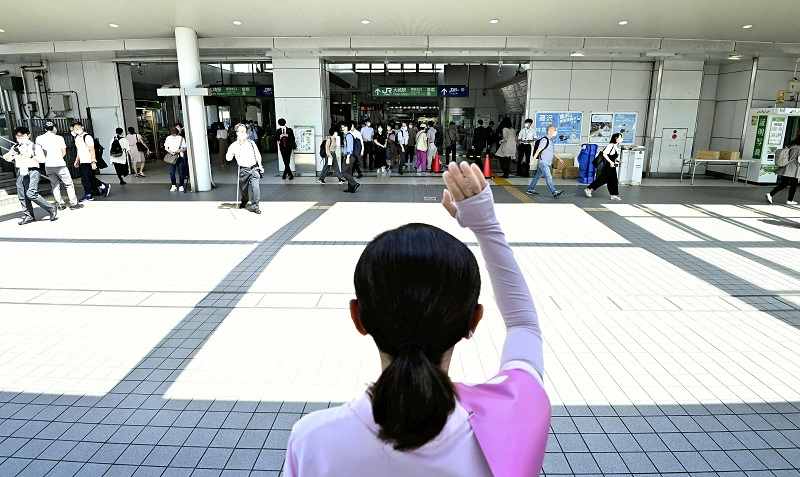
A candidate delivers a campaign speech on Wednesday in Tokyo.
15:35 JST, July 3, 2022
Political parties have been posting short video messages on social media in the House of Councillors election campaigns to attract voters, especially younger ones, and directly delivery their slogans and policy sound bites.
In the videos, each lasting about one minute or less, parties are using their ingenuity to convey simple messages via the use of subtitles, illustrations and livestreaming.
“All the more because this is an era of uncertainty in which we are confronting major challenges, they are the ones considered indispensable,” said Prime Minister Fumio Kishida, who is also the president of the Liberal Democratic Party, in a short video, raising his voice while the footage shifts quickly from him to people listening to his message and then to party candidates seeking voters’ support.
These documentary-like videos, which the LDP has posted on YouTube and other sites, last about 40 seconds. Each one focuses on characteristics of the party’s candidates and adds a slogan such as “To create a country where everyone can feel comfortable to work” or “My affection toward my hometown is my driving force.”
The ban on campaigning via the internet was lifted from the House of Councillors election in 2013. The coronavirus has also had an impact on campaigns: During the House of Representatives election last year, parties galvanized forces using social media. Parties keep the videos short, usually less than 1 minute, and tend to format them for viewing on a smartphone.
Komeito has posted one-minute videos that summarize the speeches delivered by its leader Natsuo Yamaguchi, each one touching on specific topics such as diplomacy, security and the consumption tax.
The Constitutional Democratic Party of Japan has posted a 15-second animated video explaining its election promises on TikTok, a social media app for sharing short videos. The party also presents via Twitter its campaign pledges using illustrations on slides.
The Japanese Communist Party has posted videos of party members questioning government officials during Diet sessions. In one, a JCP member pressures a Cabinet member, saying, “How could you give such an evasive answer?” with a subtitle that reads “Our anger is at the Max!”
Nippon Ishin no Kai (Japan Innovation Party) has been livestreaming a “special program for the election” on YouTube every day, with its candidates appearing as guests.
The Democratic Party for the People emphasizes its friendliness by featuring its mascot “Kokumin rabbit.”
“With so many videos circulating, viewers won’t watch long ones,” said Takuma Ohamazaki, an election planner. “What counts is how easy they are to understand, with the main points put concisely.”
The areas to be canvassed by the candidates in upper house elections are wider than in lower house elections for both the constituency and the proportional representation bloc systems.
“There are also many cases in which parties make use of social media to introduce a candidate’s character to help voters feel closer to candidates who otherwise may seem to be distant from them,” Ohamazaki said.









Most Read
Popular articles in the past 24 hours
-

Japan Train Company to Increase Fares, Including in Tokyo Metropo...
-

Japan Govt to Tighten Requirements to Receive Permanent Residency...
-

Tail of ANA Plane Struck Runway During Landing in Houston; No Inj...
-

Samurai Japan Holds First Practice in Miami; Team Will Play again...
-

Medical Care at Home and Disasters: Ensure Systems to Provide Con...
-

Iran Targets Busiest International Airport as Top UN Body Demands...
-

Japan to Face Venezuela in World Baseball Classic Quarterfinals
-

North Korean Leader Kim and His Daughter Try out New Pistols at S...
Popular articles in the past week
-

Japan Figure Skating Legend Yuzuru Hanyu Is Proud Disaster Surviv...
-

Nippon Life Insurance's U.S. Arm Sues OpenAI Over Legal Assistanc...
-

Ibaraki Pref.'s 1st Foreign Bus Driver Hired in Tsukuba
-

Govt to Utilize ODA for Ensuring Economic Security; Securing Ener...
-

Massive Sewer Pipe Found Jutting Out of Highway in Osaka
-

Beckoning Cats Get Makeover to Fit Modern Lifestyles with Sleek D...
-
Japan Govt Survey Finds Just 10% of Workers Want Working Hours to...
-

Japan's 2nd Round of U.S. Investments May Be Worth Over $100 Bill...
Popular articles in the past month
-

Producer Behind Pop Group XG Arrested for Cocaine Possession
-

Japan PM Takaichi’s Cabinet Resigns en Masse
-

Man Infected with Measles Reportedly Dined at Restaurant in Tokyo...
-

Videos Plagiarized, Reposted with False Subtitles Claiming ‘Ryuky...
-

iPS Treatments Pass Key Milestone, but Broader Applications Far f...
-
Japan Figure Skating Legend Yuzuru Hanyu Is Proud Disaster Surviv...
-

Sanae Takaichi Elected Prime Minister of Japan; Keeps All Cabinet...
-

Nepal Bus Crash Kills 19 People, Injures 25 Including One Japanes...
Top Articles in Politics
-
Japan PM Takaichi’s Cabinet Resigns en Masse
-
Sanae Takaichi Elected Prime Minister of Japan; Keeps All Cabinet Appointees from Previous Term
-

Japan’s Govt to Submit Road Map for Growth Strategy in March, PM Takaichi to Announce in Upcoming Policy Speech
-
LDP Begins Training New Lawmakers to Avoid Scandal, Gaffes; Historic Victory in Latest Election Heightens Focus on Party
-

Japan PM Sanae Takaichi Welcomes Peach Ambassadors Koga Momo Musume to Official Residence
JN ACCESS RANKING
-
Producer Behind Pop Group XG Arrested for Cocaine Possession
-
Japan PM Takaichi’s Cabinet Resigns en Masse
-
Man Infected with Measles Reportedly Dined at Restaurant in Tokyo Station
-
Videos Plagiarized, Reposted with False Subtitles Claiming ‘Ryukyu Belongs to China’; Anti-China False Information Also Posted in Japan
-
iPS Treatments Pass Key Milestone, but Broader Applications Far from Guaranteed