
Japan On Heightened Alert Amid China’s Military Coercion; Planes May Have Been Within Missile Range
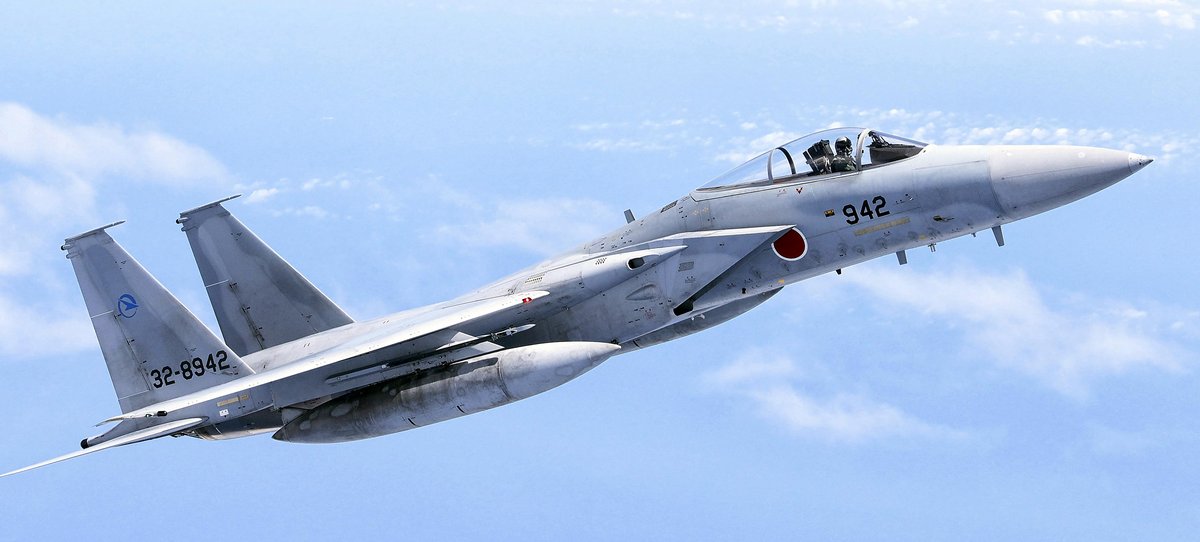
Japanese F-15 fighter jet
18:00 JST, December 8, 2025
The Japanese government is on heightened alert in the wake of Chinese aircraft directing radar at Air Self-Defense Force fighter jets above international waters southeast of Okinawa Island on Saturday, viewing this move as an escalation of military coercion
The incident occurred after Prime Minister Sanae Takaichi’s remark in the Diet that a Taiwan contingency could constitute a “survival-threatening situation.” Japan seeks to avoid escalation but is also preparing to counter China by deepening cooperation with its ally and like-minded nations.
Purpose unclear
“We have lodged a strong protest with the Chinese side and urged they take strict measures to prevent recurrence,” Takaichi told reporters in Ishikawa Prefecture on Sunday during her visit to the prefecture, which has been hit by a series of natural disasters. The prime minister expressed her determination to ensure thorough vigilance and surveillance in the air and sea surrounding Japan.
The latest incidents occurred as the Chinese aircraft carrier Liaoning was sailing near Japanese waters, prompting a scramble of ASDF F-15 jets against China’s carrier-based aircraft.
The Chinese aircraft directed radar at Japanese plans in an “unnecessarily intermittent” fashion, a senior SDF official said. This strongly suggests that the Chinese aircraft were engaging in deliberate provocation.
Fighter aircraft’s radar is normally mounted in the nose. Unlike maritime vessels, fighter jets do not have separate radars — fire-control radar to detect and track a target, and surveillance radar for searching the surrounding area. Instead, a single radar system handles both functions.
It remains unclear why the Chinese military aircraft was using the radar, but a senior ASDF official said, “It’s not normal to direct radar intermittently like this during a search operation.”
Former Maj. Gen. Yoshiaki Kawanami emphasized that the F-15s that had the radar directed at them “may have been within the missile range of the Chinese military aircraft.” Kawanami speculated, “The [F-15] pilots likely felt their aircraft was being targeted and judged they were in danger.”
Becoming normal
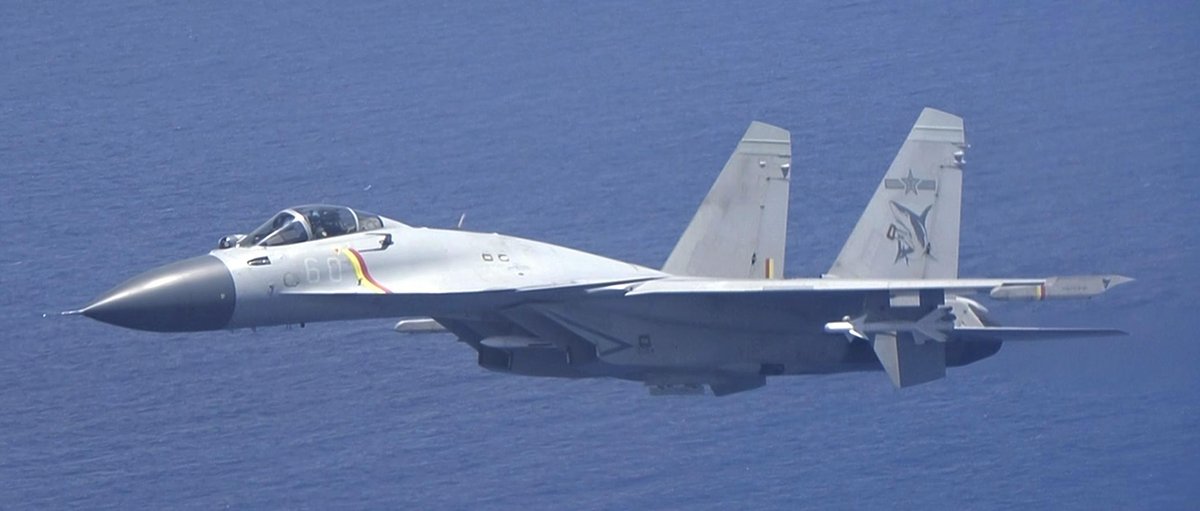
Chinese J-15 fighter jet
China’s National Defense Ministry announced the commissioning of its third aircraft carrier Fujian in November. With three carriers, including the Liaoning and Shandong, now ready for operations, China can rotate the carriers among three statuses: operations, training and maintenance. This allows one aircraft carrier to be on duty at all times, suggesting carrier deployments near Japan will become norm.
In recent years, the Chinese military has been carrying out joint strategic aerial patrols with Russian strategic bombers around the year-end. Amid cooling Japan-China relations, China may intensify military pressure on Japan through cooperation with Russia.
Reports indicate China has deployed numerous naval and China Coast Guard vessels to East Asian waters since the prime minister’s remarks on a survival-threatening situation.
“This could last for two to three weeks,” an SDF official said regarding the Liaoning’s current activities. The SDF plans to continue vigilant surveillance by sea and air and respond cautiously to prevent accidental clashes.
Cooperation
“Australia has also experienced concerning events in interactions with the PLA [People’s Liberation Army],” Australian Deputy Prime Minister and Defense Minister Richard Marles expressed a common concern during his talks with Defense Minister Shinjiro Koizumi on Sunday, after the radar incidents.
A senior ministry official said, “It was good timing that the Japanese and Australian defense ministers were able to convey a message the day after the incident.”
The Japanese government intends to strengthen its response capabilities and deterrence by coordinating with allies and like-minded nations such as the United States and Australia, aiming to hinder China from engaging in further provocations. Another ministry official said, “We need to spread awareness and understanding to other countries about the Chinese military’s problematic behavior.”
Amid China’s increasing military activities around the Nansei Islands, the government and ruling parties plan to include concrete measures to enhance defense capabilities for the islands — the front line of the national defense — in the revision of the three security documents, including the National Security Strategy, scheduled for by the end of 2026.
The government and the ruling parties plan to advance the revisions. This will also accelerate the shift of the nation’s defense capabilities to the region around the Nansei Islands.



Most Read
Popular articles in the past 24 hours
-

Japanese Shipping Giants Halt Strait of Hormuz Transit as Iran Co...
-

U.S. Launches Attacks on Iran: Avoid Escalation of Conflict by An...
-

Japan Shares and Yen Fall, Jgbs Rise as Iran Strikes Continue
-

Takaichi: Japan Striving to Ensure Safety of Japanese Nationals; ...
-

Sawtooth Roof Factory Stands as Monument to Ashikaga Textile Hist...
-
Kyoto Animation President Hideaki Hatta Dies of Illness at 76; Co...
-

Parents of Japanese Teen Shot in U.S. Strive for Gun Control
-

Disinformation Spreads About Team Mirai, Ballot Readers; Online P...
Popular articles in the past week
-

Nepal Bus Crash Kills 19 People, Injures 25 Including One Japanes...
-

Milano Cortina 2026: Japanese Gold Medalist Figure Skater Miura S...
-

Tokyo Spends Big on Children, Wins Over Parents
-

McDonald's Japan Raises Prices; Big Mac to Cost ¥500, Double Chee...
-

Japan’s Miura, Kihara Announce Withdrawal from Figure Skating Wor...
-

Exhibition Featuring Yoshiharu Tsuge’s Manga World Underway in Ch...
-

Yokohama to Test Out Renewable-Powered Offshore Floating Data Cen...
-

BOJ Keeping Eye on Economy and Takaichi's ‘Proactive Fiscal Polic...
Popular articles in the past month
-

Producer Behind Pop Group XG Arrested for Cocaine Possession
-

Japan PM Takaichi’s Cabinet Resigns en Masse
-

Man Infected with Measles Reportedly Dined at Restaurant in Tokyo...
-

Israeli Ambassador to Japan Speaks about Japan’s Role in the Reco...
-

Videos Plagiarized, Reposted with False Subtitles Claiming ‘Ryuky...
-

Man Infected with Measles May Have Come in Contact with Many Peop...
-

Prudential Life Insurance Plans to Fully Compensate for Damages C...
-

Woman with Measles Visited Hospital in Tokyo Multiple Times Befor...
Top Articles in Politics
-
Japan PM Takaichi’s Cabinet Resigns en Masse
-

Sanae Takaichi Elected Prime Minister of Japan; Keeps All Cabinet Appointees from Previous Term
-

Japan’s Govt to Submit Road Map for Growth Strategy in March, PM Takaichi to Announce in Upcoming Policy Speech
-

LDP Wins Historic Landslide Victory
-

LDP Wins Landslide Victory, Secures Single-party Majority; Ruling Coalition with JIP Poised to Secure Over 300 seats (UPDATE 1)
JN ACCESS RANKING
-
Producer Behind Pop Group XG Arrested for Cocaine Possession
-
Japan PM Takaichi’s Cabinet Resigns en Masse
-
Man Infected with Measles Reportedly Dined at Restaurant in Tokyo Station
-
Israeli Ambassador to Japan Speaks about Japan’s Role in the Reconstruction of Gaza
-
Videos Plagiarized, Reposted with False Subtitles Claiming ‘Ryukyu Belongs to China’; Anti-China False Information Also Posted in Japan