
Japan’s Joint Operations Command, Joint Staff Not Seeing Eye to Eye on Information Sharing, 6 Months After Launch of JOC
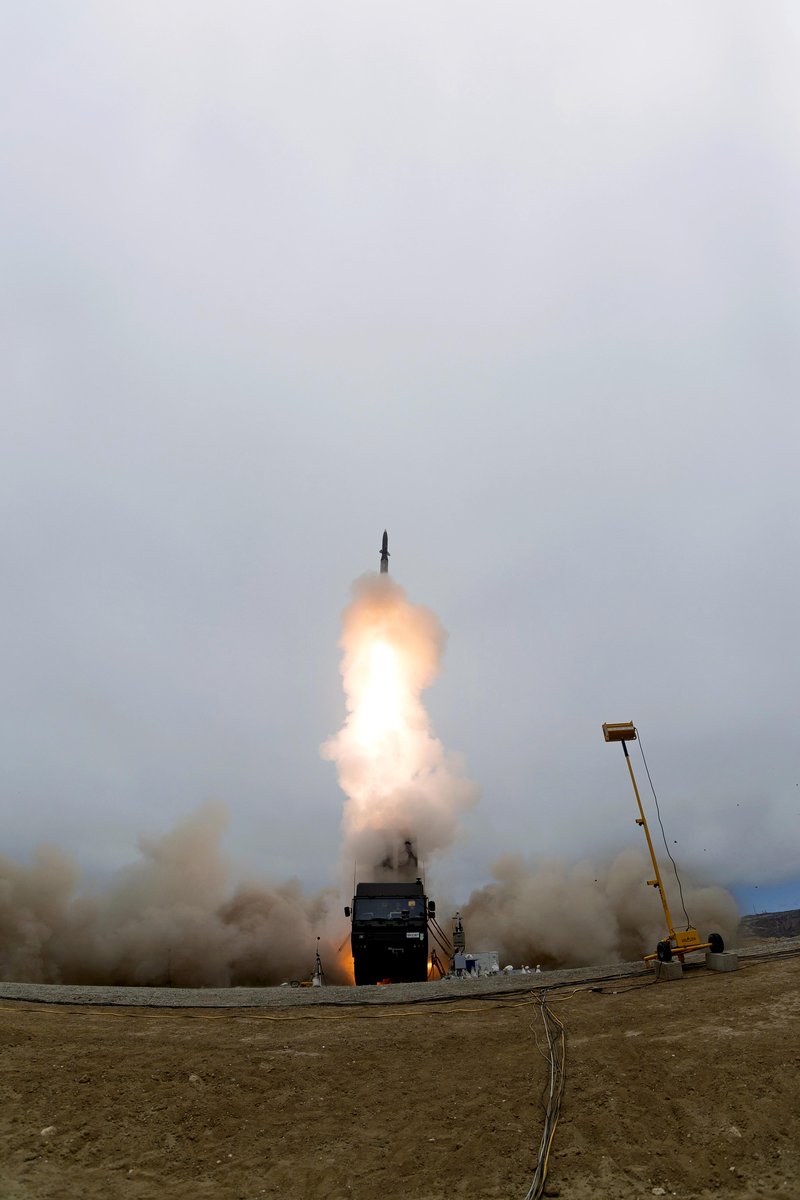
A launch to test the Self-Defense Forces’ stand-off missile, in California in June
17:08 JST, September 30, 2025
Six months have passed since the launch of the Joint Operations Command (JOC), and disagreements between the JOC and the Joint Staff have arisen regarding the sharing of information.
The JOC centrally commands the Self-Defense Forces, and the Joint Staff assists the defense minister.
The JOC is tasked with directing the operations of stand-off missiles, which the government is rushing to introduce as a pillar of its counterstrike capabilities, and remote island defense operations.
An SDF joint disaster prevention exercise held July 14-18 simulated a major earthquake directly beneath the capital and involved about 14,000 SDF personnel and others. According to SDF sources, there were repeated complaints from the JOC and the Joint Staff during the exercise.
“We can’t really see what’s happening on the front line,” a Joint Staff official said.
While a JOC official said, “The Joint Staff wants to know every detail of our actions.”
The chief of staff of the Joint Staff, who assists the defense minister, formulates security policies and defense strategies, while the commander of the JOC directs units under the defense minister’s orders.
The Joint Staff, which has about 400 personnel, and the JOC, which has about 240 personnel, are two integral parts of Japan’s defense. However, there appears to be discord emerging between the two entities.
During the exercise, the Joint Staff repeatedly requested specific information from the JOC, such as affected locations and the number of personnel that arrived at those location, in order to brief the defense minister and the government’s response headquarters. There were reportedly instances in which the Joint Staff directly asked field units questions, going over the head of the JOC.
Complaints emerged within the Joint Staff that reports from the JOC were insufficient, while the JOC perceived this as “excessive micromanagement,” leading to disgruntled whispers from the JOC.
Coordination committee
Disagreements over the sharing of information existed even before the exercise. As a result, the Joint Staff and the JOC established a “coordination committee” in early July for the purpose of “continuously optimizing mutual cooperation.”
The establishment of the committee was not anticipated when the JOC was launched in March.
Senior officials from both entities reportedly attended the coordination committee meetings and discussed analyses of different situations and the content of exercises.
“It has only been six months since [the JOC’s] launch,” said an SDF senior official. “It will take a little more time to align our understanding of what information should be shared.”
When asked at a regular press conference on Sept. 18 about the sharing of information, Chief of Staff Hiroaki Uchikura said: “I hear complaints from units and various commands that information is insufficient or slow. We want to carefully resolve these issues.”
Cooperation essential
So far, the SDF have temporarily formed “integrated task forces” to respond to emergencies.
The chief of staff assisted the defense minister and was in a position to “coordinate” the missions of the three SDF branches, which are the Ground Self-Defense Force, the Air Self-Defense Force and the Maritime Self-Defense Force.
However, the situation surrounding Japan has become severe and complicated, and the areas in which defense forces need to operate have expanded to include space and cyberspace.
There was a growing need to constantly direct the three SDF branches in an integrated manner, leading to the creation of the JOC commander position on March 24.
The move was aimed at avoiding increasing the chief of staff’s workload, allowing the chief of staff to focus solely on assisting the defense minister. The chief of staff and the JOC commander coordinate with the U.S. military in their respective capacities.
In an emergency, if the Joint Staff and the JOC fail to share the necessary information, there could be delays in making critical decisions.
One of the JOC’s primary missions is the operation of stand-off missiles, which will begin to be deployed this fiscal year.
The missiles will be deployed to the GSDF’s ground units, the MSDF’s surface vessels and submarines, and the ASDF’s fighter jets. Meticulous coordination among the three branches is essential — from target detection to their launches.
To defend the Nansei Islands, the MSDF and ASDF will cooperate to deploy the GSDF’s Amphibious Rapid Deployment Brigade and Osprey transport aircraft units.
To strengthen the air defense system of the Pacific Ocean, preparations are underway for the ASDF’s F-35B fighter jets, equipped with the latest stealth capabilities to evade enemy radars, to take off and land on the MSDF’s large destroyers.
To adequately operate these units and equipment, coordination between the chief of staff and the JOC commander is vital.
“While gathering the necessary information to support the defense minister is essential, constantly demanding even minute detail would confuse the field personnel,” said Hirohito Ogi, a senior research fellow at the Institute of Geoeconomics based in Tokyo, who is an expert on security policy.
“A mechanism should be established early on that enables the swift and effective sharing of critical information with the defense minister, while ensuring operational flexibility,” he added.



Most Read
Popular articles in the past 24 hours
-

Japanese Version of Shohei Ohtani's Picture Book Published
-

Milano Cortina 2026: Japan’s Speed Skater Takagi Sinks to 6...
-
Osaka: 40 Ninjas Display Shuriken Throwing Skills at Japan Champi...
-
Tottori: 95-Year-Old Japanese Descendent from Philippines Visits ...
-
Hiroshima: Land Scape, Special Architecture to Offer Unique Beaut...
-

Miyazaki: Japanese Woman Walks in Footsteps of Samurai Ancestor W...
-

Japan PM Sanae Takaichi Declares ‘Responsible Diplomacy’ in Her P...
-
Japan to Host 3rd Pacific Islands Defense Meeting from Sunday thr...
Popular articles in the past week
-

Japan PM Takaichi’s Cabinet Resigns en Masse
-

Man Infected with Measles Reportedly Dined at Restaurant in Tokyo...
-

Sanae Takaichi Elected Prime Minister of Japan; Keeps All Cabinet...
-

Japan's Govt to Submit Road Map for Growth Strategy in March, PM ...
-
Bus Carrying 40 Passengers Catches Fire on Chuo Expressway; All E...
-

Milano Cortina 2026: Figure Skaters Riku Miura, Ryuichi Kihara Pa...
-
Japan, U.S. Name 3 Inaugural Investment Projects; Reached Agreeme...
-

U.S. Firm to Build Training Hub in Fukushima N-plant for Debris R...
Popular articles in the past month
-
Japan PM Takaichi’s Cabinet Resigns en Masse
-

Japan Institute to Use Domestic Commercial Optical Lattice Clock ...
-

Israeli Ambassador to Japan Speaks about Japan’s Role in the Reco...
-
Man Infected with Measles Reportedly Dined at Restaurant in Tokyo...
-

Videos Plagiarized, Reposted with False Subtitles Claiming ‘Ryuky...
-

Man Infected with Measles May Have Come in Contact with Many Peop...
-

Prudential Life Insurance Plans to Fully Compensate for Damages C...
-

Woman with Measles Visited Hospital in Tokyo Multiple Times Befor...
Top Articles in Politics
-
Japan PM Takaichi’s Cabinet Resigns en Masse
-
Sanae Takaichi Elected Prime Minister of Japan; Keeps All Cabinet Appointees from Previous Term
-
Japan’s Govt to Submit Road Map for Growth Strategy in March, PM Takaichi to Announce in Upcoming Policy Speech
-

LDP Wins Historic Landslide Victory
-

LDP Wins Landslide Victory, Secures Single-party Majority; Ruling Coalition with JIP Poised to Secure Over 300 seats (UPDATE 1)
JN ACCESS RANKING
-
Japan PM Takaichi’s Cabinet Resigns en Masse
-
Japan Institute to Use Domestic Commercial Optical Lattice Clock to Set Japan Standard Time
-
Israeli Ambassador to Japan Speaks about Japan’s Role in the Reconstruction of Gaza
-
Man Infected with Measles Reportedly Dined at Restaurant in Tokyo Station
-
Videos Plagiarized, Reposted with False Subtitles Claiming ‘Ryukyu Belongs to China’; Anti-China False Information Also Posted in Japan