
Japanese Government to Establish New Guidelines on Disclosing Names of Missing Persons in Event of Military Contingency
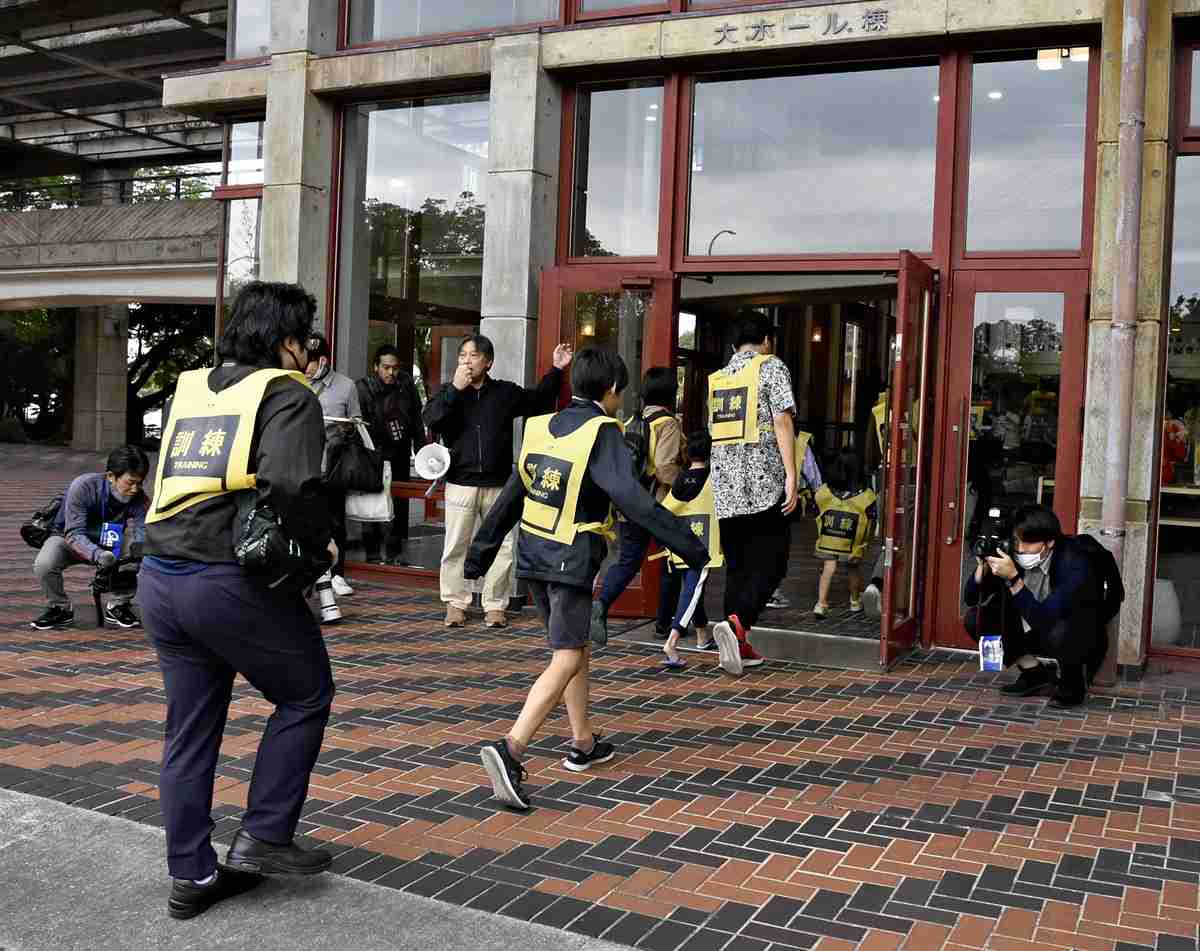
People participate in an evacuation drill to prepare for a contingency in Ishigaki, Okinawa Prefecture, in February 2024.
11:44 JST, September 5, 2025
The government will establish new guidelines for disclosing the names of missing persons in the event of a military attack by another country.
A proposal is gaining traction to encourage local governments to disclose, under a certain rule, the names of missing persons without family consent, as they do after natural disasters like earthquakes. The aim is to make it easier to confirm that people are safe in the event of a military contingency under the Civil Protection Law, by establishing national standards.
The law requires municipalities to collect information about missing persons who may have been killed or injured by an armed attack. While disclosing the names is expected to help narrow down the list of those unaccounted for, there are currently no uniform standards, leaving the matter to the discretion of local governments.
The Fire and Disaster Management Agency plans to start making the guidelines by the end of this year and then notify local governments across the nation of the guidelines.
The new guidelines are expected to largely follow the guidelines compiled by the Cabinet Office in 2023 for responding to natural disasters. These guidelines state that the name, address, age or age group and gender of a person can be disclosed for disaster response purposes without violating the Law on the Protection of Personal Information.
While the guidelines state that the names of missing persons should in general be disclosed within 72 hours of a disaster, they exclude victims of stalking and domestic violence. After the Noto Peninsula Earthquake in January 2024, the names of missing persons were disclosed based on these guidelines.
The government is rushing to debate this issue in light of a possible Taiwan contingency, but the Civil Protection Law has never been invoked, leaving many operational uncertainties. Concerns have been raised about differing responses among local governments regarding missing persons, with a Hyogo Prefecture official saying, “If responses vary between municipalities, confusion could arise.” This has prompted calls for the central government to promptly establish standards.
“It’s important for the government to establish national guidelines,” said Mitsuru Fukuda, a professor at Nihon University’s College of Risk Management and an expert on civil protection. “However, they must also consider the possibility that armed attacks could cause prolonged and widespread damage.”




Most Read
Popular articles in the past 24 hours
-

Japanese Version of Shohei Ohtani's Picture Book Published
-

Milano Cortina 2026: Japan’s Speed Skater Takagi Sinks to 6...
-
Osaka: 40 Ninjas Display Shuriken Throwing Skills at Japan Champi...
-
Tottori: 95-Year-Old Japanese Descendent from Philippines Visits ...
-

Hiroshima: Land Scape, Special Architecture to Offer Unique Beaut...
-

Miyazaki: Japanese Woman Walks in Footsteps of Samurai Ancestor W...
-

Japan PM Sanae Takaichi Declares ‘Responsible Diplomacy’ in Her P...
-
Japan to Host 3rd Pacific Islands Defense Meeting from Sunday thr...
Popular articles in the past week
-

Japan PM Takaichi’s Cabinet Resigns en Masse
-

Man Infected with Measles Reportedly Dined at Restaurant in Tokyo...
-

Sanae Takaichi Elected Prime Minister of Japan; Keeps All Cabinet...
-

Japan's Govt to Submit Road Map for Growth Strategy in March, PM ...
-

Bus Carrying 40 Passengers Catches Fire on Chuo Expressway; All E...
-

Milano Cortina 2026: Figure Skaters Riku Miura, Ryuichi Kihara Pa...
-

Japan, U.S. Name 3 Inaugural Investment Projects; Reached Agreeme...
-

U.S. Firm to Build Training Hub in Fukushima N-plant for Debris R...
Popular articles in the past month
-
Japan PM Takaichi’s Cabinet Resigns en Masse
-

Japan Institute to Use Domestic Commercial Optical Lattice Clock ...
-

Israeli Ambassador to Japan Speaks about Japan’s Role in the Reco...
-
Man Infected with Measles Reportedly Dined at Restaurant in Tokyo...
-

Videos Plagiarized, Reposted with False Subtitles Claiming ‘Ryuky...
-

Man Infected with Measles May Have Come in Contact with Many Peop...
-

Prudential Life Insurance Plans to Fully Compensate for Damages C...
-

Woman with Measles Visited Hospital in Tokyo Multiple Times Befor...
Top Articles in Politics
-
Japan PM Takaichi’s Cabinet Resigns en Masse
-
Sanae Takaichi Elected Prime Minister of Japan; Keeps All Cabinet Appointees from Previous Term
-
Japan’s Govt to Submit Road Map for Growth Strategy in March, PM Takaichi to Announce in Upcoming Policy Speech
-

LDP Wins Historic Landslide Victory
-

LDP Wins Landslide Victory, Secures Single-party Majority; Ruling Coalition with JIP Poised to Secure Over 300 seats (UPDATE 1)
JN ACCESS RANKING
-
Japan PM Takaichi’s Cabinet Resigns en Masse
-
Japan Institute to Use Domestic Commercial Optical Lattice Clock to Set Japan Standard Time
-
Israeli Ambassador to Japan Speaks about Japan’s Role in the Reconstruction of Gaza
-
Man Infected with Measles Reportedly Dined at Restaurant in Tokyo Station
-
Videos Plagiarized, Reposted with False Subtitles Claiming ‘Ryukyu Belongs to China’; Anti-China False Information Also Posted in Japan