
Rapp-Hooper: Like-Minded Countries Show Resilience Despite U.S. Unpredictability; No More Important U.S. Ally Than Japan
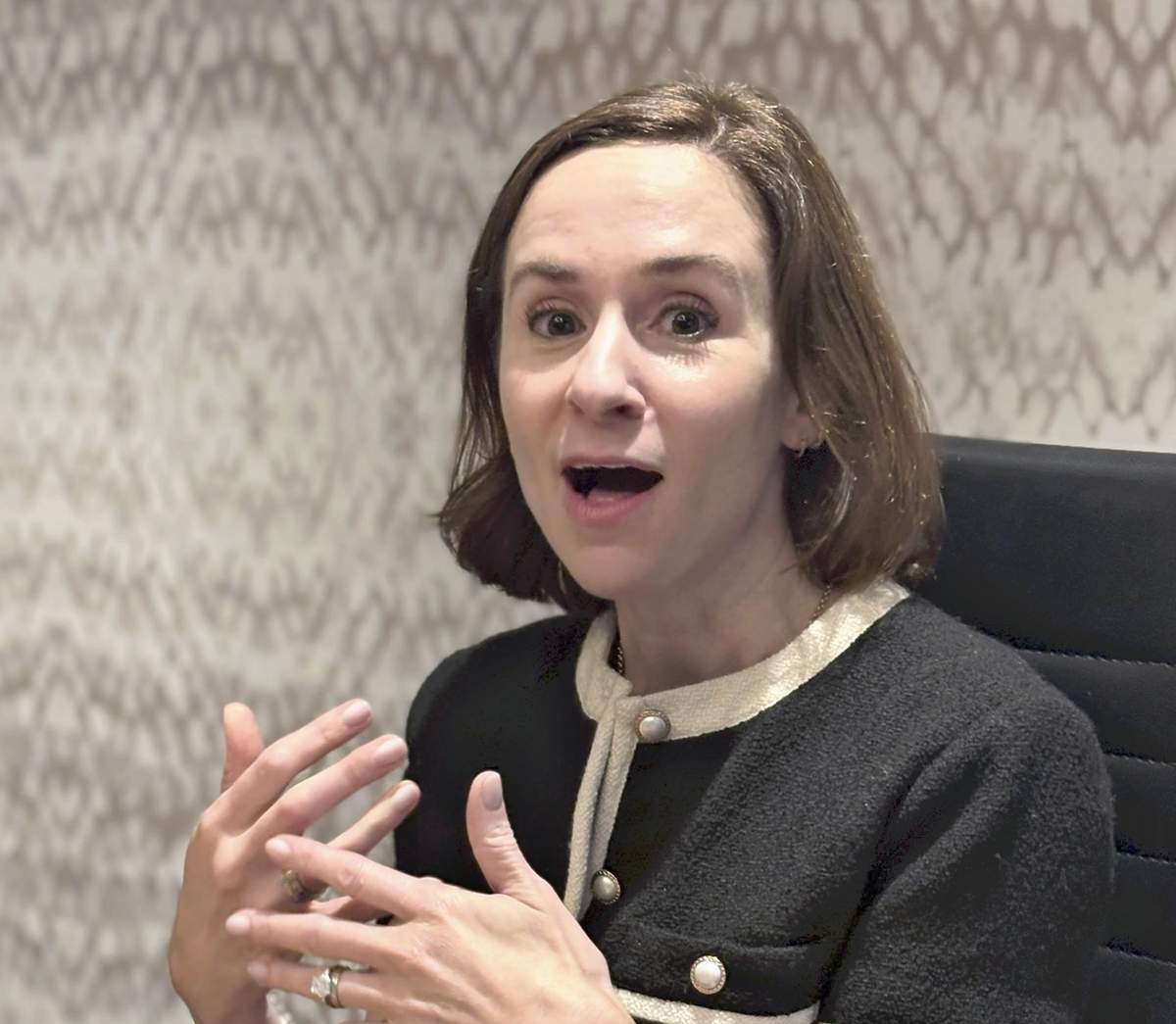
Mira Rapp-Hooper
6:00 JST, August 2, 2025
The tariff measures of the administration of U.S. President Donald Trump have revealed that being a privileged U.S. security partner does not necessarily mean being a privileged economic partner, former Director for Indo-Pacific Strategy of the U.S. National Security Council Mira Rapp-Hooper said in a recent interview with The Yomiuri Shimbun.
The following is excerpted from the interview, which was conducted by Yomiuri Shimbun Correspondent Yuko Mukai.
***
I’m very relieved that the United States and Japan were able to conclude a trade negotiation after intensive engagements over the last many months. Japan is a critical ally to the United States and a critical economic partner, and having trade issues remain an irritant would have placed downward pressure on the totality of the relationship.
We calculated that the LDP’s setback [in the House of Councillors election on July 20] would actually make a trade deal more difficult in the coming days, but the fact that a trade deal was reached is testimony to the fact that both sides had done a good job of preparing for that moment of opportunity when it came. The critical piece, as I understand, is that the Trump administration finally demonstrated flexibility on auto tariffs, which up until that point, it had not done, and the Japanese government was then able to grant a little bit of flexibility on rice imports under the existing quota, which was something that mattered a lot to the Trump administration. I also think that elements of this trade deal recognize the critical role that Japan already plays in the U.S. economy, such as as a driver of high quality investment.
I think there’s no doubt that the tariff policy has impacted public opinion of the United States, in Japan and around the world, especially in allied countries.
Part of what is being captured in that public opinion is, for allied countries, typically American security commitments and American economic commitments, openness to trade, have traveled together.
So, part of what was demonstrated in the April 2nd tariffs was the fact that just because you are a privileged U.S. security partner did not mean you would be a privileged U.S. economic partner.
The era that we knew as the post-Cold War era has come to an end, and we are at a moment of significant flux in which we don’t exactly know how we will define the international order that is coming next. We are headed into a world that is much more multipolar.
In that world, the United States is still extremely powerful, but it has competition when it comes to the exercise of its power on the global stage, and power is much more diffused than it has been in any time in recent memory.
President Trump is playing the role of an accelerant, or an accelerator, on these trends towards multipolarity.
Obviously, China is going to be extremely powerful. So too do we expect economies like India to keep growing at a significant rate.
It is very hard to know after three more years of Donald Trump’s presidency, where exactly this will all leave us.
What is clear is that the United States is not going to be able to go back into the exact same leadership position that [it] has occupied during the post-Cold War period. It’s going to need to adjust itself come 2029, once President Trump is no longer president, to a changed set of global circumstances. That certainly means finding a way to renew its relationships with key allies, because those are such an essential part of American power.
And I think you even saw over the course of [former U.S.] President [Joe] Biden’s four years, the challenges sort of piling up in ways that tested the United States’ ability to do everything it wanted to do on the global stage.
Just a year into the administration, Russia invaded Ukraine. In 2023, you saw another horrible attack on Oct. 7 that plunged the Middle East into conflict,
Americans have demonstrated, in their public opinion over the course of the last couple of decades, increasing disaffection with American involvement in faraway, long-lasting wars, and have some skepticism about vast expenditure overseas, if they think those same dollars could be used at home.
I think one of the really critical charges for whomever the next U.S. president will be, whether they be a Democrat or a more mainstream Republican, will be to think about how to link our foreign policy objectives on the global stage to a rhetoric and a narrative capability that actually works for the American people.
Part of the beauty of what the United States built with Japan and other regional partners over recent years is that those networks of alliances and partnerships in the Indo Pacific and in Europe have actually created resilience amongst allies and partners that they can draw upon now. So whether it’s Japan’s leadership in the Quad [a cooperation framework among Japan, the United States, Australia and India], the U.S.-ROK-Japan trilateral, Japan’s relationships with India, Australia, Vietnam individually, or the fact that Japan has forged much stronger ties with NATO [North Atlantic Treaty Organization] allies, these are all basically like-minded countries that came together because they agreed they had a common set of strategic objectives in the world at a moment where the United States may feel more unpredictable, a little bit less reliable in its day to day interactions.
It is highly likely that wherever the United States winds up three years from now, we are still living in a world where Democrats and Republicans in Congress agree that Asia is the priority theater for the future and that there is no more important ally in Japan.
Mira Rapp-Hooper
Mira Rapp-Hooper served as director for Indo-Pacific strategy of the U.S. National Security Council under the administration led by former U.S. President Joe Biden. She joined the administration after working on Hillary Clinton’s U.S. presidential election campaign. Rapp-Hooper holds a doctorate from Columbia University. She is a partner at The Asia Group, a consulting firm led by former U.S. Deputy Secretary of State Kurt Campbell.




Most Read
Popular articles in the past 24 hours
-
Japanese High School Student Aims to Share Kaiten History Through...
-
PM Takaichi Spells out Plans to Advance Bold Policy Shifts in Spe...
-
Chronic Issues Erode Thailand’s Economy as Political Confusion Pe...
-

Japanese Version of Shohei Ohtani's Picture Book Published
-
Tottori: 95-Year-Old Japanese Descendent from Philippines Visits ...
-

Japan to Monitor Trump Administration's Response to U.S. Supreme ...
-

Milano Cortina 2026: Speed Skater Takagi Finishes 6th in the 1,50...
-

Osaka: 40 Ninjas Display Shuriken Throwing Skills at Japan Champi...
Popular articles in the past week
-

Japan PM Takaichi’s Cabinet Resigns en Masse
-

Man Infected with Measles Reportedly Dined at Restaurant in Tokyo...
-

Sanae Takaichi Elected Prime Minister of Japan; Keeps All Cabinet...
-

Japan's Govt to Submit Road Map for Growth Strategy in March, PM ...
-

Bus Carrying 40 Passengers Catches Fire on Chuo Expressway; All E...
-

Milano Cortina 2026: Figure Skaters Riku Miura, Ryuichi Kihara Pa...
-

Japan, U.S. Name 3 Inaugural Investment Projects; Reached Agreeme...
-
U.S. Firm to Build Training Hub in Fukushima N-plant for Debris R...
Popular articles in the past month
-
Japan PM Takaichi’s Cabinet Resigns en Masse
-

Japan Institute to Use Domestic Commercial Optical Lattice Clock ...
-

Israeli Ambassador to Japan Speaks about Japan’s Role in the Reco...
-
Man Infected with Measles Reportedly Dined at Restaurant in Tokyo...
-

Videos Plagiarized, Reposted with False Subtitles Claiming ‘Ryuky...
-

Man Infected with Measles May Have Come in Contact with Many Peop...
-

Prudential Life Insurance Plans to Fully Compensate for Damages C...
-

Woman with Measles Visited Hospital in Tokyo Multiple Times Befor...
Top Articles in Politics
-
Japan PM Takaichi’s Cabinet Resigns en Masse
-
Sanae Takaichi Elected Prime Minister of Japan; Keeps All Cabinet Appointees from Previous Term
-
Japan’s Govt to Submit Road Map for Growth Strategy in March, PM Takaichi to Announce in Upcoming Policy Speech
-

LDP Wins Historic Landslide Victory
-

LDP Wins Landslide Victory, Secures Single-party Majority; Ruling Coalition with JIP Poised to Secure Over 300 seats (UPDATE 1)
JN ACCESS RANKING
-
Japan PM Takaichi’s Cabinet Resigns en Masse
-
Japan Institute to Use Domestic Commercial Optical Lattice Clock to Set Japan Standard Time
-
Israeli Ambassador to Japan Speaks about Japan’s Role in the Reconstruction of Gaza
-
Man Infected with Measles Reportedly Dined at Restaurant in Tokyo Station
-
Videos Plagiarized, Reposted with False Subtitles Claiming ‘Ryukyu Belongs to China’; Anti-China False Information Also Posted in Japan