
Japan Still Concerned U.S. Could Leverage Security Treaty for More Defense Purchases

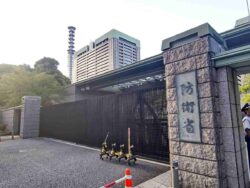
The Prime Minister’s Office in Tokyo
16:12 JST, July 25, 2025
The government is concerned that the Japan-U.S. security arrangement might be used as leverage in negotiations to get Japan to buy more U.S.-made defense equipment.
Tokyo plans to make the “additional” purchases of U.S.-made defense equipment that are a part of the Japan-U.S. trade agreement through existing plans, such as the Defense Buildup Program.
As a result of the trade negotiations, the U.S. government announced that Japan will increase its annual purchases of U.S. defense equipment by an “additional billions of dollars.”
However, at a press conference on Thursday, Chief Cabinet Secretary Yoshimasa Hayashi stated that near-term purchases of defense equipment are based on the already-decided Defense Buildup Program and other policies, indicating that they do not constitute additional purchases.
On Thursday, Ryosei Akazawa, minister in charge of economic revitalization, told reporters in Tokyo that there was no difference in understanding between Japan and the United States on the issue.
Akazawa added that he had explained during negotiations with the U.S. government that defense equipment purchases could contribute to an improved trade balance between the two countries.
However, the Japanese government is still concerned that U.S. President Donald Trump’s administration may continue to push for deals that include further purchases of defense equipment and increases in defense spending.
Trump has reportedly expressed dissatisfaction with the U.S.-Japan Security Treaty, saying that while the United States has spent hundreds of billions of dollars protecting Japan, Japan has contributed nothing.
The U.S. Defense Department has indicated that its Asian allies, including Japan, should increase their defense spending to 5% of their gross domestic product.
“Should increases in defense spending and equipment purchases not meet their expectations, [Washington] might threaten us again with higher tariffs,” said a high-ranking Japanese government official.
The so-called sympathy budget, which is paid by Japan to defray the costs of stationing U.S. troops on its territory, is also set to expire in March 2027. There are expected to be complicated negotiations with the United States on new burden-sharing ratios.





Most Read
Popular articles in the past 24 hours
-
Japanese High School Student Aims to Share Kaiten History Through...
-
PM Takaichi Spells out Plans to Advance Bold Policy Shifts in Spe...
-
Chronic Issues Erode Thailand’s Economy as Political Confusion Pe...
-

Japanese Version of Shohei Ohtani's Picture Book Published
-
Tottori: 95-Year-Old Japanese Descendent from Philippines Visits ...
-

Japan to Monitor Trump Administration's Response to U.S. Supreme ...
-

Milano Cortina 2026: Speed Skater Takagi Finishes 6th in the 1,50...
-
Osaka: 40 Ninjas Display Shuriken Throwing Skills at Japan Champi...
Popular articles in the past week
-

Japan PM Takaichi’s Cabinet Resigns en Masse
-

Man Infected with Measles Reportedly Dined at Restaurant in Tokyo...
-

Sanae Takaichi Elected Prime Minister of Japan; Keeps All Cabinet...
-

Japan's Govt to Submit Road Map for Growth Strategy in March, PM ...
-

Bus Carrying 40 Passengers Catches Fire on Chuo Expressway; All E...
-

Milano Cortina 2026: Figure Skaters Riku Miura, Ryuichi Kihara Pa...
-

Japan, U.S. Name 3 Inaugural Investment Projects; Reached Agreeme...
-

U.S. Firm to Build Training Hub in Fukushima N-plant for Debris R...
Popular articles in the past month
-
Japan PM Takaichi’s Cabinet Resigns en Masse
-

Japan Institute to Use Domestic Commercial Optical Lattice Clock ...
-

Israeli Ambassador to Japan Speaks about Japan’s Role in the Reco...
-
Man Infected with Measles Reportedly Dined at Restaurant in Tokyo...
-

Videos Plagiarized, Reposted with False Subtitles Claiming ‘Ryuky...
-

Man Infected with Measles May Have Come in Contact with Many Peop...
-

Prudential Life Insurance Plans to Fully Compensate for Damages C...
-

Woman with Measles Visited Hospital in Tokyo Multiple Times Befor...
Top Articles in Politics
-
Japan PM Takaichi’s Cabinet Resigns en Masse
-
Sanae Takaichi Elected Prime Minister of Japan; Keeps All Cabinet Appointees from Previous Term
-
Japan’s Govt to Submit Road Map for Growth Strategy in March, PM Takaichi to Announce in Upcoming Policy Speech
-

LDP Wins Historic Landslide Victory
-

LDP Wins Landslide Victory, Secures Single-party Majority; Ruling Coalition with JIP Poised to Secure Over 300 seats (UPDATE 1)
JN ACCESS RANKING
-
Japan PM Takaichi’s Cabinet Resigns en Masse
-
Japan Institute to Use Domestic Commercial Optical Lattice Clock to Set Japan Standard Time
-
Israeli Ambassador to Japan Speaks about Japan’s Role in the Reconstruction of Gaza
-
Man Infected with Measles Reportedly Dined at Restaurant in Tokyo Station
-
Videos Plagiarized, Reposted with False Subtitles Claiming ‘Ryukyu Belongs to China’; Anti-China False Information Also Posted in Japan