
Extended Stays Become Focus for Tsunami Towers to Ensure Communities Have Adequate Accommodations in Earthquake-Prone Japan
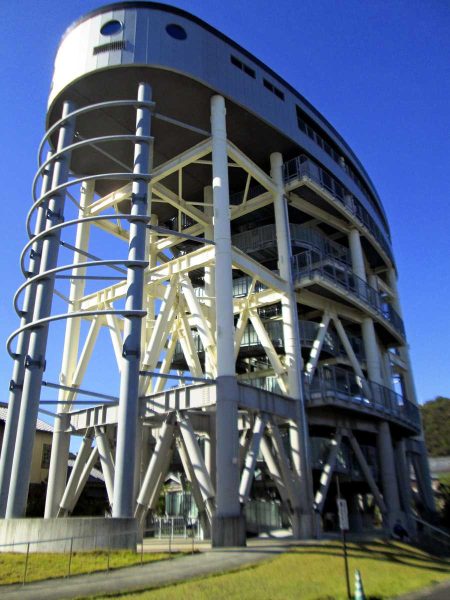
A tsunami evacuation tower in Kuroshio, Kochi Prefecture
15:48 JST, November 18, 2025
Tsunami evacuation towers are being built across the nation, while the focus is now shifting to ensuring that communities have adequate accommodations for extended evacuations.
According to a Cabinet Office survey conducted in April 2023, there are 550 structures of this kind nationwide, including shelters.
Residents seeking emergency refuge face long evacuation times at tsunami evacuation towers on high ground or non-inundated areas, and the designs and functionality of the facilities are evolving to reflect this.
Some municipalities are developing facilities that allow evacuees to stay for a longer period after seeking shelter.
The central government has identified that a key challenge is addressing situations in which there are long evacuation time, and experts are urging stronger countermeasures.
For the earthquake that occurred near the Kamchatka Peninsula in Russia in July, it took about 32 hours before all tsunami warnings and advisories were fully lifted. There were also cases in which people were transported from evacuation sites due to suspected heat stroke.
While the towers are for temporary escape, Chikako Isouchi, a specially appointed associate professor who specializes in regional disaster management at Kagawa University, said: “The development [of evacuation towers] has progressed significantly in recent years. The next challenge is implementing measures that anticipate long-duration evacuations.”
Six evacuation towers have been constructed in Kuroshio, Kochi Prefecture, where a tsunami of up to about 34 meters is predicted in the event of a Nankai Trough earthquake.
When the Nankai Trough Earthquake Extra Information was first issued last August, the town realized countermeasures would be necessary if people had to evacuate in the summer heat, an official said.
Concurrently, a plan was underway to install solar power panels on the rooftops of five towers, with development starting in October last year. While lighting was previously the only operational feature, this expansion is expected to enable the use of fans, electric blankets and cell phone charging, according to the town.
Some towers have also been built with the contingency of multi-day evacuations in mind. For example, a tower completed in Nankoku, Kochi Prefecture, in 2022 is equipped with solar panels and a storage warehouse. It also has spaces for setting up temporary toilets, changing rooms and nursing rooms.
Hokkaido’s Kushiro, which is expected to suffer major damage if an earthquake occurs along the Japan Trench or Chishima Trench, this year began operating three towers designed for cold climates, according to the town.
The structure features a heating system primarily fueled by propane gas to maintain room temperature. The town has also reportedly addressed lavatory concerns by installing a circulating wastewater reuse system.
“To help people think about staying in the towers after an evacuation, municipalities should find creative ways to make their stays enjoyable when an emergency evacuation drill is conducted, such as holding social gatherings after drills, or having residents stay overnight, like camping,” Isouchi said.


Related Tags




Most Read
Popular articles in the past 24 hours
-
Rising Kabuki Star Works to Ensure Deaf Audience's Enjoyment of P...
-

Lady Bess: Iroha Okuda, Mayuko Kominami Discuss Performing Elizab...
-

Japan Considering Taking Part in U.S. ‘Golden Dome’ Defense Syste...
-
Japan's TEPCO Releases Footage from Fukushima N-Plant Reactor
-

46 Evacuated from UAE, Oman on Japanese Govt-chartered Flight
-
Driver Dies in Collision with Express Train at Crossing in Mito; ...
-
Japan's Sanyo Shinkansen Suspended Again; Between Okayama, Aioi S...
-
Raise Interest Rate, Stop Yen’s Fall to Stabilize Prices
Popular articles in the past week
-

Japan Figure Skating Legend Yuzuru Hanyu Is Proud Disaster Surviv...
-

Nippon Life Insurance's U.S. Arm Sues OpenAI Over Legal Assistanc...
-
Govt to Utilize ODA for Ensuring Economic Security; Securing Ener...
-
15 Measles Patients Confirmed in Tokyo in Past 6 Days; 1 May Have...
-
Massive Sewer Pipe Found Jutting Out of Highway in Osaka
-
Japan Govt to Tighten Requirements to Receive Permanent Residency...
-

Beckoning Cats Get Makeover to Fit Modern Lifestyles with Sleek D...
-
Japan Govt Survey Finds Just 10% of Workers Want Working Hours to...
Popular articles in the past month
-

Producer Behind Pop Group XG Arrested for Cocaine Possession
-

Japan PM Takaichi’s Cabinet Resigns en Masse
-

Man Infected with Measles Reportedly Dined at Restaurant in Tokyo...
-

Videos Plagiarized, Reposted with False Subtitles Claiming ‘Ryuky...
-
Japan Figure Skating Legend Yuzuru Hanyu Is Proud Disaster Surviv...
-

iPS Treatments Pass Key Milestone, but Broader Applications Far f...
-

Sanae Takaichi Elected Prime Minister of Japan; Keeps All Cabinet...
-
Nepal Bus Crash Kills 19 People, Injures 25 Including One Japanes...
Top Articles in JN Specialities
-

Step Back in Time at Historical Estate Renovated into a Commercial Complex in Tokyo
-

The Japan News / Weekly Edition (2/20-2/26)
-
‘World’s Oldest Bio-Business’ Is Japan’s Seed Koji Retailing, Mold Used to Make Fermented Products like Sake, Miso, Soy Sauce
-
Donald Keene’s Drinking Buddy and Translator Yukio Kakuchi Pays Tribute to Japanologist’s Lifelong Work
-
“The Tale of Genji” Back-Translation Project Led to Touching Encounter with Keene; Poet Sisters Recount Memories of Scholar at Packed Talk Event in Tokyo
JN ACCESS RANKING
-
Producer Behind Pop Group XG Arrested for Cocaine Possession
-
Japan PM Takaichi’s Cabinet Resigns en Masse
-
Man Infected with Measles Reportedly Dined at Restaurant in Tokyo Station
-
Videos Plagiarized, Reposted with False Subtitles Claiming ‘Ryukyu Belongs to China’; Anti-China False Information Also Posted in Japan
-
Japan Figure Skating Legend Yuzuru Hanyu Is Proud Disaster Survivor and Gold Medalist, Vows to Continue Support Efforts