
Hiking Lower-Altitude Mountains Is Easy Way to Enjoy 4 Seasons, Get Good Exercise and Refresh Yourself
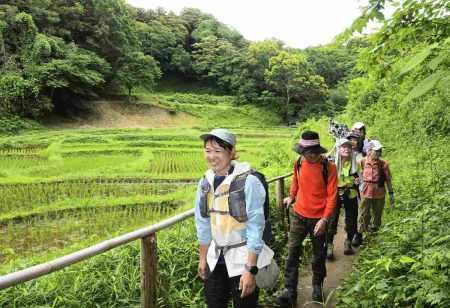
Sawako Iizuka, far left, walks in Kamakura, Kanagawa Prefecture.
17:26 JST, October 28, 2025
Hiking in low-altitude mountains is becoming more popular as people can enjoy nature and scenery while walking along trails. I recently joined a group of hikers to explore the appeal of walking.
In late June, 20 members of the Oiraku Mountaineers Club (OMC) got off the train at Shonan-Machiya Station on the Shonan Monorail in Kamakura, Kanagawa Prefecture. They were planning to walk through residential areas up to Kamakura Central Park, and then hike up and down mountain trails, crossing the Yamasaki Daimine-Ryokuchi woodlands, before descending to JR Kita-Kamakura Station. The course would take about four hours. The OMC has about 600 members, primarily seniors.
The members moved to a nearby park from the Shonan-Machiya Station to prepare for their hike. They re-tied their boots or took off their jackets. Makoto Yoshino, 77, OMC president and the leader for the day, took a roll call. Sawako Iizuka, 57, raised her hand and said “Yes!” as her name was called.
Some hiking paths on the course, shaded by trees like sudajii chinquapin, were gently undulating, but others were slippery because of fallen leaves or steep enough to make you breathe faster.
They soon came across a small pond covered with white flowers along the hiking path. Iizuka pointed her smartphone camera at them and asked people around her the name of the flower. A woman, who was walking ahead, immediately replied. “It’s hangesho (Asian lizard’s tails).”
“You don’t have to go to the top of a high mountain to enjoy flowers or listen to the stories of experienced hikers,” Iizuka said.
No worries about altitude sickness
Iizuka used to enjoy marathons, but started mountain climbing about eight years ago after developing leg problems. However, she could not enjoy mountain climbing. She suffered altitude sickness when she tried to scale Mt. Fuji.
Iizuka also had to abandon her attempt to climb Mt. Yakushi in the Northern Japanese Alps because of altitude sickness, despite having climbed to a hut near the summit. She said that then she began considering enjoying lower mountains, believing that there must be ways to enjoy mountains other than climbing high peaks.
Invited by a friend, she joined the OMC in 2022.
Since then, she has enjoyed climbing low mountains three or four times a month. Having a job makes it difficult for her to take several days off to travel to mountain ranges like the Japanese Alps, but she can easily go out to enjoy nature in lower mountains. Unlike well-known mountains like those in the Japanese Alps, low mountains can offer unexpected challenges such as poorly maintained trails and signposts, she said. The mixture of forest and strip roads can also cause people to easily get lost.
In May, Iizuka enjoyed lodging in a tent at a campground at the base of Mt. Fuji. “We made a campfire, and I learned various things from experienced hikers. I was also able to experience the joy of going to the mountain with friends,” Iizuka said.
Iizuka said the appeal of low-mountain climbing is that she can experience the four seasons, breathe fresh air and refresh herself by just going a small distance away from the city center.
Sport you can enjoy throughout life
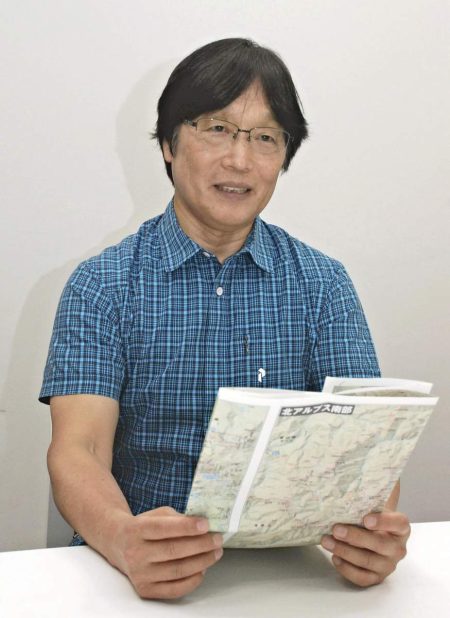
Hiroshi Hagiwara
Hiroshi Hagiwara, a former editor-in-chief of the mountaineering magazine “Yama to Keikoku,” published by Yama-Kei Publishers Co., shared his thoughts on the appeal of walking in the mountains and how to get started. Hagiwara also was a commentator for the NHK TV program to intoduce climbing Japan’s 100 famous mountains.
The following are excerpts from the Yomiuri Shimbun’s interview with him.
***
Hagiwara: First, I recommend trying a hiking course that requires about 5 hours or less a day to complete. You can find some by studying a guidebook about mountain walking.
Researching the course helps prevent you from getting lost in the mountains. You also can learn about the mountain’s history and its flora and fauna, broadening your hiking experience. I want people to start experiencing the joy that mountains can offer before actual climbing.
Low mountains are recommended for beginner hikers or climbers. They don’t require any extensive planning or lodging reservations, allowing you to easily enjoy day trips. Being close to human dwellings, such mountains often feature trails used by locals for years. You also can find things like hokora small shrines on the summits, giving you a taste of regional culture. It is important not to aim for high peaks from the beginning, but to gradually step up to higher mountains, considering factors like climbing hours, difference of elevation and the presence of rocky sections.
To prevent getting lost and becoming stranded in the mountains, use GPS locators on your smartphone to know where you are. Plan a loose schedule, adding a 10%-20% buffer to the estimated hiking course time. Without ample time, you tend to rush on a trail so as not to miss buses or get caught in the dark. Moreover, if you get lost, you are more likely to keep going in the wrong direction rather than turning back.
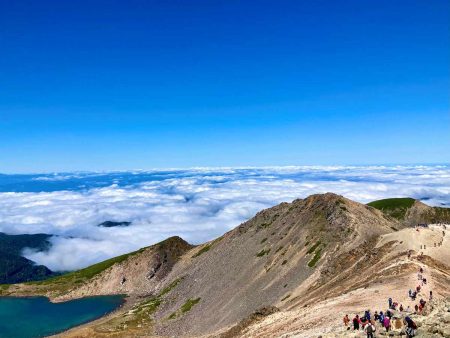
A view from Mt.Norikura
Mountain climbing is a sport that people can engage in throughout life. It is an aerobic exercise, a repetitive movement that improves the body’s ability to use oxygen. By moving your whole body, the sport strengthens legs that easily become weakened and improves your physical condition.
When you age, you can enjoy climbing lower mountains or reduce the time you spend walking each day for walking. You can enjoy the sport even in winter by choosing snow-free mountains. It is best to climb mountains to train yourself, but you can walk up and down slopes in parks or elsewhere when you have no time to go to the mountains.




Most Read
Popular articles in the past 24 hours
-

Moai Statue Shows Lasting Bond Between Miyagi Pref. Town, Easter ...
-

Milano Cortina 2026: Japan’s Oguri Wins Para Snowboard Silver at ...
-
Japan's Defense Ministry: North Korea Appears to Have Fired Balli...
-

National Intelligence Council: Proposed Body Must Be Utilized To ...
-

Aichi Fisheries Cooperatives Use Smart Tech to Farm Triploid Oyst...
-

Teachers Support Students’ Inquiry Learning behind the Scenes
-

Japan's Lower House Passes Budget Proposal; Could Be Delayed in U...
-

CARTOON OF THE DAY (March 14)
Popular articles in the past week
-

Japan Figure Skating Legend Yuzuru Hanyu Is Proud Disaster Surviv...
-

Govt to Utilize ODA for Ensuring Economic Security; Securing Ener...
-
15 Measles Patients Confirmed in Tokyo in Past 6 Days; 1 May Have...
-

Massive Sewer Pipe Found Jutting Out of Highway in Osaka
-

Japan Govt to Tighten Requirements to Receive Permanent Residency...
-
JR Tokai Breaks Ground on Yamanashi Maglev Station; Will Be Part ...
-
Power Outage Forces About 980 Passengers in Yokohama to Walk to T...
-

Beckoning Cats Get Makeover to Fit Modern Lifestyles with Sleek D...
Popular articles in the past month
-

Producer Behind Pop Group XG Arrested for Cocaine Possession
-

Japan PM Takaichi’s Cabinet Resigns en Masse
-

Man Infected with Measles Reportedly Dined at Restaurant in Tokyo...
-

Videos Plagiarized, Reposted with False Subtitles Claiming ‘Ryuky...
-
Japan Figure Skating Legend Yuzuru Hanyu Is Proud Disaster Surviv...
-

iPS Treatments Pass Key Milestone, but Broader Applications Far f...
-

Sanae Takaichi Elected Prime Minister of Japan; Keeps All Cabinet...
-

Nepal Bus Crash Kills 19 People, Injures 25 Including One Japanes...
Top Articles in JN Specialities
-

Step Back in Time at Historical Estate Renovated into a Commercial Complex in Tokyo
-

The Japan News / Weekly Edition (2/20-2/26)
-
‘World’s Oldest Bio-Business’ Is Japan’s Seed Koji Retailing, Mold Used to Make Fermented Products like Sake, Miso, Soy Sauce
-
Donald Keene’s Drinking Buddy and Translator Yukio Kakuchi Pays Tribute to Japanologist’s Lifelong Work
-
“The Tale of Genji” Back-Translation Project Led to Touching Encounter with Keene; Poet Sisters Recount Memories of Scholar at Packed Talk Event in Tokyo
JN ACCESS RANKING
-
Producer Behind Pop Group XG Arrested for Cocaine Possession
-
Japan PM Takaichi’s Cabinet Resigns en Masse
-
Man Infected with Measles Reportedly Dined at Restaurant in Tokyo Station
-
Videos Plagiarized, Reposted with False Subtitles Claiming ‘Ryukyu Belongs to China’; Anti-China False Information Also Posted in Japan
-
Japan Figure Skating Legend Yuzuru Hanyu Is Proud Disaster Survivor and Gold Medalist, Vows to Continue Support Efforts