
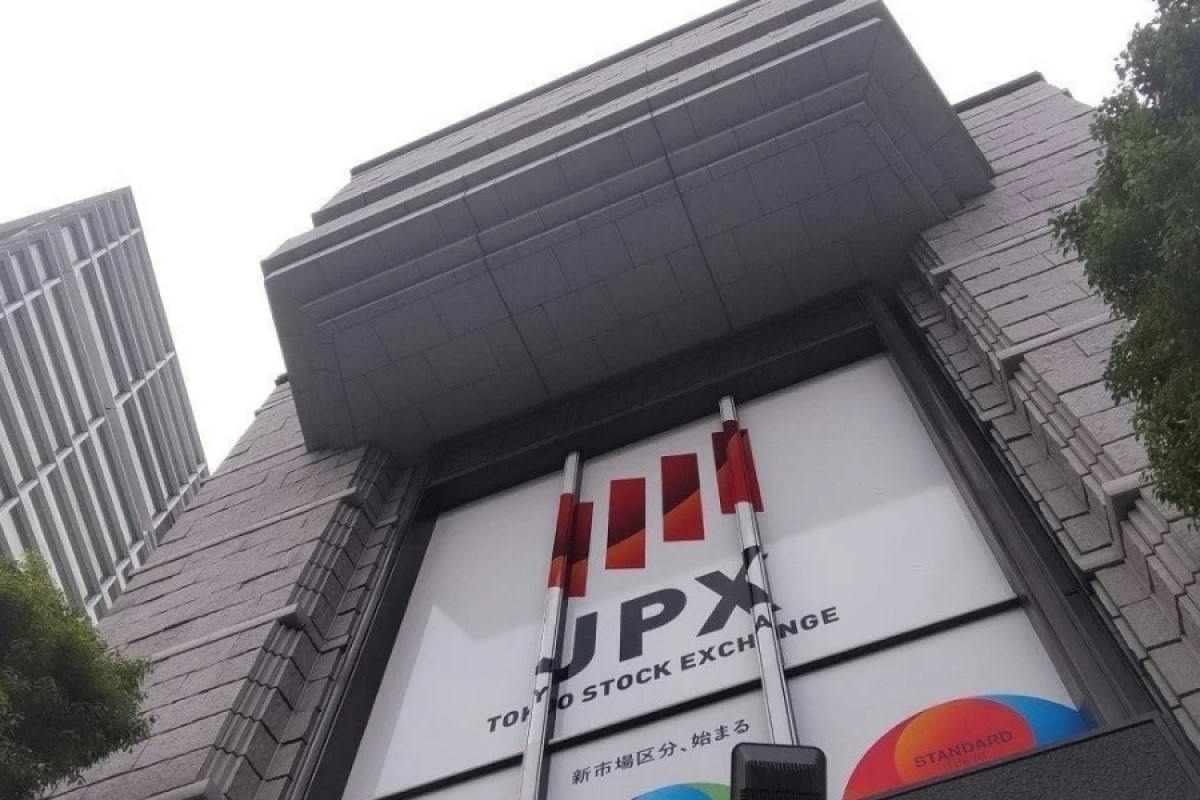
The Tokyo Stock Exchange
12:58 JST, January 7, 2026 (updated at 16:56 JST)
TOKYO, Jan 7 (Reuters) – Japan’s Nikkei share average fell 1% on Wednesday as investors booked profits after a rally that took the gauge to a record close in the previous session.
The Nikkei .N225fell 1.06% to 51,961.98, while the broader Topix .TOPX slipped 0.77% to 3,511.34.
The Nikkei rose 4% in the first two sessions of the year, notching a record closing high on Tuesday.
The market also weighed the impact of China’s ban on exports of dual-use items to the country.
“China’s export ban was a negative cue, but overall, investors sold stocks as the market rose sharply in the past two sessions,” said Naoki Fujiwara, senior fund manager at Shinkin Asset Management.
“But the money was circulating. The selloff was focused on large stocks, and smaller shares were firm.”
The Topix’s small-cap index .TOPXS edged up 0.39%. Some 55% stocks on the Tokyo Stock Exchange’s (TSE) prime market rose, while 41% fell and 3% traded flat.
China has banned exports of dual-use items to Japan that can be used for military purposes, according to its Commerce Ministry statement on Tuesday.
Dual-use items are goods, software or technologies that have both civilian and military applications, including certain rare earth elements that are essential for making drones and chips.
Automakers Toyota Motor 7203.Tand Honda Motor 7267.T fell more than 2% each.
Shares of Toyo Engineering6330.T, a developer of offshore rare-earth extraction technology, surged almost 20% to an exchange-imposed daily limit high of 4,285 yen on Wednesday.
On the other hand, chip-testing equipment maker Advantest 6857.T fell 4.4% to drag down the Nikkei the most.
Uniqlo brand owner Fast Retailing 9983.T declined 2.74%.
Hisamitsu Pharmaceutical 4530.Talso surged 19.23% to a daily limit high of 6,200 yen after the company said it was planning to take the company private in a management buyout for nearly 400 billion yen ($2.55 billion).






Most Read
Popular articles in the past 24 hours
-

TEPCO's Rebuilding Still Far from Complete; Effects of 2011 Fukus...
-
78% Interested in Reconstruction from 2011 Disaster; Concern High...
-
2 Mt. Fuji Hikers Identified as Police Warn People Not to Climb i...
-

Japan’s Nikkei Stock Average Rise Lifted by AI Stocks, Easing Con...
-

Samurai Japan Routs Perky Czech Republic Team After Shuto, Muraka...
-

15 Years since Great East Japan Earthquake: How Can Affected Area...
-

Italy Shocks U.S. in World Baseball Classic Pool Game
-

Parents in Japan to Get Instagram Notifications When Teens Repeat...
Popular articles in the past week
-

Ibaraki Pref.'s 1st Foreign Bus Driver Hired in Tsukuba
-
Govt to Utilize ODA for Ensuring Economic Security; Securing Ener...
-

Nippon Life Insurance's U.S. Arm Sues OpenAI Over Legal Assistanc...
-

Amid Strait of Hormuz Blockade, Shipping Companies Scramble to Ge...
-
Japan Govt Survey Finds Just 10% of Workers Want Working Hours to...
-
Japan's 2nd Round of U.S. Investments May Be Worth Over $100 Bill...
-

Imperial Family Watches World Baseball Classic Game Against Austr...
-

Beckoning Cats Get Makeover to Fit Modern Lifestyles with Sleek D...
Popular articles in the past month
-

Producer Behind Pop Group XG Arrested for Cocaine Possession
-

Japan PM Takaichi’s Cabinet Resigns en Masse
-

Man Infected with Measles Reportedly Dined at Restaurant in Tokyo...
-

Videos Plagiarized, Reposted with False Subtitles Claiming ‘Ryuky...
-

iPS Treatments Pass Key Milestone, but Broader Applications Far f...
-

Sanae Takaichi Elected Prime Minister of Japan; Keeps All Cabinet...
-

Nepal Bus Crash Kills 19 People, Injures 25 Including One Japanes...
-
South Korea Tightens Rules on Foreigners Buying Homes in Seoul Me...
Top Articles in News Services
-
Survey Shows False Election Info Perceived as True
-
Japan’s Nikkei Stock Average Falls as US-Iran Tensions Unsettle Investors (UPDATE 1)
-
Japan’s Nikkei Stock Average Touches 58,000 as Yen, Jgbs Rally on Election Fallout (UPDATE 1)
-
Japan’s Nikkei Stock Average Rises on Tech Rally and Takaichi’s Spending Hopes (UPDATE 1)
-
Japan to Ban Use of Power Banks on Airplanes
JN ACCESS RANKING
-
Producer Behind Pop Group XG Arrested for Cocaine Possession
-
Japan PM Takaichi’s Cabinet Resigns en Masse
-
Man Infected with Measles Reportedly Dined at Restaurant in Tokyo Station
-
Videos Plagiarized, Reposted with False Subtitles Claiming ‘Ryukyu Belongs to China’; Anti-China False Information Also Posted in Japan
-
iPS Treatments Pass Key Milestone, but Broader Applications Far from Guaranteed