
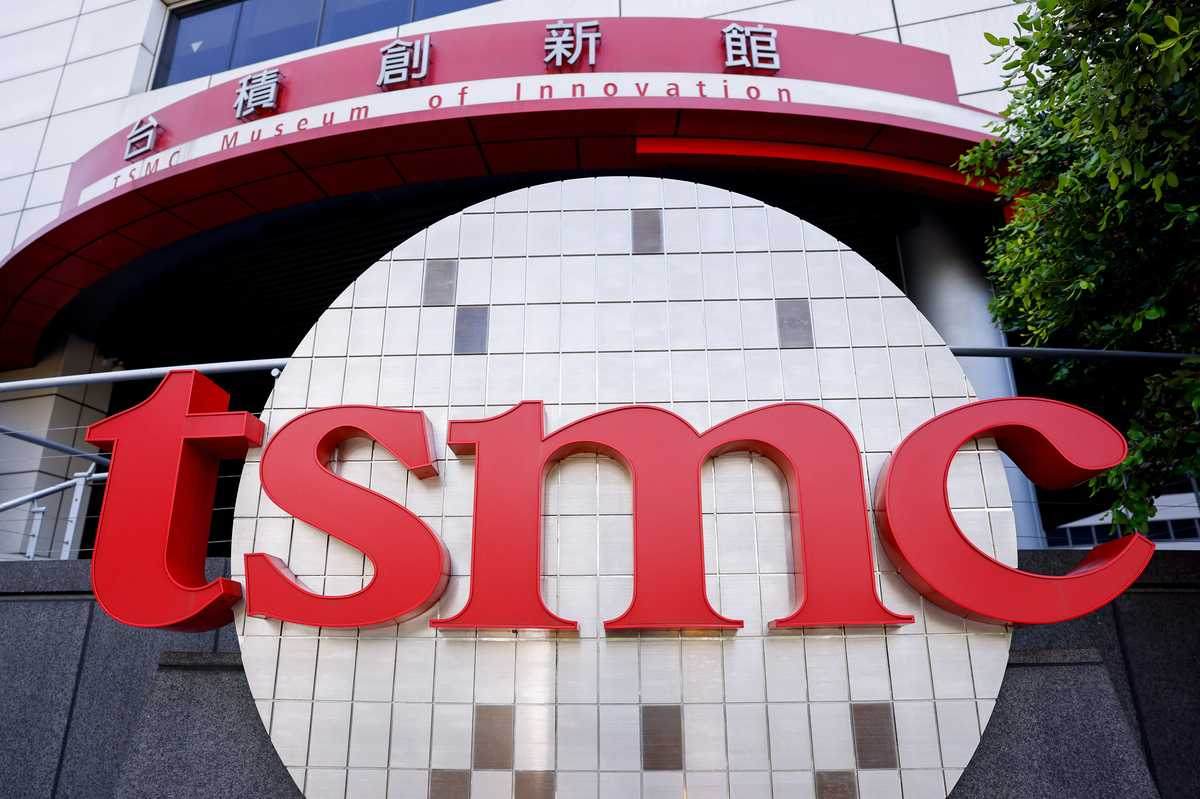
The TSMC logo is displayed on a building in Hsinchu, Taiwan April 15, 2025.
13:35 JST, June 3, 2025
HSINCHU, Taiwan, June 3 (Reuters) – Taiwan’s TSMC 2330.TW said on Tuesday that U.S. tariffs are having some impact on the company but demand for artificial intelligence (AI) remains strong and continues to outpace supply.
U.S. President Donald Trump’s trade policies have created much uncertainty for the global chip industry and TSMC, the top producer of the world’s most advanced semiconductors whose customers include Apple AAPL.O and Nvidia NVDA.O.
Chief Executive C.C. Wei, speaking at the company’s annual shareholders meeting in the northern Taiwanese city of Hsinchu, said they have not seen any changes in customer behavior due to tariff uncertainty and the situation may become clearer in coming months.
“Tariffs do have some impact on TSMC, but not directly. That’s because tariffs are imposed on importers, not exporters. TSMC is an exporter. However, tariffs can lead to slightly higher prices, and when prices go up, demand may go down,” he said.
“If demand drops, TSMC’s business could be affected. But I can assure you that AI demand has always been very strong and it’s consistently outpacing supply.”
In April, the company, the world’s largest contract chipmaker, gave a bullish outlook for the year on robust demand for AI applications.
In a sign of the strength of demand, Wei said TSMC’s job is to provide its customers “with enough chips, and we’re working hard on that. ‘Working hard’ means it’s still not enough.”
Asked about media reports that the company has been looking at building chip factories in the United Arab Emirates, Wei said TSMC has no plans for any such plants in the Middle East.
Wei was also asked about TSMC’s suspension of shipments to China-based chip designer Sophgo after its chip matched the one found on the Huawei AI processor, a Chinese company that has been the focus of sweeping U.S. government curbs.
He said the company works closely with the Taiwan and U.S. governments to comply with legal and regulatory requirements.
TSMC also faces broader political risk as China steps up military pressure on democratically and separately governed Taiwan, which Beijing views as “sacred” Chinese territory.
“If something happens that we don’t want to happen, it’s a matter for governments, not for TSMC alone,” Wei said, responding to a question about a possible crisis in the Taiwan Strait.









Most Read
Popular articles in the past 24 hours
-
JR Tokai Breaks Ground on Yamanashi Maglev Station; Will Be Part ...
-

Milano Cortina 2026: Japan’s Alpine Skier Muraoka Extends P...
-
Rising Kabuki Star Works to Ensure Deaf Audience's Enjoyment of P...
-

Lady Bess: Iroha Okuda, Mayuko Kominami Discuss Performing Elizab...
-
Japan Considering Taking Part in U.S. ‘Golden Dome’ Defense Syste...
-

Trump Discourages Iranian Soccer Team from Attending the World Cu...
-
Driver Dies in Collision with Express Train at Crossing in Mito; ...
-
46 Evacuated from UAE, Oman on Japanese Govt-chartered Flight
Popular articles in the past week
-

Japan Figure Skating Legend Yuzuru Hanyu Is Proud Disaster Surviv...
-
Nippon Life Insurance's U.S. Arm Sues OpenAI Over Legal Assistanc...
-
Govt to Utilize ODA for Ensuring Economic Security; Securing Ener...
-
Massive Sewer Pipe Found Jutting Out of Highway in Osaka
-
15 Measles Patients Confirmed in Tokyo in Past 6 Days; 1 May Have...
-
Japan Govt to Tighten Requirements to Receive Permanent Residency...
-

Beckoning Cats Get Makeover to Fit Modern Lifestyles with Sleek D...
-
Japan Govt Survey Finds Just 10% of Workers Want Working Hours to...
Popular articles in the past month
-

Producer Behind Pop Group XG Arrested for Cocaine Possession
-

Japan PM Takaichi’s Cabinet Resigns en Masse
-

Man Infected with Measles Reportedly Dined at Restaurant in Tokyo...
-

Videos Plagiarized, Reposted with False Subtitles Claiming ‘Ryuky...
-
Japan Figure Skating Legend Yuzuru Hanyu Is Proud Disaster Surviv...
-

iPS Treatments Pass Key Milestone, but Broader Applications Far f...
-

Sanae Takaichi Elected Prime Minister of Japan; Keeps All Cabinet...
-

Nepal Bus Crash Kills 19 People, Injures 25 Including One Japanes...
Top Articles in News Services
-
Survey Shows False Election Info Perceived as True
-
Japan’s Nikkei Stock Average Falls as US-Iran Tensions Unsettle Investors (UPDATE 1)
-
Japan’s Nikkei Stock Average Rises on Tech Rally and Takaichi’s Spending Hopes (UPDATE 1)
-
Japan to Ban Use of Power Banks on Airplanes
-

North Korea Unveils Image of Kim Jong Un’s Teenage Daughter Firing Rifle
JN ACCESS RANKING
-
Producer Behind Pop Group XG Arrested for Cocaine Possession
-
Japan PM Takaichi’s Cabinet Resigns en Masse
-
Man Infected with Measles Reportedly Dined at Restaurant in Tokyo Station
-
Videos Plagiarized, Reposted with False Subtitles Claiming ‘Ryukyu Belongs to China’; Anti-China False Information Also Posted in Japan
-
Japan Figure Skating Legend Yuzuru Hanyu Is Proud Disaster Survivor and Gold Medalist, Vows to Continue Support Efforts