
Autumn in Shikoku: Enjoy Trip to Crystal-Clear Waters of Kochi Pref. River
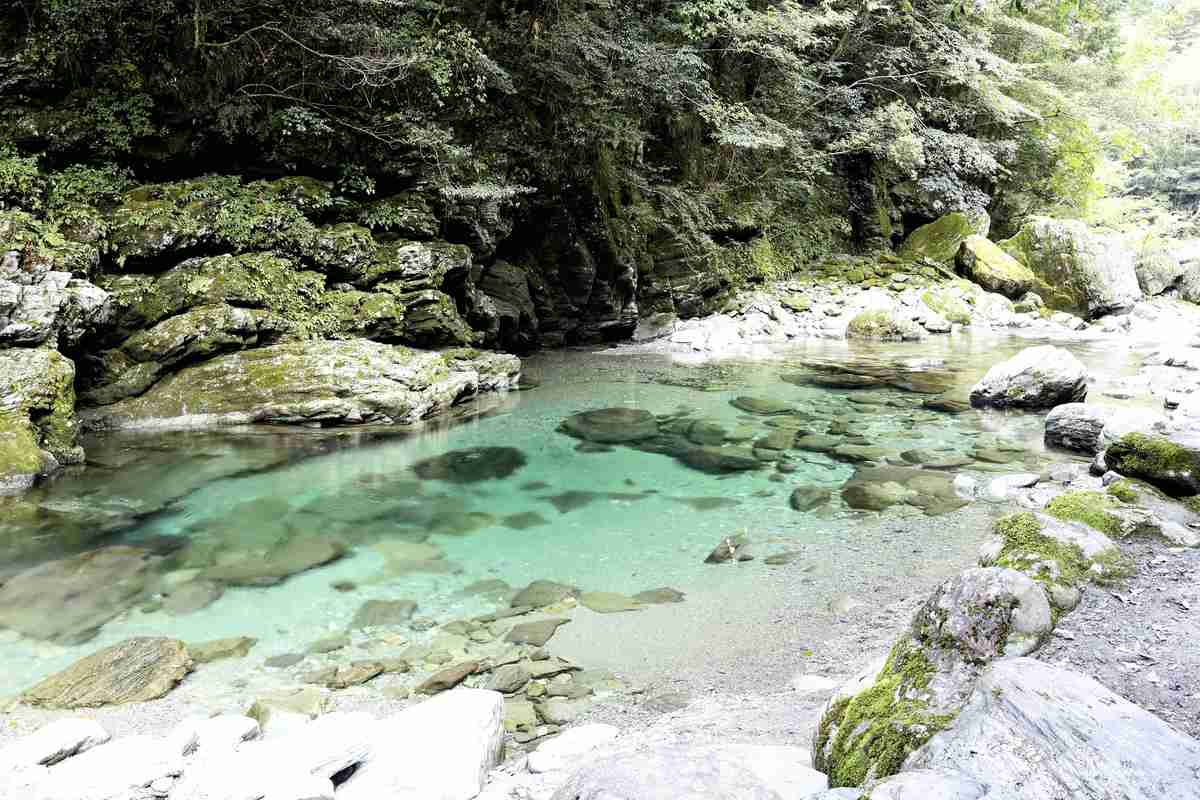
Suishobuchi basin or “Crystal Deep” has particularly clear blue water in Niyodogawa, Kochi Prefecture.
11:30 JST, November 8, 2025
NIYODOGAWA, Kochi — As the scorching summer gives way to the pleasant autumn season, now is a good time to experience the nature, culture, history and traditions of the Shikoku region.
Thanks to its highly transparent water, the Niyodo River in Kochi Prefecture is known as “Niyodo Blue.” One place where you can experience the purity of the river is Yasui Valley in the town of Niyodogawa in the prefecture. The gentle stream of Suishobuchi, also known as “Crystal Deep,” has a particularly striking blue color. Time seems to slow down there.
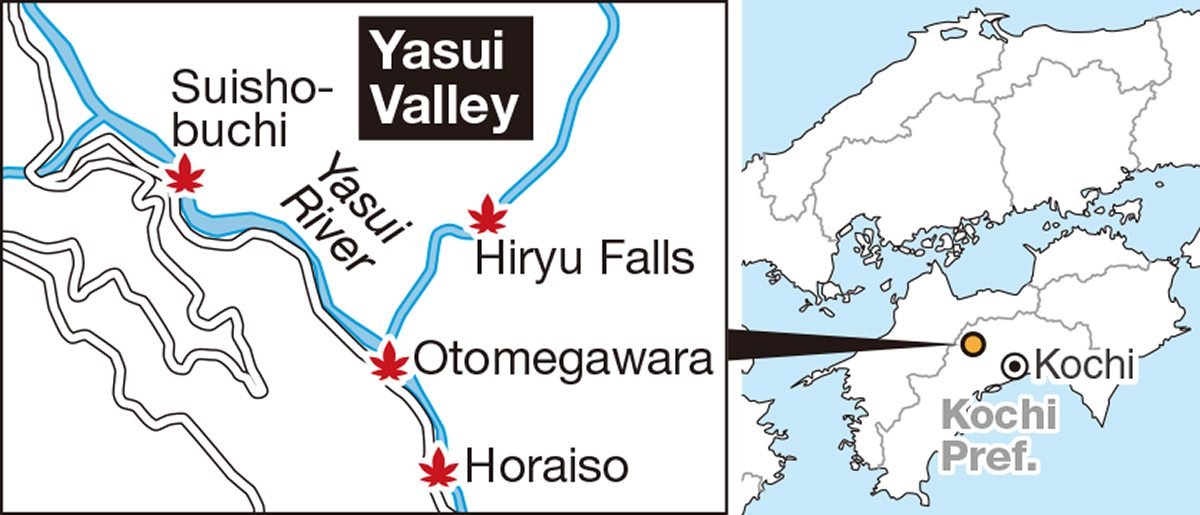
Yasui River, a tributary of the Niyodo River’s upper reaches, flows through the valley.
“Suishobuchi bustles with tourists. In summer, people can have fun playing in the river and enjoy viewing the autumn leaves,” said Chise Takemoto, an official from the Niyodogawa Town Tourism Association.
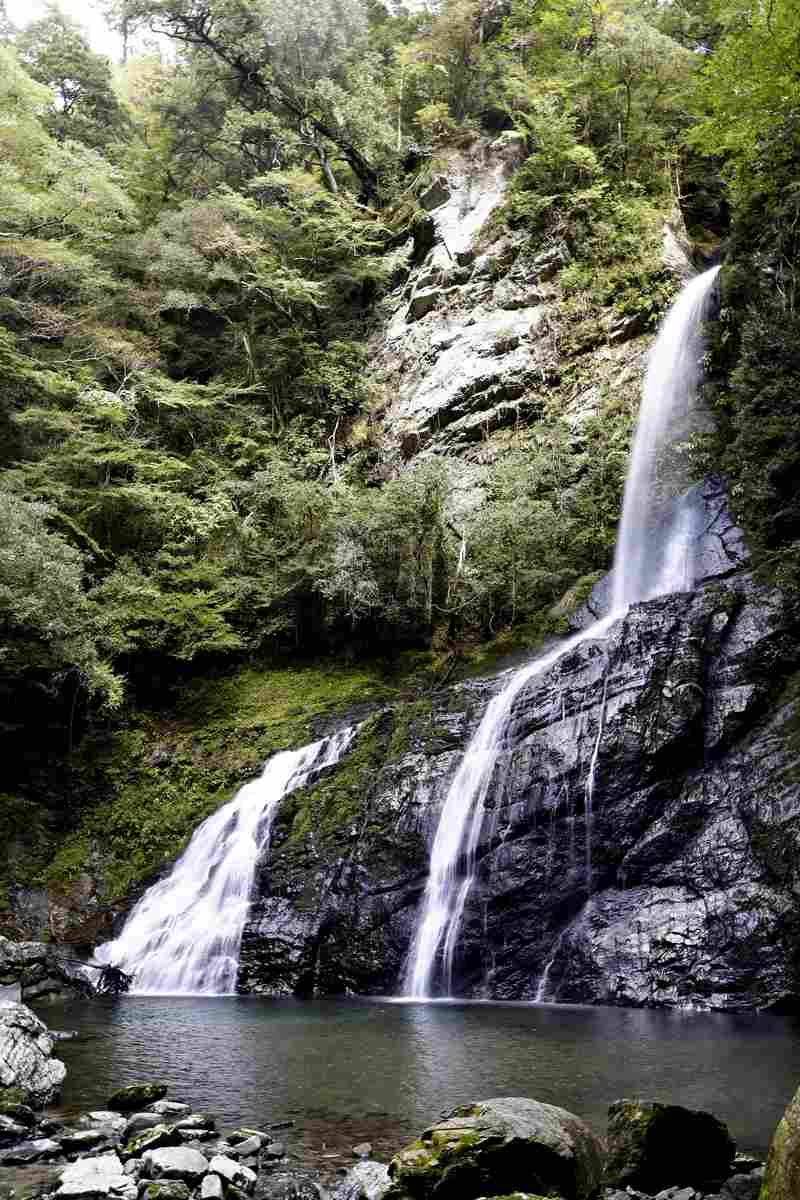
Hiryu Falls, meaning “Flying dragon falls,” gives off a feeling of power.
The Suishobuchi basin is located upstream within the gorge. “The water becomes clearer and brighter in winter when rainfall decreases and river volumes are reduced,” Takemoto said.
Recently, visitors have been seen sitting on the riverbank at Suishobuchi, taking their time admiring the Niyodo Blue waters.
The valley is also home to several waterfalls, including Hiryu Falls, which is a 10-minute walk from Otomegawara riverside near the parking lot in the south. Its twisting form is reminiscent of a flying dragon, or hiryu in Japanese. Water cascades down the waterfall and hits the rocks; it splits and flows into the waters below with a roaring sound. Visitors are sure to be impressed by the powerful waterfall amid the cool air.
Local specialties that can be enjoyed in the valley include soba noodles made with sencha or hojicha green tea, served at lunch at Horaiso, a restaurant and ryokan inn. Both teas are produced in the town. The noodles, handmade by Horaiso manager Ryu Nakabayashi, 35, using water from the valley, are fresh and have a distinctively smooth texture.
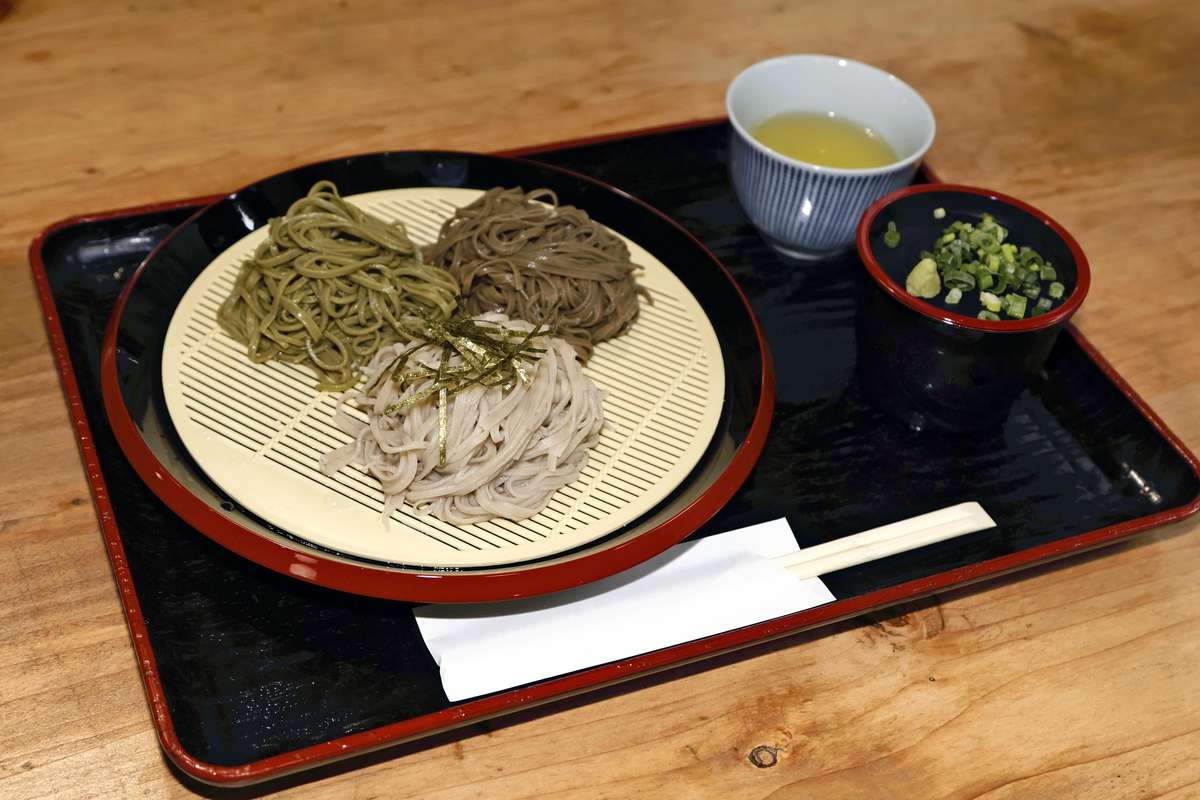
A set of three kinds of soba served at Horaiso
A set menu of three varieties of soba, including regular soba, is available for ¥1,380. “You can enjoy the aroma of the soba more by eating it without dipping it in the broth,” Nakabayashi said.
During the peak of the autumn foliage season around mid-November, visitors can observe the contrast of red and green leaves.
“The sight of autumn leaves flowing down the river is beautiful. I hope people will enjoy the scenery while walking along the path,” Takemoto said.
Boat ride offers view of leaves reflected on pond’s surface
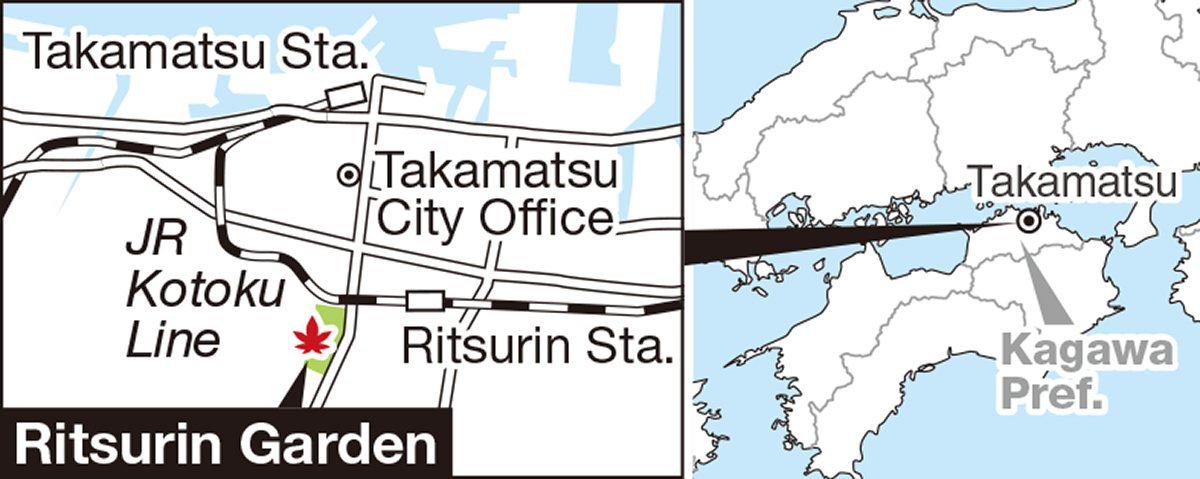
TAKAMATSU — The Ritsurin Garden, a national scenic spot, is about a 10-minute drive from JR Takamatsu Station. Covering about 75 hectares, it features lush greenery and Mt. Shiun in the background.
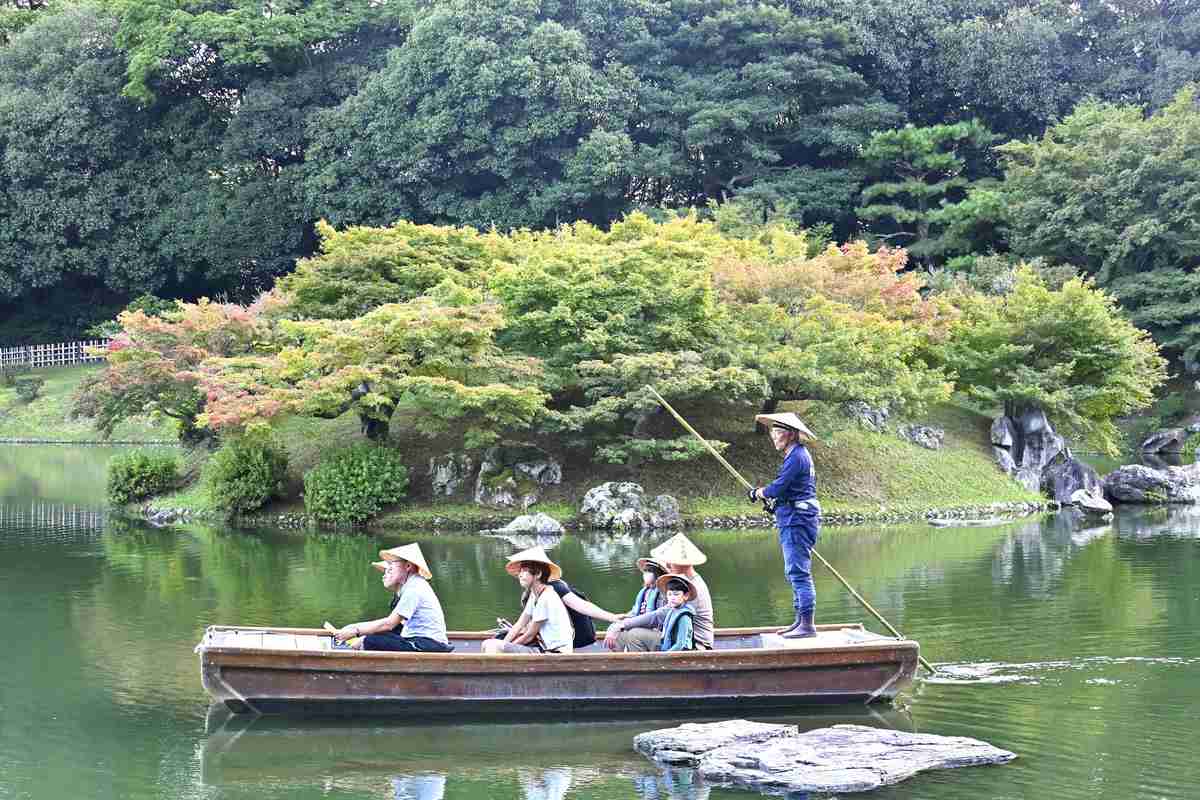
A traditional wooden Japanese boat travels on Nanko pond with autumn leaves in the background.
It was built in the late 16th century as a garden for a powerful local clan. It later underwent a series of renovations as a garden of daimyo feudal lords and became a prefectural park 150 years ago.
The walking tour of the park, which takes between 40 minutes and 1 hour, is especially popular among visitors. Another enjoyable activity is riding a traditional wooden Japanese boat on Nanko pond in the garden. Visitors can enjoy an about 30-minute boat trip while wearing wicker hats.
“This boat is the only one that allows you to view the autumn leaves reflected on the mirror-like surface of the pond up close. It’s a different experience than seeing them from the ground,” said 73-year-old boatman Ryuichiro Niwa.
The lake will be illuminated from Nov. 21 to 30. Rides cost ¥850 for high school students and older visitors, and ¥420 for junior high school students and younger visitors.







Most Read
Popular articles in the past 24 hours
-

Japan Train Company to Increase Fares, Including in Tokyo Metropo...
-
Hawaii Museum on Tsunami Including Japan's 2011 Disaster at Risk ...
-

Japan Govt to Tighten Requirements to Receive Permanent Residency...
-

Tail of ANA Plane Struck Runway During Landing in Houston; No Inj...
-

Samurai Japan Holds First Practice in Miami; Team Will Play again...
-

Medical Care at Home and Disasters: Ensure Systems to Provide Con...
-

Iran Targets Busiest International Airport as Top UN Body Demands...
-

Japan to Face Venezuela in World Baseball Classic Quarterfinals
Popular articles in the past week
-

Japan Figure Skating Legend Yuzuru Hanyu Is Proud Disaster Surviv...
-

Nippon Life Insurance's U.S. Arm Sues OpenAI Over Legal Assistanc...
-

Ibaraki Pref.'s 1st Foreign Bus Driver Hired in Tsukuba
-
Govt to Utilize ODA for Ensuring Economic Security; Securing Ener...
-
Massive Sewer Pipe Found Jutting Out of Highway in Osaka
-

Amid Strait of Hormuz Blockade, Shipping Companies Scramble to Ge...
-
Beckoning Cats Get Makeover to Fit Modern Lifestyles with Sleek D...
-
Japan Govt Survey Finds Just 10% of Workers Want Working Hours to...
Popular articles in the past month
-

Producer Behind Pop Group XG Arrested for Cocaine Possession
-

Japan PM Takaichi’s Cabinet Resigns en Masse
-

Man Infected with Measles Reportedly Dined at Restaurant in Tokyo...
-

Videos Plagiarized, Reposted with False Subtitles Claiming ‘Ryuky...
-

iPS Treatments Pass Key Milestone, but Broader Applications Far f...
-

Sanae Takaichi Elected Prime Minister of Japan; Keeps All Cabinet...
-
Japan Figure Skating Legend Yuzuru Hanyu Is Proud Disaster Surviv...
-

Nepal Bus Crash Kills 19 People, Injures 25 Including One Japanes...
Top Articles in Features
-
Tokyo’s New Record-Breaking Fountain Named ‘Tokyo Aqua Symphony’
-
High-Hydration Bread on the Rise, Seeing Increase in Specialty Shops, Recipe Searches
-
Japanese Students Use Traditional Pickle to Create Novel Wagashi Confectionery
-
Heirs to Kyoto Talent: Craftsman Works to Keep Tradition of ‘Kinran’ Brocade Alive Through Initiatives, New Creations
-

My Spendthrift Mother Constantly Asks Me for Money
JN ACCESS RANKING
-
Producer Behind Pop Group XG Arrested for Cocaine Possession
-
Japan PM Takaichi’s Cabinet Resigns en Masse
-
Man Infected with Measles Reportedly Dined at Restaurant in Tokyo Station
-
Videos Plagiarized, Reposted with False Subtitles Claiming ‘Ryukyu Belongs to China’; Anti-China False Information Also Posted in Japan
-
iPS Treatments Pass Key Milestone, but Broader Applications Far from Guaranteed