
The Art of Making ‘Japan Blue’; Founded in 1914, Nogawa Senshoku Kogyo Continues Making Dye for Popular Color Using Traditional Techniques
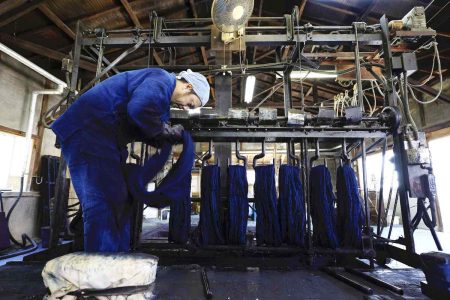
A craftsman soaks bundles of thread in dye beneath the floorboards, where they gradually take on rich indigo hues.
16:29 JST, December 15, 2025
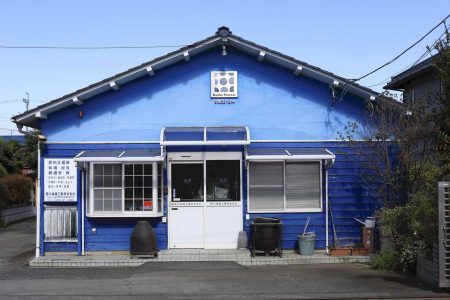
An exterior view of Nogawa Senshoku Kogyo’s head office and factory
HANYU, Saitama — Thirteen jars of indigo dye are lined up beneath the factory floor. Each jar contains dye that has undergone a different fermentation period and varies in dyeing strength.
An artisan steadily and quietly repeats the task of dipping bundles of thread into the jars at his feet and pulling them back up. “I’m proceeding with the work while carefully examining the dyeing degree and color tone to ensure the indigo permeates every corner,” he said.
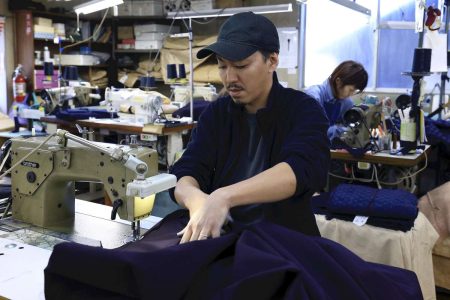
A worker sews fabrics made from dyed threads with a sewing machine.
The area of Hanyu in Saitama Prefecture is said to have been renowned for indigo dyeing since the Edo period (1603-1867), producing work clothes for farmers. In 2008, the dyeing method in the area was trademarked as “Bushu Sho Aizome,” or Bushu area’s true indigo dyeing. Founded in 1914, Nogawa Senshoku Kogyo continues to use these traditional techniques.
The dye is made from sukumo (naturally fermented indigo leaves), fusuma (wheat husks) and lime, and does not contain any chemical dyes. When the bundles of dyed thread are lifted out, the pigment reacts with the oxygen in the air and turns indigo blue. The simple, deep hues created by the varying shades of indigo are called “Japan Blue” and are popular overseas.
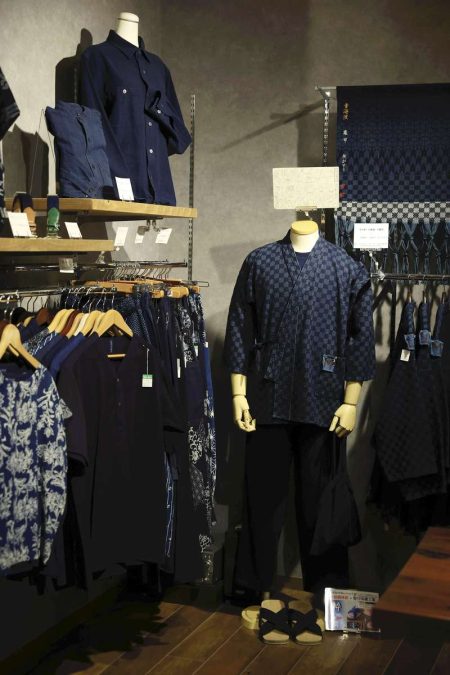
A store owned by Nogawa Senshoku Kogyo near the head office sells indigo-dyed goods.
Another notable aspect of the method is the “pre-dyeing” process, in which the threads are dyed before weaving, rather than afterward. “The dye coating increases the threads’ strength, and hand-dyeing creates a unique striped pattern on the fabric called Aojima (blue stripes),” said Yuki Nogawa, 35, managing director of the firm, explaining the appeal of the dyeing method.
A kendo uniform called Bushu ichi, which is made with fabric that offers both suppleness and strength, is the company’s highly regarded original brand. When sales of kendo uniforms plummeted in 2020 due to the coronavirus pandemic, the firm seized the opportunity to diversify its product line. It developed indigo-dyed masks, slippers and other items, overcoming the crisis. The firm now offers hundreds of products, including bedding, dresses and stoles.
Hundreds of indigo dyeing workshops are said to have once operated in the area around Hanyu. Today, however, the city only has three. Nogawa reaffirms his resolve to preserve the local industry.
“While preserving traditional techniques, we aim to continue developing products closely tied to daily life,” he said.
Nogawa Senshoku Kogyo
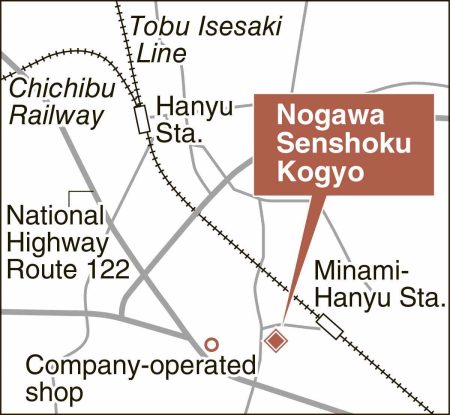
Address: 878 Sukage, Hanyu, Saitama Prefecture. The company-owned shop, which sells indigo-dyed products, is in 471-4 Sukage, Hanyu.
Access: The shop is five minutes by car from Hanyu Station on the Tobu Isesaki Line or a 25-minute walk from Minami-Hanyu Station on the same line.
Hours:The shop is open from 10:30 a.m. to 6 p.m. from Friday to Sunday. It also has an online store.


Related Tags


Most Read
Popular articles in the past 24 hours
-
78% Interested in Reconstruction from 2011 Disaster; Concern High...
-

Japan’s Nikkei Stock Average Rise Lifted by AI Stocks, Easing Con...
-

15 Years since Great East Japan Earthquake: How Can Affected Area...
-
2 Mt. Fuji Hikers Identified as Police Warn People Not to Climb i...
-

Parents in Japan to Get Instagram Notifications When Teens Repeat...
-

CARTOON OF THE DAY (March 11)
-

Japan’s Mitsui O.S.K. Lines Container Ship Anchored in Persian Gu...
-
Tokyo Conference 2026 Opens, Discusses Rebuilding Multilateralism...
Popular articles in the past week
-

Ibaraki Pref.'s 1st Foreign Bus Driver Hired in Tsukuba
-

Nippon Life Insurance's U.S. Arm Sues OpenAI Over Legal Assistanc...
-
Govt to Utilize ODA for Ensuring Economic Security; Securing Ener...
-

Amid Strait of Hormuz Blockade, Shipping Companies Scramble to Ge...
-
Japan Govt Survey Finds Just 10% of Workers Want Working Hours to...
-
Japan's 2nd Round of U.S. Investments May Be Worth Over $100 Bill...
-
Beckoning Cats Get Makeover to Fit Modern Lifestyles with Sleek D...
-

Imperial Family Watches World Baseball Classic Game Against Austr...
Popular articles in the past month
-

Producer Behind Pop Group XG Arrested for Cocaine Possession
-

Japan PM Takaichi’s Cabinet Resigns en Masse
-

Man Infected with Measles Reportedly Dined at Restaurant in Tokyo...
-

Videos Plagiarized, Reposted with False Subtitles Claiming ‘Ryuky...
-

iPS Treatments Pass Key Milestone, but Broader Applications Far f...
-

Sanae Takaichi Elected Prime Minister of Japan; Keeps All Cabinet...
-

Nepal Bus Crash Kills 19 People, Injures 25 Including One Japanes...
-
South Korea Tightens Rules on Foreigners Buying Homes in Seoul Me...
Top Articles in Features
-
Tokyo’s New Record-Breaking Fountain Named ‘Tokyo Aqua Symphony’
-
High-Hydration Bread on the Rise, Seeing Increase in Specialty Shops, Recipe Searches
-
Japanese Students Use Traditional Pickle to Create Novel Wagashi Confectionery
-
Heirs to Kyoto Talent: Craftsman Works to Keep Tradition of ‘Kinran’ Brocade Alive Through Initiatives, New Creations
-
My Spendthrift Mother Constantly Asks Me for Money
JN ACCESS RANKING
-
Producer Behind Pop Group XG Arrested for Cocaine Possession
-
Japan PM Takaichi’s Cabinet Resigns en Masse
-
Man Infected with Measles Reportedly Dined at Restaurant in Tokyo Station
-
Videos Plagiarized, Reposted with False Subtitles Claiming ‘Ryukyu Belongs to China’; Anti-China False Information Also Posted in Japan
-
iPS Treatments Pass Key Milestone, but Broader Applications Far from Guaranteed