
Kyoto: Retired Steam Locomotives Collected Show Off Rich Railway History as Part of Japanese Culture
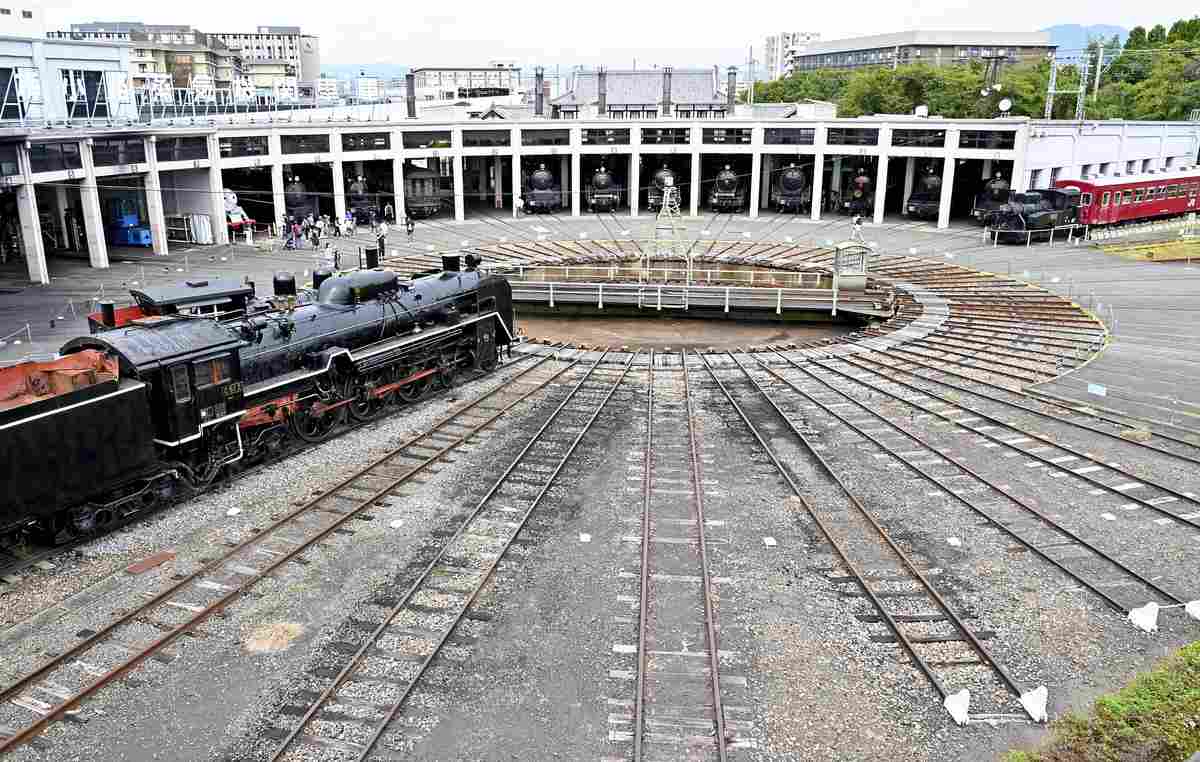
The fan-shaped steam locomotive roundhouse at the Kyoto Railway Museum in Shimogyo Ward, Kyoto
11:19 JST, November 22, 2025
KYOTO — The Umekoji locomotive shed located within the Kyoto Railway Museum in Shimogyo Ward, Kyoto, is the oldest surviving reinforced concrete locomotive shed in Japan. This area was a key transportation hub in the early 20th century, and many steam locomotives passed through Umekoji.
Today, majestic and nostalgic steam locomotives, whose operations were taken over by electric and diesel trains years ago, are preserved and displayed side by side, entertaining visitors and showcasing the thriving railway culture of the past.
The 20 famous steam locomotives, seen at the end of the sidetracks radiating out from the roundhouse’s turntable, include: Japan’s most famous model, the D51; the C62 representing Japan’s passenger steam locomotives; and the “Yoshitsune,” imported from the United States in 1880. Their lustrous black bodies shine in the shed.
The shed was established as a railway depot in 1914 when freight operations were separated from Kyoto Station and the former Umekoji Station, now known as Kyoto Freight Station, was built as a dedicated freight terminal. Before World War II, the fan-shaped roundhouse served as a vital hub for expanding railway transport capacity, equipped with workshops for repairing locomotives.
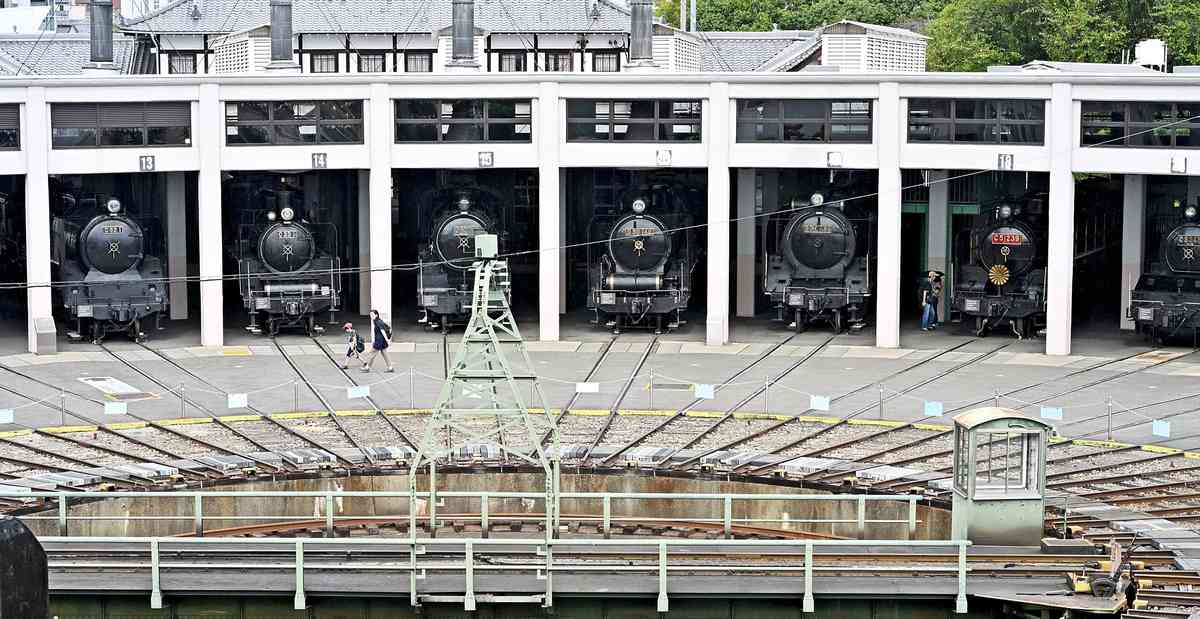
Steam locomotives that were active from the late 19th century to the 20th century on display side by side
Immediately after the end of the war, this depot housed up to 85 steam locomotives, which transported passengers and freight on major routes such as the JR Tokaido and Sanin lines.
However, over the next few decades, steam locomotives were seen less and less on railway tracks due to the modernization of traction power and the rise of diesel locomotives and electric trains.
There were many calls for retired steam locomotives to be preserved.
You may also like to read
Hyogo: Kobe Muslim Mosque in Japan Symbolizes Coexistence with People with Different Religious, Cultural Backgrounds Okayama: Red Bricks, Green Ivy from Old Textile Factory Evoke Kurashiki’s History5The Japanese National Railways, JR Group’s predecessor, modified the depot into a museum for preserving steam locomotives since it had ample maintenance facilities and was close to tourist destinations in Kyoto. The Umekoji Steam Locomotive Museum opened in 1972 and was home to a collection of locomotives from all across the country.
The museum was merged with the Modern Transportation Museum, which was formerly located in Osaka and closed in 2014, to become what is now the Kyoto Railway Museum.
Curator Kenichiro Okamoto said: “Umekoji’s history is railway history itself. This museum is in the perfect location for visitors to experience the charm and complexity of railways firsthand.”
The shed is a designated National Important Cultural Property and is also an active locomotive depot for the West Japan Railway Co. Four of its steam locomotives are preserved in a drivable condition, running daily on a rotating basis within the Kyoto Railway Museum grounds.
Visitors can enjoy a one-kilometer round-trip journey in passenger cars pulled by these steam locomotives. After the final run of the day, visitors can also watch the locomotive moving onto the turntable in the center of the shed while billowing white smoke, and dynamically spinning.
Next spring, the Kyoto Railway Museum will celebrate its 10th anniversary. It is a popular tourist spot in the Kansai region, attracting 700,000 to 800,000 visitors annually.
“Our popularity is proof that railways are seen as part of Japanese culture. We want to remain at the center of railway culture for the next 50 and even 100 years,” said museum director Toshihiro Matsuoka.

Streetcars as places of relaxation
Japan’s first streetcar began operating in Kyoto in 1895. Near the Kyoto Railway Museum, eight cars, which once ran through Kyoto and are nicknamed “Chin Chin Densha,” are preserved. The streetcars used to be the main means of transport for local residents and the nickname comes from the sound of the bells they rang while in operation.
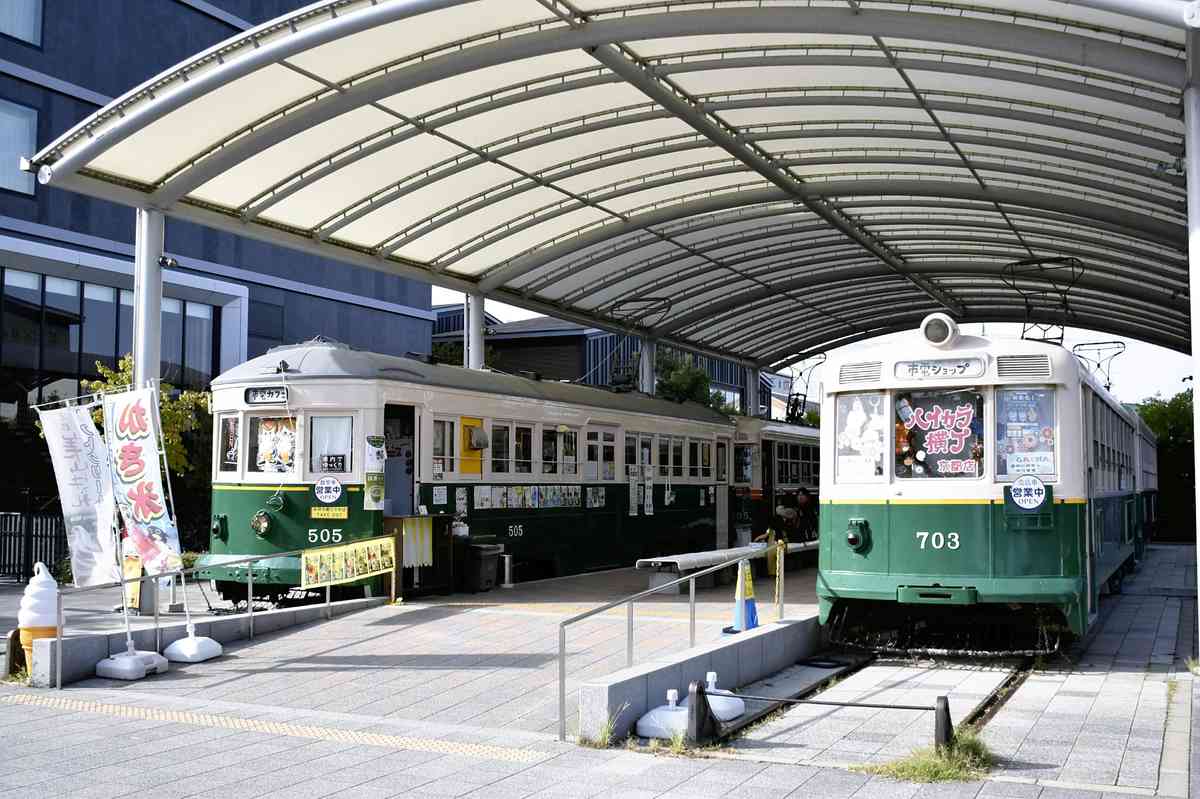
Retired streetcars are used as a cafe and a rest area.
At their peak, 17 streetcar lines crisscrossed the city, but all were discontinued by 1978. Four cars that actually ran in the city are on display side by side at the Shiden Hiroba (Street car square) in Umekoji Park, with each car serving as a cafe, souvenir shop and rest area.
On weekends and holidays, a wooden streetcar built in the early 20th century operates along a route in the park (a distance of about 210 meters each way). It is powered by lithium-ion batteries produced by the local battery giant GS Yuasa Corp. One-way rides cost ¥150 and are free for preschool children.
“We hope visitors will experience the history of Kyoto, the birthplace of the streetcar [in Japan],” a city official said.

Parfait filled with Kyoto sweets
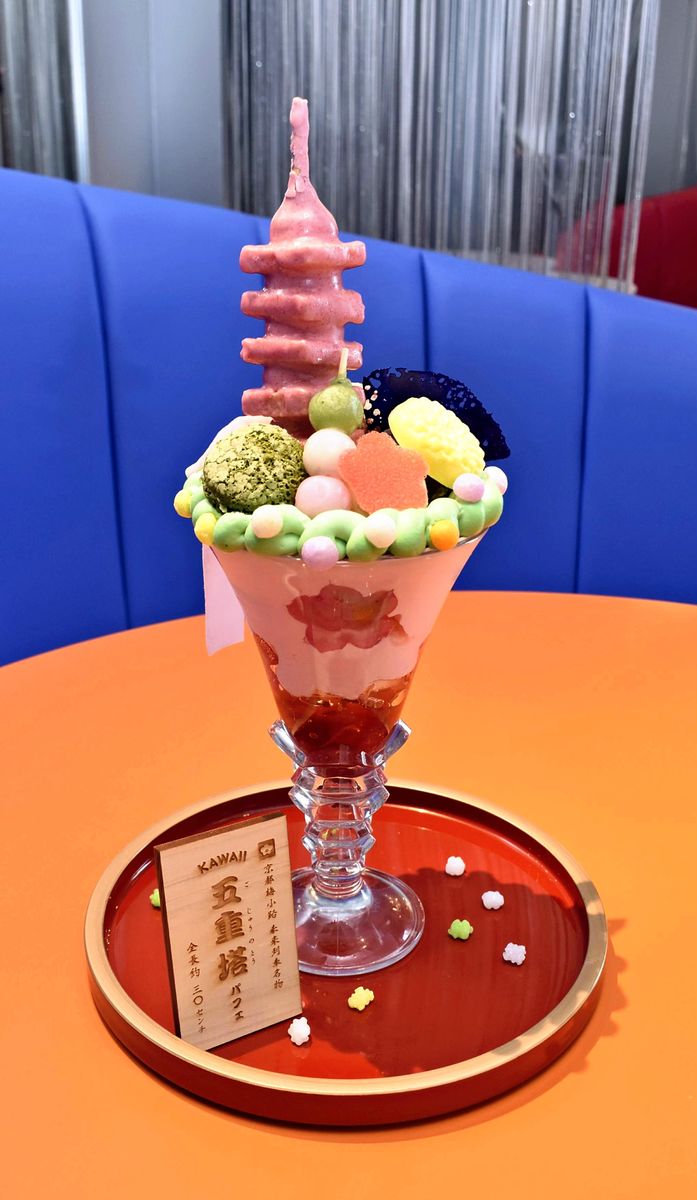
A Five-Story Pagoda Parfait
The train-shaped restaurant Future Train is directly connected to JR Umekoji-Kyotonishi Station, built atop an elevated railway track that has been retired.
Art director Sebastian Masuda, a pioneer of “kawaii” cute culture, serves as the supervising director of the restaurant. Colorful seats with a shape reminiscent of those found in dining cars line the space.
The about 30-centimeter-tall “Goju no to Parfait” (Five-Story Pagoda Parfait; ¥2,600 including tax) is an eye-catching menu item filled with Japanese sweets such as wheat gluten cakes and rice powder dumplings in addition to Western-style cakes and ice cream.
There is also an immersive experience area, converted from the front car of a Thunderbird limited express train. Admission is ¥300 for elementary school students and ¥700 for junior high school students and older. It is open from 11 a.m. to 11 p.m., with a break between 4 p.m. and 5 p.m. on weekdays.
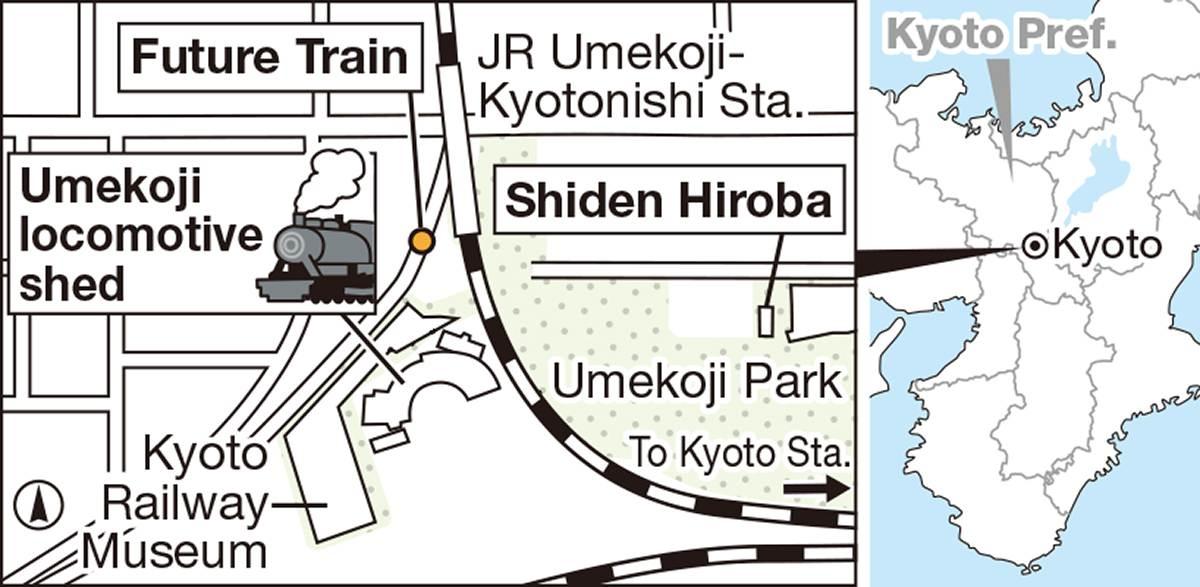
Umekoji locomotive shed
A 2-minute walk from JR Umekoji-Kyotonishi Station. Admission to the Kyoto Railway Museum containing the shed costs ¥1,500 for adults and ¥500 for elementary and junior high school students. Open 10 a.m. to 5 p.m., closed Wednesdays (but open on public holidays).






Most Read
Popular articles in the past 24 hours
-

Director Naomi Kawase's New Film Explores Heart Transplants in Ja...
-

Japan’s Nikkei Stock Average Rises on Tech Rally and Takaichi's S...
-

Takaichi Expected to Express Desire for Constitutional Revision P...
-
Japanese Man Living in Iraq Suspected of Illegally Entering U.S. ...
-

Security Services Law Unconstitutional: Do Not Restrict Career Ch...
-

New Leader of Japan's CRA Opposition Party Faces Challenge of For...
-

Milano Cortina 2026: Snowboarding Star Fukada Wins Gold in Hard-F...
-

Tokyo Exhibition Featuring VR Walk Through 2025 Osaka-Kansai Expo...
Popular articles in the past week
-

Japan PM Takaichi’s Cabinet Resigns en Masse
-

Man Infected with Measles Reportedly Dined at Restaurant in Tokyo...
-

Videos Plagiarized, Reposted with False Subtitles Claiming ‘Ryuky...
-

Sanae Takaichi Elected 105th Prime Minister of Japan; Keeps All C...
-

Japan's Govt to Submit Road Map for Growth Strategy in March, PM ...
-

Milano Cortina 2026: Figure Skaters Riku Miura, Ryuichi Kihara Pa...
-
Tokyo’s New Record-Breaking Fountain Named ‘Tokyo Aqua Symphony’
-

Bus Carrying 40 Passengers Catches Fire on Chuo Expressway; All E...
Popular articles in the past month
-
Japan PM Takaichi’s Cabinet Resigns en Masse
-

Japan Institute to Use Domestic Commercial Optical Lattice Clock ...
-

Israeli Ambassador to Japan Speaks about Japan’s Role in the Reco...
-
Man Infected with Measles Reportedly Dined at Restaurant in Tokyo...
-

Man Infected with Measles May Have Come in Contact with Many Peop...
-

Prudential Life Insurance Plans to Fully Compensate for Damages C...
-
Videos Plagiarized, Reposted with False Subtitles Claiming ‘Ryuky...
-

Woman with Measles Visited Hospital in Tokyo Multiple Times Befor...
Top Articles in Features
-
Sapporo Snow Festival Opens with 210 Snow and Ice Sculptures at 3 Venues in Hokkaido, Features Huge Dogu
-
Tokyo’s New Record-Breaking Fountain Named ‘Tokyo Aqua Symphony’
-

Tourists Flock to Ice Dome Lodge at Resort in Hokkaido, Japan; Facility Invites Visitors to Sleep on Beds Made of Ice
-

High-Hydration Bread on the Rise, Seeing Increase in Specialty Shops, Recipe Searches
-
Heirs to Kyoto Talent: Craftsman Works to Keep Tradition of ‘Kinran’ Brocade Alive Through Initiatives, New Creations
JN ACCESS RANKING
-
Japan PM Takaichi’s Cabinet Resigns en Masse
-
Japan Institute to Use Domestic Commercial Optical Lattice Clock to Set Japan Standard Time
-
Israeli Ambassador to Japan Speaks about Japan’s Role in the Reconstruction of Gaza
-
Man Infected with Measles Reportedly Dined at Restaurant in Tokyo Station
-
Man Infected with Measles May Have Come in Contact with Many People in Tokyo, Went to Store, Restaurant Around When Symptoms Emerged