
Traditional Yuki-Tsumugi Silk Weaving Thrives in Modern Japan; Ibaraki Prefecture Museum Lets Visitors Experience Centuries-Old Production Methods
17:26 JST, August 5, 2025
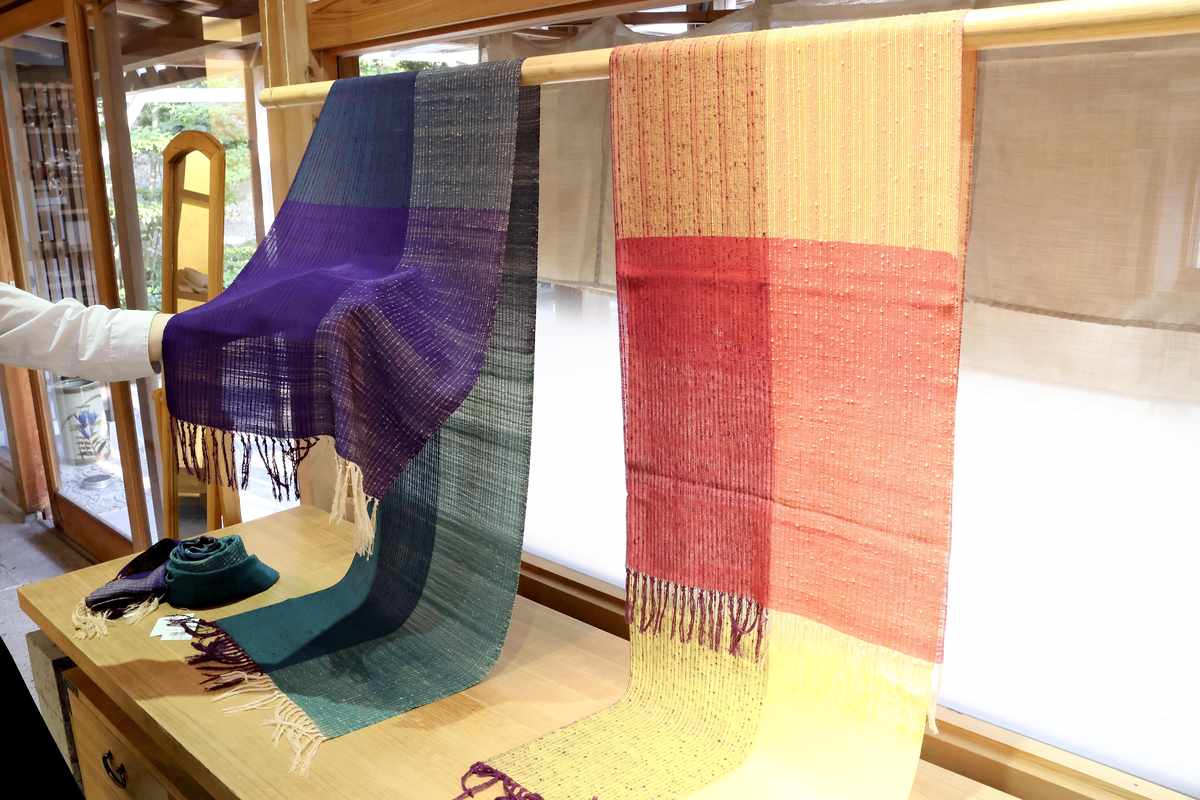
Colorful Yuki-tsumugi shawls on display
YUKI, Ibaraki — A pleasant thump-thump sound echoed throughout the Tsumugi no Yakata museum in Yuki, Ibaraki Prefecture, each time the weft was woven through the warp.
An elementary school girl on a family visit, eyes alight with excitement, tried her hand at weaving. In about 30 minutes, she created a small coaster, 10 centimeters square.
Opened roughly 20 years ago by Okujun Co. — a wholesale dealer in Yuki-tsumugi silk founded in 1907 — Tsumugi no Yakata is a facility that introduces visitors to the traditional production techniques and culture of this renowned Japanese silk variety through hands-on experiences. The surrounding area still features many old homes and storehouses from the Meiji Era (1868-1912) and the Taisho Era (1912-1926).
The region follows a roughly 20-kilometer stretch of the Kinugawa river, which flows between Tochigi and Ibaraki prefectures. It is renowned as a production center of Yuki-tsumugi, a high-grade silk fabric with a history spanning more than 1,500 years. Interestingly, the “Kinu” portion of the river’s name was once written with the kanji for “silk.”
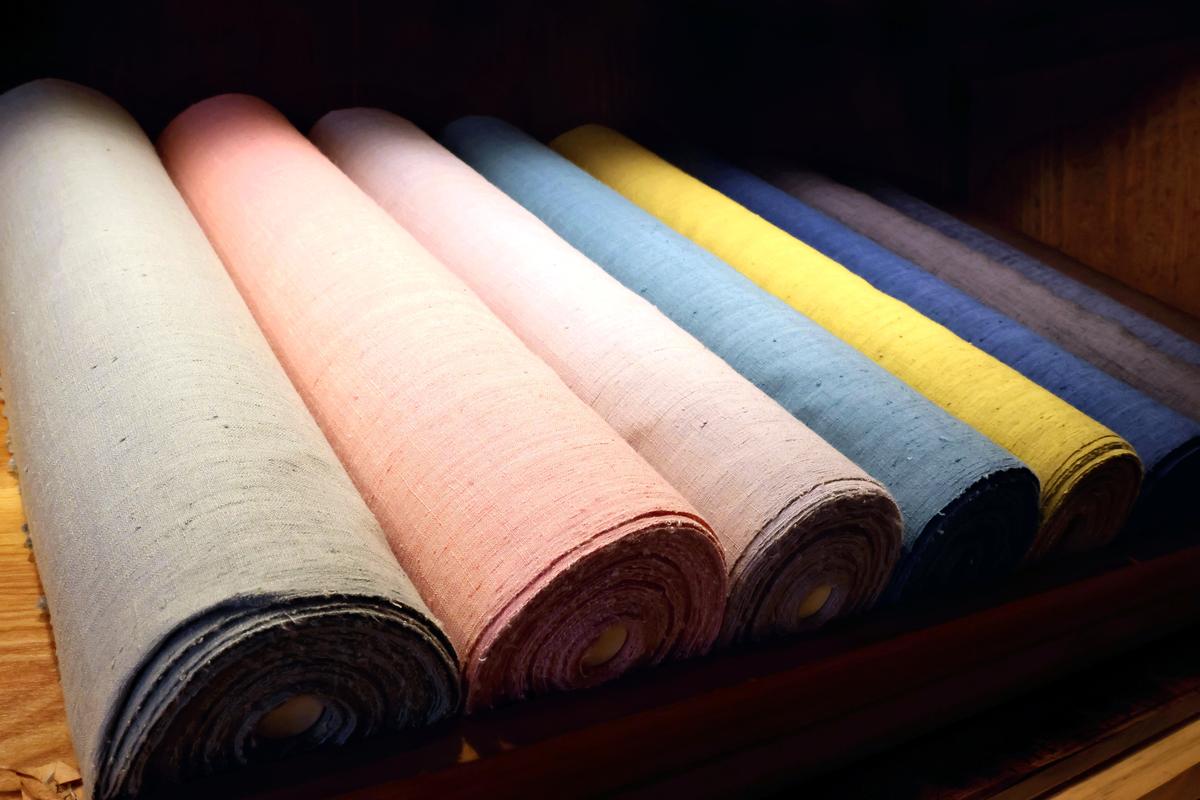
Soft-colored fabric rolls
Floss silk is made from silkworm cocoons. It is spun into thread, dyed and woven. The area is full of weaving and dyeing workshops that continue to use long-standing handcrafting methods to complete the various processes involved in silk production.
Rolls of fabric ordered by wholesalers are meticulously finished by a relay of skilled artisans. A gentle touch confirms its wonderfully soft feel. Its durability is also noteworthy. Each roll of fabric requires about 2,000 cocoons to make.
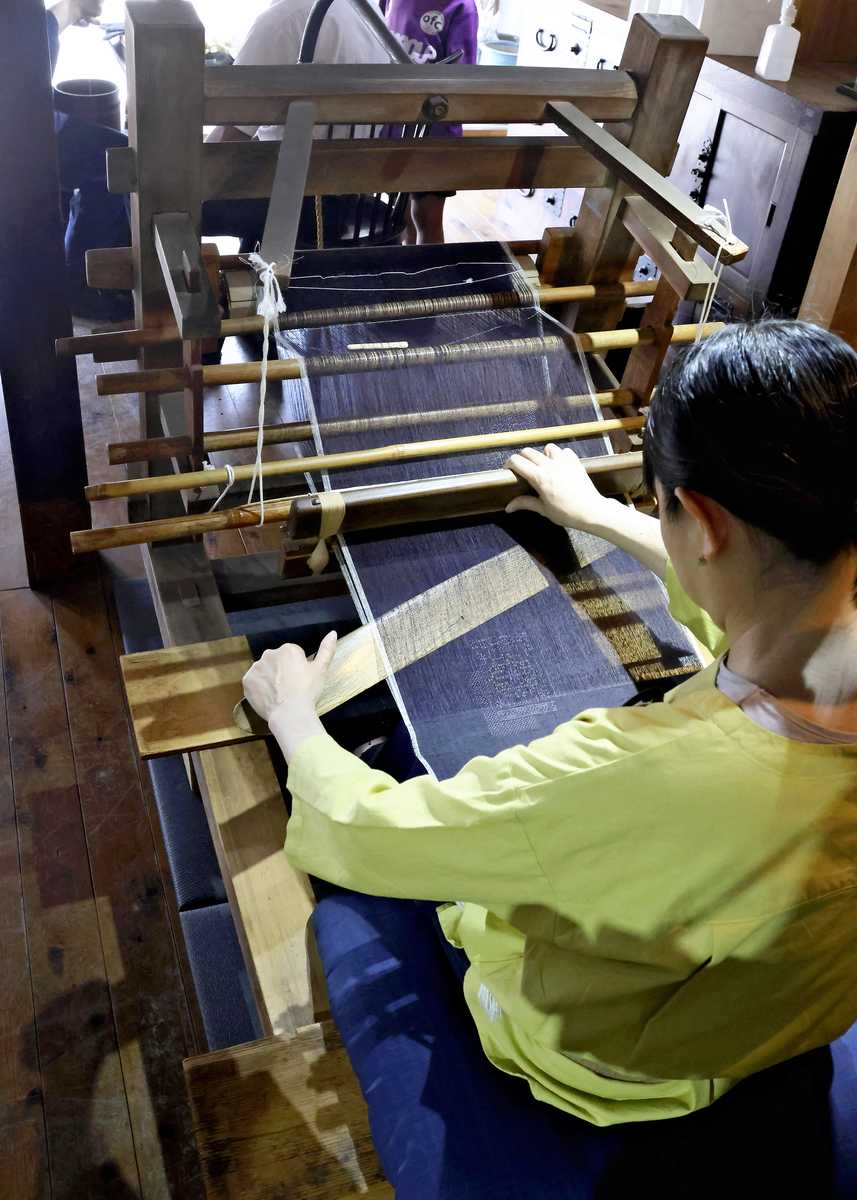
A woman demonstrates jibata-ori, a traditional Japanese weaving method.
Yuki-tsumugi silk fabric production techniques include jibata-ori, or backstrap weaving, in which the weaver adjusts the tension by connecting the thread to their waist. This technique was registered on the UNESCO Intangible Cultural Heritage list in 2010, bringing great pride to the region.
The museum has exhibits of weaving looms and spinning tools that visitors can view up close.
“We want more young people to learn [about Yuki-tsumugi]. Please come [to the museum],” said Yoko Shin, 50, the museum’s manager.
As I was on my way out, I stopped into the museum shop, where an orange shawl displayed in a window caught my attention. Clearly, Yuki-tsumugi can also work well for Western clothing. It seems that artisans who work with this fabric are going to continue to try new things even as they honor tradition.
***
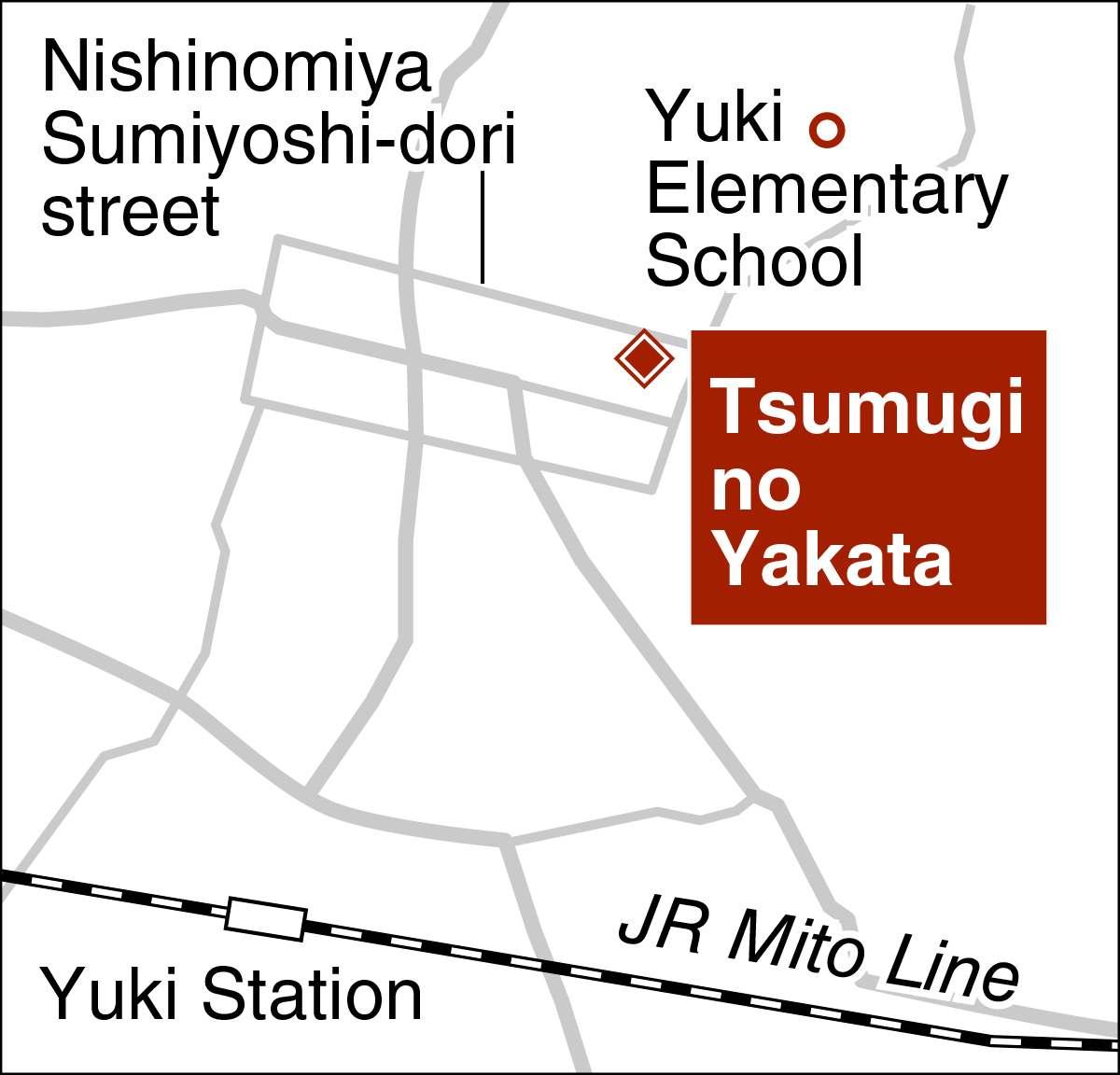
Tsumugi no Yakata
Address: 12-2, Yuki, Yuki City, Ibaraki Prefecture
Access: 10-minute walk from the north exit of Yuki Station on the JR Mito Line. Parking available.
Memo: Closed on Tuesdays and Wednesdays.


Related Tags




Most Read
Popular articles in the past 24 hours
-

Director Naomi Kawase's New Film Explores Heart Transplants in Ja...
-

Japan’s Nikkei Stock Average Rises on Tech Rally and Takaichi's S...
-

Takaichi Expected to Express Desire for Constitutional Revision P...
-
Japanese Man Living in Iraq Suspected of Illegally Entering U.S. ...
-

Security Services Law Unconstitutional: Do Not Restrict Career Ch...
-

Milano Cortina 2026: Snowboarding Star Fukada Wins Gold in Hard-F...
-

New Leader of Japan's CRA Opposition Party Faces Challenge of For...
-

Tokyo Exhibition Featuring VR Walk Through 2025 Osaka-Kansai Expo...
Popular articles in the past week
-

Japan PM Takaichi’s Cabinet Resigns en Masse
-

Man Infected with Measles Reportedly Dined at Restaurant in Tokyo...
-

Videos Plagiarized, Reposted with False Subtitles Claiming ‘Ryuky...
-

Sanae Takaichi Elected 105th Prime Minister of Japan; Keeps All C...
-

Japan's Govt to Submit Road Map for Growth Strategy in March, PM ...
-

Milano Cortina 2026: Figure Skaters Riku Miura, Ryuichi Kihara Pa...
-

Tokyo’s New Record-Breaking Fountain Named ‘Tokyo Aqua Symphony’
-

Bus Carrying 40 Passengers Catches Fire on Chuo Expressway; All E...
Popular articles in the past month
-
Japan PM Takaichi’s Cabinet Resigns en Masse
-

Japan Institute to Use Domestic Commercial Optical Lattice Clock ...
-

Israeli Ambassador to Japan Speaks about Japan’s Role in the Reco...
-
Man Infected with Measles Reportedly Dined at Restaurant in Tokyo...
-

Man Infected with Measles May Have Come in Contact with Many Peop...
-

Prudential Life Insurance Plans to Fully Compensate for Damages C...
-
Videos Plagiarized, Reposted with False Subtitles Claiming ‘Ryuky...
-

Woman with Measles Visited Hospital in Tokyo Multiple Times Befor...
Top Articles in Features
-
Sapporo Snow Festival Opens with 210 Snow and Ice Sculptures at 3 Venues in Hokkaido, Features Huge Dogu
-
Tokyo’s New Record-Breaking Fountain Named ‘Tokyo Aqua Symphony’
-

Tourists Flock to Ice Dome Lodge at Resort in Hokkaido, Japan; Facility Invites Visitors to Sleep on Beds Made of Ice
-

High-Hydration Bread on the Rise, Seeing Increase in Specialty Shops, Recipe Searches
-
Heirs to Kyoto Talent: Craftsman Works to Keep Tradition of ‘Kinran’ Brocade Alive Through Initiatives, New Creations
JN ACCESS RANKING
-
Japan PM Takaichi’s Cabinet Resigns en Masse
-
Japan Institute to Use Domestic Commercial Optical Lattice Clock to Set Japan Standard Time
-
Israeli Ambassador to Japan Speaks about Japan’s Role in the Reconstruction of Gaza
-
Man Infected with Measles Reportedly Dined at Restaurant in Tokyo Station
-
Man Infected with Measles May Have Come in Contact with Many People in Tokyo, Went to Store, Restaurant Around When Symptoms Emerged