
Japan-South Korea Summit: Build up Cooperation through Frequent Reciprocal Visits between Leaders

14:54 JST, January 14, 2026
Japan-South Korea relations, which are on a trend of improvement, are growing more stable as their leaders engage in frequent reciprocal visits. The two countries must increase the amount of concrete cooperation and establish a robust relationship that will not go backward.
Prime Minister Sanae Takaichi hosted an about 1½-hour meeting with South Korean President Lee Jae Myung in Nara Prefecture, her home turf. The two leaders agreed on a policy of aiming for a future-oriented bilateral relationship and deepening trilateral security cooperation among Japan, the United States and South Korea, with North Korea in mind.
Takaichi stated during the summit that Japan and South Korea “should work together to play a role in ensuring the stability of the region.” In response, Lee said that in the increasingly complex international order, cooperation between the two countries is more important than anything else.
Lee visited Tokyo in August last year. In September, then Prime Minister Shigeru Ishiba visited Busan, South Korea. Lee’s visit to Nara Prefecture this time was reportedly proposed by the South Korean side. Seoul thus appears to be aiming to build a personal relationship of mutual trust between the leaders.
It is a welcome sight that reciprocal visits, in which Japanese and South Korean leaders visit each other’s countries, without being bound by formality are becoming established.
During the summit, the leaders also confirmed cooperation toward building supply chains for critical materials such as rare earths.
China, reacting against Takaichi’s Diet remarks regarding a potential Taiwan contingency, has imposed export restrictions on rare earth-related items to Japan. Japan should expand diversified frameworks for securing critical materials without relying on China, in cooperation with South Korea, Southeast Asian nations and others.
China’s propaganda campaign to disparage Japan has gone too far.
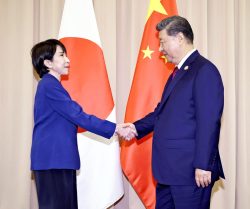
Chinese President Xi Jinping hastily invited Lee as a state guest for a summit in Beijing immediately before Lee’s visit to Japan. The obvious aim of China’s action was to isolate Japan by forming a united front with South Korea.
Indeed, after the talks concluded, the Chinese side announced that Xi had stated that China and South Korea “made tremendous national sacrifices and won the victory against Japanese militarism” and Lee had responded that South Korea and China “fought together against Japanese militarist aggression.”
However, the South Korean side’s announcement contained no mention of historical issues, nor did it include the remarks attributed to Lee by the Chinese side.
The fact that the South Korean side did not allow itself to be influenced during the China-South Korea summit by China’s agenda and did not undermine Japan-South Korea relations likely reflects the Lee administration’s view that Japan is an important partner.
Last year, South Korea expressed its intention to seek membership in the Comprehensive and Progressive Agreement for Trans-Pacific Partnership (CPTPP). South Korea’s economic strength stands just below members of the Group of Seven advanced nations, and if it joins, that would lead to the strengthening of the free trade framework. Japan should also support South Korea’s efforts for CPTPP membership.
(From The Yomiuri Shimbun, Jan. 14, 2026)



Most Read
Popular articles in the past 24 hours
-

Amid Strait of Hormuz Blockade, Shipping Companies Scramble to Ge...
-

Japan Drafts New Measures against Tech Leakage on Government Fund...
-

Ibaraki Pref.'s 1st Foreign Bus Driver Hired in Tsukuba
-

Honda to Reimport 2 U.S.-Made Models to Sell in Japan; Both Model...
-

Trump Fires Homeland Security Secretary Noem after Mounting Criti...
-

Japanese Nationals in 4 Gulf Countries to Be Evacuated with Chart...
-
Japan Foreign Minister Confirms Two Japanese Detained in Iran
-

Drone Show in Japan Features Horticultural Expo Mascot
Popular articles in the past week
-
South Korea Tightens Rules on Foreigners Buying Homes in Seoul Me...
-
Tokyo Spends Big on Children, Wins Over Parents
-
Japan’s Miura, Kihara Announce Withdrawal from Figure Skating Wor...
-
2 Unpublished Early Novellas by Japan's Kenzaburo Oe Discovered, ...
-

Strait of Hormuz Closure Shakes Markets; Prolonged Closure Could ...
-
Tourists Ignore Safety Barriers Near Famous Zao ‘Snow Monsters’ i...
-

Iran Situation: Japan Must Exert Diplomatic Efforts without Merel...
-
Measles Patient Visited Hospital in Bunkyo Ward, Tokyo, Metropoli...
Popular articles in the past month
-

Producer Behind Pop Group XG Arrested for Cocaine Possession
-

Japan PM Takaichi’s Cabinet Resigns en Masse
-

Man Infected with Measles Reportedly Dined at Restaurant in Tokyo...
-

Videos Plagiarized, Reposted with False Subtitles Claiming ‘Ryuky...
-

Prudential Life Insurance Plans to Fully Compensate for Damages C...
-

Woman with Measles Visited Hospital in Tokyo Multiple Times Befor...
-

iPS Treatments Pass Key Milestone, but Broader Applications Far f...
-

Sanae Takaichi Elected Prime Minister of Japan; Keeps All Cabinet...
Top Articles in Editorial & Columns
-

Riku-Ryu Pair Wins Gold Medal: Their Strong Bond Leads to Major Comeback Victory
-
Reciprocal Tariffs Ruled Illegal: Judiciary Would Not Tolerate President’s High-Handed Approach
-
China Provoked Takaichi into Risky Move of Dissolving House of Representatives, But It’s a Gamble She Just Might Win
-
Flu Cases Surging Again: Infection Can Also Be Prevented by Humidifying Indoor Spaces
-
Japan’s Plan for Investment in U.S.: Aim for Mutual Development by Ensuring Profitability
JN ACCESS RANKING
-
Producer Behind Pop Group XG Arrested for Cocaine Possession
-
Japan PM Takaichi’s Cabinet Resigns en Masse
-
Man Infected with Measles Reportedly Dined at Restaurant in Tokyo Station
-
Videos Plagiarized, Reposted with False Subtitles Claiming ‘Ryukyu Belongs to China’; Anti-China False Information Also Posted in Japan
-
Prudential Life Insurance Plans to Fully Compensate for Damages Caused by Fraudulent Actions Without Waiting for Third-Party Committee Review