
Regional Bank Management: ‘World with Interest Rates’ Encourages Business Expansion
15:17 JST, October 23, 2025
With the arrival of a “world with interest rates,” business scale now determines profitability even for regional banks. It is crucial to support regional economies by strengthening the banks’ management foundations, including through reorganization.
Chiba Bank and Chiba Kogyo Bank have reached a basic agreement to proceed with negotiations for a management integration in April 2027. Chiba Bank has total assets of about ¥22 trillion. The integration will create Japan’s second largest regional banking group after Fukuoka Financial Group, Inc.
It is noteworthy that, despite both banks being located within the same prefecture, they have chosen a management integration approach in which they will coexist under a holding company.
Previously, when regional banks were reorganized within the same prefecture, mergers were the most adopted approach. This is because a merger facilitates the integration of operational departments such as personnel and general affairs, which are separate for each bank, and makes it easier to reduce overlapping branches in some regions.
As it becomes easier to make a profit on interest margins on loans in a world with interest rates, increasing deposits and loans is directly connected to increased earnings. To adapt to changing business environments, the two regional banks in Chiba Prefecture likely prioritized speed in their effort to expand business scale, rather than carrying out a merger in which adjusting their respective interests would take time.
During the era when deflation persisted and ultra-low interest rates continued for a long time, regional banks struggled with low profitability. Even if restructuring occurred, it often carried a strong element of rescuing ailing financial institutions.
However, according to the Regional Banks Association of Japan, the combined net profits of 61 regional banks for the fiscal year ending in March 2025 rose over 30% from the previous year, reaching a record high. It can be said that this is an era when the reorganization of regional banks has shifted from “defense” to “offense.”
Going forward, moves will likely continue for regional banks operating across prefectural borders to utilize the management integration approach to maintain a degree of independence for each business. A representative example is the agreement by Daishi Hokuetsu Financial Group, Inc., based in Niigata Prefecture, and Gunma Bank to merge their operations in April 2027.
While the overall Japanese economy continues its gradual recovery, stimulating regional economies facing population decline remains a significant challenge. Regional banks are pivotal in supporting local economies. To be able to take risks and provide financing that meets corporate needs, it is essential for them to strengthen their management foundations.
The number of visitors to Japan this year surpassed 30 million by September. There is significant demand for funding to develop new services in industries such as tourism.
As companies are reviewing their supply chains from an economic security perspective, providing funding for fresh factory construction is also crucial.
The Financial Services Agency plans to formulate a plan to strengthen financial power in regions within the year. The application deadline for the financial support system to promote reorganization is March next year. An extension will likely be necessary. It is hoped that regional banks will grasp the changes of the times in formulating their strategies.
(From The Yomiuri Shimbun, Oct. 23, 2025)



Most Read
Popular articles in the past 24 hours
-
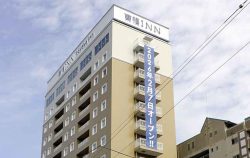
Business Hotels Expanding into Regional Areas in Japan, Aiming to...
-
Milano Cortina 2026: Japan Sees Leap in Olympic Performance Throu...
-

Milano Cortina 2026: Japan's Satoshi Furuno Places 4th in Men's S...
-

Milano Cortina 2026: Speed Skater Takagi Finishes 6th in the 1,50...
-

Fiji Defense Minister Hopes Japan Will Support Stabilization of P...
-
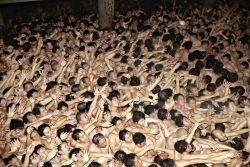
6 Injured at Naked Festival in Japan’s Okayama Prefecture; Police...
-

Milano Cortina 2026: Malinin Highlights Dangers of Social Media i...
-
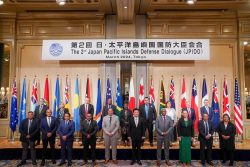
3rd Japan Pacific Islands Defense Dialogue to Begin in Tokyo on S...
Popular articles in the past week
-

Japan PM Takaichi’s Cabinet Resigns en Masse
-

Man Infected with Measles Reportedly Dined at Restaurant in Tokyo...
-

Sanae Takaichi Elected Prime Minister of Japan; Keeps All Cabinet...
-

Japan's Govt to Submit Road Map for Growth Strategy in March, PM ...
-

Bus Carrying 40 Passengers Catches Fire on Chuo Expressway; All E...
-

Milano Cortina 2026: Figure Skaters Riku Miura, Ryuichi Kihara Pa...
-

Japan, U.S. Name 3 Inaugural Investment Projects; Reached Agreeme...
-

U.S. Firm to Build Training Hub in Fukushima N-plant for Debris R...
Popular articles in the past month
-
Japan PM Takaichi’s Cabinet Resigns en Masse
-

Japan Institute to Use Domestic Commercial Optical Lattice Clock ...
-

Israeli Ambassador to Japan Speaks about Japan’s Role in the Reco...
-
Man Infected with Measles Reportedly Dined at Restaurant in Tokyo...
-

Videos Plagiarized, Reposted with False Subtitles Claiming ‘Ryuky...
-

Man Infected with Measles May Have Come in Contact with Many Peop...
-

Prudential Life Insurance Plans to Fully Compensate for Damages C...
-

Woman with Measles Visited Hospital in Tokyo Multiple Times Befor...
Top Articles in Editorial & Columns
-

Riku-Ryu Pair Wins Gold Medal: Their Strong Bond Leads to Major Comeback Victory
-
China Provoked Takaichi into Risky Move of Dissolving House of Representatives, But It’s a Gamble She Just Might Win
-
University of Tokyo Professor Arrested: Serious Lack of Ethical Sense, Failure of Institutional Governance
-

Policy Measures on Foreign Nationals: How Should Stricter Regulations and Coexistence Be Balanced?
-
Japan’s Plan for Investment in U.S.: Aim for Mutual Development by Ensuring Profitability
JN ACCESS RANKING
-
Japan PM Takaichi’s Cabinet Resigns en Masse
-
Japan Institute to Use Domestic Commercial Optical Lattice Clock to Set Japan Standard Time
-
Israeli Ambassador to Japan Speaks about Japan’s Role in the Reconstruction of Gaza
-
Man Infected with Measles Reportedly Dined at Restaurant in Tokyo Station
-
Videos Plagiarized, Reposted with False Subtitles Claiming ‘Ryukyu Belongs to China’; Anti-China False Information Also Posted in Japan