
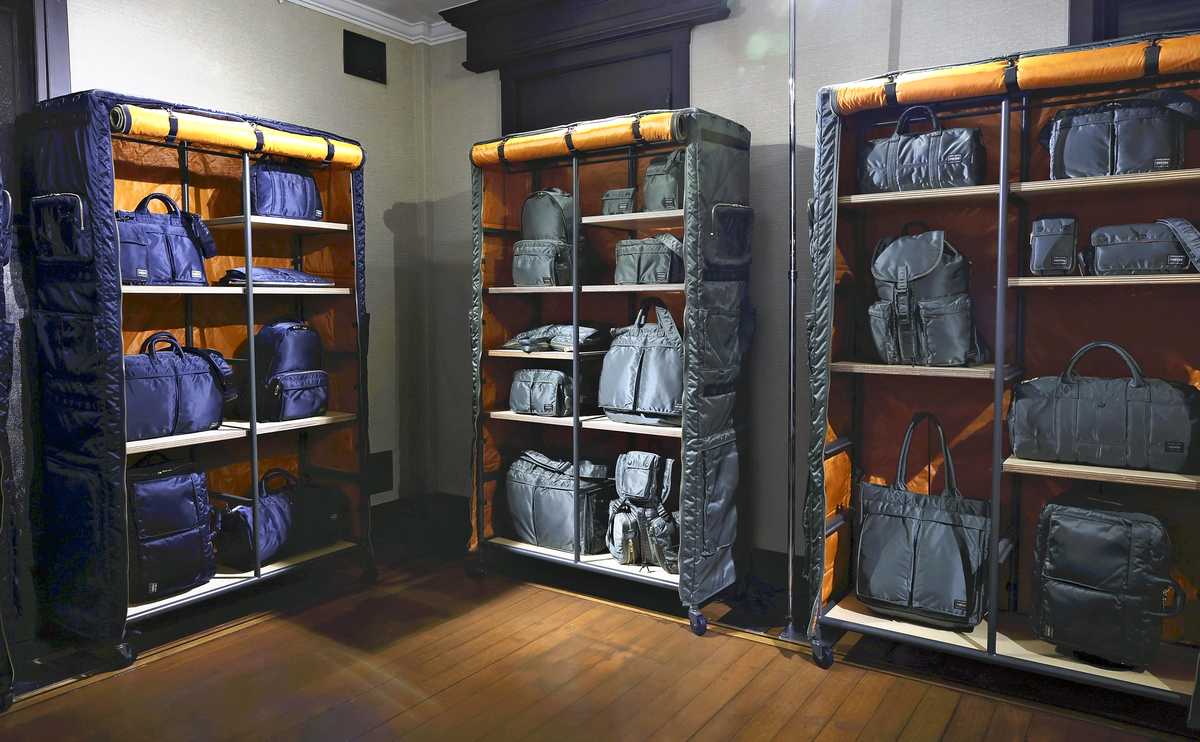
Porter’s Tanker series is displayed at Yoshida & Co.’s 90th anniversary exhibition venue in Tokyo
11:00 JST, January 23, 2026
Tokyo-based bag maker Yoshida & Co., known as “Yoshida Kaban,” celebrated its 90th anniversary last year. In November, the company held an exhibition in Tokyo showcasing bags that represent the brand’s origins. With its strengths in durable construction for long-term use and designs adapted to the times, it has garnered support both in Japan and abroad.
Founder Kichizo Yoshida (1906–1994) began working at a bag workshop at age 12. When he experienced the Great Kanto Earthquake at 17, he tied his belongings up with a rope, slung it over his shoulder and carried them with him. This experience led him to believe that “a bag is first and foremost a tool for carrying things.”
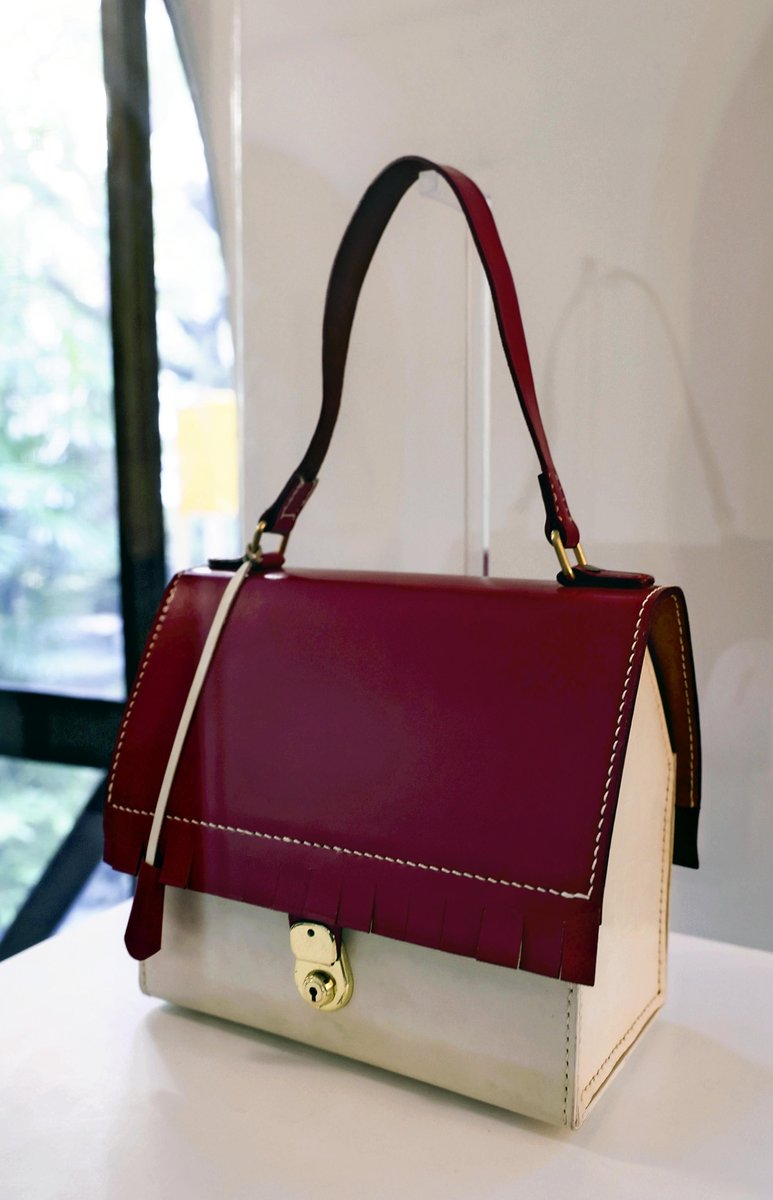
The Red Roof Bag designed by Yoshida & Co. founder Kichizo Yoshida
In 1935, he established Yoshida Kaban Seisakujo (Yoshida bag factory) and produced numerous hand-sewn pieces. The Red Roof Bag, displayed at the exhibition, was inspired by a souvenir from Hawaii. The Elegant Bag, released in 1953, featured a side zipper allowing expansion of the bag’s gusset width. In the postwar years, as apartment complexes and other collective housing increased, its compact design and efficient storage became highly valued.
Yoshida established his own brand, Porter. Under this brand name, the company released the Tanker series, which used fabric developed based on the U.S. Air Force MA-1 flight jacket, in 1983. The nylon fabric with interlocking padding is lightweight and durable, but difficult to sew by machine, requiring advanced craftsmanship. It has become a popular series that is Porter’s signature, with 40 standard styles alone, including backpacks and briefcases.
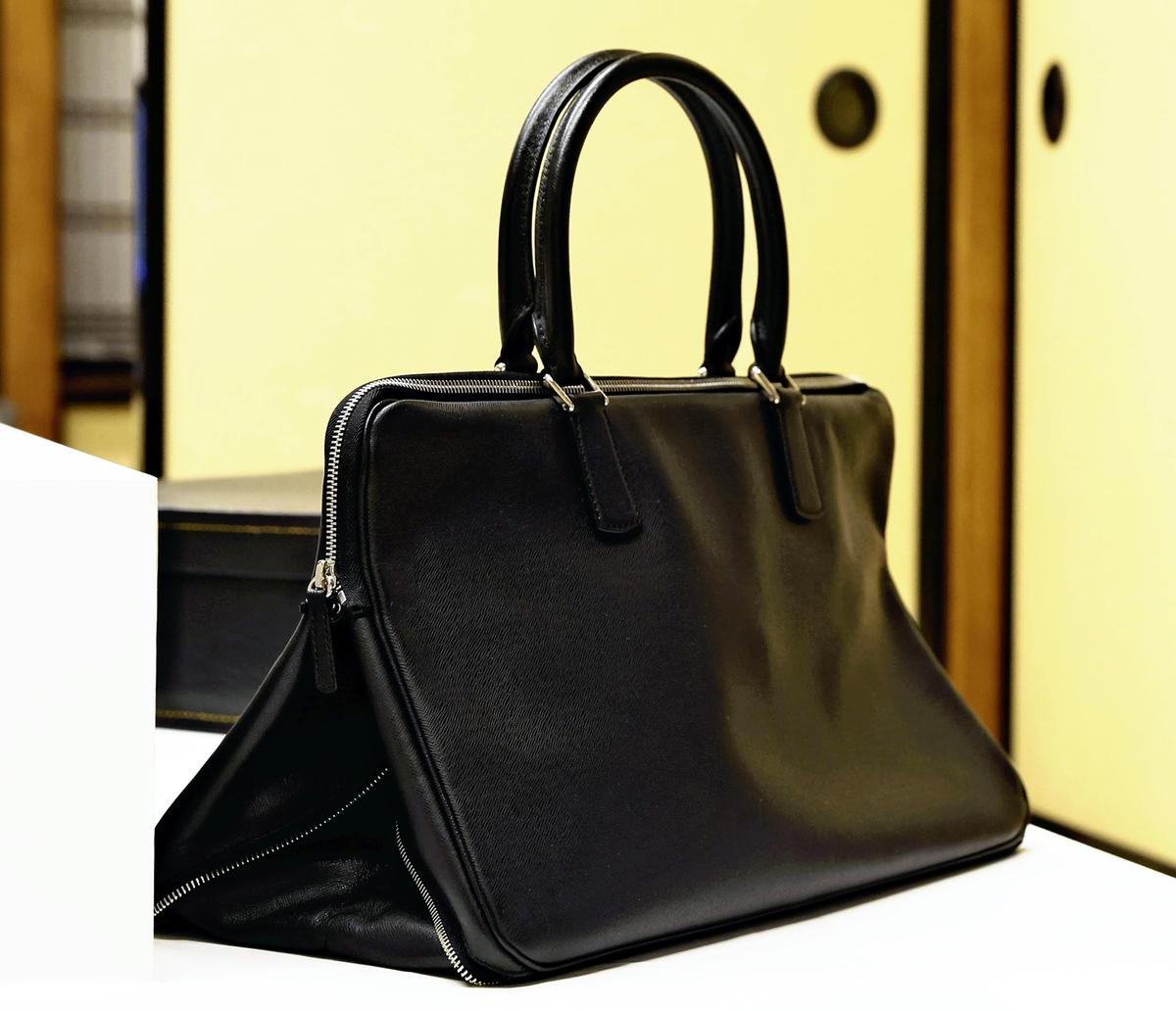
The Elegant Bag with a zipper that allows adjustable gusset width
The founder’s motto was “Isshin Nyukon” (Putting soul into every stitch). This means never cutting corners in any process, from material selection to design and sewing. This spirit continues today, harmonizing tradition and innovation while always taking on new challenges in manufacturing.
The Tanker series underwent a material overhaul in 2024, switching to 100% plant-based nylon with a lower environmental impact. Collaborating with Toray Industries, Inc., they also achieved the world’s first mass production of this material.
The brand actively pursues collaborations with diverse global and domestic brands. Products often see fierce demand upon release. Last year, for its 90th anniversary, it collaborated with partners such as Danish fashion brand Cecilie Bahnsen and British electronics giant Dyson.
The company is committed to “Made in Japan,” so sewing and other processes are handled by artisans in workshops in Japan. Their designs pursuing functional beauty attract many people. “We want to continue providing good bags that can be used for a long time, together with our artisans,” said President Yukihiro Yoshida.

Porter bags made in collaboration with Danish brand Cecilie Bahnsen
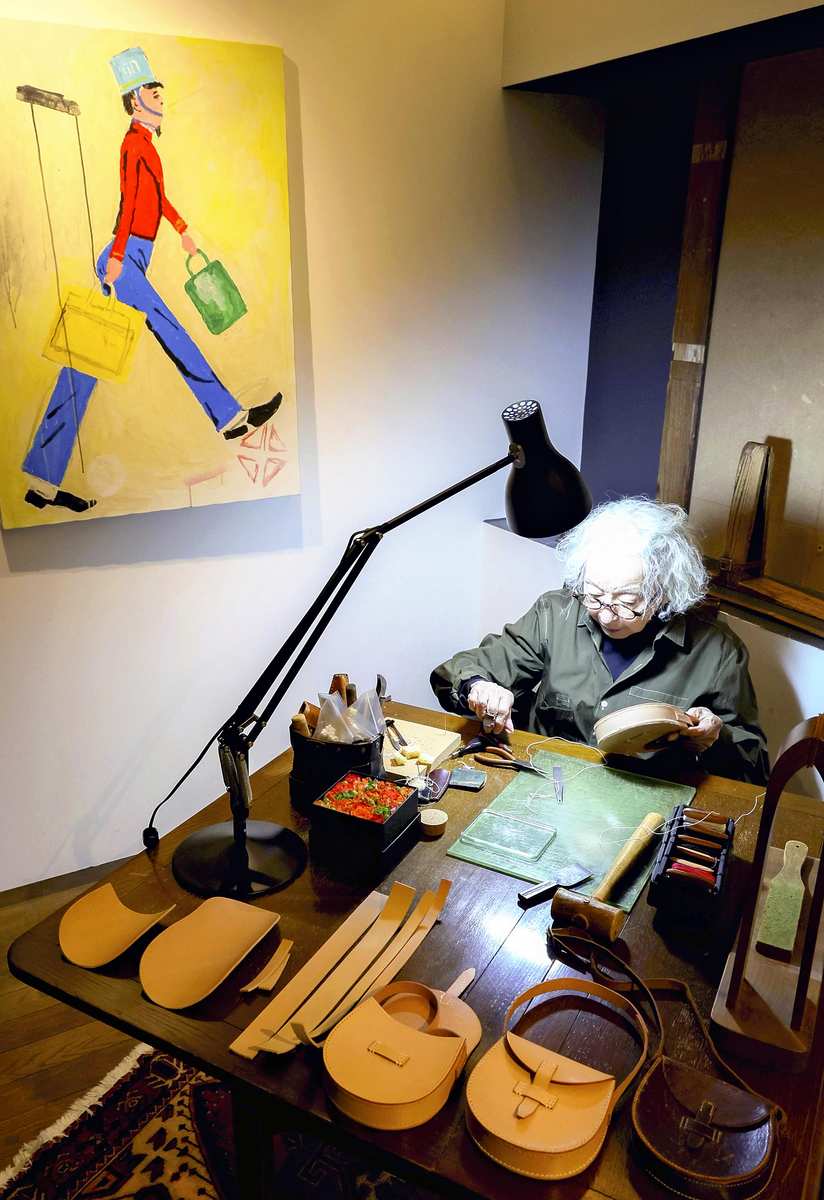
Hand-stitching of leather bags is demonstrated at the venue in Tokyo.






Most Read
Popular articles in the past 24 hours
-
‘Dry Bonsai’ Gives New Life to Withered Trees, Allows Free Artist...
-

McDonald's Japan Raises Prices; Big Mac to Cost ¥500, Double Chee...
-

Nepal Bus Crash Kills 19 People, Injures 25 Including One Japanes...
-

Japan’s Nikkei Stock Average Rises as AI-Related Stocks Shine; Co...
-

Aggression against Ukraine: Malignant Precedent Must Not Be Set t...
-

Joruri Bunraku Narrative Performed in Honor of Donald Keene by La...
-

Astellas Collaborates with Vir to Develop Its Experimental Prosta...
-

Early-Blooming Kawazu Cherry Blossoms Create Sea of Pink at Park ...
Popular articles in the past week
-

Producer Behind Pop Group XG Arrested for Cocaine Possession
-

Japan PM Takaichi’s Cabinet Resigns en Masse
-

Sanae Takaichi Elected Prime Minister of Japan; Keeps All Cabinet...
-

Japan's Govt to Submit Road Map for Growth Strategy in March, PM ...
-

Bus Carrying 40 Passengers Catches Fire on Chuo Expressway; All E...
-

Japan, U.S. Name 3 Inaugural Investment Projects; Reached Agreeme...
-

Riku-Ryu Pair Wins Gold Medal: Their Strong Bond Leads to Major C...
-
Tokyo Skytree's Elevator Stops, Trapping 20 People; All Rescued (...
Popular articles in the past month
-
Producer Behind Pop Group XG Arrested for Cocaine Possession
-
Japan PM Takaichi’s Cabinet Resigns en Masse
-

Japan Institute to Use Domestic Commercial Optical Lattice Clock ...
-

Man Infected with Measles Reportedly Dined at Restaurant in Tokyo...
-

Israeli Ambassador to Japan Speaks about Japan’s Role in the Reco...
-

Videos Plagiarized, Reposted with False Subtitles Claiming ‘Ryuky...
-

Man Infected with Measles May Have Come in Contact with Many Peop...
-

Prudential Life Insurance Plans to Fully Compensate for Damages C...
Top Articles in Culture
-
BTS to Hold Comeback Concert in Seoul on March 21; Popular Boy Band Releases New Album to Signal Return
-

Director Naomi Kawase’s New Film Explores Heart Transplants in Japan, Production Involved Real Patients, Families
-

‘Jujutsu Kaisen’ Voice Actor Junya Enoki Discusses Rapid Action Scenes in Season 3, Airing Now
-

Tokyo Exhibition Offers Inside Look at Impressionism; 70 of 100 Works on ‘Interiors’ by Monet, Others on Loan from Paris
-
Traditional Japanese Silk Hakama Tradition Preserved by Sole Weaver in Sendai
JN ACCESS RANKING
-
Producer Behind Pop Group XG Arrested for Cocaine Possession
-
Japan PM Takaichi’s Cabinet Resigns en Masse
-
Japan Institute to Use Domestic Commercial Optical Lattice Clock to Set Japan Standard Time
-
Man Infected with Measles Reportedly Dined at Restaurant in Tokyo Station
-
Israeli Ambassador to Japan Speaks about Japan’s Role in the Reconstruction of Gaza