
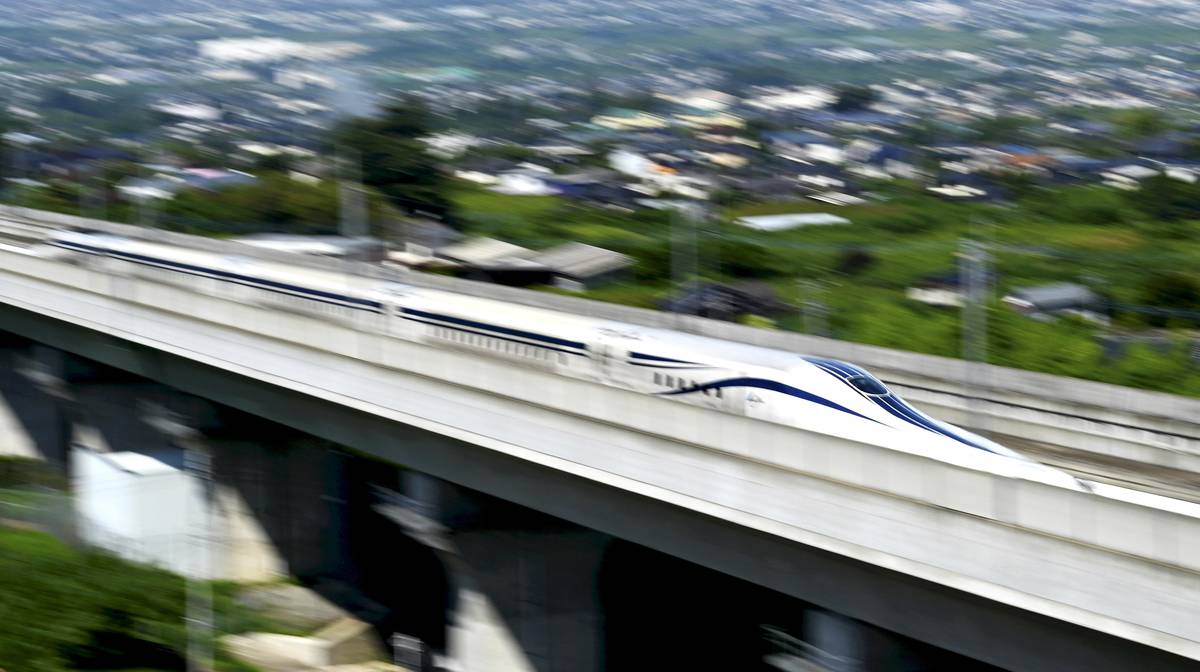
A Linear Chuo Shinkansen maglev train conducts a test run in Fuefuki, Yamanashi Prefecture, in September 2024.
14:28 JST, October 30, 2025
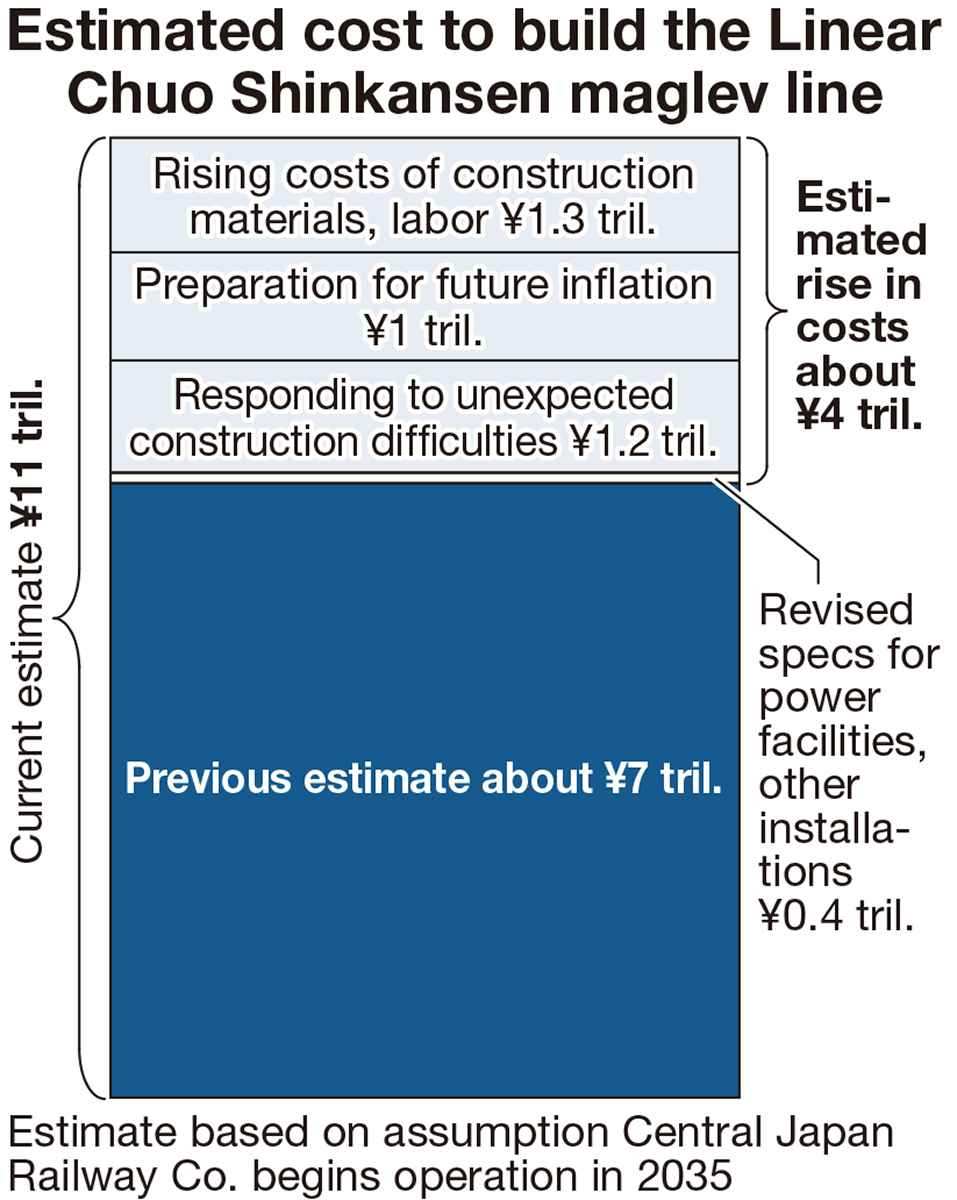
Central Japan Railway Co. (JR Central) announced on Wednesday that the total construction cost for the Linear Chuo Shinkansen line, which will carry maglev bullet trains between Shinagawa in Tokyo and Nagoya, is expected to increase by about ¥4 trillion to ¥11 trillion.
This also represents a doubling from the initial projected cost of ¥5.52 trillion for the approximately 286-kilometer line. The company had previously forecast a rise of approximately ¥1.5 trillion compared to the initial estimate, bringing the total to ¥7.04 trillion in 2021.
The increase is mainly attributed to soaring material costs and challenges in construction.
In the second upward revision, the approximately 4-trillion-yen increase includes ¥1.3 trillion to cover soaring material, labor and other costs and ¥1 trillion as a buffer against future inflation. Additionally, ¥1.2 trillion is to cover challenges in construction, such as making tunnels in weaker-than-expected ground, and ¥400 billion yen is mainly for anticipated increases in material costs due to revisions to the structural design of tunnels. These estimates are based on a provisional 2035 target for opening.
“We take seriously the fact that the total construction cost has reached ¥11 trillion,” said JR Central President Shunsuke Niwa, at a press conference in Nagoya on Wednesday. “On the other hand, realizing the Chuo Shinkansen project is necessary for our company to fulfill its mission of contributing to the development of Japan’s major transportation arteries and social infrastructure.”
The company plans to cover the increased cost through utilizing Shinkansen operating revenues and borrowing.
JR Central has not specified an opening date for the maglev line, partly due to uncertainty surrounding the start of tunnel excavation in the Shizuoka construction zone.




Most Read
Popular articles in the past 24 hours
-
‘Dry Bonsai’ Gives New Life to Withered Trees, Allows Free Artist...
-

McDonald's Japan Raises Prices; Big Mac to Cost ¥500, Double Chee...
-

Nepal Bus Crash Kills 19 People, Injures 25 Including One Japanes...
-

Japan’s Nikkei Stock Average Rises as AI-Related Stocks Shine; Co...
-

Aggression against Ukraine: Malignant Precedent Must Not Be Set t...
-
Joruri Bunraku Narrative Performed in Honor of Donald Keene by La...
-

Astellas Collaborates with Vir to Develop Its Experimental Prosta...
-

Early-Blooming Kawazu Cherry Blossoms Create Sea of Pink at Park ...
Popular articles in the past week
-

Producer Behind Pop Group XG Arrested for Cocaine Possession
-

Japan PM Takaichi’s Cabinet Resigns en Masse
-

Sanae Takaichi Elected Prime Minister of Japan; Keeps All Cabinet...
-

Japan's Govt to Submit Road Map for Growth Strategy in March, PM ...
-

Bus Carrying 40 Passengers Catches Fire on Chuo Expressway; All E...
-

Japan, U.S. Name 3 Inaugural Investment Projects; Reached Agreeme...
-

Riku-Ryu Pair Wins Gold Medal: Their Strong Bond Leads to Major C...
-
Tokyo Skytree's Elevator Stops, Trapping 20 People; All Rescued (...
Popular articles in the past month
-
Producer Behind Pop Group XG Arrested for Cocaine Possession
-
Japan PM Takaichi’s Cabinet Resigns en Masse
-

Japan Institute to Use Domestic Commercial Optical Lattice Clock ...
-

Man Infected with Measles Reportedly Dined at Restaurant in Tokyo...
-

Israeli Ambassador to Japan Speaks about Japan’s Role in the Reco...
-

Videos Plagiarized, Reposted with False Subtitles Claiming ‘Ryuky...
-

Man Infected with Measles May Have Come in Contact with Many Peop...
-

Prudential Life Insurance Plans to Fully Compensate for Damages C...
Top Articles in Business
-
Prudential Life Insurance Plans to Fully Compensate for Damages Caused by Fraudulent Actions Without Waiting for Third-Party Committee Review
-
Narita Airport, Startup in Japan Demonstrate Machine to Compress Clothes for Tourists to Prevent People from Abandoning Suitcases
-
Japan, U.S. Name 3 Inaugural Investment Projects; Reached Agreement After Considerable Difficulty
-

Toyota Motor Group Firm to Sell Clean Energy Greenhouses for Strawberries
-

SoftBank Launches AI Service for Call Centers That Converts Harsh Customer Voices into Softer Voices
JN ACCESS RANKING
-
Producer Behind Pop Group XG Arrested for Cocaine Possession
-
Japan PM Takaichi’s Cabinet Resigns en Masse
-
Japan Institute to Use Domestic Commercial Optical Lattice Clock to Set Japan Standard Time
-
Man Infected with Measles Reportedly Dined at Restaurant in Tokyo Station
-
Israeli Ambassador to Japan Speaks about Japan’s Role in the Reconstruction of Gaza