
Hamamatsu-Born Technology Used for Fly Control in Palau; Company Wants to Develop ‘Fruit Fly Forecast’
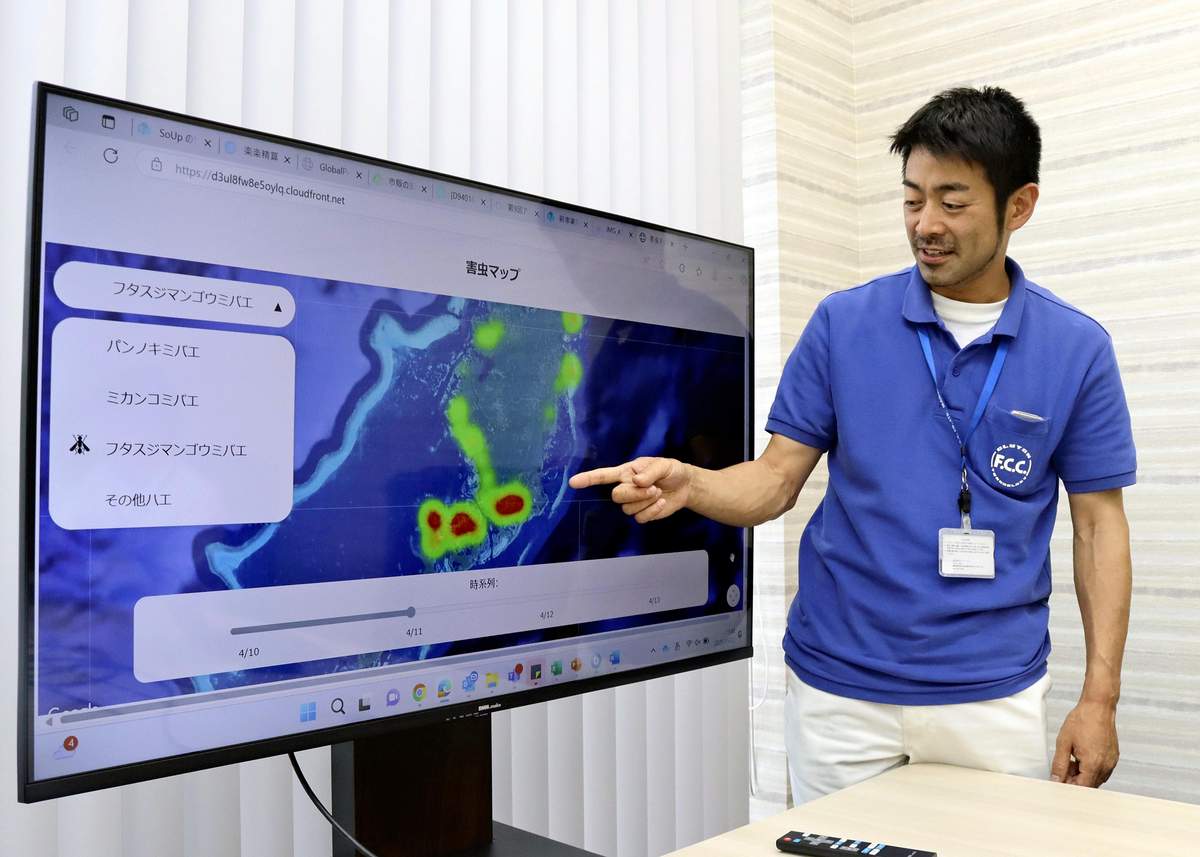
Akinori Tsuchiya, who aims to develop a “fruit fly forecast,” points to a monitor.
14:23 JST, August 3, 2025
A technology for quality inspection developed by a Hamamatsu-based company is being used for fly control in the island nation of Palau, where damage to mangoes and other crops caused by fly larvae has become a serious problem.
The technology by F.C.C. Co., a motorcycle components manufacturer in Hamamatsu, Shizuoka Prefecture, allows users to quickly analyze the species of several hundreds of thousands of flies collected from various parts of the country and identify the distribution of the flies throughout the island, enabling effective pesticide application.
The fruit flies, which measure 3-5 millimeters in length, are causing the most trouble for the people of Palau. The flies lay eggs on mangoes and other fruits, and the hatched larvae cause serious damage to them.
In 1998, the Palau government launched a nationwide fly eradication campaign to protect the mangoes from these tiny “invaders,” but the campaign stalled due to budget shortfalls. In 2021, nearly a quarter-century later, Palau sought assistance from Japan, with which it has signed a memorandum of understanding in the agricultural sector.
In response, the Japan International Cooperation Agency (JICA) launched a project to develop a fruit fly control system.
The first step in fly control is to identify the distribution of the three types of fruit flies found in Palau — the mango fruit fly, breadfruit fly and oriental fruit fly — because different pesticides are effective on different types of fruit flies.
JICA set traps at 145 locations in Palau and attempted to capture approximately 300,000 fruit flies every two weeks and classify each one by species and distribution. However, as sorting was done manually with tweezers, one person could only identify 1,000 flies per day.
It was the F.C.C. Production Technology Center’s DX group that provided a solution.
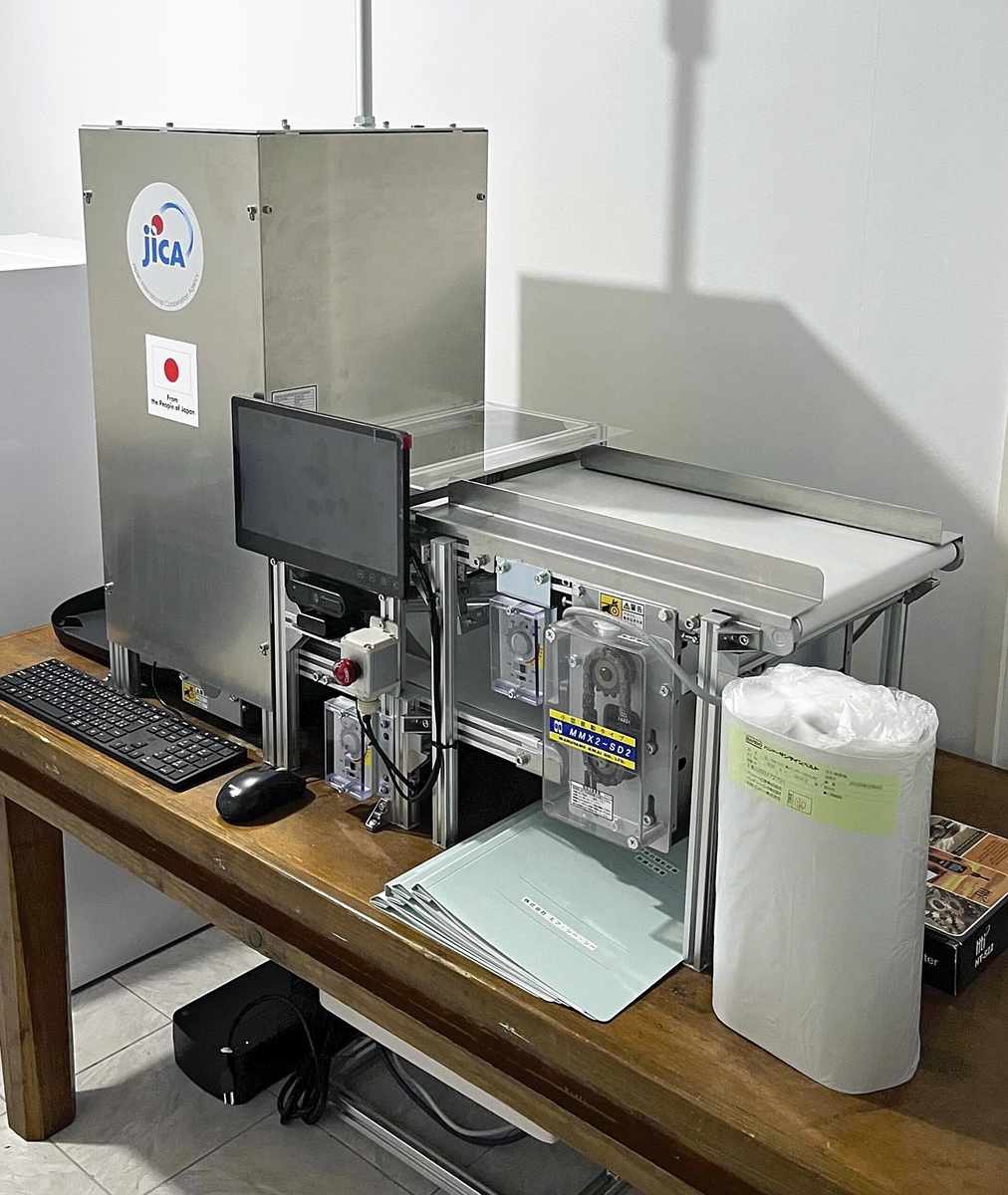
An inspection device that uses AI to classify fly species
F.C.C.’s Akinori Tsuchiya, 40, visited Palau on a trip in October 2023 and listened to the JICA staff there speak about the fly control project. He realized that his company’s quality inspection technology, which uses artificial intelligence, could be useful.
Tsuchiya and his team made use of a technology originally used to detect distortions in motorcycle parts. They simply put large numbers of flies on a conveyor belt, and the AI automatically analyzed their colors and shapes and quickly compiled data on the distribution of the three fly species. JICA plans to begin drone-based pesticide spraying this autumn based on this distribution data.
Damage caused by fruit flies has been confirmed in Okinawa Prefecture and other areas in Japan. Tsuchiya said, “If we can analyze the relationship between fruit fly distribution and various factors such as weather conditions and wind direction, it may be possible to create a ‘pest forecast’ similar to a weather forecast.”





Most Read
Popular articles in the past 24 hours
-

Prime Minister Sanae Takaichi to Visit Fukushima Pref. on 15th An...
-
Pass Rate for Overseas Driver's License Conversion Test in Japan ...
-
Tokyo High Court Upholds Unification Church Dissolution Order
-

WBC to Begin: All the Pieces are in Place for Japan’s Second Stra...
-

Milano Cortina 2026: Ceremony for Winter Paralympic Torch Relay T...
-

How Trump Assassination Attempts Played into His Decision to Atta...
-

Japanese Speedskater Takagi Announces Retirement
-

PM Sanae Takaichi: Iran Situation Won’t Immediately Affect Electr...
Popular articles in the past week
-
Tokyo Spends Big on Children, Wins Over Parents
-

Japan’s Miura, Kihara Announce Withdrawal from Figure Skating Wor...
-

Yokohama to Test Out Renewable-Powered Offshore Floating Data Cen...
-
BOJ Keeping Eye on Economy and Takaichi's ‘Proactive Fiscal Polic...
-
Tokyo Measles Patient Traveled to Fukuoka Aboard JAL Planes; Susp...
-

South Korea Tightens Rules on Foreigners Buying Homes in Seoul Me...
-

Nidec Chairman Resigns Amid Accounting Scandal at Major Japanese ...
-
Tourists Ignore Safety Barriers Near Famous Zao ‘Snow Monsters’ i...
Popular articles in the past month
-

Producer Behind Pop Group XG Arrested for Cocaine Possession
-

Japan PM Takaichi’s Cabinet Resigns en Masse
-

Man Infected with Measles Reportedly Dined at Restaurant in Tokyo...
-

Israeli Ambassador to Japan Speaks about Japan’s Role in the Reco...
-

Videos Plagiarized, Reposted with False Subtitles Claiming ‘Ryuky...
-

Prudential Life Insurance Plans to Fully Compensate for Damages C...
-

Woman with Measles Visited Hospital in Tokyo Multiple Times Befor...
-

iPS Treatments Pass Key Milestone, but Broader Applications Far f...
Top Articles in Business
-
Prudential Life Insurance Plans to Fully Compensate for Damages Caused by Fraudulent Actions Without Waiting for Third-Party Committee Review
-

Japan, U.S. Name 3 Inaugural Investment Projects; Reached Agreement After Considerable Difficulty
-

Japan’s Major Real Estate Firms Expanding Overseas Businesses to Secure Future Growth, Focusing on Europe, U.S., Asia
-

SoftBank Launches AI Service for Call Centers That Converts Harsh Customer Voices into Softer Voices
-

Transport Companies See Opportunity in Narita Expansion; Airlines, Railways Prepare to Meet Expected Growth in Demand
JN ACCESS RANKING
-
Producer Behind Pop Group XG Arrested for Cocaine Possession
-
Japan PM Takaichi’s Cabinet Resigns en Masse
-
Man Infected with Measles Reportedly Dined at Restaurant in Tokyo Station
-
Israeli Ambassador to Japan Speaks about Japan’s Role in the Reconstruction of Gaza
-
Videos Plagiarized, Reposted with False Subtitles Claiming ‘Ryukyu Belongs to China’; Anti-China False Information Also Posted in Japan