
19:28 JST, April 18, 2021
Prime Minister Yoshihide Suga and U.S. President Joe Biden have held their first summit and issued a joint statement that serves as a guideline for the Japan-U.S. alliance. The Yomiuri Shimbun interviewed an expert about the achievements of the summit and the tasks ahead for the bilateral relationship. The following is excerpted from the interview.
Japan and the United States can cooperate on the issue of climate change, mainly in the area of technology. Having accumulated technology and operational know-how in terms of nuclear power generation, the two countries can also enjoy an advantage in small nuclear power plant development [which has been advanced around the world]. Japan and the United States are also leading the world in the development of technologies to separate and recover carbon dioxide emitted from factories and other facilities for reuse or burial underground.
What the Group of Seven leading industrial nations — including Japan and the United States — should share is that China is the world’s largest CO2-emitting nation. The main topics of discussion at the G7 summit in June are likely to be China’s human rights and security issues, but China’s CO2 emissions should be dealt with on the same level.
China obtains 60% of its energy supply from low-cost, coal-fired power generation. Cheap electricity is making the manufacturing industry more competitive. Industrialized countries’ having set a goal of achieving net-zero greenhouse emissions by 2050 must have been a welcome move for China since that will help it sell even more of its electric vehicles and solar power generation facilities.
During the latest summit meeting, Japan and the United States also agreed to support emerging countries in their decarbonization efforts. But there are many emerging and developing nations that need coal-fired power generation to provide the energy needed for economic development. If Japan and the United States don’t support them, China will do so instead, and it will benefit China.
The United States is willing to suspend its policy of encouraging exports of coal-fired power generation equipment, but Japan should consider its moves in a careful manner.
In Japan, the focus is now on whether to raise the fiscal 2030 target of greenhouse gas reductions. Japan should not lean toward an idealistic view that may create its own difficulties. If businesses are forced to make further greenhouse gas emission reduction efforts, the nation’s manufacturing industry will be in dire straits, and many jobs will be lost.
The United States is not monolithic either. The country is the world’s largest oil producer, and some of its states benefit from natural resources, including shale oil and gas. Because of the large gap within the Democratic and Republican parties in terms of the approaches to decarbonization, the Biden administration’s climate change countermeasures could turn out to be empty promises.
Concerning Europe, the energy-related tax rates are high in Germany, for example, but in practice there are various ways to offset this. European countries are working cunningly to keep their manufacturing competitive.
Japan cannot easily reduce CO2 emissions in the future, as there is not much land suitable for producing renewable energy such as wind and solar power. It is necessary to have a calm, down-to-earth discussion to prevent Japan from getting caught up in a PR battle about decarbonization that may weaken the economy.
— This interview was conducted by Yomiuri Shimbun Staff Writer Ryosuke Terunuma.
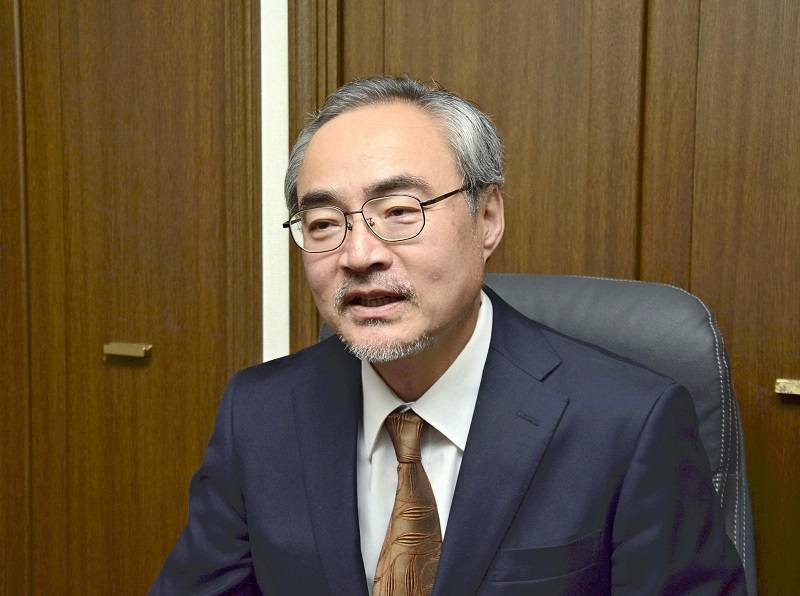
Taishi Sugiyama
Research Director at the Canon Institute for Global Studies Sugiyama, 52, specializes in energy and environmental policy. Having finished his graduate study at the University of Tokyo, Sugiyama worked at the Central Research Institute of Electric Power Industry. He assumed his current post in 2019.



Most Read
Popular articles in the past 24 hours
-

National Intelligence Council: Proposed Body Must Be Utilized To ...
-
Japan's Defense Ministry: North Korea Appears to Have Fired Balli...
-

Aichi Fisheries Cooperatives Use Smart Tech to Farm Triploid Oyst...
-

CARTOON OF THE DAY (March 14)
-
Japan's Lower House Passes Budget Proposal; Could Be Delayed in U...
-

Fukuoka: American Beavers at Japan's Zoo Create Sculptures; Visit...
-
Hyogo: Family in Japan Produces Traditional Charcoal to Help Pres...
-

Election Fraud in Tokyo’s Ota Ward: Use Incident As Catalyst for ...
Popular articles in the past week
-

Japan Figure Skating Legend Yuzuru Hanyu Is Proud Disaster Surviv...
-
Govt to Utilize ODA for Ensuring Economic Security; Securing Ener...
-
15 Measles Patients Confirmed in Tokyo in Past 6 Days; 1 May Have...
-

Massive Sewer Pipe Found Jutting Out of Highway in Osaka
-

Japan Govt to Tighten Requirements to Receive Permanent Residency...
-
JR Tokai Breaks Ground on Yamanashi Maglev Station; Will Be Part ...
-

Power Outage Forces About 980 Passengers in Yokohama to Walk to T...
-

Beckoning Cats Get Makeover to Fit Modern Lifestyles with Sleek D...
Popular articles in the past month
-

Producer Behind Pop Group XG Arrested for Cocaine Possession
-

Japan PM Takaichi’s Cabinet Resigns en Masse
-

Man Infected with Measles Reportedly Dined at Restaurant in Tokyo...
-
Japan Figure Skating Legend Yuzuru Hanyu Is Proud Disaster Surviv...
-

iPS Treatments Pass Key Milestone, but Broader Applications Far f...
-

Sanae Takaichi Elected Prime Minister of Japan; Keeps All Cabinet...
-

South Korea Tightens Rules on Foreigners Buying Homes in Seoul Me...
-

Nepal Bus Crash Kills 19 People, Injures 25 Including One Japanes...
Top Articles in Politics
-
Japan PM Takaichi’s Cabinet Resigns en Masse
-
Sanae Takaichi Elected Prime Minister of Japan; Keeps All Cabinet Appointees from Previous Term
-

Japan’s Govt to Submit Road Map for Growth Strategy in March, PM Takaichi to Announce in Upcoming Policy Speech
-
LDP Begins Training New Lawmakers to Avoid Scandal, Gaffes; Historic Victory in Latest Election Heightens Focus on Party
-

Japan PM Sanae Takaichi Welcomes Peach Ambassadors Koga Momo Musume to Official Residence
JN ACCESS RANKING
-
Producer Behind Pop Group XG Arrested for Cocaine Possession
-
Japan PM Takaichi’s Cabinet Resigns en Masse
-
Man Infected with Measles Reportedly Dined at Restaurant in Tokyo Station
-
Japan Figure Skating Legend Yuzuru Hanyu Is Proud Disaster Survivor and Gold Medalist, Vows to Continue Support Efforts
-
iPS Treatments Pass Key Milestone, but Broader Applications Far from Guaranteed