
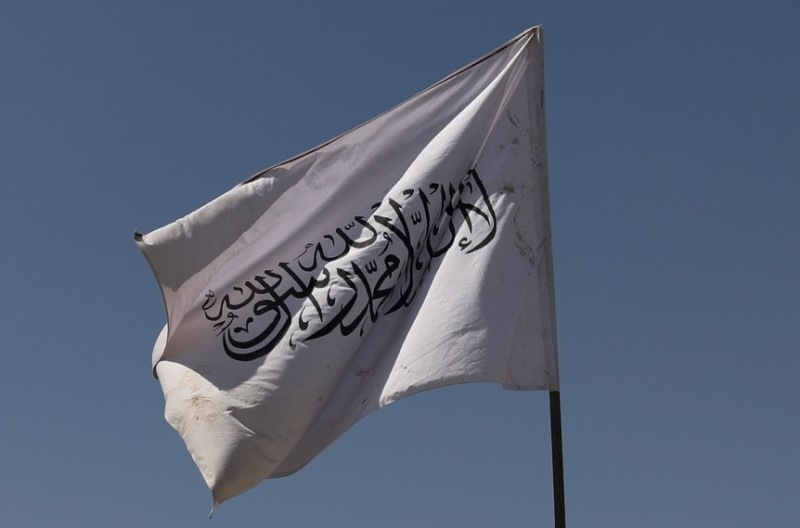
The flag of the Islamic Emirate of Afghanistan (Taliban) is raised at the military airfield in Kabul, Afghanistan.
18:42 JST, August 17, 2021
As the Taliban took control of Kabul on Sunday, U.S. TV stations repeatedly broadcast footage of U.S. Embassy staff being evacuated by helicopter on April 30, 1975, amid the chaos when the South Vietnamese capital of Saigon fell at the end of the Vietnam War.
Despite many casualties, the United States failed to achieve its goal in the Vietnam War of stopping communism from spreading in Southeast Asia. It can be described as a symbol of a failed foreign policy, in which the United States made errors in judgment.
There is growing opinion in the United States that the “Fall of Kabul” is the biggest mistake to be made by the administration of U.S. President Joe Biden since its inauguration.
Why did Biden rush to withdraw U.S. troops? In addition to his opposition to stationing U.S. military for purposes other than rooting out terrorists and to involvement in Afghanistan’s nation-building, Biden undeniably wanted to end the “longest war in U.S. history” before the 20th anniversary of the Sept. 11, 2001, terrorist attacks on U.S. soil.
His decision was also supported by U.S. public opinion against the war on terror, with over 60% of the public approving of the withdrawal.
Biden is the fourth U.S. president to lead the war against terrorism started by Republican President George W. Bush. Biden’s insufficient understanding of the situation cannot be denied since his hasty withdrawal has created a power vacuum, but the United States did not have the national strength or public support to continue the war, which shows no sign of ending.
The Afghan government made scant progress toward democracy despite support from the international community, including the United States. It collapsed instantly and the nation is returning to the Taliban’s control.
However, this may not be just a return to square one. The Biden administration has said the United States will lead the bloc that champions democracy to counter the authoritarianism in such countries as Russia and China that have been pronounced over the past 20 years. If the United States gives up on Afghanistan, trust in the United States would certainly be undermined and authoritarian forces would likely gain strength.
Should Afghanistan again become a hotbed of terrorism, or the country come under the influence of non-democratic forces, it will fuel global instability.
What can be done to alleviate the chaos? The United States still has responsibilities it must fulfill in this regard.




Most Read
Popular articles in the past 24 hours
-

Japanese Version of Shohei Ohtani's Picture Book Published
-

Milano Cortina 2026: Japan’s Speed Skater Takagi Sinks to 6...
-

Osaka: 40 Ninjas Display Shuriken Throwing Skills at Japan Champi...
-
Tottori: 95-Year-Old Japanese Descendent from Philippines Visits ...
-

Hiroshima: Land Scape, Special Architecture to Offer Unique Beaut...
-

Miyazaki: Japanese Woman Walks in Footsteps of Samurai Ancestor W...
-

Japan PM Sanae Takaichi Declares ‘Responsible Diplomacy’ in Her P...
-
Japan to Host 3rd Pacific Islands Defense Meeting from Sunday thr...
Popular articles in the past week
-

Japan PM Takaichi’s Cabinet Resigns en Masse
-

Man Infected with Measles Reportedly Dined at Restaurant in Tokyo...
-

Sanae Takaichi Elected Prime Minister of Japan; Keeps All Cabinet...
-

Japan's Govt to Submit Road Map for Growth Strategy in March, PM ...
-

Bus Carrying 40 Passengers Catches Fire on Chuo Expressway; All E...
-

Milano Cortina 2026: Figure Skaters Riku Miura, Ryuichi Kihara Pa...
-

Japan, U.S. Name 3 Inaugural Investment Projects; Reached Agreeme...
-

U.S. Firm to Build Training Hub in Fukushima N-plant for Debris R...
Popular articles in the past month
-
Japan PM Takaichi’s Cabinet Resigns en Masse
-

Japan Institute to Use Domestic Commercial Optical Lattice Clock ...
-

Israeli Ambassador to Japan Speaks about Japan’s Role in the Reco...
-
Man Infected with Measles Reportedly Dined at Restaurant in Tokyo...
-

Videos Plagiarized, Reposted with False Subtitles Claiming ‘Ryuky...
-

Man Infected with Measles May Have Come in Contact with Many Peop...
-

Prudential Life Insurance Plans to Fully Compensate for Damages C...
-

Woman with Measles Visited Hospital in Tokyo Multiple Times Befor...
Top Articles in World
-
Israeli Ambassador to Japan Speaks about Japan’s Role in the Reconstruction of Gaza
-
Videos Plagiarized, Reposted with False Subtitles Claiming ‘Ryukyu Belongs to China’; Anti-China False Information Also Posted in Japan
-
North Korea Possibly Launches Ballistic Missile
-
Chinese Embassy in Japan Reiterates Call for Chinese People to Refrain from Traveling to Japan; Call Comes in Wake of ¥400 Mil. Robbery
-

Russia: Visa Required for Visiting Graves in Northern Territories, Lifting of Sanctions Also Necessary
JN ACCESS RANKING
-
Japan PM Takaichi’s Cabinet Resigns en Masse
-
Japan Institute to Use Domestic Commercial Optical Lattice Clock to Set Japan Standard Time
-
Israeli Ambassador to Japan Speaks about Japan’s Role in the Reconstruction of Gaza
-
Man Infected with Measles Reportedly Dined at Restaurant in Tokyo Station
-
Videos Plagiarized, Reposted with False Subtitles Claiming ‘Ryukyu Belongs to China’; Anti-China False Information Also Posted in Japan