
11:00 JST, March 13, 2026
Riding on Prime Minister Sanae Takaichi’s popularity, the Liberal Democratic Party coasted to a historic victory in the Feb. 8 House of Representatives election. The LDP won 316 seats, enough to secure a more than two-thirds majority in the lower house on its own.
During the election campaign, both the ruling and opposition parties called for lowering or eliminating the consumption tax as a measure to address rising prices. However, in-depth discussions on the subject were not always held. Now that the will of the people has been decided, I’d like to look into this issue anew.
The election focused primarily on rising prices, a matter of great interest to the public. The year-on-year change in the country’s core consumer price index, excluding fresh food, has been above the Bank of Japan’s price stability target of 2% for 46 consecutive months.
The increase in the price of staple food items is more noticeable in Japan than in Europe and the United States. Food prices here, excluding those of perishable items, saw particularly high year-on-year rises of 9.2% from May to August 2023, and of 6.2% in January this year.
In particular, the cost of rice more than doubled year-on-year in May and June 2025, a situation that was widely described as the “Reiwa rice crisis.”
Rise in Engel’s coefficient
Engel’s coefficient, the proportion of household expenditures spent on food, tends to be lower for wealthier households. In the post-World War II decades, the coefficient in Japan kept declining until it reached 22.9% in 2005. After that, it turned upward to stand at 28.3% in 2024. Those changes indicate that household finances have tightened over the past 20 years.
In the latest election, each party appealed to voters with a variety of measures to raise disposable income, often referred to as “take-home pay,” which is gross income minus all mandatory deductions, such as taxes and social insurance premiums.
Why have consumer prices risen in the first place? The current round of inflation began in 2022 when Russia invaded Ukraine, triggering a rise in prices of resources such as oil and wheat.
The orthodox approach to controlling inflation is to resort to tighter monetary policy, raising interest rates. The Bank of Japan, responsible for the country’s monetary policy, is called the “guardian of price stability.”
The central bank has shifted from its negative interest rate policy to raising interest rates, bringing back a “world with interest rates,” though at a slow pace. Its policy rate currently stands at 0.75%. This means that the real (inflation-adjusted) interest rate remains negative. As such, an ultra-loose monetary policy is still in place amid waves of inflation.
A weaker yen also fuels inflation, as Japan imports huge amounts of natural resources and food from abroad. When the yen weakens, primary commodities customarily priced and traded in U.S. dollars become more expensive within Japan.
According to a December survey of companies on foreign exchange, conducted by Tokyo Shoko Research, Ltd., the most common response to the question about the desired exchange level was “¥120 or more but less than ¥125 to the dollar.”
The yen is now weaker than that, hovering in the ¥150-plus range. This has not only driven up consumer prices and put pressure on household finances, it’s negatively affecting the management of small- and medium-sized companies due to rising material prices.
Takaichi intends to discuss at an inter-party “national council” the possibility of lowering the consumption tax on food items to zero for two years. She wants the council to prepare an interim report before the summer.
It is true that there are households struggling because of rising consumer prices. But reducing the consumption tax lacks a sound policy rationale as a measure to provide financial assistance to those households that are truly in need.
According to the Internal Affairs and Communications Ministry’s National Survey of Family Income and Expenditure for 2025, which covered both single-person and multiple-person households, when households were divided into 10 income brackets, the average monthly expenditure on food items was ¥37,800 for the lowest income group and ¥114,800 for the highest income group.
If the tax rate on food were lowered to zero, the benefits would rise the more people spend. Wealthy households would actually benefit at a level three times that of low-income households, because the consumption tax is a “proportional tax” that levies the same, or flat, tax rate on everyone.
Then Prime Minister Shinzo Abe raised the consumption tax from 5% to the current level of 10% in two stages. He did so to ensure a stable future for the social security system, which can be said to function as a bulwark against inequality. When his administration increased the consumption tax from 8% to 10%, it allowed social security to cover all generations, including those raising children, instead of concentrating primarily on the elderly.
The consumption tax has been a stable source of revenue that underpins social security. Even so, social security continues to rely on deficit-financed government bonds. A decision to give up a permanent source of financing for social security programs — which has already been insufficient — means choosing a policy path that will differ from the one this country has taken to date.
If the administration’s support is exclusively for households that are in need due to high prices, it should proceed with income tax reforms by introducing a system of “tax credits with cash payments.” This system evolved from a “negative income tax” that would enable people with low income to receive benefits instead of paying taxes. It can also help address the problem of the so-called “barrier of X million yen,” which causes your take-home pay to decrease as you work.
Takaichi has explained that the two-year consumption tax reduction will be a “stopgap” until a tax credit with benefits is introduced. The government may be able to find alternative sources of fiscal revenue somewhere for the projected annual loss of ¥5 trillion for two years that would result from lowering the consumption tax rate on food to zero. But there is no guarantee that the tax rate will be returned to 8% in two years. Even if a stopgap measure is essential, I wonder if there is any point in providing tax relief to the wealthy that is three times greater than that given to people truly in need.
The widening gap between rich and poor is the underlying reason why high prices have become such a big issue. A growing number of people find it increasingly hard to make ends meet after businesses have preferred for years to raise their percentage of irregular employees as a way of suppressing wages. In recent years, wage increases are becoming standard practice as awareness spread that this can’t go on. Nevertheless, wage raises have not kept up with price hikes, resulting in real, or inflation-adjusted, wages continuing to drop even now.
Innovation is the way to break through this situation and realize a sustainable increase in real wages. Private-sector companies should play a central role in making that happen.
Rhetoric alone won’t work
The Takaichi administration launched the Council for Japan’s Growth Strategy shortly after its inauguration, designating 17 sectors for strategic investment. In these areas, what role will the government play in collaboration with private-sector companies? If the administration envisages managing the budget for the Growth Strategy separately across multiple fiscal years, she should provide an especially detailed explanation about that.
It has been a long time since Japan lost its role as an international ocean transportation hub, known as a superport. The problem had been raised but remained unresolved. This time, the administration has designated “port logistics” as one of the strategic sectors. I want the administration to demonstrate a clear path for how to realize innovation that would be different from what had been done before.
The “food-tech” field, one of the 17 strategic sectors, may suggest the future of agriculture. That said, however, Japan’s rice cultivation, which can be considered a pillar of its agriculture, is now under pressure. The Takaichi administration has made a 180-degree reversal on the previous administration’s policy of seeking to increase rice production. The “Reiwa rice crisis,” the surge in rice prices, has been one of the factors behind the high prices of today. Before talking about the future, the government has to clearly explain to the public the basic policy regarding the agricultural sector.
In any case, the designation of the 17 strategic sectors must not make each ministry feel that they will be given special approval for their budget requests in the years ahead. In the case of inbound tourism to Japan, which is not included in the 17 sectors, regulatory reforms, such as the relaxation of entry visa requirements, have played a major role in boosting the industry. This, together with private-sector investment, has produced significant outcomes without requiring the government to spend much of its budget on it.
The economy doesn’t move by rhetoric alone. I hope the Takaichi administration, supported by the high expectations of the people, will implement sound policy management.
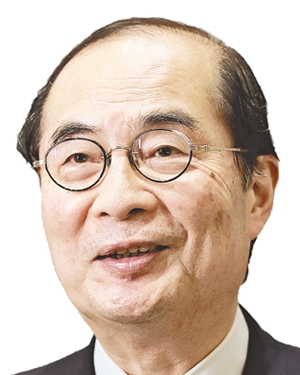
Hiroshi Yoshikawa
Yoshikawa is a professor emeritus at the University of Tokyo. He has served as the chair of the Fiscal System Council, an advisory panel to the finance minister. He is the author of “Reconstruction of Macroeconomics: Methods of Statistical Physics, and Keynes’ Principle of Effective Demand.”
The original Japanese article appeared in the March 1 issue of The Yomiuri Shimbun.





Most Read
Popular articles in the past 24 hours
-
Japan Govt to Tighten Requirements to Receive Permanent Residency...
-
‘King Kazu’ Discusses His Connection to Fukushima
-
JR Tokai Breaks Ground on Yamanashi Maglev Station; Will Be Part ...
-

Medical Care at Home and Disasters: Ensure Systems to Provide Con...
-

Metal Pipe That Protruded 13 Meters Above Ground in Osaka Sinks B...
-

White House Takes First Step toward Permanent Fix for Illegal Tar...
-
Japan to Extend Drone No-fly Zones Near Key Facilities to 1 km
-
The Japan News / Weekly Edition (3/13-3/19)
Popular articles in the past week
-

Japan Figure Skating Legend Yuzuru Hanyu Is Proud Disaster Surviv...
-

Nippon Life Insurance's U.S. Arm Sues OpenAI Over Legal Assistanc...
-
Govt to Utilize ODA for Ensuring Economic Security; Securing Ener...
-
Massive Sewer Pipe Found Jutting Out of Highway in Osaka
-

Beckoning Cats Get Makeover to Fit Modern Lifestyles with Sleek D...
-
Japan Govt Survey Finds Just 10% of Workers Want Working Hours to...
-
Japan's 2nd Round of U.S. Investments May Be Worth Over $100 Bill...
-

Imperial Family Watches World Baseball Classic Game Against Austr...
Popular articles in the past month
-

Producer Behind Pop Group XG Arrested for Cocaine Possession
-

Japan PM Takaichi’s Cabinet Resigns en Masse
-

Man Infected with Measles Reportedly Dined at Restaurant in Tokyo...
-

Videos Plagiarized, Reposted with False Subtitles Claiming ‘Ryuky...
-
Japan Figure Skating Legend Yuzuru Hanyu Is Proud Disaster Surviv...
-

iPS Treatments Pass Key Milestone, but Broader Applications Far f...
-

Sanae Takaichi Elected Prime Minister of Japan; Keeps All Cabinet...
-

Nepal Bus Crash Kills 19 People, Injures 25 Including One Japanes...
Top Articles in Editorial & Columns
-
Riku-Ryu Pair Wins Gold Medal: Their Strong Bond Leads to Major Comeback Victory
-

Reciprocal Tariffs Ruled Illegal: Judiciary Would Not Tolerate President’s High-Handed Approach
-
Japan’s Plan for Investment in U.S.: Aim for Mutual Development by Ensuring Profitability
-
Chronic Issues Erode Thailand’s Economy as Political Confusion Persists, Threatening Terminal Decline in Its Economy
-
Iran Situation: Japan Must Exert Diplomatic Efforts without Merely Standing by
JN ACCESS RANKING
-
Producer Behind Pop Group XG Arrested for Cocaine Possession
-
Japan PM Takaichi’s Cabinet Resigns en Masse
-
Man Infected with Measles Reportedly Dined at Restaurant in Tokyo Station
-
Videos Plagiarized, Reposted with False Subtitles Claiming ‘Ryukyu Belongs to China’; Anti-China False Information Also Posted in Japan
-
Japan Figure Skating Legend Yuzuru Hanyu Is Proud Disaster Survivor and Gold Medalist, Vows to Continue Support Efforts