
Japan’s Govt Says No Immediate Impact on Oil Supply; No Releases of Stockpiled Oil Planned For Now
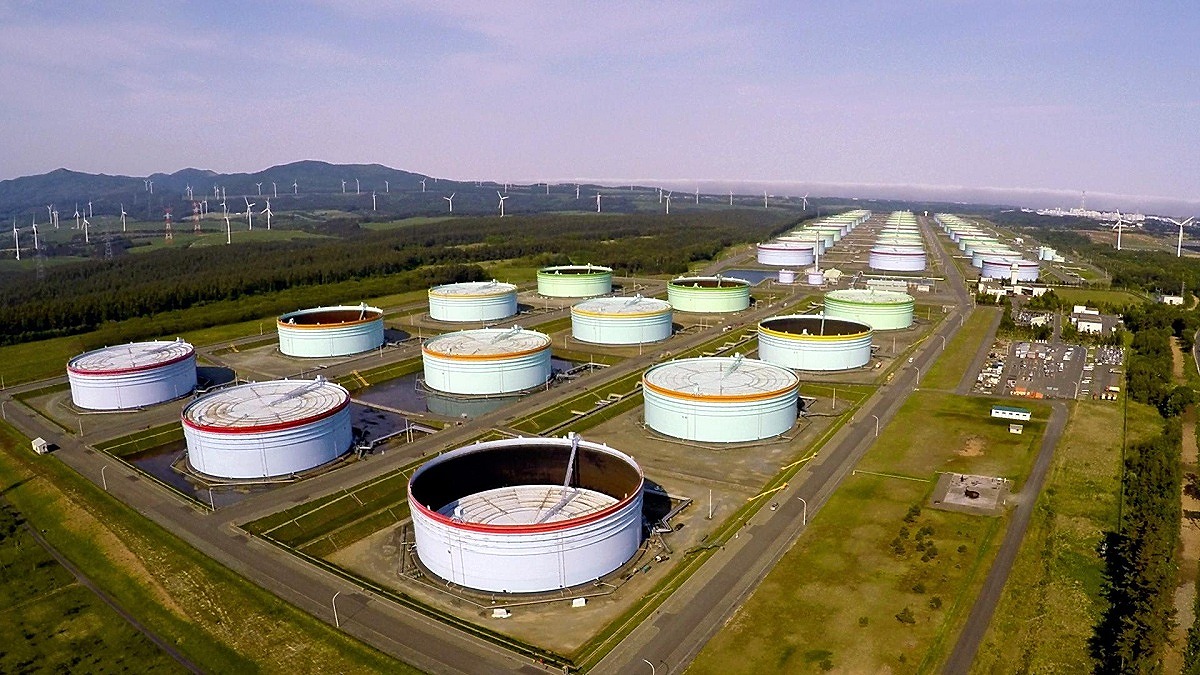
Mutsu-Ogawara National Petroleum Stockpiling Base in Rokkasho, Aomori Prefecture
15:31 JST, March 4, 2026
The closure of the Strait of Hormuz has sparked concerns in Japan, as it relies on the Middle East for over 90% of its crude oil imports.
The government has said there will be no immediate disruption in oil supply due to the nation’s oil stockpiles. There are no plans to release stockpiled oil at this time, but there may be releases should the Iran conflict become protracted.
Economy, Trade and Industry Minister Ryosei Akazawa said at a press conference after a Cabinet meeting on Tuesday, “The [purpose of stockpile releases] is not to suppress prices, but to ensure a stable supply of oil in the event of shortages.”
Under the Oil Stockpiling Law, Japan held a total of 254 days’ worth of oil in stockpiles as of the end of December. The law was enacted in 1975 following the 1973 oil crisis. It requires private businesses to maintain stockpiles above a specified level and allows for the release of stockpiled oil when there is a risk of disruption to the domestic supply due to insufficient imports or the impact of a disaster.
The stockpiles are divided into three categories: state stockpiles – currently 146 days’ worth – mostly held by the government in the form of crude oil; private sector stockpiles — 101 days’ worth — often in the form of petroleum products by refiners and other businesses; and joint stockpiles — seven days’ worth — held domestically in cooperation with oil-producing nations.
Oil stockpile releases may also occur when concerns over the global oil supply arise. In 2022, following the start of Russia’s aggression against Ukraine, the Japanese government coordinated with International Energy Agency (IEA) member countries and conducted its first-ever release of state stockpiles.
“It is necessary to prepare for the worst-case scenario, engage in discussions with the IEA and various countries and respond in a collaborative manner,” said Ken Koyama, chief economist at the Institute of Energy Economics, Japan.
The Economy, Trade and Industry Ministry on Monday set up a response headquarters to the situation regarding Iran. It is assessing the impact on energy supplies and oil market trends while considering countermeasures.






Most Read
Popular articles in the past 24 hours
-
2 Unpublished Early Novellas by Japan's Kenzaburo Oe Discovered, ...
-

Prime Minister Sanae Takaichi to Visit Fukushima Pref. on 15th An...
-
Pass Rate for Overseas Driver's License Conversion Test in Japan ...
-
Tokyo High Court Upholds Unification Church Dissolution Order
-
Nikkei Average Sinks over 1,500 Points in Morning
-

Japanese Speedskater Takagi Announces Retirement
-

How Trump Assassination Attempts Played into His Decision to Atta...
-

Sumo Scene / Former Makuuchi Daiamami Pays Tribute to Home Island...
Popular articles in the past week
-

Milano Cortina 2026: Japanese Gold Medalist Figure Skater Miura S...
-
Tokyo Spends Big on Children, Wins Over Parents
-

Japan’s Miura, Kihara Announce Withdrawal from Figure Skating Wor...
-

Yokohama to Test Out Renewable-Powered Offshore Floating Data Cen...
-

BOJ Keeping Eye on Economy and Takaichi's ‘Proactive Fiscal Polic...
-
Tokyo Measles Patient Traveled to Fukuoka Aboard JAL Planes; Susp...
-

South Korea Tightens Rules on Foreigners Buying Homes in Seoul Me...
-
Nidec Chairman Resigns Amid Accounting Scandal at Major Japanese ...
Popular articles in the past month
-

Producer Behind Pop Group XG Arrested for Cocaine Possession
-

Japan PM Takaichi’s Cabinet Resigns en Masse
-

Man Infected with Measles Reportedly Dined at Restaurant in Tokyo...
-

Israeli Ambassador to Japan Speaks about Japan’s Role in the Reco...
-

Videos Plagiarized, Reposted with False Subtitles Claiming ‘Ryuky...
-

Prudential Life Insurance Plans to Fully Compensate for Damages C...
-

Woman with Measles Visited Hospital in Tokyo Multiple Times Befor...
-

iPS Treatments Pass Key Milestone, but Broader Applications Far f...
Top Articles in Business
-
Prudential Life Insurance Plans to Fully Compensate for Damages Caused by Fraudulent Actions Without Waiting for Third-Party Committee Review
-

Japan, U.S. Name 3 Inaugural Investment Projects; Reached Agreement After Considerable Difficulty
-

Japan’s Major Real Estate Firms Expanding Overseas Businesses to Secure Future Growth, Focusing on Europe, U.S., Asia
-

SoftBank Launches AI Service for Call Centers That Converts Harsh Customer Voices into Softer Voices
-

Transport Companies See Opportunity in Narita Expansion; Airlines, Railways Prepare to Meet Expected Growth in Demand
JN ACCESS RANKING
-
Producer Behind Pop Group XG Arrested for Cocaine Possession
-
Japan PM Takaichi’s Cabinet Resigns en Masse
-
Man Infected with Measles Reportedly Dined at Restaurant in Tokyo Station
-
Israeli Ambassador to Japan Speaks about Japan’s Role in the Reconstruction of Gaza
-
Videos Plagiarized, Reposted with False Subtitles Claiming ‘Ryukyu Belongs to China’; Anti-China False Information Also Posted in Japan