
Milano Cortina 2026: Miura and Kihara Eager to Add Their Names to Japan’s Olympic Roll of Honour
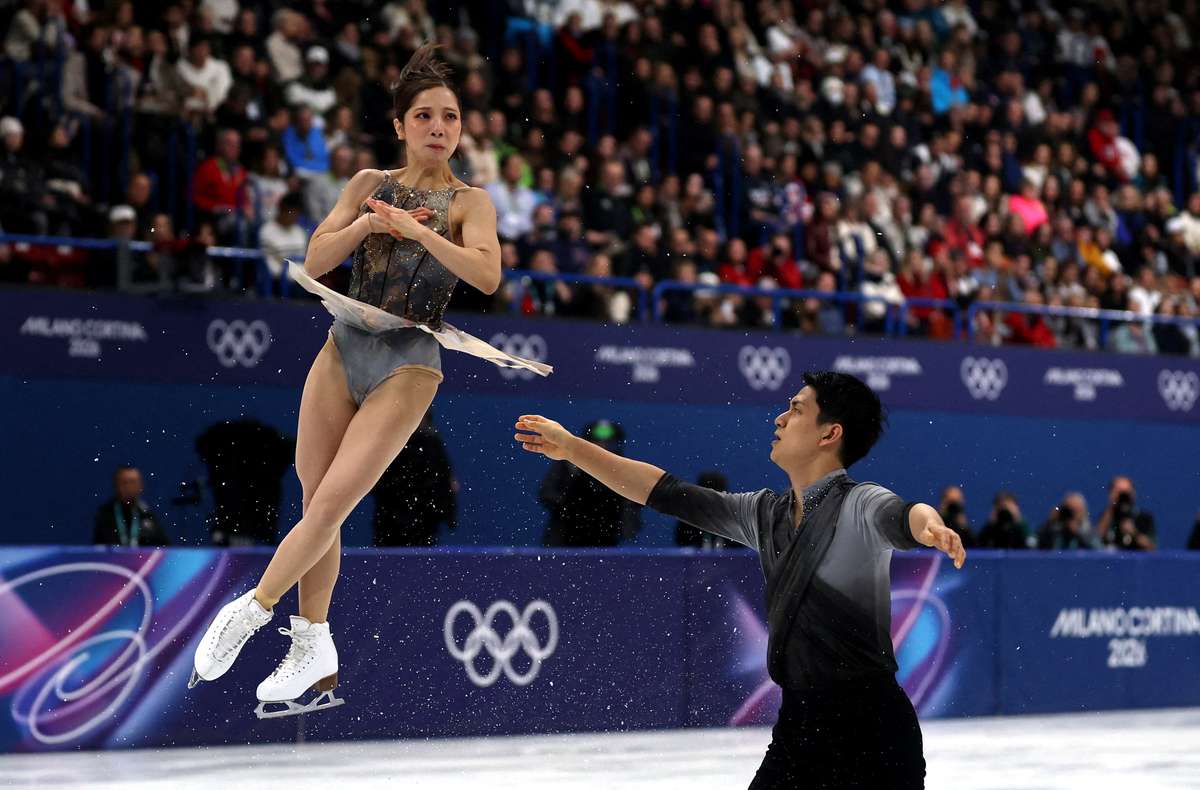
Riku Miura, left, and Ryuichi Kihara compete during the figure skating pairs team event at the Winter Olympics in Milan on Sunday.
11:04 JST, February 14, 2026
MILAN, Feb 13 (Reuters) – Japanese figure skaters have been conquering Olympic events over the last two decades and following the successes of Shizuka Arakawa in the women’s and Yuzuru Hanyu in the men’s, Riku Miura and Ryuichi Kihara will be hoping to make a golden impact in the pairs at the Milano Cortina Olympics.
When Italy last hosted the Winter Games in 2006, Arakawa struck gold in Turin to finally earn the Asian nation their first ever Olympic title in the sport before the ever-popular Hanyu mined more gold in the men’s event in 2014 and 2018.
You may also like to read
Milano Cortina 2026: Japan Takes Silver Medal in Team Figure Skating; Finishes Just 1 Point Behind U.S. For Second Consecutive SilverNow two-time world champions Miura and Kihara will be eager to add their names to Japan’s Olympic roll of honour by keeping the chasing pack at bay when the pairs competition begins on Sunday with the short programme.
In a closely‑packed field, Georgia’s Anastasiia Metelkina and Luka Berulava, German duo Minerva Fabienne Hase and Nikita Volodin, Canadians Deanna Stellato-Dudek and Maxime Deschamps and Italian home favourites Sara Conti and Niccolo Macii are expected to be in hot pursuit of the Japanese skaters.
Miura and Kihara topped the pairs competition in the team event to help Japan capture silver earlier in the Games.
And while Miura has been troubled by a recurring dislocated shoulder, Kihara suffered from a back injury in 2023 that sidelined the pair from the Grand Prix circuit that year.
The duo, who have been partners for seven years, said their injuries are finally a thing of the past.
“A lot of things didn’t go our way the last four years including injuries,” Miura told Olympics.com. “But we got through it all and that’s what made us stronger in mind and body.”
Miura and Kihara are competing at their second Olympics, and cemented their status as the team to beat after winning the Grand Prix Final in Nagoya in December, where they edged Italy’s Conti and Macii, with Fabienne Hase and Volodin finishing third.
“The Grand Prix Final was a mini-Olympics,” Conti said.
Metelkina and Berulava were fourth at the final, followed by Hungary’s Maria Pavlova and Alexei Sviatchenko, and Stellato-Dudek and Deschamps.
Metelkina and Berulava, who dominated the recent European championships, finished runners-up to the Japanese in the Olympic team event to underline their status as medal contenders, while the Italians, buoyed by the home crowd, were third.
Stellato‑Dudek had high hopes of becoming figure skating’s oldest Olympic female gold medallist, but the 42-year-old hit her head in training on January 30, forcing the duo out of the team event before medical evaluations cleared her for the pairs.
Her remarkable comeback after 16 years away from the sport saw her become the sport’s oldest female world champion when she and Deschamps won gold in 2024.
She is the oldest figure skater to compete at the Olympics in nearly a century.
China’s reigning Olympic champions Sui Wenjing and Han Cong are writing a comeback story of their own, returning to the Olympic stage after a three-year hiatus.
They won bronze at the Cup of China in October, but remain well below their previous scoring levels and missed qualification for December’s Grand Prix Final.
“Every pair has their owns strengths. We are more intense; the Georgians are very precise and perform some spectacular elements. The Japanese just race ahead. We’ve been working on getting faster – but there is no catching them,” Italy’s Macii said.



Related Tags
Most Read
Popular articles in the past 24 hours
-
Japan's Ruling Bloc Aims to Reclaim Key Committee Posts in Lower ...
-
Milano Cortina 2026: Japan’s Mitsuki Ono, Ikuma Horishima Add 2 B...
-

Japan, U.S. Fail to Make Final Decision on $550 Bil. Investment P...
-

Taiwan Chipmaker’s New Factory: Utilize Advanced Products to Boos...
-
Japan's Former Justice Minister Mori Expected to Be Elected as Sp...
-
Council Submits Proposals for Revising Retrial System; Some Legal...
-

Berlin Film Festival Kicks off with a Nod to New Voices from Mich...
-

Milano Cortina 2026: Japan’s Totsuka Wins Gold, Yamada Takes Bron...
Popular articles in the past week
-

Woman with Measles Visited Hospital in Tokyo Multiple Times Befor...
-

Prudential Life Insurance Plans to Fully Compensate for Damages C...
-

Woman with No Overseas Travel History Infected with Measles in Na...
-

LDP Wins Historic Landslide Victory
-

LDP Wins Landslide Victory, Secures Single-party Majority; Ruling...
-

Measles Patient Flew Between Tokyo, Hokkaido in Late January; Lik...
-
Milano Cortina 2026: Kokomo Murase Comes Out on Top After Overcom...
-

Tokyo, Many Regions across Japan Hit with Heavy Snow
Popular articles in the past month
-

Japan Institute to Use Domestic Commercial Optical Lattice Clock ...
-

Israeli Ambassador to Japan Speaks about Japan’s Role in the Reco...
-

Man Infected with Measles May Have Come in Contact with Many Peop...
-

China Eyes Rare Earth Foothold in Malaysia to Maintain Dominance,...
-
Australian Woman Dies After Mishap on Ski Lift in Nagano Prefectu...
-
Japan, Qatar Ministers Agree on Need for Stable Energy Supplies; ...
-
Woman with Measles Visited Hospital in Tokyo Multiple Times Befor...
-
Foreign Snowboarder in Serious Condition After Hanging in Midair ...
Top Articles in Sports
-
Aonishiki Tops Atamifuji in Playoff to Win New Year Grand Sumo Tournament in Ozeki Debut
-
Milano Cortina 2026: Kokomo Murase Comes Out on Top After Overcoming Obstacles, Aiming for Greater Heights in Competition
-

Milano Cortina 2026: Olympics-Torch Arrives in Co-Host Cortina on Anniversary of 1956 Games
-
Milano Cortina 2026: Japan’s Athletes Arrive in Italy for Milano Cortina Winter Olympics; Other Athletes to Arrive from Now
-
Sumo Scene / What’s in a Sumo Name? The Reason Why the New Year Tournament Is Called the January Tournament
JN ACCESS RANKING
-
Japan Institute to Use Domestic Commercial Optical Lattice Clock to Set Japan Standard Time
-
Israeli Ambassador to Japan Speaks about Japan’s Role in the Reconstruction of Gaza
-
Man Infected with Measles May Have Come in Contact with Many People in Tokyo, Went to Store, Restaurant Around When Symptoms Emerged
-
China Eyes Rare Earth Foothold in Malaysia to Maintain Dominance, Counter Japan, U.S.
-
Australian Woman Dies After Mishap on Ski Lift in Nagano Prefecture