
Osaka: Cute Merchandise of Ancient Japan Haniwa Clay Figures Sparks New Wave of Fans
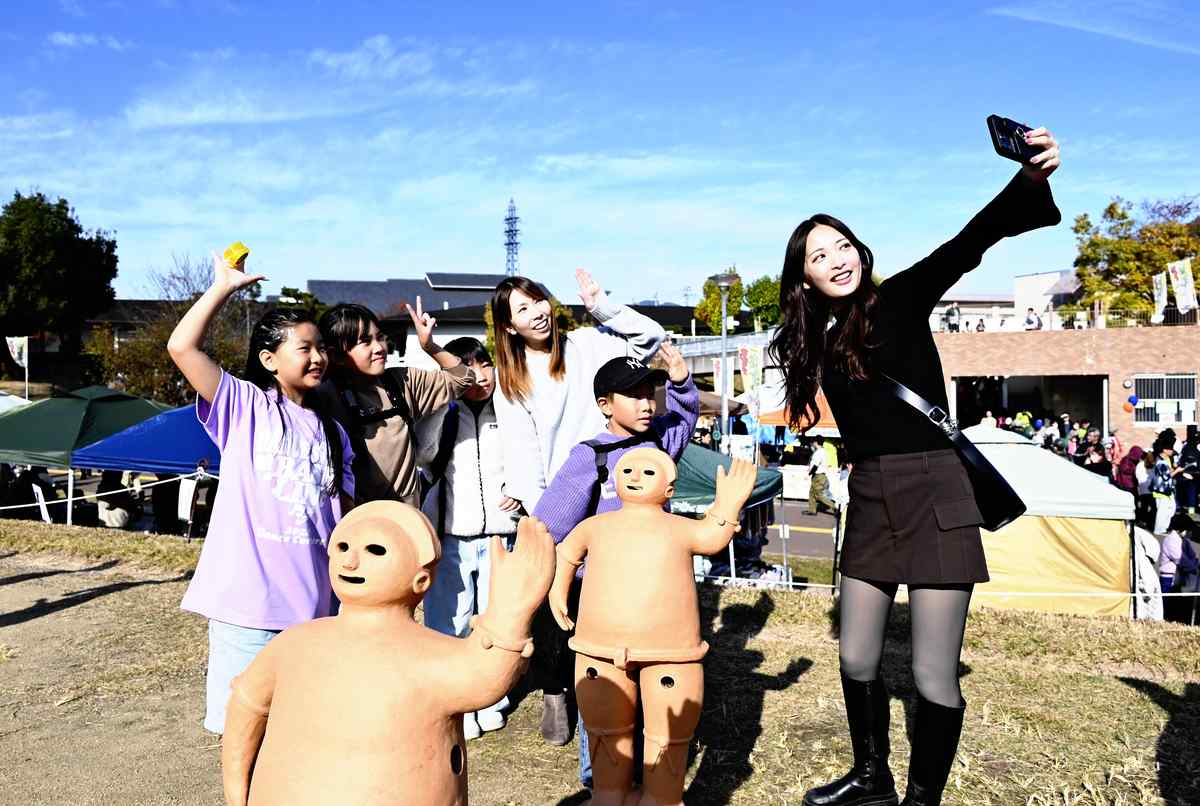
People take a photo with reproductions of haniwa clay figures from the Imashirozuka Burial Mound in Takatsuki, Osaka Prefecture.
11:08 JST, February 7, 2026
TAKATSUKI, Osaka — Kofun ancient burial mounds and haniwa clay figures, which were ornaments arranged on and around these tombs, are gaining popularity among young people smitten by goods cutely depicting their distinctive shapes.
In November, the 15th Kofun Fes Hanicotto festival was held at Imashirozuka Burial Mound Park in Takatsuki. Hanicotto is a portmanteau of the words “haniwa,” which are important archaeological materials, and “mascot.” Kofun were tombs for royalty or other powerful families, and well-known examples have a distinctive keyhole shape.
A music stage was set up with the huge burial mound as a backdrop, with stalls offering visitors handmade items shaped like haniwa and keyhole-shaped burial mounds. The festival was a blend of the ancient and the contemporary.
“The haniwa’s facial expressions are really pop,” a 42-year-old woman said cheerfully. She came from Osaka City and was attending the festival for the first time. “This is the only place where you can be surrounded by various kofun and haniwa merchandise.”
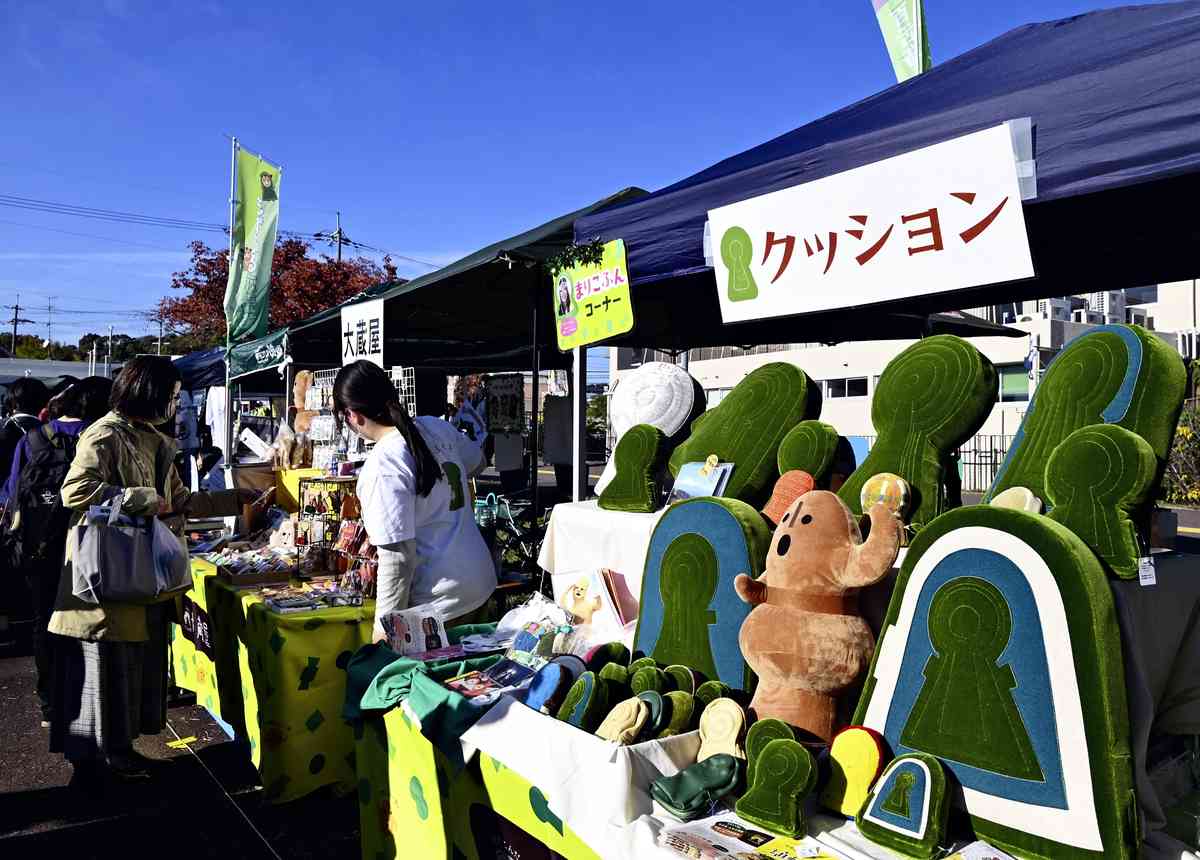
A stall selling kofun- and haniwa-themed items
The 181-meter-long Imashirozuka burial mound is believed to have been built in the first half of the sixth century as the tomb of Emperor Keitai. About 190 clay figures, including some shaped as people, houses or long swords, have been recovered during excavations at the park, which is operated by the city government. The area has become a popular place for residents to relax.
The festival was the brainchild of Rie Maki, a handmade accessory artist who moved to a house near the kofun about 20 years ago. While going for a walk with her young daughter one day, Maki realized that their usual route passed through the area around the burial mound. She was astonished that daily life in Takatsuki is connected to 1,500 years ago.
“I wondered what people back then were thinking when they built this kofun,” Maki, 45, recalled. She became intrigued by the people who had lived there long ago.
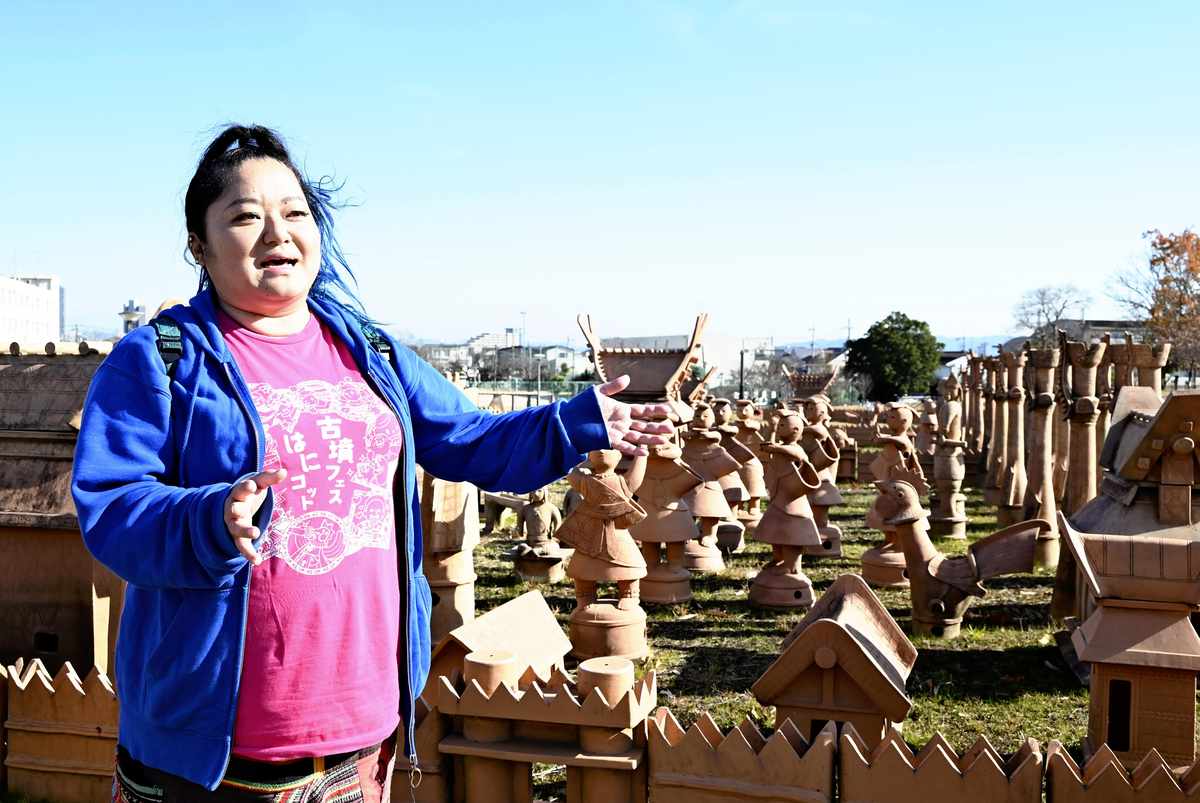
A stall selling kofun- and haniwa-themed items
Inspired by the city government’s creation of the park in 2011, Maki thought about how she could use her skill at making crafts by hand to convey the area’s fascinating history. After discussions with the city government, the following year she organized the first Hanicotto event selling accessories and other goods at the park.
Kofun have captivated people before. The discovery of wall paintings depicting women and other figures inside the Takamatsuzuka Tumulus in the village of Asuka, Nara Prefecture, in 1972 sparked a nationwide boom in archaeology.
In 1989, a moated settlement from the Yayoi period (ca 300 B.C.–ca A.D. 300) was found in the Yoshinogari Ruins in Saga Prefecture and triggered debate over where the Yamatai Kingdom had been located. But in these cases, the people caught up in the excitement were mostly middle-aged and elderly people from those areas.
Fast-forward to the Hanicotto festival, and most attendees are young women and families.
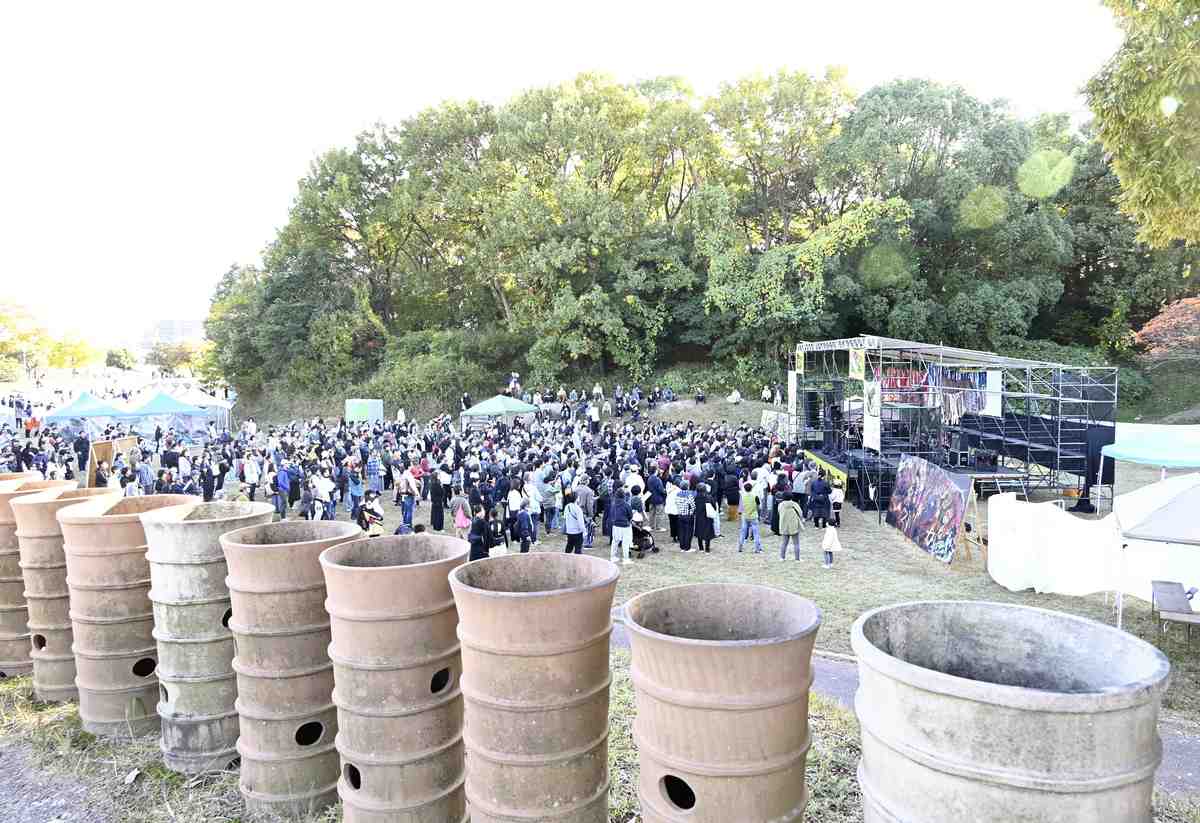
A music stage is set up next to the Imashirozuka Burial Mound in Takatsuki, Osaka Prefecture.
“This comes against the backdrop of a ‘kawaii’ boom in Japan since the turn of the century,” explained Junya Sakurai, professor emeritus at Shobi University and an expert in Japanese archaeology. “The kofun and haniwa have been personified and stylized. I think this has coincided with the craze in yurukyara character mascots, which has made young people interested in them.”
The first festival, which was originally envisaged as a place for people with a shared interest to get together, attracted about 3,000 visitors. The latest edition had grown into a major event that attracted about 39,000 people in one day.
Sakurai suggested that the current kofun boom is a social phenomenon that differs from previous ancient history fads because it is centered on merchandise and art. However, these items can pique deeper interest in Japan’s ancient history. Young people bearing haniwa mascot goods have been spotted at information sessions held at excavation sites.
For Maki, this place, where people can be surrounded by the simple, rounded sculptures and tangibly feel the history around them, is special. “This is a relaxing space,” she said.
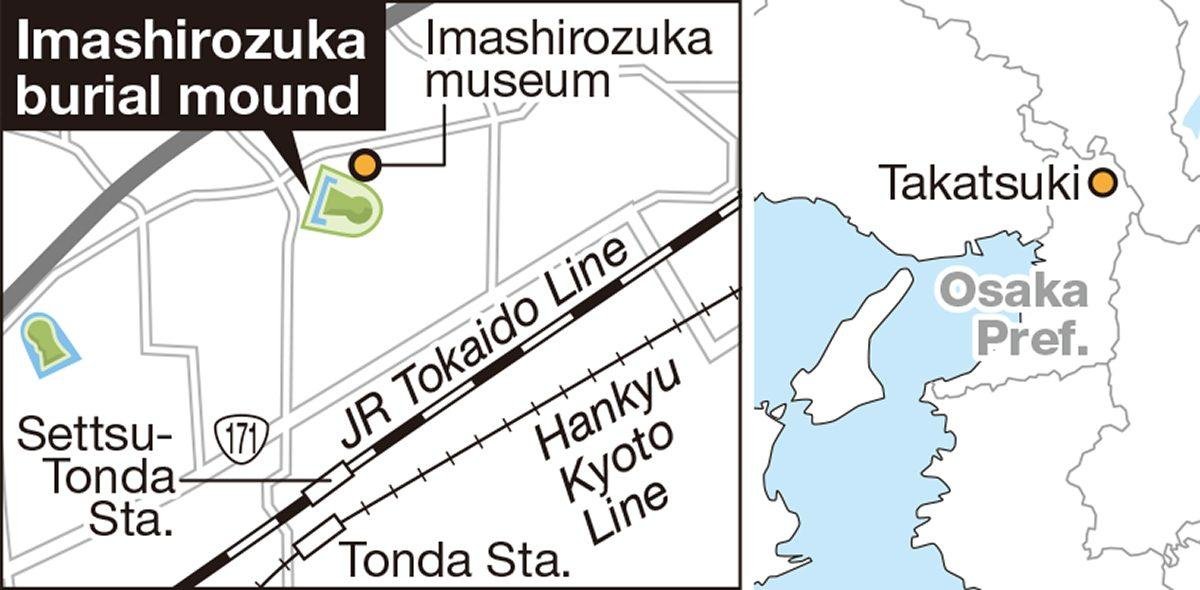
Imashirozuka Burial Mound Park
The park allows visitors to freely walk around the burial mound. It is about a 25-minute walk from JR Settsu-Tonda Station. If you take a bus from the station, get off at either Imashirozuka Kofun mae or Himuro stops and walk for 2 minutes. The Imashirozuka Ancient History Museum is free to enter. It is closed every Monday, or the following day if Monday is a holiday.


Related Tags

Most Read
Popular articles in the past 24 hours
-

JR Yamanote Line Resumes Services after Suspension Due to Acciden...
-

Amazon, Japan's JERA Energy Firm Sign Deal on AI, Data Centers
-

Japan's Ruling, Opposition Party Execs Make Final Push to Secure ...
-
Vietnam's Cherry Blossom Doctor Turns 10 Seeds from Japan into 12...
-
Takaichi's Popularity Giving LDP Candidates a Leg Up in Campaign'...
-
Supreme Court Justices on Ballot in Japan; Public Interest Rising...
-

China Provoked Takaichi into Risky Move of Dissolving House of Re...
-
Visitors Enjoy Early Blooming Flowers Set Against Mt. Fuji
Popular articles in the past week
-

Man Infected with Measles May Have Come in Contact with Many Peop...
-
Australian Woman Dies After Mishap on Ski Lift in Nagano Prefectu...
-

Chinese Embassy in Japan Reiterates Call for Chinese People to Re...
-

BTS to Hold Comeback Concert in Seoul on March 21; Popular Boy Ba...
-

Toyota Motor Group Firm to Sell Clean Energy Greenhouses for Stra...
-

Beer Yeast Helps Save Labor, Water Use in Growing Rice; Govt Hope...
-
Japan Tourism Agency Calls for Strengthening Measures Against Ove...
-
Rising Prices in Japan Squeeze Household Finances; Major Parties ...
Popular articles in the past month
-
Univ. in Japan, Tokyo-Based Startup to Develop Satellite for Disa...
-
JAL, ANA Cancel Flights During 3-day Holiday Weekend due to Blizz...
-

Japan Institute to Use Domestic Commercial Optical Lattice Clock ...
-

China Eyes Rare Earth Foothold in Malaysia to Maintain Dominance,...
-

China Confirmed to Be Operating Drilling Vessel Near Japan-China ...
-
Man Infected with Measles May Have Come in Contact with Many Peop...
-

Japan, Qatar Ministers Agree on Need for Stable Energy Supplies; ...
-
Australian Woman Dies After Mishap on Ski Lift in Nagano Prefectu...
Top Articles in Features
-
Pangasius Catfish Increasingly Featured on Japanese Restaurant Menus, Home Dining Tables Due to Affordability, Mild Flavor
-
Sapporo Snow Festival Opens with 210 Snow and Ice Sculptures at 3 Venues in Hokkaido, Features Huge Dogu
-

Tourists Flock to Ice Dome Lodge at Resort in Hokkaido, Japan; Facility Invites Visitors to Sleep on Beds Made of Ice
-
Traditional Umbrellas Illuminated in Gifu City, Projection Mapping Lights Up Park Near Gifu Castle
-

Elementary School Students’ Roasted Sweet Potato Gelato a Hot Seller
JN ACCESS RANKING
-
Univ. in Japan, Tokyo-Based Startup to Develop Satellite for Disaster Prevention Measures, Bears
-
JAL, ANA Cancel Flights During 3-day Holiday Weekend due to Blizzard
-
Japan Institute to Use Domestic Commercial Optical Lattice Clock to Set Japan Standard Time
-
China Eyes Rare Earth Foothold in Malaysia to Maintain Dominance, Counter Japan, U.S.
-
Man Infected with Measles May Have Come in Contact with Many People in Tokyo, Went to Store, Restaurant Around When Symptoms Emerged