
Noto Quake-Hit Suzu to Reuse Part of Osaka Expo Grand Ring as Timber for Disaster Public Housing

Concept rendering of the public housing for disaster victims to be built in Suzu
6:00 JST, January 24, 2026
SUZU, Ishikawa ― Municipal government of Suzu, a city in Ishikawa Prefecture devastated by the Noto Peninsula Earthquake, will repurpose part of the Grand Ring, the signature structure of the 2025 Osaka-Kansai Expo, and use it as building material for public housing for disaster victims.
The proposal was put forward by internationally acclaimed architect Shigeru Ban, 68, who said he hoped the project would “give people a reason to look at the reality of the disaster area.” In Suzu, residents and officials alike hope the project will serve as both an Expo legacy and a symbol of recovery.

The Grand Ring is seen being dismantled in Osaka on Dec. 5.
The ring, which measures about 2 kilometers in circumference, contains roughly 27,000 cubic meters of timber. Under the plan, 1,200 cubic meters — about 4% of the total — will be reused in Suzu. The Japan Association for the 2025 World Exposition will donate the wood to the city free of charge.
Public housing for disaster victims refers to homes municipalities provide at affordable rents to residents who have lost housing in a disaster.
Suzu is estimated to need 700 units. Of those, timber from the ring is expected to be used for beams and columns in approximately 50 units of apartment-style housing. If each unit is assumed to be 65 square meters, the calculation works out to about 20 cubic meters of timber per unit, officials said. Completion is targeted within fiscal 2027.
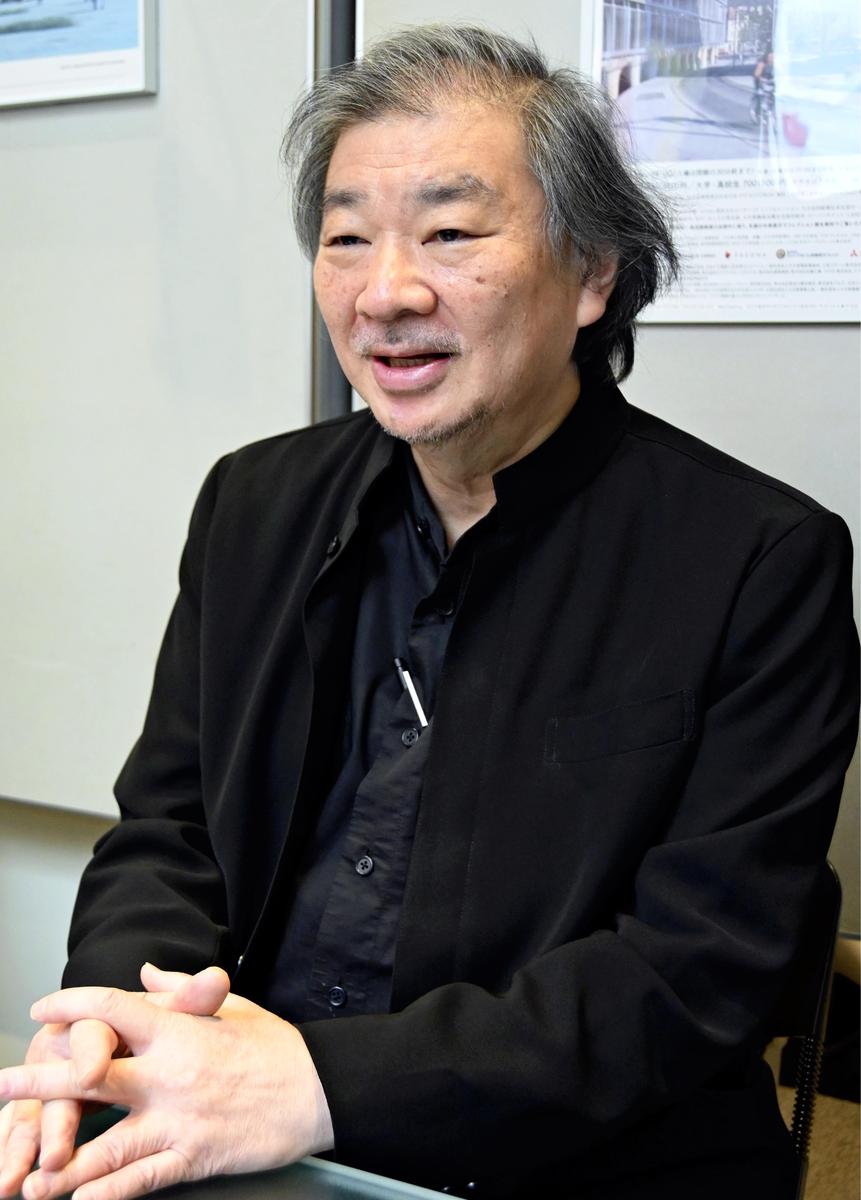
Shigeru Ban
At the Expo, Ban designed a private-sector pavilion themed around ocean conservation. While he is known worldwide for major construction projects, he has also long been recognized for humanitarian work, including providing temporary shelters for refugees and disaster survivors.
He has deep ties to Suzu. He designed the Shiosai Restaurant, which opened in the city in 2023, and after the Noto Peninsula Earthquake in January 2024, he donated partitions made from paper tubes and cloth to help secure privacy in evacuation shelters.
In Suzu and other affected areas, he also worked on designs for two-story wooden emergency temporary housing, contributing to improvements in survivors’ living conditions.
Seeking ways to reuse the timber after the ring is dismantled, the Expo association invited applications from potential recipients. Suzu applied last summer and later received notification that it had been selected.
The city has yet to choose the designers and construction contractors for the public housing for disaster victims.
“If the ring is just going to be disposed of as wood chips, it’s better to put it to effective use in a disaster area,” Ban said. “It also creates conversation,” he added.
The Grand Ring has been certified by Guinness World Records as the world’s largest wooden architectural structure. Dismantling efforts for the timber are underway, with one 200-meter section in the northeast to be set aside for displaying at the site.
A Suzu city official said, “We want it to carry on the Expo legacy and become a symbolic presence when our recovery is complete.”


Related Tags




Most Read
Popular articles in the past 24 hours
-

Voters Using AI to Choose Candidates in Japan's Upcoming General ...
-

Japan's Snow-Clad Beauty: Camellia Flowers Seen in Winter Bloom a...
-

Monkey Strikes Junior High School Girl from Behind in Japan's Yam...
-

Genichiro Inokuma's Mural in Ueno Station That Gave Hope in Postw...
-

Senior Japanese Citizens Return to University to Gain Knowledge, ...
-

Foreign and Security Policy: Political Parties Must Discuss How T...
-
Heavy Snow Linked to 30 Deaths across Japan since Late Jan.; JMA ...
-

Tokyo Police Arrest Head of Resignation Assistance Firm
Popular articles in the past week
-

Japan Institute to Use Domestic Commercial Optical Lattice Clock ...
-
Australian Woman Dies After Mishap on Ski Lift in Nagano Prefectu...
-
Foreign Snowboarder in Serious Condition After Hanging in Midair ...
-

Chinese Embassy in Japan Reiterates Call for Chinese People to Re...
-
Narita Airport, Startup in Japan Demonstrate Machine to Compress ...
-

Toyota Motor Group Firm to Sell Clean Energy Greenhouses for Stra...
-

Sakie Yokota, Last Surviving Parent of a North Korea Abductee, Ur...
-

Beer Yeast Helps Save Labor, Water Use in Growing Rice; Govt Hope...
Popular articles in the past month
-

Univ. in Japan, Tokyo-Based Startup to Develop Satellite for Disa...
-

JAL, ANA Cancel Flights During 3-day Holiday Weekend due to Blizz...
-

China Confirmed to Be Operating Drilling Vessel Near Japan-China ...
-

China Eyes Rare Earth Foothold in Malaysia to Maintain Dominance,...
-
M6.2 Earthquake Hits Japan's Tottori, Shimane Prefectures; No Tsu...
-
Japan Institute to Use Domestic Commercial Optical Lattice Clock ...
-

Japan, Qatar Ministers Agree on Need for Stable Energy Supplies; ...
-

Japan, Italy to Boost LNG Cooperation; Aimed at Diversifying Japa...
Top Articles in Society
-
JAL, ANA Cancel Flights During 3-day Holiday Weekend due to Blizzard
-
Record-Breaking Snow Cripples Public Transport in Hokkaido; 7,000 People Stay Overnight at New Chitose Airport
-
Australian Woman Dies After Mishap on Ski Lift in Nagano Prefecture
-
Foreign Snowboarder in Serious Condition After Hanging in Midair from Chairlift in Nagano Prefecture
-
Train Services in Tokyo Resume Following Power Outage That Suspended Yamanote, Keihin-Tohoku Lines (Update 4)
JN ACCESS RANKING
-
Univ. in Japan, Tokyo-Based Startup to Develop Satellite for Disaster Prevention Measures, Bears
-
JAL, ANA Cancel Flights During 3-day Holiday Weekend due to Blizzard
-
China Confirmed to Be Operating Drilling Vessel Near Japan-China Median Line
-
China Eyes Rare Earth Foothold in Malaysia to Maintain Dominance, Counter Japan, U.S.
-
Japan Institute to Use Domestic Commercial Optical Lattice Clock to Set Japan Standard Time