
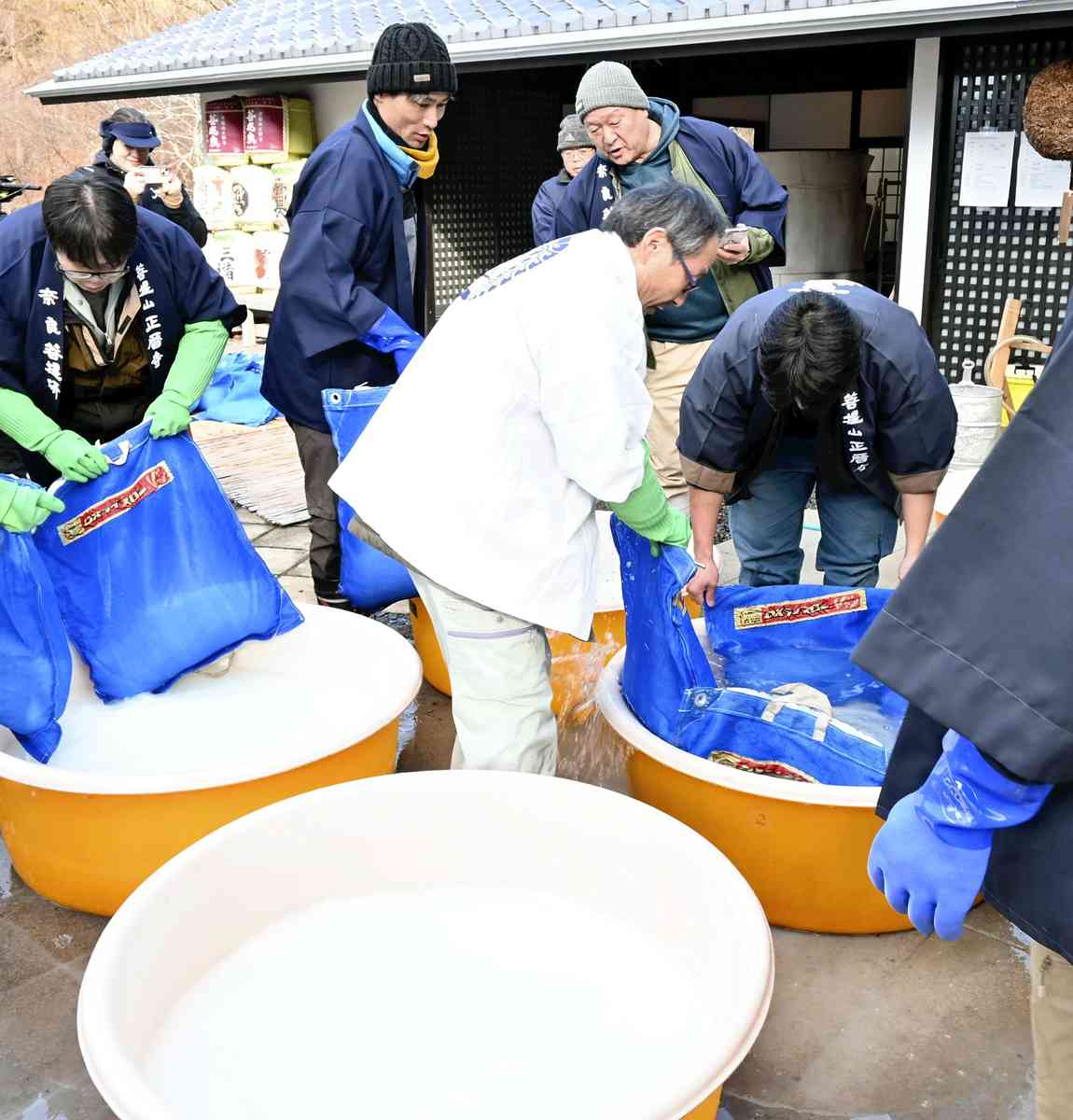
Members of a group studying an ancient brewing method wash rice for sake in Nara.
16:39 JST, January 24, 2026&
NARA — The brewing of refined sake using an ancient method began at Shoryakuji temple in the city of Nara in early January. The temple, located along mountains on the outskirts of Japan’s ancient capital, is considered the birthplace of refined sake.
While there are multiple theories about the origin of refined sake, one suggests brewing refined sake began at the temple in the mid-15th century. Until then, sake was typically a cloudy beverage, the temple said. Other temples across the region are also said to have been actively producing sake at that time, using it as an important source of income.
The ancient sake making method called Bodaimoto involves brewing sake using water in which raw rice has been fermented with lactic acid bacteria. According to Shoryakuji temple, it produced high-quality, clear sake until around the 17th century, but production ceased with the temple’s decline.
In 1999, a research group formed by breweries and others in Nara Prefecture revived the Bodaimoto method based on descriptions from documents over 500 years old. Since then, brewing using the method has been conducted annually around early January.
On Jan. 6, about 15 employees from seven sake breweries in the prefecture began the work under a cold sky. They washed about 370 kilograms of rice produced in the prefecture with spring water from the temple grounds and added lactic acid bacteria discovered at the temple and yeast in a large tank. They mixed these ingredients to create the fermented liquid used in sake brewing.
“We have a mission to preserve Japan’s sake brewing for future generations,” said head priest Koshin Ohara. “We want to continue making sake, which is indispensable to Japanese food culture.”


Related Tags

Most Read
Popular articles in the past 24 hours
-
Kesennuma, Miyagi Pref., Locals Raise Carp Streamers as Symbol of...
-

Iran Situation: Significance of Rule of Law Must Be Conveyed
-
Toyota Advancing Plant-Based Biofuel Development in Fukushima Tow...
-

Trump Says Iran Had a New Site for Developing Nuclear Weapons
-
2 People Reportedly Found on Mt. Fuji; Hiking Trail Currently Clo...
-

CARTOON OF THE DAY (March 10)
-
Rapeseed Flowers Reach Peak Viewing Period at Tokyo's Showa Kinen...
-
Japan's TEPCO to Raise Electricity Rates for Corporations in Apri...
Popular articles in the past week
-

Ibaraki Pref.'s 1st Foreign Bus Driver Hired in Tsukuba
-

Amid Strait of Hormuz Blockade, Shipping Companies Scramble to Ge...
-
Govt to Utilize ODA for Ensuring Economic Security; Securing Ener...
-
Japan Govt Survey Finds Just 10% of Workers Want Working Hours to...
-
Japan's 2nd Round of U.S. Investments May Be Worth Over $100 Bill...
-

Imperial Family Watches World Baseball Classic Game Against Austr...
-

Nippon Life Insurance's U.S. Arm Sues OpenAI Over Legal Assistanc...
-
Beckoning Cats Get Makeover to Fit Modern Lifestyles with Sleek D...
Popular articles in the past month
-

Producer Behind Pop Group XG Arrested for Cocaine Possession
-

Japan PM Takaichi’s Cabinet Resigns en Masse
-

Man Infected with Measles Reportedly Dined at Restaurant in Tokyo...
-

Videos Plagiarized, Reposted with False Subtitles Claiming ‘Ryuky...
-

iPS Treatments Pass Key Milestone, but Broader Applications Far f...
-

Sanae Takaichi Elected Prime Minister of Japan; Keeps All Cabinet...
-

Nepal Bus Crash Kills 19 People, Injures 25 Including One Japanes...
-
South Korea Tightens Rules on Foreigners Buying Homes in Seoul Me...
Top Articles in Features
-
Tokyo’s New Record-Breaking Fountain Named ‘Tokyo Aqua Symphony’
-
High-Hydration Bread on the Rise, Seeing Increase in Specialty Shops, Recipe Searches
-
Japanese Students Use Traditional Pickle to Create Novel Wagashi Confectionery
-
Heirs to Kyoto Talent: Craftsman Works to Keep Tradition of ‘Kinran’ Brocade Alive Through Initiatives, New Creations
-

My Spendthrift Mother Constantly Asks Me for Money
JN ACCESS RANKING
-
Producer Behind Pop Group XG Arrested for Cocaine Possession
-
Japan PM Takaichi’s Cabinet Resigns en Masse
-
Man Infected with Measles Reportedly Dined at Restaurant in Tokyo Station
-
Videos Plagiarized, Reposted with False Subtitles Claiming ‘Ryukyu Belongs to China’; Anti-China False Information Also Posted in Japan
-
iPS Treatments Pass Key Milestone, but Broader Applications Far from Guaranteed