
Kobe’s ‘Hope’ Baby Helped People Connect with Tohoku, as Region Recovered from 2011 Great East Japan Earthquake
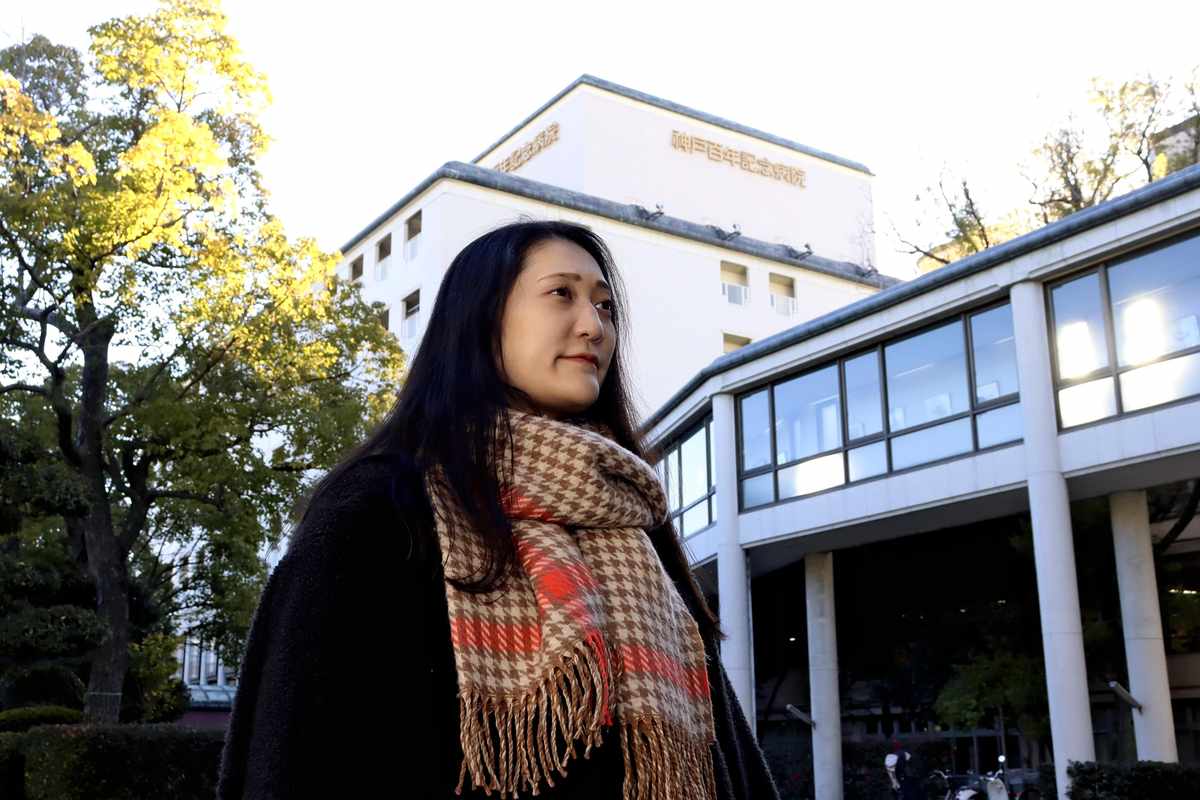
Hanako Ukon stands in front of the hospital where she was born in Hyogo Ward, Kobe, on Jan.3.
21:00 JST, January 17, 2026
KOBE — On Jan. 20, 1995, three days after the Great Hanshin Earthquake, a baby girl weighing 2.97 kilograms was born at Kanebo Memorial Hospital in Hyogo Ward, Kobe. The happy news from the disaster-struck area was reported both in Japan and abroad, and diapers and clothing were sent to the hospital.
The girl was named Hanako, with “hana” meaning “cheerfulness.” Her parents hoped that the “ruined city may see a cheerful rebirth, as soon as possible.” The name has proved providential for Hanako Ukon, now 30.
When the earthquake struck in 1995, Hanako’s mother Yuko was 33 years old, and she had returned to her parents’ apartment near the hospital to give birth.
You may also like to read
Hanshin Earthquake Memorials Draw Thousands of Mourners in Japan 31 Years After DisasterAt 5:46 a.m. on Jan. 17, she was woken by shaking that seemed to thrust her upward. She turned on her side to pick up her 2-year-old daughter, when a dresser fell over and hit her hip.
Yuko, now 64, shudders when she thinks what would have happened if she had been lying on her back at the time.
Her labor pains began around 4 a.m. on Jan. 20. The elevators were not working, so she spent an hour descending the stairs step by step from the 15th floor.
An acquaintance who lived in the same apartment building drove her to the hospital, where she headed to the delivery room. Seventeen minutes after she arrived, the baby was born. The newborn could not even have a bath as the water was cut off, but her cries, a sign of life, echoed through the ward.
When Hanako was in elementary school, her mother told her about the origin of her name, how she was meant to embody hope. Hanako was not upset to learn about her connection to the earthquake.
The 2011 Great East Japan Earthquake struck when Hanako was 16 years old and a student in high school. At first, she did not think of the disaster as something that involved her; she was busy playing hockey.
But before long, she began to take an interest in her classmate Nami Harada, who had visited the impacted area as a volunteer.
“I began to ask myself why I did nothing, even though I was supposed to be a sign of hope,” she said. She had always loved her name, but for the first time she felt burdened by it. She even began to feel guilty.
Hanako enrolled in the same university as Harada. In 2013, Harada invited Hanako to visit Kesennuma in Miyagi Prefecture, a town hit by the devastating tsunami that followed the 2011 quake.
While talking with local fishermen, Hanako tasted the bounty of the sea and experienced the warmth of local residents. She stopped thinking, “I want to help them,” and started thinking, “I want to share the appeal.”
Hanako, together with Harada and another friend, began trying to create a place where people could feel connected to the region that had been so wrecked. In May 2014, they started an initiative out of a rented store in Kyoto, serving dishes made with ingredients from Tohoku on the 11th day of each month, the same date that the disaster struck. They named it Kikkake Syokudo (opportunity restaurant) in the hope it would give people a chance to think about Tohoku.
The initiative drew attention and spread from Kyoto to Tokyo, Sendai and elsewhere. Through these activities, Hanako’s emotional burden gradually disappeared.
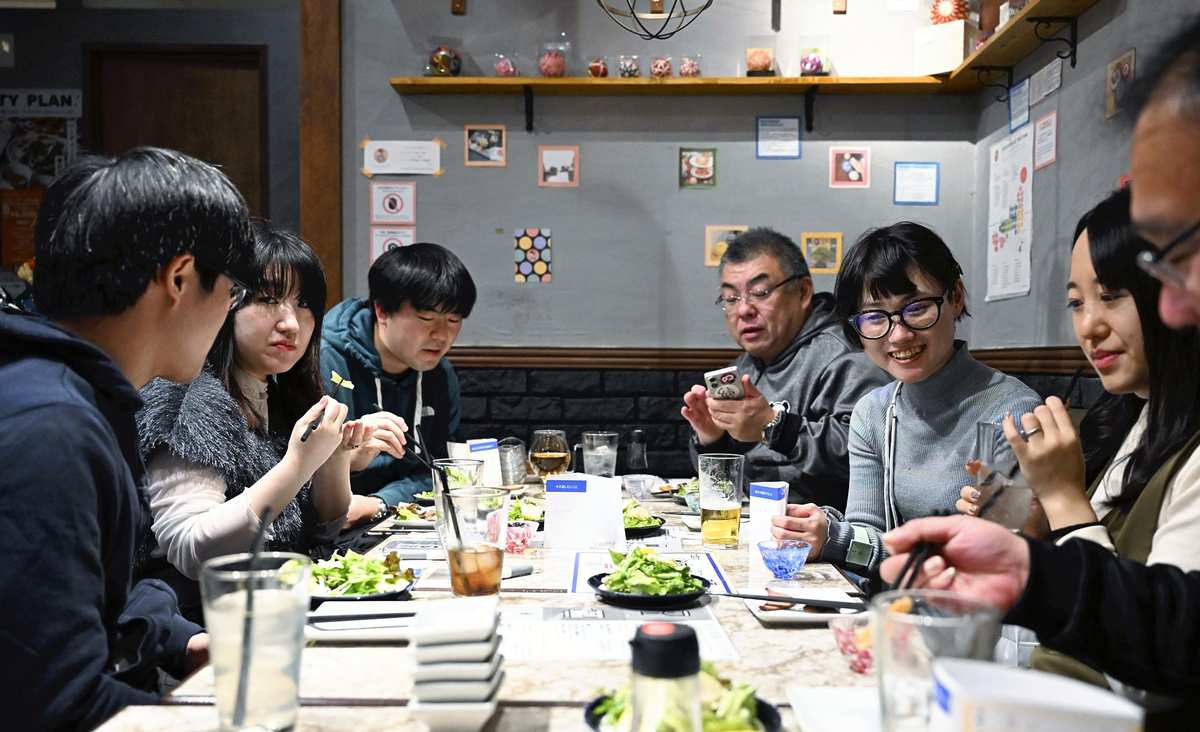
People discuss areas affected by the 2011 Great East Japan Earthquake at Kikkake Syokudo on Dec. 13 in Minato Ward, Tokyo.
Many working adults have joined the project, which has continued for 12 years. To date, it has held about 250 events, with around 6,000 people participating.
“By coming here, I was able to form a connection with Tohoku,” said Nobuhiko Abe, a 60-year-old man who joined in a Kikkake Syokudo event in Tokyo’s Minato Ward in mid-December.
Hanako graduated from university in 2017 and got a job in Tokyo. She then left the Kikkake Syokudo project, but she still visits Tohoku regularly and continues to interact with the fishermen.
On Jan. 3, Hanako stood in front of Kobe Century Memorial Hospital, the hospital where she was born (its name has changed since that time).
“My mother named me Hanako after seeing Kobe devastated by the earthquake,” she said. “I think that’s what has led me to be who I am today.”



Most Read
Most read in the last 24 hours
-
Tohoku, Hokkaido Tourist Sites Prepare to Evacuate Visitors in Ca...
-

India's Arms Indigenization Quest for Self-Reliance / Desert Dril...
-
26-year-old U.S. National Falls While Climbing Mt. Fuji; Accompan...
-
Japan Passport Fees Going Down to ¥9,000 in July
-

Japanese Side Machida Zelvia Faces Ah-Ahli in Asian Champions Lea...
-
Japan Eyes Trialing Dual-Use Tech Developed by Startups to Promot...
-

Transfer of Defense Equipment: Increase the Number of Like-minded...
-
Charm of Meiji-Era Poet Takuboku Examined from Viewpoint of Donal...
Most read in the last 7 days
-
Earthquake Hits Japan's Tohoku Region; 3-meter Tsunami Warning Is...
-

Trump Extends the Ceasefire with Iran but Keeps the Blockade
-
China, South Korea Object to Japanese PM Takaichi's Ritual Offeri...
-

India's Arms Indigenization Quest for Self-Reliance / New Delhi S...
-
Japan to Ban Use of Portable Chargers on Airplanes from April 24,...
-
¥1,000 Coins to Be Issued to Mark Anniversary of Beginning of Jap...
-

Most Serious Cyberattacks against the UK Now from Russia, Iran an...
-
New Challenges Await as Miura-Kihara Retires; Blade Maker, Ex-Coa...
Most read in the last 30 days
-
Earthquake Hits Japan's Tohoku Region; 3-meter Tsunami Warning Is...
-
Police Find Child's Shoe During Search for Missing Boy in Nantan,...
-
Body Found in Nantan, Kyoto Prefecture, During Search for 11-Year...
-
Cherry Blossoms, Rapeseed Flowers Perform Colorful ‘Duet’ in Niig...
-
Trump Extends the Ceasefire with Iran but Keeps the Blockade
-

Olympic Gold Medal-Winning Figure Skaters Riku-Ryu Announce Retir...
-
Nori Prices Surge in Japan Due to Poor Seaweed Production Amid Ri...
-
China, South Korea Object to Japanese PM Takaichi's Ritual Offeri...
Top Articles in Society
-
Earthquake Hits Japan’s Tohoku Region; 3-meter Tsunami Warning Issued (Update 1)
-
Police Find Child’s Shoe During Search for Missing Boy in Nantan, Kyoto Prefecture
-
Body Found in Nantan, Kyoto Prefecture, During Search for 11-Year-Old Boy in Area (Update 1)
-
Cherry Blossoms, Rapeseed Flowers Perform Colorful ‘Duet’ in Niigata
-
Two Women in Osaka Found Lying on Floor Bleeding, Later Pronounced Dead
JN ACCESS RANKING
-
Earthquake Hits Japan’s Tohoku Region; 3-meter Tsunami Warning Issued (Update 1)
-
Police Find Child’s Shoe During Search for Missing Boy in Nantan, Kyoto Prefecture
-
Body Found in Nantan, Kyoto Prefecture, During Search for 11-Year-Old Boy in Area (Update 1)
-
Cherry Blossoms, Rapeseed Flowers Perform Colorful ‘Duet’ in Niigata
-
Trump Extends the Ceasefire with Iran but Keeps the Blockade
Most read in the last 24 hours
-
Tohoku, Hokkaido Tourist Sites Prepare to Evacuate Visitors in Ca...
-
India's Arms Indigenization Quest for Self-Reliance / Desert Dril...
-
26-year-old U.S. National Falls While Climbing Mt. Fuji; Accompan...
-
Japan Passport Fees Going Down to ¥9,000 in July
-
Japanese Side Machida Zelvia Faces Ah-Ahli in Asian Champions Lea...
Most read in the last 7 days
-
Earthquake Hits Japan's Tohoku Region; 3-meter Tsunami Warning Is...
-
Trump Extends the Ceasefire with Iran but Keeps the Blockade
-
China, South Korea Object to Japanese PM Takaichi's Ritual Offeri...
-
India's Arms Indigenization Quest for Self-Reliance / New Delhi S...
-
Japan to Ban Use of Portable Chargers on Airplanes from April 24,...
Most read in the last 30 days
-
Earthquake Hits Japan's Tohoku Region; 3-meter Tsunami Warning Is...
-
Police Find Child's Shoe During Search for Missing Boy in Nantan,...
-
Body Found in Nantan, Kyoto Prefecture, During Search for 11-Year...
-
Cherry Blossoms, Rapeseed Flowers Perform Colorful ‘Duet’ in Niig...
-
Trump Extends the Ceasefire with Iran but Keeps the Blockade