
Tower of the Sun Symbol of 1970 Osaka World Expo Continues to Resist ‘Progress,’ ‘Harmony’ Theme of that Event
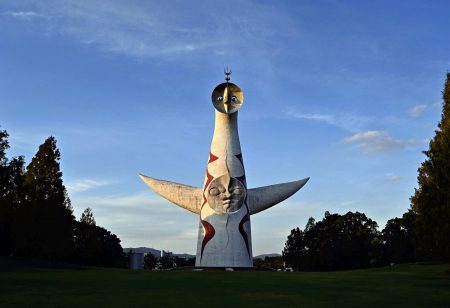
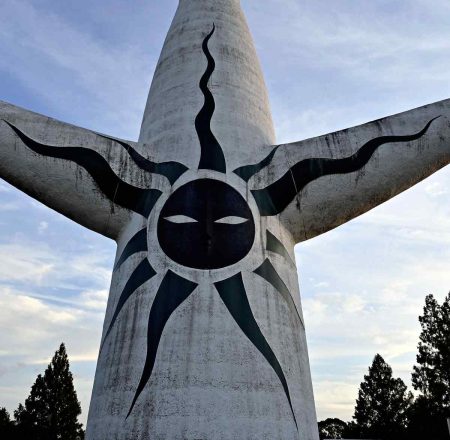
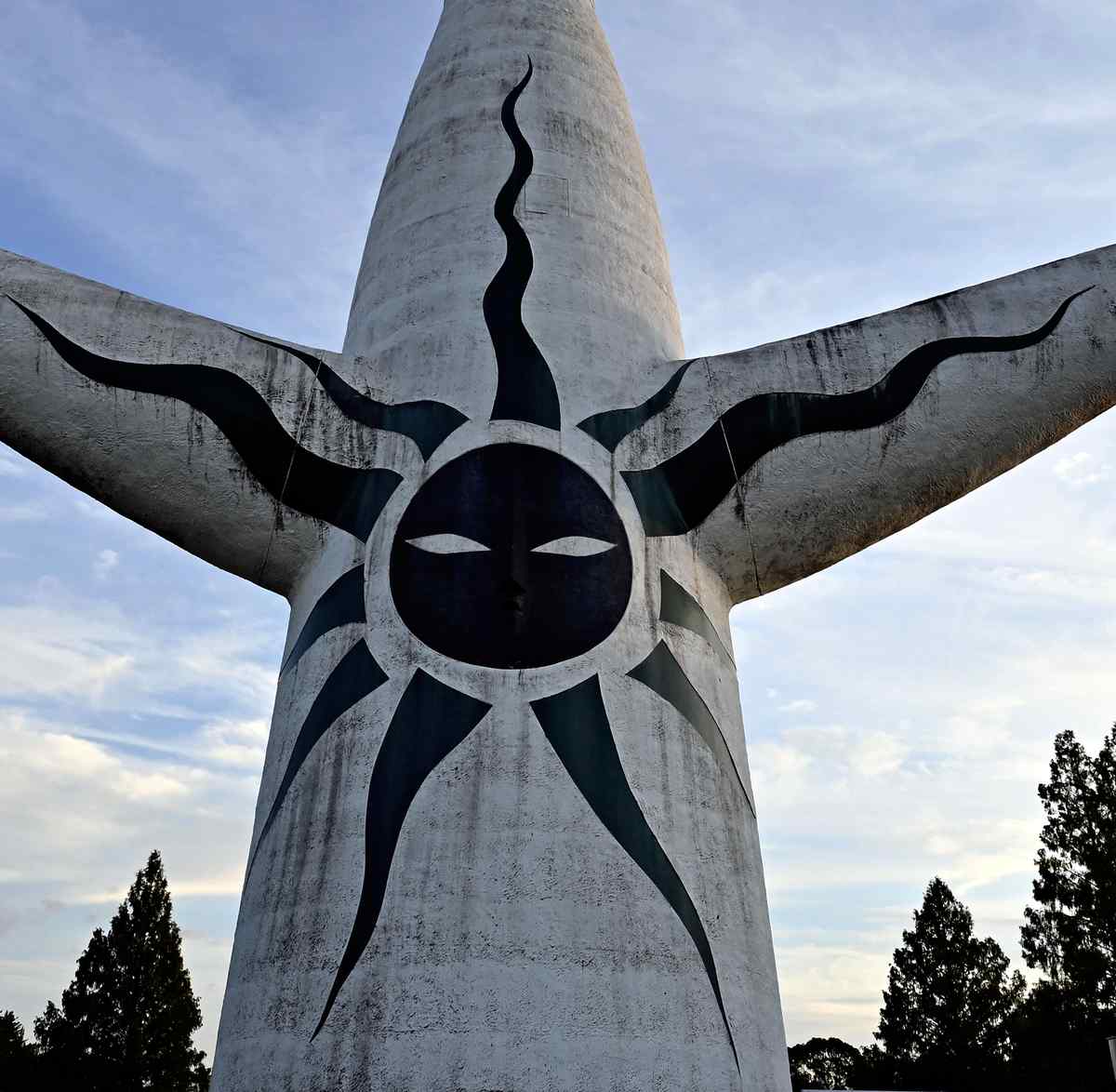
The Tower of the Sun soars with the sky as the backdrop. The “Face of the Sun” is at the center.
16:48 JST, January 8, 2026
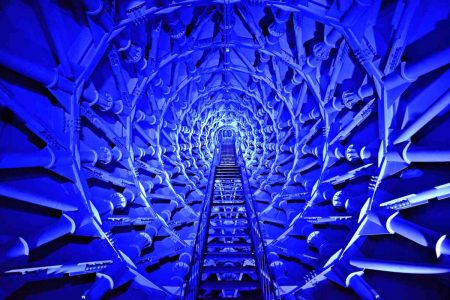
The inside of one of the “arms” of the Tower of the Sun is seen. Each arm is around 25 meters long.
The towering colossus resembles both a soaring bird and a human with arms spread wide. Faces adorn its front and back. In a word, it is “monstrous.”
The Tower of the Sun is the symbol of the 1970 Osaka World Expo. It was built as part of the Theme Pavilion expressing the Expo’s theme of “Progress and Harmony for Mankind,” and its interior served as an exhibition space. Preserved after the Expo closed, it now stands in the Expo ’70 Commemorative Park developed on the former site in Suita, Osaka Prefecture.
The pavilion’s producer was artist Taro Okamoto (1911–1996). Okamoto rebelled against the Expo’s theme and created a tower that seemed to embody the opposite of progress — somewhat primitive, overwhelming to behold. After the Expo, the tower’s interior was closed to the public but reopened in 2018.
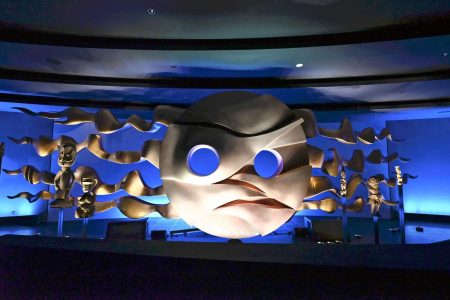
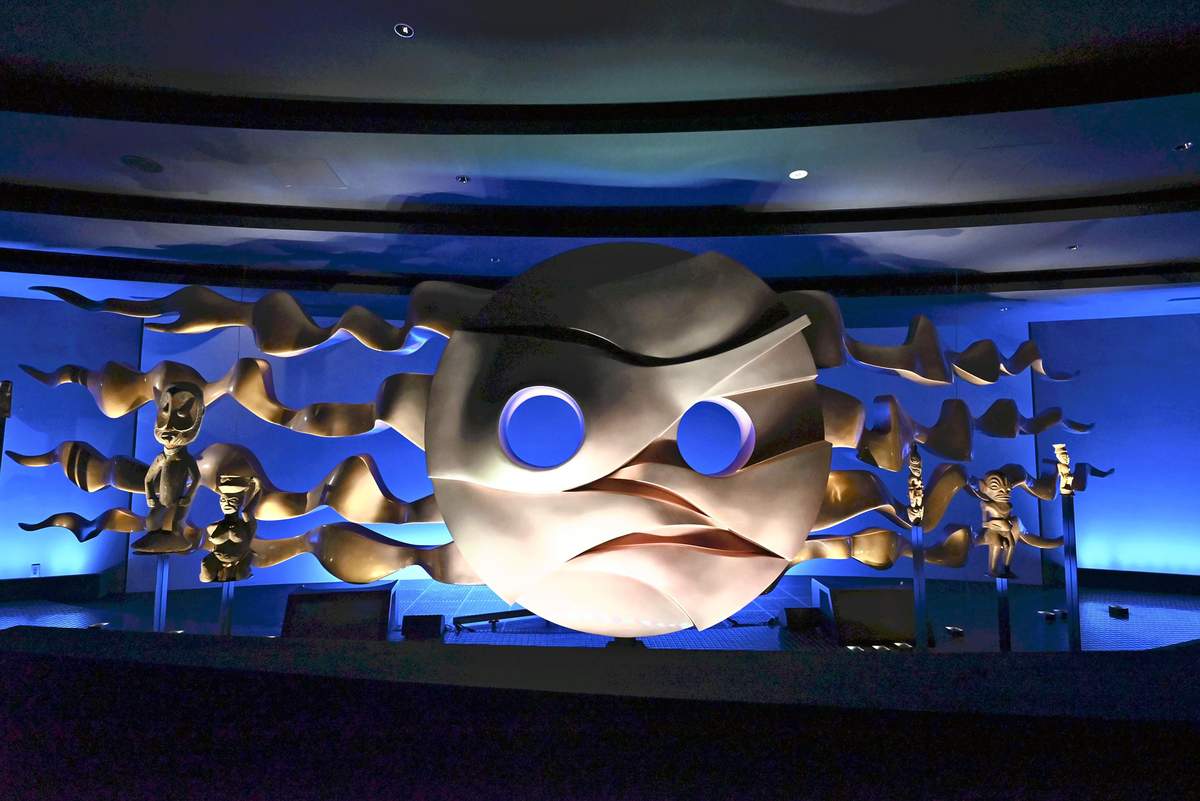
Descending the stairs on the rear side to enter the tower, visitors encounter the large-scale object “Underground Sun” in the dimly lit space. The golden, shining sun has eyes, and what looks like flames spew out from both sides of it. You can feel the energy by just looking at it.
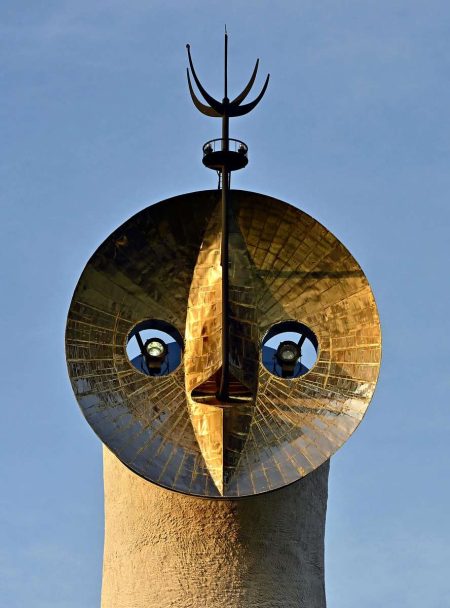
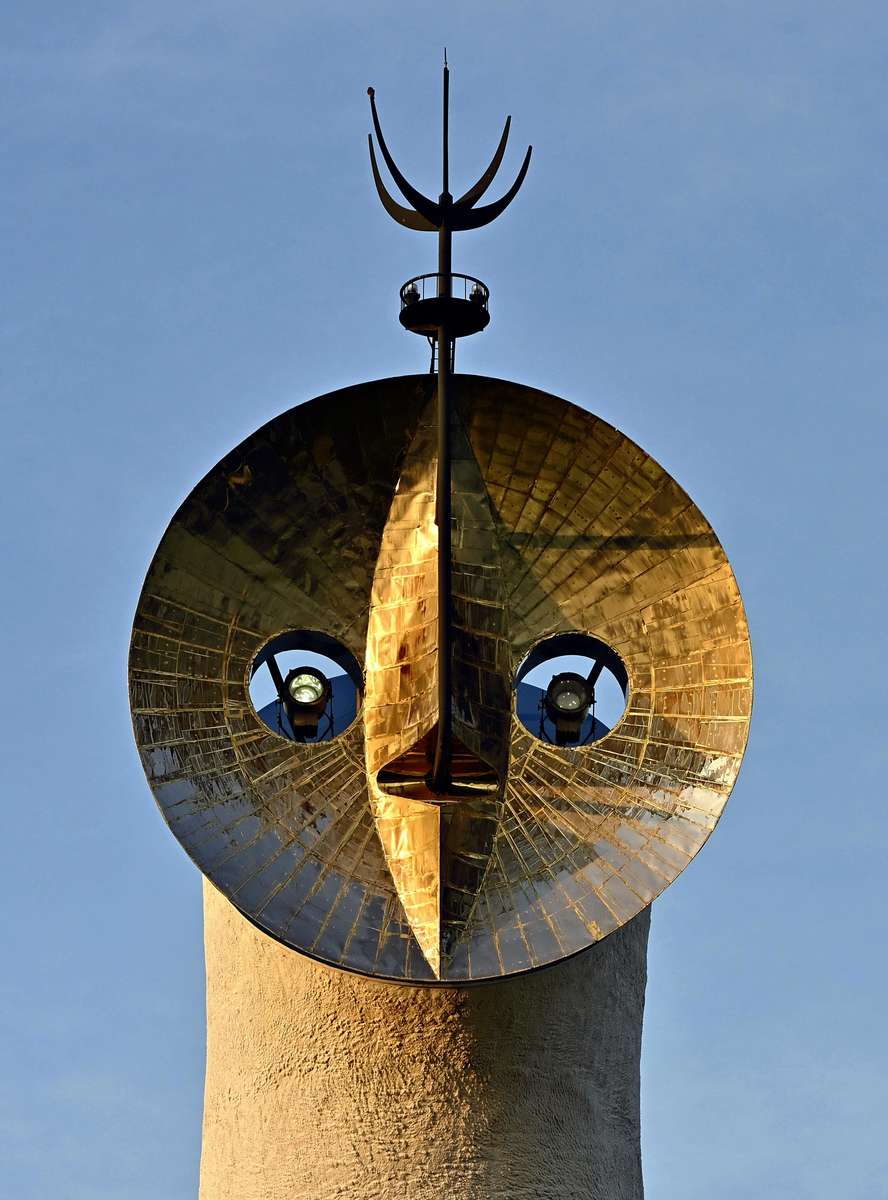
The “Underground Sun” is one of the tower’s four faces. The other three are the “Golden Mask” and the “Face of the Sun” on the tower’s front, and the “Black Sun” on the back.
-
The Yomiuri Shimbun
The “Underground Sun” -
The Yomiuri Shimbun
The “Golden Mask” -
The Yomiuri Shimbun
The “Black Sun”
“The two at the front represent the present and future, and the one at the back represents the past,” said Hazuki Kita, the curator at the Taro Okamoto Museum of Art, Kawasaki. “The ‘Underground Sun’ is considered to be a symbol of the spiritual world of mankind.”
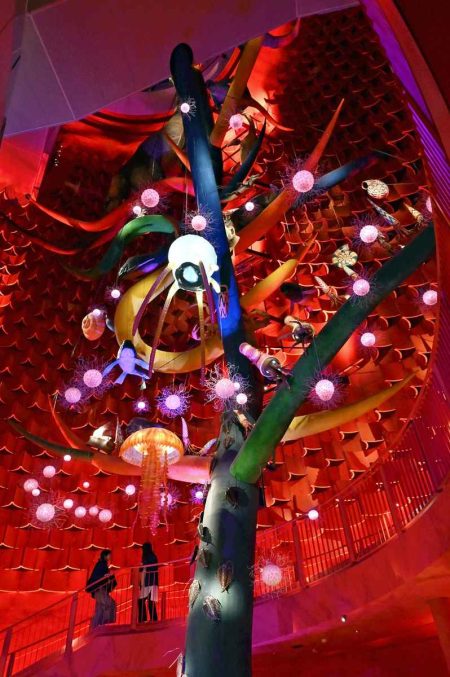
The “Tree of Life” depicts the evolutionary process of living things.
However, Kita also said Okamoto himself left no recorded interpretation.
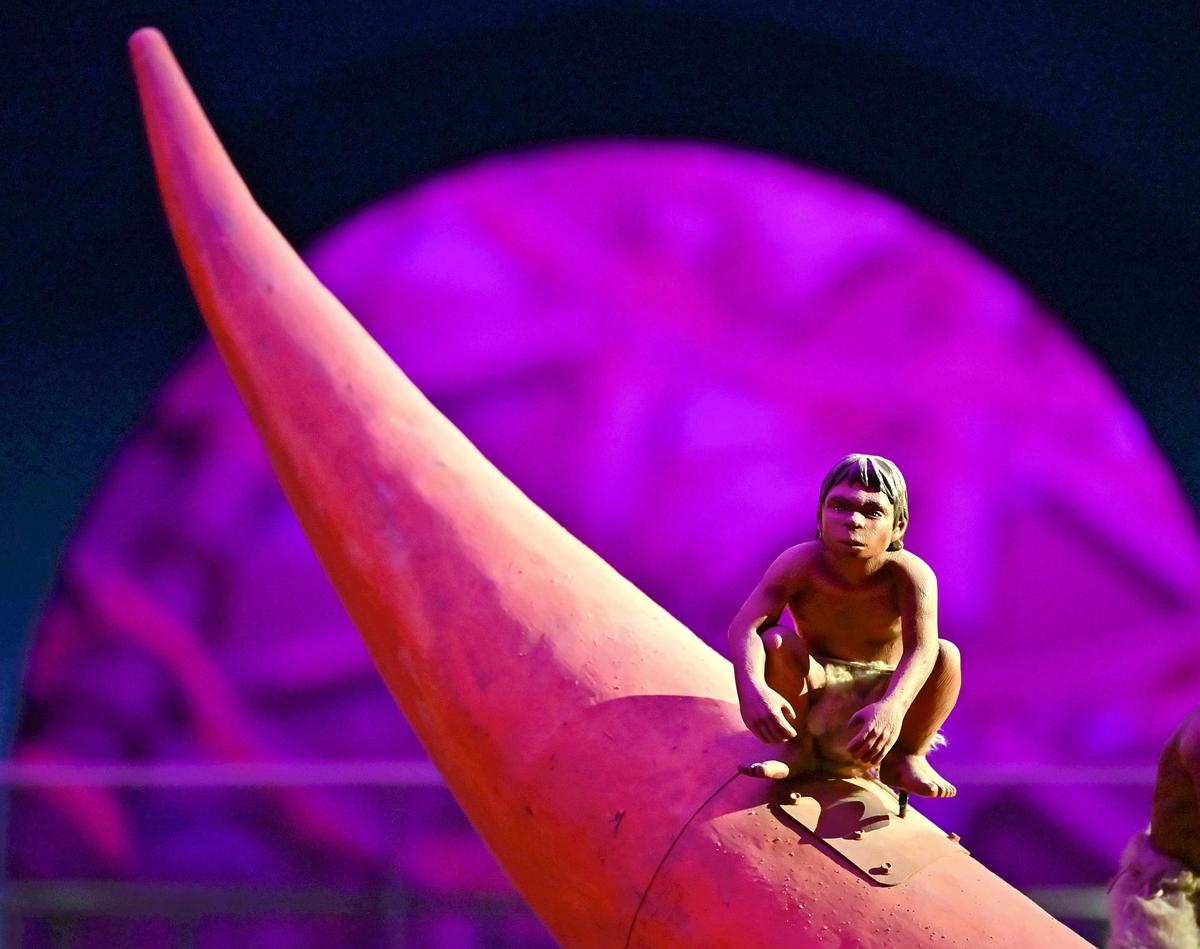
Moving deeper inside, visitors find the 41-meter-tall “Tree of Life” sculpture that soars all the way from the bottom to the top of the tower. Red and green branches twist and protrude from its trunk, which is adorned with numerous creatures. The work depicts the evolutionary process of life. At the very bottom are ancient creatures like trilobites, above them are large amphibians, then dinosaurs and mammals, and finally primitive humans adorn the top.
Okamoto seemed to have resisted the Expo’s celebration of the “progress of mankind,” so he equally displayed the diverse life forms that emerged throughout evolution.
The original “Underground Sun” has been missing since after the Expo ended, and the current exhibit is the second iteration. The creatures on the “Tree of Life” were also re-created using modern sculpting techniques and knowledge.
“I think ‘regeneration’ is a more fitting term than ‘refreshment,’” Kita said.
-
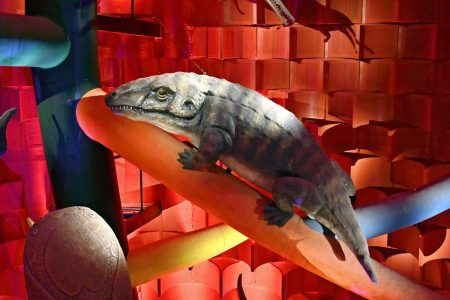
The Yomiuri Shimbun
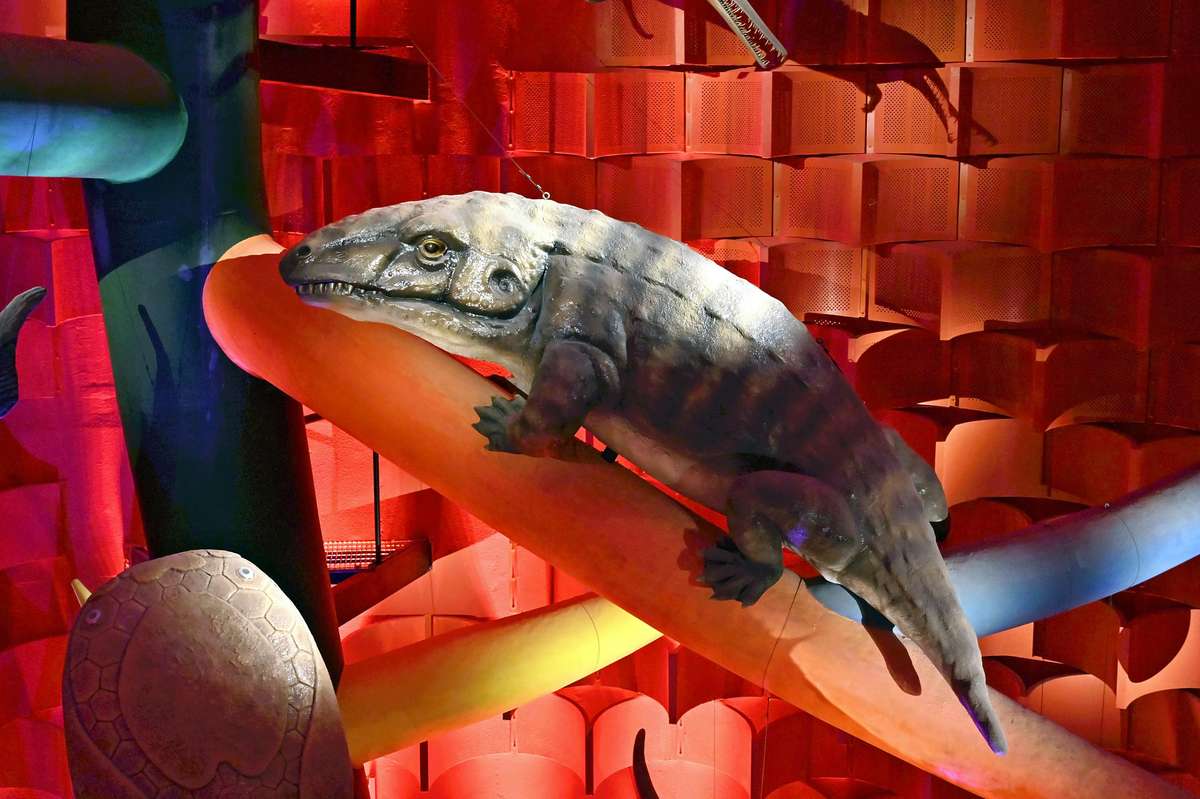
An ancient amphibian, Mastodonsaurus, is featured in the “Tree of Life.” -
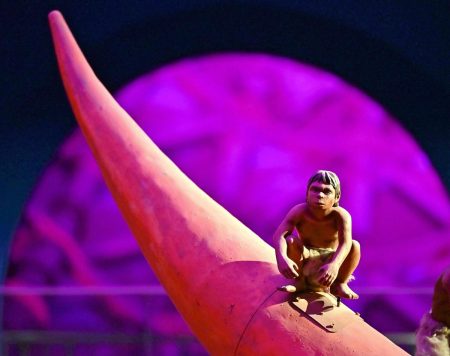
The Yomiuri Shimbun
A primitive human is at the very top of the “Tree of Life.”
Thanks to the 2025 Osaka-Kansai Expo, the Tower of the Sun has been visited by more people this year than in the average year.
“The Tower of the Sun’s design amazed me with the bold challenge of the people back then,” said Takuto Eguchi, 47, a company employee from Kadoma, Osaka Prefecture.
The bustle of the 1970 Osaka Expo, which drew 64 million visitors, is now a distant memory. The Tower of the Sun stands at the former venue, which has been transformed into a green space, watching over the changing times, and it makes people wonder if “Progress and Harmony for Mankind” has been achieved since then.


Related Tags



Most Read
Popular articles in the past 24 hours
-

Japan Govt to Tighten Requirements to Receive Permanent Residency...
-
‘King Kazu’ Discusses His Connection to Fukushima
-
JR Tokai Breaks Ground on Yamanashi Maglev Station; Will Be Part ...
-

Tail of ANA Plane Struck Runway During Landing in Houston; No Inj...
-

Medical Care at Home and Disasters: Ensure Systems to Provide Con...
-

Samurai Japan Holds First Practice in Miami; Team Will Play again...
-

CARTOON OF THE DAY (March 12)
-

White House Takes First Step toward Permanent Fix for Illegal Tar...
Popular articles in the past week
-

Japan Figure Skating Legend Yuzuru Hanyu Is Proud Disaster Surviv...
-

Nippon Life Insurance's U.S. Arm Sues OpenAI Over Legal Assistanc...
-
Govt to Utilize ODA for Ensuring Economic Security; Securing Ener...
-
Massive Sewer Pipe Found Jutting Out of Highway in Osaka
-
Beckoning Cats Get Makeover to Fit Modern Lifestyles with Sleek D...
-
Japan Govt Survey Finds Just 10% of Workers Want Working Hours to...
-
Japan's 2nd Round of U.S. Investments May Be Worth Over $100 Bill...
-

Imperial Family Watches World Baseball Classic Game Against Austr...
Popular articles in the past month
-

Producer Behind Pop Group XG Arrested for Cocaine Possession
-

Japan PM Takaichi’s Cabinet Resigns en Masse
-

Man Infected with Measles Reportedly Dined at Restaurant in Tokyo...
-

Videos Plagiarized, Reposted with False Subtitles Claiming ‘Ryuky...
-
Japan Figure Skating Legend Yuzuru Hanyu Is Proud Disaster Surviv...
-

iPS Treatments Pass Key Milestone, but Broader Applications Far f...
-

Sanae Takaichi Elected Prime Minister of Japan; Keeps All Cabinet...
-

Nepal Bus Crash Kills 19 People, Injures 25 Including One Japanes...
Top Articles in Features
-
Tokyo’s New Record-Breaking Fountain Named ‘Tokyo Aqua Symphony’
-

High-Hydration Bread on the Rise, Seeing Increase in Specialty Shops, Recipe Searches
-
Japanese Students Use Traditional Pickle to Create Novel Wagashi Confectionery
-

My Spendthrift Mother Constantly Asks Me for Money
-
Heirs to Kyoto Talent: Craftsman Works to Keep Tradition of ‘Kinran’ Brocade Alive Through Initiatives, New Creations
JN ACCESS RANKING
-
Producer Behind Pop Group XG Arrested for Cocaine Possession
-
Japan PM Takaichi’s Cabinet Resigns en Masse
-
Man Infected with Measles Reportedly Dined at Restaurant in Tokyo Station
-
Videos Plagiarized, Reposted with False Subtitles Claiming ‘Ryukyu Belongs to China’; Anti-China False Information Also Posted in Japan
-
Japan Figure Skating Legend Yuzuru Hanyu Is Proud Disaster Survivor and Gold Medalist, Vows to Continue Support Efforts