
Autonomous Passenger Ship Connects Mainland with Remote Island in Seto Inland Sea; World’s 1st Commercially Operated Autonomous Vessel
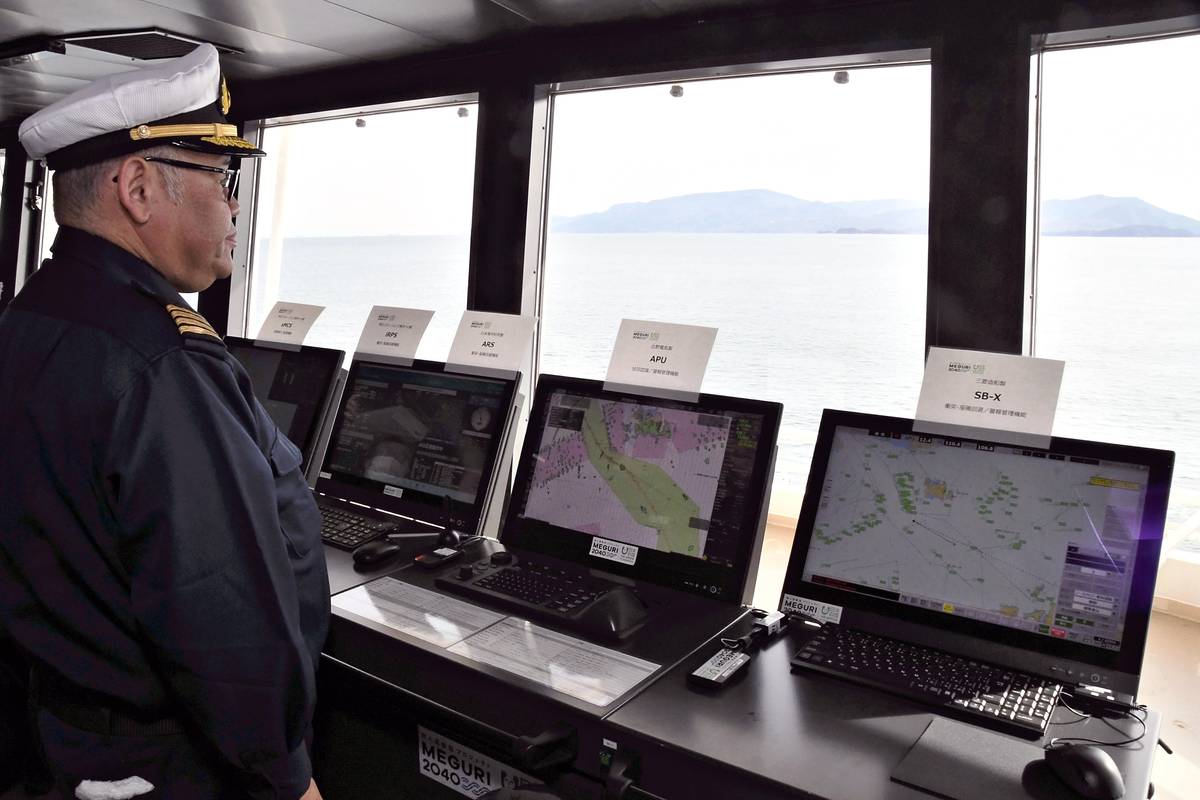
A captain monitors the status of an autonomous navigation on screens installed on the bridge of a ship on Dec. 10 on the Seto Inland Sea.
7:00 JST, January 1, 2026
OKAYAMA — A passenger ship equipped with an autonomous navigation system has begun sailing between Okayama and Shodoshima Island in the Seto Inland Sea.
While there are crew members on board to monitor the trips and respond in emergencies, the technology is expected to help alleviate crew shortages faced by the shipping industry, as well as prevent accidents.
According to the project’s operators, this is the world’s first commercially operated autonomous vessel.
The Olympia Dream Seto detects the locations of other ships using a synthesis of data from an automatic identification system, radar and other equipment. The ferry, which has a capacity of 500 people and is operated by Okayama City-based Ryobi Group, measures 65.56 meters in length and has a gross tonnage of 942 tons.
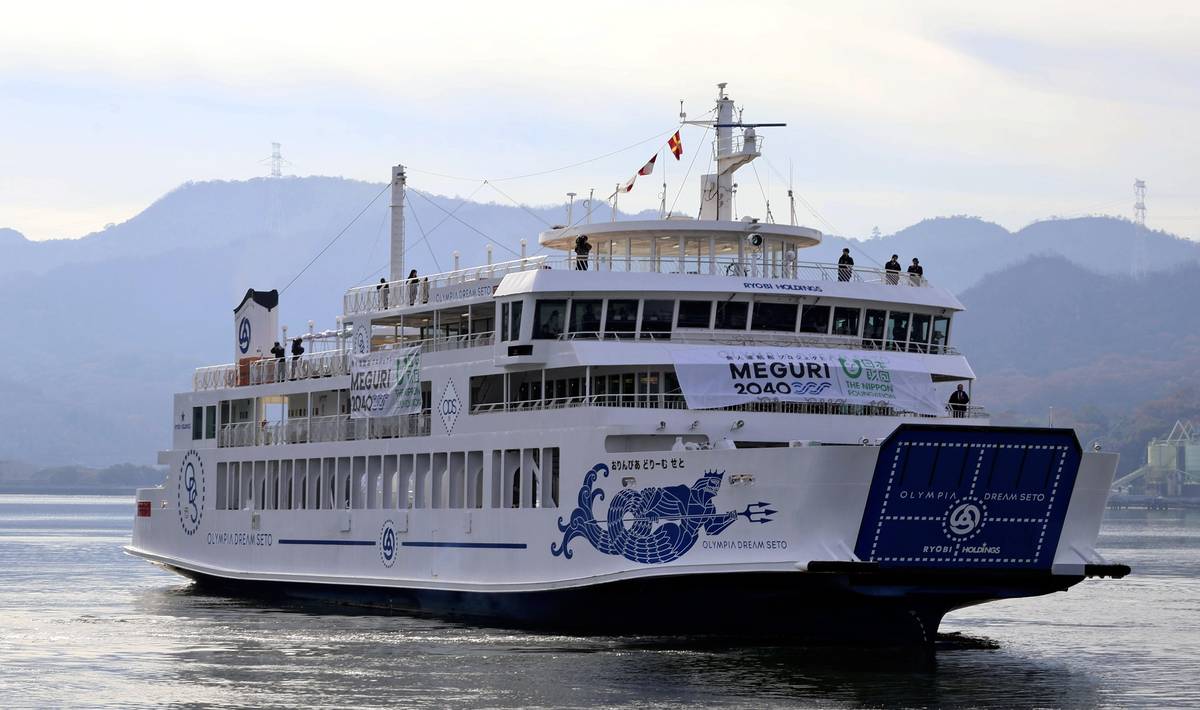
The autonomous ship “Olympia Dream Seto”
The vessel makes four round trips per day between Shin-Okayama Port and Tonosho Port on the island.
The project is backed by a consortium of 53 entities, including The Nippon Foundation and shipbuilding and shipping companies. They have been working on the project since 2020 and have conducted multiple demonstrations.
On Dec. 5, the ship’s autonomous navigation system passed screening by the Land, Infrastructure, Transport and Tourism Ministry.
Eliminating human error
During a demonstration held on Dec. 10, the vessel’s captain only monitored the navigation route and the positions of surrounding ships on a monitor, without touching any controls.
Other ships were intentionally placed in the ferry’s way as obstacles during the demonstration, but Olympia Dream Seto accurately detected their positions using radar and other methods and calculated a safe route to avoid them.
Docking and undocking normally requires the skills and experience of a helmsman, but the ferry performed even that process autonomously.
An official from The Nippon Foundation cited data showing that human error was responsible for 80% of maritime accidents.
“While humans tend to have lapses in concentration, autonomous navigation can maintain a consistent level of performance,” the official said.
The consortium aims to begin operating three other autonomous ships on other routes by March.
“Based on the data we obtain from the commercial operations, we hope to contribute to the creation of international rules for autonomous ships,” said Nippon Foundation Executive Director Mitsuyuki Unno.
Support from land
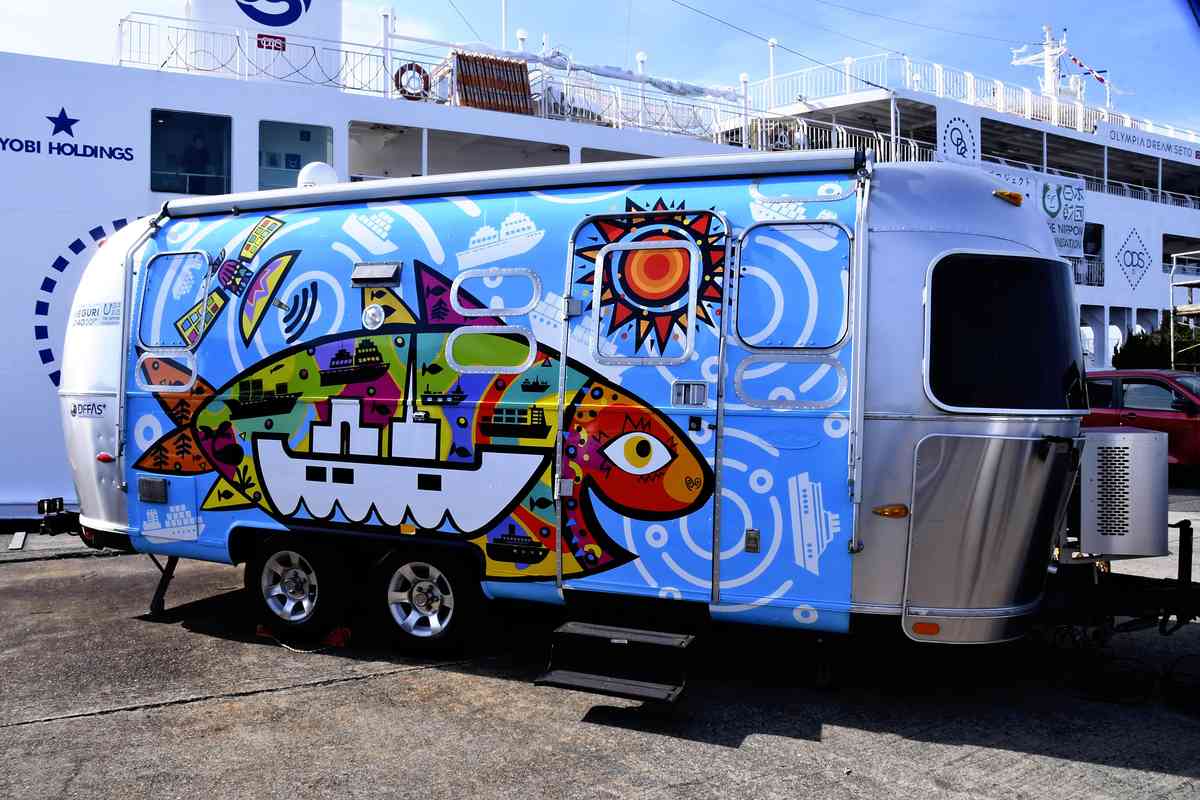
A mobile land-based support center is seen at Shin-Okayama Port in Okayama.
The ship’s autonomous navigation is also supported by the mobile, land-based Fleet Operation Center, which analyzes weather conditions and monitors the ship’s equipment for abnormalities. On the day of the demonstration, the center was deployed at Shin-Okayama Port.
The mobile center is a van with a classical design and a dazzling silver body, but inside it is equipped with several screens that display information like a cockpit.





Most Read
Popular articles in the past 24 hours
-

Japan PM Takaichi’s Cabinet Resigns en Masse
-

Japan's Govt to Submit Road Map for Growth Strategy in March, PM ...
-

Bus Carrying 40 Passengers Catches Fire on Chuo Expressway; All E...
-

Riku-Ryu Pair Wins Gold Medal: Their Strong Bond Leads to Major C...
-

Survey Shows False Election Info Perceived as True
-

Japan’s Plan for Investment in U.S.: Aim for Mutual Development b...
-

Sanae Takaichi Elected Japan's 105th Prime Minister (UPDATE 1)
-

Milano Cortina 2026: Japan Sets Winter Olympics Medal Record at 1...
Popular articles in the past week
-
Japan PM Takaichi’s Cabinet Resigns en Masse
-

Man Infected with Measles Reportedly Dined at Restaurant in Tokyo...
-

Videos Plagiarized, Reposted with False Subtitles Claiming ‘Ryuky...
-
Japan's Govt to Submit Road Map for Growth Strategy in March, PM ...
-

Milano Cortina 2026: Figure Skaters Riku Miura, Ryuichi Kihara Pa...
-
Tokyo’s New Record-Breaking Fountain Named ‘Tokyo Aqua Symphony’
-
CRA Leadership Election Will Center on Party Rebuilding; Lower Ho...
-
Bus Carrying 40 Passengers Catches Fire on Chuo Expressway; All E...
Popular articles in the past month
-
Japan PM Takaichi’s Cabinet Resigns en Masse
-

Japan Institute to Use Domestic Commercial Optical Lattice Clock ...
-

Israeli Ambassador to Japan Speaks about Japan’s Role in the Reco...
-

Man Infected with Measles May Have Come in Contact with Many Peop...
-

China Eyes Rare Earth Foothold in Malaysia to Maintain Dominance,...
-

Prudential Life Insurance Plans to Fully Compensate for Damages C...
-
Man Infected with Measles Reportedly Dined at Restaurant in Tokyo...
-

Woman with Measles Visited Hospital in Tokyo Multiple Times Befor...
Top Articles in Features
-

Sapporo Snow Festival Opens with 210 Snow and Ice Sculptures at 3 Venues in Hokkaido, Features Huge Dogu
-
Tokyo’s New Record-Breaking Fountain Named ‘Tokyo Aqua Symphony’
-

Tourists Flock to Ice Dome Lodge at Resort in Hokkaido, Japan; Facility Invites Visitors to Sleep on Beds Made of Ice
-

High-Hydration Bread on the Rise, Seeing Increase in Specialty Shops, Recipe Searches
-

Maltese Pavilion’s Famous Ftira Bread Now Available in Osaka; Loaves Became Popular during 2025 Osaka-Kansai Expo
JN ACCESS RANKING
-
Japan PM Takaichi’s Cabinet Resigns en Masse
-
Japan Institute to Use Domestic Commercial Optical Lattice Clock to Set Japan Standard Time
-
Israeli Ambassador to Japan Speaks about Japan’s Role in the Reconstruction of Gaza
-
Man Infected with Measles May Have Come in Contact with Many People in Tokyo, Went to Store, Restaurant Around When Symptoms Emerged
-
Prudential Life Insurance Plans to Fully Compensate for Damages Caused by Fraudulent Actions Without Waiting for Third-Party Committee Review