
Japan’s H3 Rocket Likely Made 1.5 Trips Around Earth; Analyst Believes Satellite Almost Certainly Lost As Well
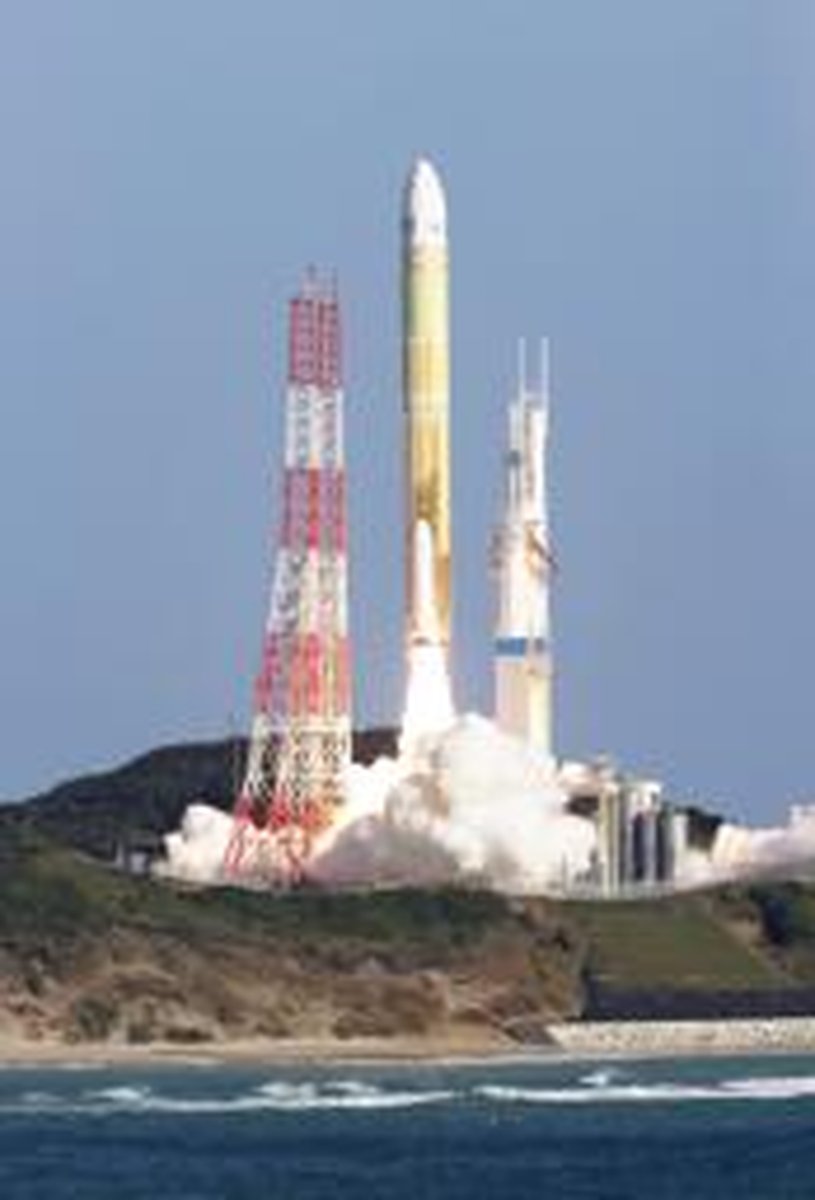
The No. 8 H-3 rocket is launched from the Tanegashima Space Center in Kagoshima Prefecture on Monday.
16:02 JST, December 25, 2025
WASHINGTON — Japan’s No. 8 H3 rocket likely reentered the atmosphere over South America about two hours after launch, according to analysis by Dr. Jonathan McDowell of the Harvard-Smithsonian Center for Astrophysics.
The Monday launch of the H3 rocket ended in failure. The Cabinet Office’s Michibiki No. 5 positioning satellite was aboard and is also believed to have been lost.
McDowell calculated the rocket’s trajectory using flight altitude and velocity data released by the Japan Aerospace Exploration Agency (JAXA). The rocket was launched at 10:51 a.m. Japan time on Monday, and it likely reentered the atmosphere somewhere over Brazil or Argentina around 1 p.m. the same day, after making 1½ orbits around the Earth.
Its speed before atmospheric reentry was about 27,000 kph, below the roughly 28,000 kph needed to maintain Earth orbit.
According to JAXA, the second-stage engine of the rocket ceased burning about five minutes earlier than planned. The Education, Culture, Sports, Science and Technology Ministry and JAXA have established a task force to investigate the cause of the failure and how the satellite became separated from the rocket.
In an interview with The Yomiuri Shimbun, McDowell said that even if the satellite had separated successfully, it likely reentered the atmosphere as well, because its orbit is nearly identical to the rocket’s.
It is 99% certain that the rocket and satellite fell into the atmosphere, he said.




Most Read
Popular articles in the past 24 hours
-

3,000 Accounts Posting, Spreading Content Critical of Japan on X;...
-

Milano Cortina 2026: Sakamoto Serves as Flag Bearer; Japan Earns ...
-

My Spendthrift Mother Constantly Asks Me for Money
-

A Packed Bus Plunges off a Nepal Highway, Killing 19 and Injuring...
-

Emperor Receives Well-Wishes from Public on His 66th Birthday
-

Dozens of Jewelry, Other Items Stolen After Glass Door, Showcases...
-

1.2 Mil. Rapeseed Flowers Attract Cute Birds, People in Aichi Pre...
-

Mexican Army Kills Leader of Powerful Jalisco New Generation Cart...
Popular articles in the past week
-

Japan PM Takaichi’s Cabinet Resigns en Masse
-

Man Infected with Measles Reportedly Dined at Restaurant in Tokyo...
-

Sanae Takaichi Elected Prime Minister of Japan; Keeps All Cabinet...
-

Japan's Govt to Submit Road Map for Growth Strategy in March, PM ...
-

Bus Carrying 40 Passengers Catches Fire on Chuo Expressway; All E...
-

U.S. Firm to Build Training Hub in Fukushima N-plant for Debris R...
-

Japan, U.S. Name 3 Inaugural Investment Projects; Reached Agreeme...
-

Riku-Ryu Pair Wins Gold Medal: Their Strong Bond Leads to Major C...
Popular articles in the past month
-
Japan PM Takaichi’s Cabinet Resigns en Masse
-

Japan Institute to Use Domestic Commercial Optical Lattice Clock ...
-

Israeli Ambassador to Japan Speaks about Japan’s Role in the Reco...
-
Man Infected with Measles Reportedly Dined at Restaurant in Tokyo...
-

Videos Plagiarized, Reposted with False Subtitles Claiming ‘Ryuky...
-

Man Infected with Measles May Have Come in Contact with Many Peop...
-

Prudential Life Insurance Plans to Fully Compensate for Damages C...
-

Woman with Measles Visited Hospital in Tokyo Multiple Times Befor...
Top Articles in Science & Nature
-
Japan Institute to Use Domestic Commercial Optical Lattice Clock to Set Japan Standard Time
-

iPS Treatments Pass Key Milestone, but Broader Applications Far from Guaranteed
-
Record 700 Startups to Gather at SusHi Tech Tokyo in April; Event Will Center on Themes Like Artificial Intelligence and Robotics
-
iPS Cell Products for Parkinson’s, Heart Disease OK’d for Commercialization by Japan Health Ministry Panel
-

Japan to Ban Use of Power Banks on Airplanes
JN ACCESS RANKING
-
Japan PM Takaichi’s Cabinet Resigns en Masse
-
Japan Institute to Use Domestic Commercial Optical Lattice Clock to Set Japan Standard Time
-
Israeli Ambassador to Japan Speaks about Japan’s Role in the Reconstruction of Gaza
-
Man Infected with Measles Reportedly Dined at Restaurant in Tokyo Station
-
Videos Plagiarized, Reposted with False Subtitles Claiming ‘Ryukyu Belongs to China’; Anti-China False Information Also Posted in Japan