
Japan’s Govt to Subsidize Licensed Hunters Amid Efforts to Address Damage Caused by Bears
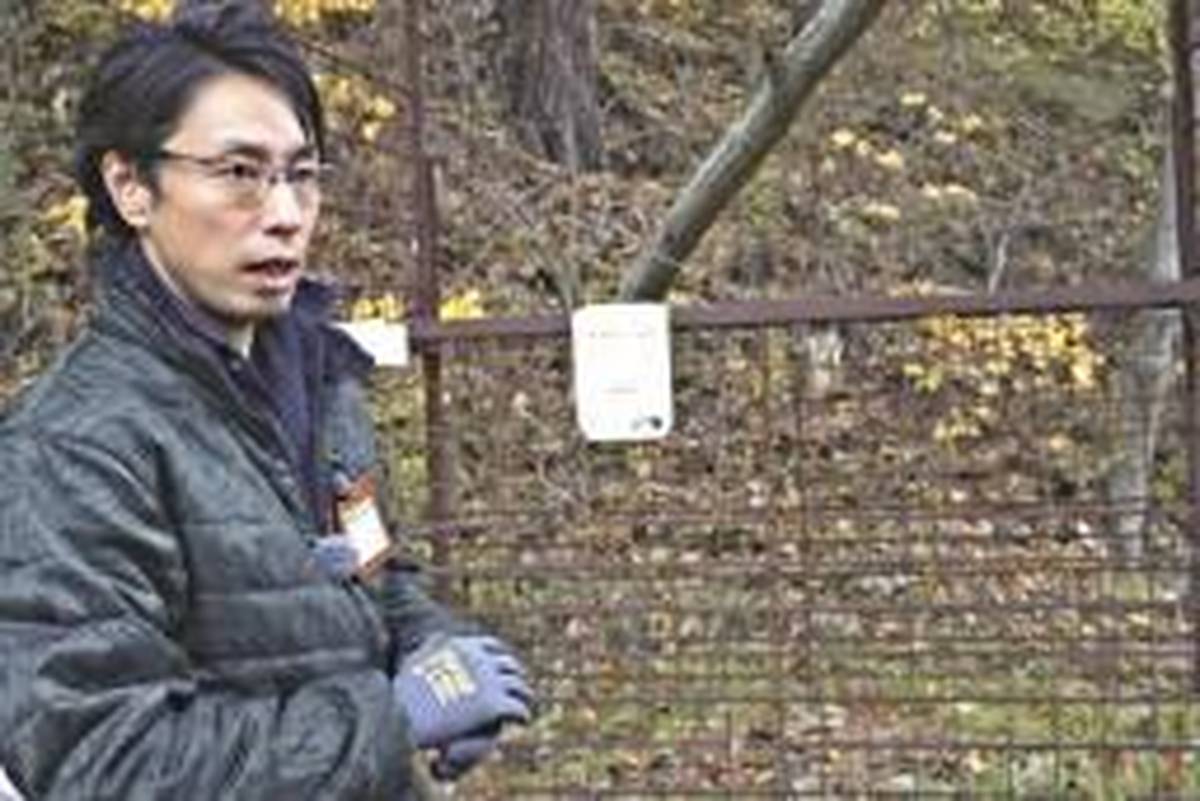
Yusuke Sakurai, an official of Komoro, Nagano Prefecture, who also works as a “government hunter” for the city, is seen in the city on Nov. 10.
12:38 JST, December 22, 2025
The central government will begin subsidizing the costs for local governments to hire hunters as part of efforts to address problems caused by bears.
Support will be available for individuals who hold hunting licenses that are hired by local governments, known as government hunters, who will be responsible for wildlife management and capture and coordination between local governments and hunting associations. It is expected that increasing the number of people with perspectives from both administrative and hunting backgrounds will lead to more effective countermeasures to address problems with bears.
You may also like to read
Govt to Take Lead on Bear Population Surveys to Help Tackle Rise in AttacksDamage to crops
In November, government hunter Yusuke Sakurai was checking traps in rural areas of Komoro, Nagano Prefecture, home to many orchards and fields. Wild boars and deer frequently appear in the city, damaging crops. Sakurai, an official of the city government’s agriculture and forestry division, is responsible for areas that have no hunters.
The city began hiring licensed experts as government hunters in April 2011 as a response to worsening damage to crops and trees that was caused by deer. Sakurai was originally employed as a regular city official, but because he had obtained a hunting license he became the second government hunter in 2023.
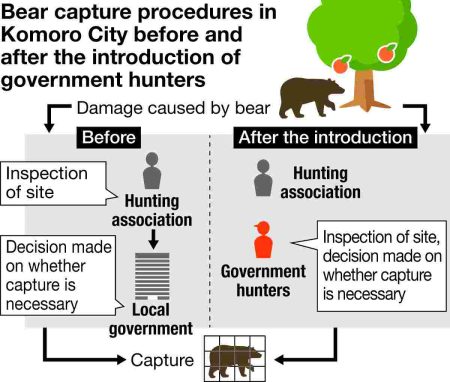
Sakurai usually handles subsidy work carried out at the division and patrols deer traps. When he receives a report on a bear sighting, he attends the scene accompanied by local hunters. After assessing the situation, he makes a request to capture the bear or prepares box traps. In the past, if damage was confirmed, hunters would inspect the area and make a report to the city, who would then decide if capture was necessary and make a request for a government hunter after obtaining permission from the prefectural government. Now, Sakurai is able to make those decisions at the scene.
In October 2024, a bear showed up at a garbage disposal area. Sakurai consulted with hunters and set up a drum-shaped trap. Initially, the bear did not enter, but after checking its behavior with a camera, they quickly changed to a larger trap and managed to capture the animal the same day. “We were able to quickly capture the bear by sharing information with local hunters day by day as we dealt with the situation,” Sakurai said.
The government’s package of countermeasures against bears is designed to promote support for training and securing personnel with specialized knowledge of capture and damage prevention measures. Up to ¥10 million per prefecture will be allocated for personnel costs to hire government hunters, and the government will subsidize half of any costs exceeding that amount. Funding for the countermeasures has been included in the supplementary budget bill for fiscal 2025.
“Government hunters need not only hunting experience but also the coordination skills to collaborate with local hunters,” said the head of the city’s agriculture and forestry division.
“It will be necessary to create an environment conducive to government hunters’ activities,” said Kiyoshi Yamauchi, an associate professor at Iwate University who is an expert on the management of wild animals. “Capturing bears is dangerous, so the government should consider compensating hunters appropriately for their workload by providing them with allowances for potential dangers and overtime work.”
Decision on gun use
Government hunters are active in various parts in the country. In Hokkaido, the Shimukappu village government employs officials who are licensed “wild bird and animal specialists.” They are responsible for capturing brown bears that cause damage, such as by destroying crops, and also make decisions on emergency hunts. This fiscal year, the village also hired researchers to investigate their ecology and damage control.
In Toyooka, Hyogo Prefecture, three officials on wildlife damage control provide technical guidance to hunting association members and draw up plans to capture wild animals. Miyagi Prefecture also employs nine former police and Self-Defense Forces personnel to capture wild boars and other animals. It is considering increasing the number of personnel and adding bears to their target in the future.
The Chitose city government in Hokkaido has appointed hunting association members as part-time, special-duty “bear control teams,” clearly defining the city’s responsibility, in consideration of risks involved in the operation. In the event of injuries, the compensation program for public servants is applied. “The program would give them some sense of relief,” said a city government official.
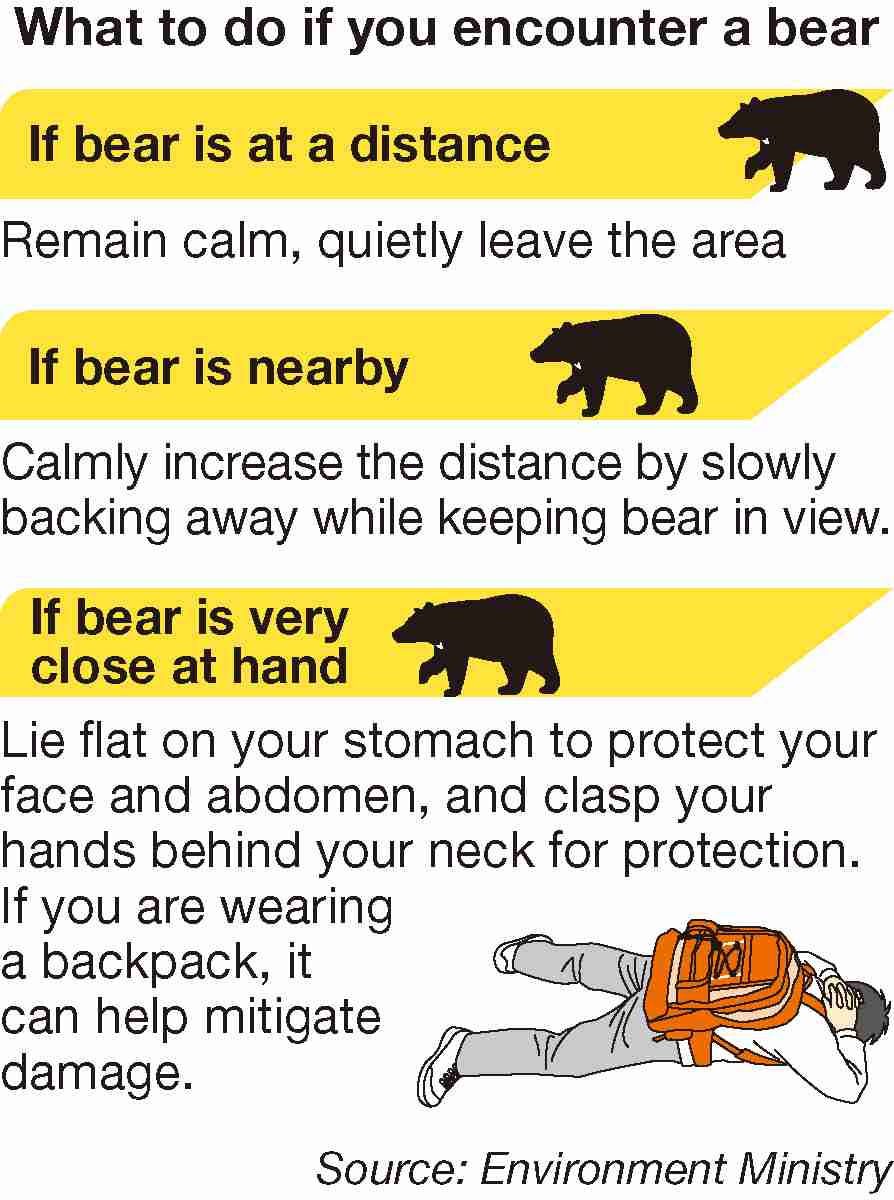
How to Protect Yourself During Bear Encounters


Related Tags





Most Read
Popular articles in the past 24 hours
-

McDonald's Japan Raises Prices; Big Mac to Cost ¥500, Double Chee...
-

Nepal Bus Crash Kills 19 People, Injures 25 Including One Japanes...
-

Japan’s Nikkei Stock Average Rises as AI-Related Stocks Shine; Co...
-

Aggression against Ukraine: Malignant Precedent Must Not Be Set t...
-

Joruri Bunraku Narrative Performed in Honor of Donald Keene by La...
-

Milano Cortina 2026: Gold Medal Olympic Figure Skaters Riku Miura...
-

Kanto's 1st Spring Wind Blows as Tokyo Sees Unseasonably High Tem...
-

How Keri Russell's Suede Coach Boots Ended up in My Closet
Popular articles in the past week
-

Producer Behind Pop Group XG Arrested for Cocaine Possession
-

Japan PM Takaichi’s Cabinet Resigns en Masse
-

Sanae Takaichi Elected Prime Minister of Japan; Keeps All Cabinet...
-
Japan's Govt to Submit Road Map for Growth Strategy in March, PM ...
-
Bus Carrying 40 Passengers Catches Fire on Chuo Expressway; All E...
-

Japan, U.S. Name 3 Inaugural Investment Projects; Reached Agreeme...
-

Riku-Ryu Pair Wins Gold Medal: Their Strong Bond Leads to Major C...
-

iPS Treatments Pass Key Milestone, but Broader Applications Far f...
Popular articles in the past month
-
Producer Behind Pop Group XG Arrested for Cocaine Possession
-
Japan PM Takaichi’s Cabinet Resigns en Masse
-

Japan Institute to Use Domestic Commercial Optical Lattice Clock ...
-

Man Infected with Measles Reportedly Dined at Restaurant in Tokyo...
-

Israeli Ambassador to Japan Speaks about Japan’s Role in the Reco...
-

Videos Plagiarized, Reposted with False Subtitles Claiming ‘Ryuky...
-

Man Infected with Measles May Have Come in Contact with Many Peop...
-

Prudential Life Insurance Plans to Fully Compensate for Damages C...
Top Articles in Society
-
Producer Behind Pop Group XG Arrested for Cocaine Possession
-
Man Infected with Measles Reportedly Dined at Restaurant in Tokyo Station
-
Man Infected with Measles May Have Come in Contact with Many People in Tokyo, Went to Store, Restaurant Around When Symptoms Emerged
-

Woman with Measles Visited Hospital in Tokyo Multiple Times Before Being Diagnosed with Disease
-
Australian Woman Dies After Mishap on Ski Lift in Nagano Prefecture
JN ACCESS RANKING
-
Producer Behind Pop Group XG Arrested for Cocaine Possession
-
Japan PM Takaichi’s Cabinet Resigns en Masse
-
Man Infected with Measles Reportedly Dined at Restaurant in Tokyo Station
-
Israeli Ambassador to Japan Speaks about Japan’s Role in the Reconstruction of Gaza
-
Videos Plagiarized, Reposted with False Subtitles Claiming ‘Ryukyu Belongs to China’; Anti-China False Information Also Posted in Japan