
WAIZU Club International Organizes Hiroshima Peace Study Tour for Residents with Foreign Roots Living in Japan; Participants Learn from Atomic Bomb Survivor about Victims’ Experiences
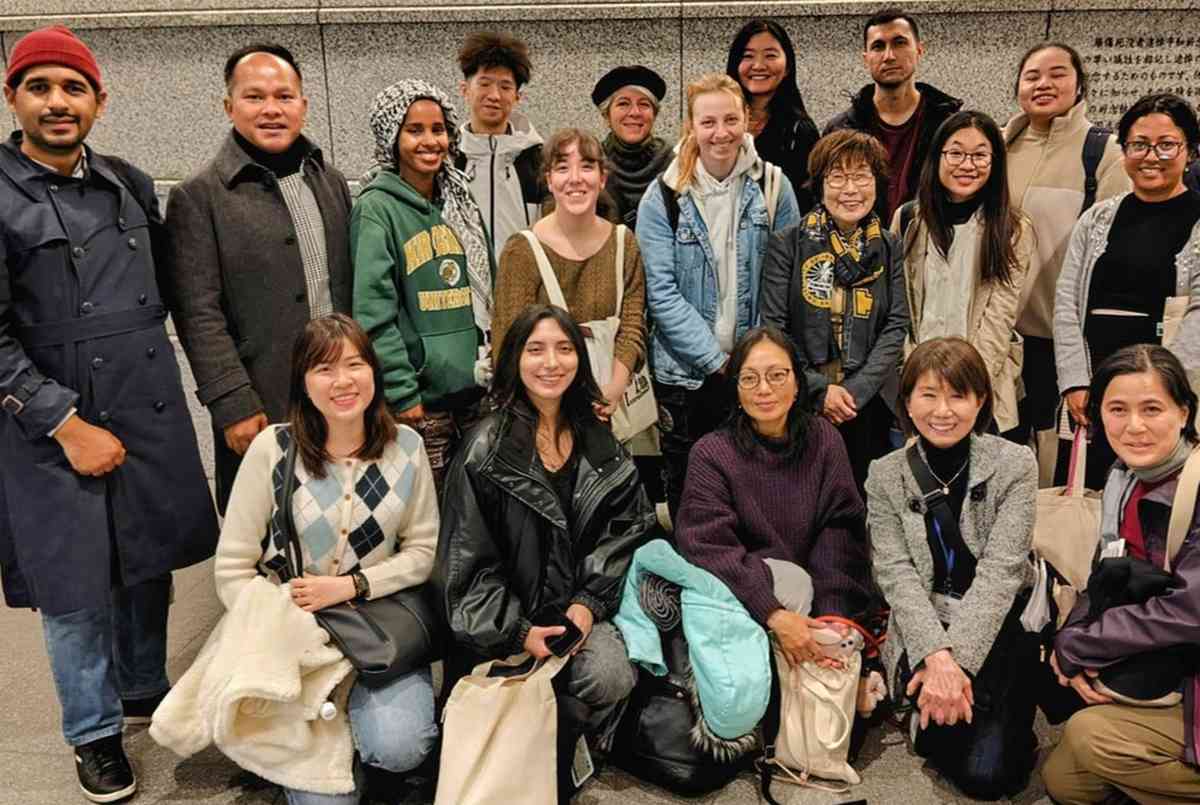
Hiroshima Peace Study Tour participants gather for a group photo with atomic bomb survivor Keiko Ogura, third from right in the second row, in Hiroshima on Nov. 22.
13:29 JST, December 5, 2025
HIROSHIMA — WAIZU Club International (WCI), an organization for people with foreign roots living in Japan, operated by The Yomiuri Shimbun Osaka, held a special tour for members to learn about peace in Hiroshima on Nov. 22, part of activities to mark the passage of 80 years since the atomic bombing of the city.
Fifteen WCI members from 11 countries participated in the Hiroshima Peace Study Tour, during which they learned about the lives of atomic bomb victims and the importance of passing down their stories to posterity.
The participants rode Hiroshima Electric Railway Co.’s Hibaku Densha (A-bombed tram), which is still in service despite having been struck by the atomic bomb blast. On the tram, Miyako Oguni, a storyteller who relates people’s experiences from the atomic bombing, told them about her activities to pass down to future generations what hibakusha atomic bomb survivors went through and their desire for peace.
At The Yomiuri Shimbun’s regional headquarters in Hiroshima, participants listened to Jiro Kamiya, the newspaper’s Hiroshima bureau chief, who explained to them the newspaper’s work on special reports as part of “Aug. 6 coverage” — Aug. 6 being the day when the atomic bomb was dropped on Hiroshima in 1945 — including surveys of hibakusha and related series of stories.
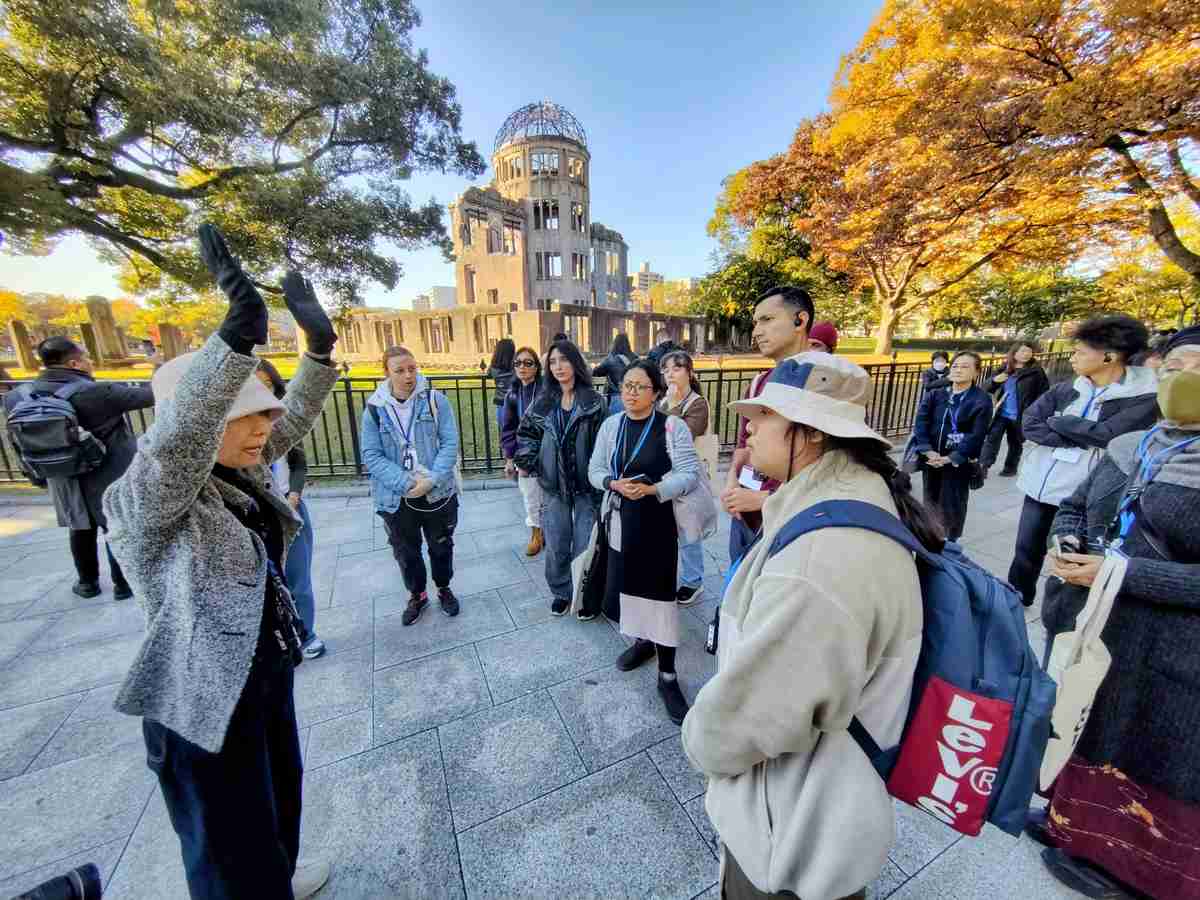
Hibakusha Keiko Ogura, who has spoken about her A-bomb experiences not only in Japan but also abroad, told the participants that if there are 10 hibakusha, there are 10 different stories, and that their trauma, which they cannot express in words, will never appear in data or documents. That is why she has continued to talk about the atomic bombing, she said.
Ogura also told participants that learning about history is necessary, but that imagination and empathy are more important. Now that she had passed the baton to the participants, who are very capable, she told them, it is their turn to pass it along to others.
The participating WCI members and others also looked at atomic bombing-related sites from the observation deck of the HIROSHIMA ORIZURU TOWER, such as the nearby Atomic Bomb Dome. They also toured one of those sites, the Hiroshima Peace Memorial Park, where they viewed the Cenotaph for the Victims of the Atomic Bomb and other monuments.
“If children from all over the world come to Hiroshima and listen to what hibakusha have to say, then the world will change for the better,” said participant Jill Friemark. “You must see with your own eyes, and you must feel and think on your own, which should be the point of origin for using your imagination.”







Most Read
Popular articles in the past 24 hours
-

Milano Cortina 2026: Japan’s Kaori Sakamoto Wins Silver; Ami Naka...
-
Japan's PM Takaichi Looks to Establish Dominance as She Follows i...
-
Milano Cortina 2026: Kaori Sakamoto Wins Silver, Ami Nakai Takes ...
-
Approval of Takaichi Cabinet Stands at 73%; Yomiuri Survey Finds ...
-

Anonymous Individual Donates Gold Bars Worth ¥566 Mil. to Osaka M...
-

New Japanese Animated Film ‘A New Dawn’ Applauded at Berlin Inter...
-

Ex-ROK President Yoon Gets Life Sentence: Declaration of Martial ...
-
Early-Blooming Cherry Blossoms Adorn Former Samurai Residences in...
Popular articles in the past week
-

Japan PM Takaichi’s Cabinet Resigns en Masse
-

Man Infected with Measles Reportedly Dined at Restaurant in Tokyo...
-

Videos Plagiarized, Reposted with False Subtitles Claiming ‘Ryuky...
-

Sanae Takaichi Elected 105th Prime Minister of Japan; Keeps All C...
-

Japan's Govt to Submit Road Map for Growth Strategy in March, PM ...
-

Milano Cortina 2026: Figure Skaters Riku Miura, Ryuichi Kihara Pa...
-

Bus Carrying 40 Passengers Catches Fire on Chuo Expressway; All E...
-

Tokyo’s New Record-Breaking Fountain Named ‘Tokyo Aqua Symphony’
Popular articles in the past month
-
Japan PM Takaichi’s Cabinet Resigns en Masse
-

Japan Institute to Use Domestic Commercial Optical Lattice Clock ...
-

Israeli Ambassador to Japan Speaks about Japan’s Role in the Reco...
-
Man Infected with Measles Reportedly Dined at Restaurant in Tokyo...
-

Man Infected with Measles May Have Come in Contact with Many Peop...
-
Videos Plagiarized, Reposted with False Subtitles Claiming ‘Ryuky...
-

Prudential Life Insurance Plans to Fully Compensate for Damages C...
-

Woman with Measles Visited Hospital in Tokyo Multiple Times Befor...
Top Articles in Society
-
Man Infected with Measles Reportedly Dined at Restaurant in Tokyo Station
-
Man Infected with Measles May Have Come in Contact with Many People in Tokyo, Went to Store, Restaurant Around When Symptoms Emerged
-
Woman with Measles Visited Hospital in Tokyo Multiple Times Before Being Diagnosed with Disease
-
Australian Woman Dies After Mishap on Ski Lift in Nagano Prefecture
-
Foreign Snowboarder in Serious Condition After Hanging in Midair from Chairlift in Nagano Prefecture
JN ACCESS RANKING
-
Japan PM Takaichi’s Cabinet Resigns en Masse
-
Japan Institute to Use Domestic Commercial Optical Lattice Clock to Set Japan Standard Time
-
Israeli Ambassador to Japan Speaks about Japan’s Role in the Reconstruction of Gaza
-
Man Infected with Measles Reportedly Dined at Restaurant in Tokyo Station
-
Man Infected with Measles May Have Come in Contact with Many People in Tokyo, Went to Store, Restaurant Around When Symptoms Emerged