
Japan’s Empty Homes Targeted for Subsidy Program, as Rise in Elderly Households Threatens Wave of Vacancies
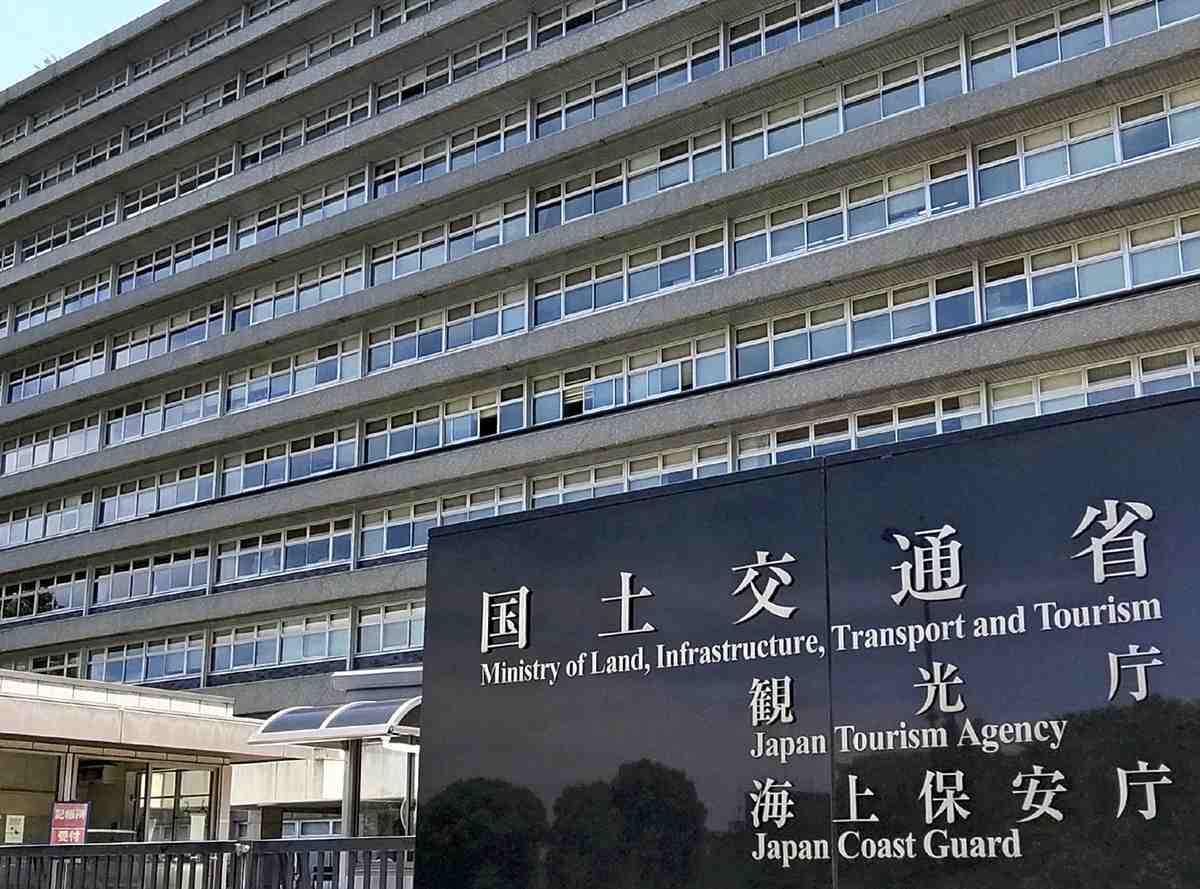
The Land, Infrastructure, Transport and Tourism Ministry in Chiyoda Ward, Tokyo
20:00 JST, October 2, 2025
A model project is set to launch next fiscal year that will provide subsidies to keep homes from sitting vacant, it has been learned. This will be run by the Land, Infrastructure, Transport and Tourism Ministry.
The project will target residential areas in major cities and neighboring areas and transform properties — including those about to be vacated by elderly people — into residences and community facilities suitable for families with children.
Homeowners who are planning to relocate or move into elder care facilities, and whose homes would otherwise likely sit empty, will be encouraged to renovate their properties for use as housing, childcare centers and other facilities.
This initiative aims both to curtail the rise in vacant homes in urban areas and to make it easier for working adults to acquire a home amid soaring construction costs.
The number of neglected vacant homes is increasing year by year, according to the Internal Affairs and Communications Ministry. In 2023, a record high 3.85 million units fell into this category.
A land ministry survey predicts that the number of single-family homes and apartment units occupied solely by those age 85 or over will increase from about 340,000 units in 2023 to about 940,000 units in 2033 across Tokyo and three surrounding prefectures. Similarly, the number in Osaka and Kyoto prefectures and four surrounding prefectures is expected to jump from about 210,000 units to about 580,000. This suggests there could be a rapid surge in vacant homes, especially in urban centers.
According to the land ministry, the model project will be implemented in residential areas in and around major cities that were developed during the high economic growth period of the 1950s to 1970s. These areas are expected to see an increase in vacant homes in the near future.
The ministry and participating local governments will select target areas.
The central government will subsidize the cost of interior and exterior renovations, plumbing repairs and other work for current owners of vacant homes, as well as for elderly people whose homes will likely go vacant after they move in with relatives or enter a care facility.
People who buy vacant homes and renovate them will also be eligible for the subsidy.
The government expects that renovated homes will be sold on the housing market and used as residences for working and child-rearing adults, as well as for facilities such as childcare centers, community halls, child-rearing support facilities and workspaces.
The project will be carried out over several years, with the aim of expanding it to other regions facing similar challenges.
“Soaring construction costs have made it difficult for your typical child-rearing family to purchase a newly built home,” a land ministry official said. “Through this revitalization project, we aim to curb the rise in vacant homes and create a comfortable living environment for families with children.”
The land ministry has included several hundred million yen for the project in its budget request for the next fiscal year.






Most Read
Popular articles in the past 24 hours
-

Voters Using AI to Choose Candidates in Japan's Upcoming General ...
-

Japan's Snow-Clad Beauty: Camellia Flowers Seen in Winter Bloom a...
-

Monkey Strikes Junior High School Girl from Behind in Japan's Yam...
-
Genichiro Inokuma's Mural in Ueno Station That Gave Hope in Postw...
-

Senior Japanese Citizens Return to University to Gain Knowledge, ...
-

Foreign and Security Policy: Political Parties Must Discuss How T...
-
Heavy Snow Linked to 30 Deaths across Japan since Late Jan.; JMA ...
-

Tokyo Police Arrest Head of Resignation Assistance Firm
Popular articles in the past week
-

Japan Institute to Use Domestic Commercial Optical Lattice Clock ...
-
Australian Woman Dies After Mishap on Ski Lift in Nagano Prefectu...
-
Foreign Snowboarder in Serious Condition After Hanging in Midair ...
-

Chinese Embassy in Japan Reiterates Call for Chinese People to Re...
-
Narita Airport, Startup in Japan Demonstrate Machine to Compress ...
-

Toyota Motor Group Firm to Sell Clean Energy Greenhouses for Stra...
-

Sakie Yokota, Last Surviving Parent of a North Korea Abductee, Ur...
-

Beer Yeast Helps Save Labor, Water Use in Growing Rice; Govt Hope...
Popular articles in the past month
-

Univ. in Japan, Tokyo-Based Startup to Develop Satellite for Disa...
-

JAL, ANA Cancel Flights During 3-day Holiday Weekend due to Blizz...
-
China Confirmed to Be Operating Drilling Vessel Near Japan-China ...
-

China Eyes Rare Earth Foothold in Malaysia to Maintain Dominance,...
-
M6.2 Earthquake Hits Japan's Tottori, Shimane Prefectures; No Tsu...
-
Japan Institute to Use Domestic Commercial Optical Lattice Clock ...
-

Japan, Qatar Ministers Agree on Need for Stable Energy Supplies; ...
-

Japan, Italy to Boost LNG Cooperation; Aimed at Diversifying Japa...
Top Articles in Society
-
JAL, ANA Cancel Flights During 3-day Holiday Weekend due to Blizzard
-
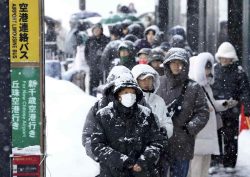
Record-Breaking Snow Cripples Public Transport in Hokkaido; 7,000 People Stay Overnight at New Chitose Airport
-
Australian Woman Dies After Mishap on Ski Lift in Nagano Prefecture
-
Foreign Snowboarder in Serious Condition After Hanging in Midair from Chairlift in Nagano Prefecture
-
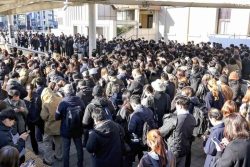
Train Services in Tokyo Resume Following Power Outage That Suspended Yamanote, Keihin-Tohoku Lines (Update 4)
JN ACCESS RANKING
-
Univ. in Japan, Tokyo-Based Startup to Develop Satellite for Disaster Prevention Measures, Bears
-
JAL, ANA Cancel Flights During 3-day Holiday Weekend due to Blizzard
-
China Confirmed to Be Operating Drilling Vessel Near Japan-China Median Line
-
China Eyes Rare Earth Foothold in Malaysia to Maintain Dominance, Counter Japan, U.S.
-
Japan Institute to Use Domestic Commercial Optical Lattice Clock to Set Japan Standard Time