
Local Governments Struggle with Mega Solar Plants, Look for Ways to Protect Environment
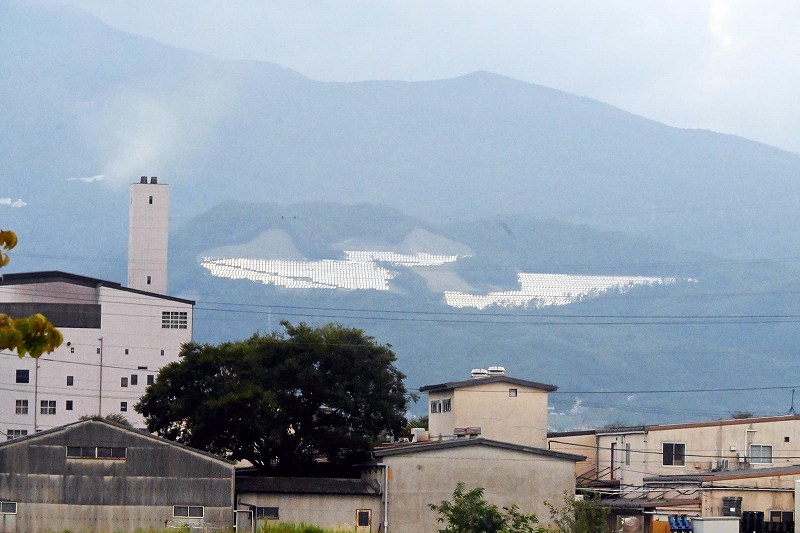
Solar panels installed on Mt. Sendatsu in Fukushima on Wednesday
16:51 JST, September 20, 2025
KUSHIRO, Hokkaido/FUKUSHIMA — Large-scale solar power generation plants, known as mega solar power plants, are leading to conflict between local residents and businesses, and local governments are struggling to respond.
On Wednesday, an ordinance regulating the installation of mega solar power plants was enacted in the city of Kushiro, Hokkaido. Kushiro has the Kushiro Shitsugen (Kushiro Marsh) National Park, and the surrounding area is home to habitats for species such as the red-crowned crane designated as a special natural monument in Japan. The ordinance aims to protect the cranes’ habitats and put a stop to uncontrolled development.
“We enacted the ordinance out of a desire to protect what we are proud of, including the nature and the rare species living there,” said Kushiro Mayor Hidenori Tsuruma.
Approximately 25 mega solar plants that generate more than 1,000 kilowatts each are in the city. Development within the national park is strictly regulated, but this is not necessarily the case in adjacent areas, where mega solar installations are being built one after the other. Kushiro is considered a suitable location for mega solar installations due to its flat terrain, relatively low land prices and long hours of sunlight.
However, there is not much difference between the park grounds and the adjacent areas in terms of the abundance of rare flora and fauna. Concerns have been growing about ecological impact, with mountaineer Ken Noguchi posting on X, “Is it really necessary to cut down forests and alter the terrain for mega solar power plants?”
Even in urbanization control areas, where building construction is restricted, solar panels are not considered buildings.
Under the ordinance, the installation of facilities with an output of 10 kilowatts or more requires the city government’s permission. Permission will not be granted if it is concluded there will be an impact on rare species. The names of noncompliant businesses will be made public.
The neighboring village of Tsurui has decided to acquire land in a hilly area, known as a red-crowned crane photography spot, as a protective measure against plans to install panels there.
Mountain slopes stripped bare
Mega solar power plants began spreading after the incident at the Fukushima No. 1 nuclear plant. Growth was further spurred in 2012 by the introduction of the Feed-in Tariff (FIT) system, wherein the government guarantees that utility companies purchase electricity from renewable energy sources at a fixed price. According to the Agency for Natural Resources and Energy, the number of mega solar power plants certified under the FIT and other schemes more than tripled by the end of fiscal 2024 compared to the end of fiscal 2012. The total domestic output of solar power generation, including from mega solar plants, reached 77.04 million kilowatts — nearly 10 times that of Kashiwazaki-Kariwa nuclear power plant.
However, strains are emerging across various regions.
After construction of a solar power facility began on Mt. Sendatsu in Fukushima in 2021, most of the planned site, about 60 hectares, was stripped bare, and about 95,000 panels were installed. Since last autumn, the city and prefectural governments have been receiving complaints about light pollution caused by reflected light.
“It’s sad to see the familiar landscape change,” said a 68-year-old woman in Fukushima. “It’s unreasonable that they’re proceeding with the project while our concerns remain unresolved.”
In the Akiu area in Sendai, known as a hot spring resort, plans to build one of Japan’s largest solar power facilities across about 600 hectares of forest land sparked opposition from residents, claiming it will destroy the landscape and lead to water pollution.
Sendai Mayor Kazuko Kori expressed her firm opposition to the development, tightening the assessment process and urging restraint from the developer.
40% of municipalities see trouble
According to a survey released by the Internal Affairs and Communications Ministry in 2024, about 40% of the 861 municipalities that responded had experienced problems with solar power generation facilities, citing issues such as “inadequate management” and “concerns about landslides.”
“Development has spread even to areas where local residents didn’t want it happening,” said Noriaki Yamashita, Senior Researcher at the NPO Institute for Sustainable Energy Policies. “In addition to concerns about disasters and the impact on the living environment, consent from local residents is insufficiently obtained in some cases. So solar power facilities have come to be seen as a nuisance.”






Most Read
Popular articles in the past 24 hours
-

Voters Using AI to Choose Candidates in Japan's Upcoming General ...
-
Japan's Snow-Clad Beauty: Camellia Flowers Seen in Winter Bloom a...
-
Monkey Strikes Junior High School Girl from Behind in Japan's Yam...
-
Genichiro Inokuma's Mural in Ueno Station That Gave Hope in Postw...
-

Senior Japanese Citizens Return to University to Gain Knowledge, ...
-

Foreign and Security Policy: Political Parties Must Discuss How T...
-
Heavy Snow Linked to 30 Deaths across Japan since Late Jan.; JMA ...
-

Tokyo Police Arrest Head of Resignation Assistance Firm
Popular articles in the past week
-

Japan Institute to Use Domestic Commercial Optical Lattice Clock ...
-
Australian Woman Dies After Mishap on Ski Lift in Nagano Prefectu...
-
Foreign Snowboarder in Serious Condition After Hanging in Midair ...
-

Chinese Embassy in Japan Reiterates Call for Chinese People to Re...
-
Narita Airport, Startup in Japan Demonstrate Machine to Compress ...
-

Toyota Motor Group Firm to Sell Clean Energy Greenhouses for Stra...
-

Sakie Yokota, Last Surviving Parent of a North Korea Abductee, Ur...
-

Beer Yeast Helps Save Labor, Water Use in Growing Rice; Govt Hope...
Popular articles in the past month
-
Univ. in Japan, Tokyo-Based Startup to Develop Satellite for Disa...
-
JAL, ANA Cancel Flights During 3-day Holiday Weekend due to Blizz...
-
China Confirmed to Be Operating Drilling Vessel Near Japan-China ...
-
China Eyes Rare Earth Foothold in Malaysia to Maintain Dominance,...
-
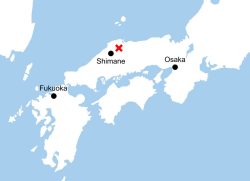
M6.2 Earthquake Hits Japan's Tottori, Shimane Prefectures; No Tsu...
-
Japan Institute to Use Domestic Commercial Optical Lattice Clock ...
-

Japan, Qatar Ministers Agree on Need for Stable Energy Supplies; ...
-

Japan, Italy to Boost LNG Cooperation; Aimed at Diversifying Japa...
Top Articles in Society
-
JAL, ANA Cancel Flights During 3-day Holiday Weekend due to Blizzard
-
Record-Breaking Snow Cripples Public Transport in Hokkaido; 7,000 People Stay Overnight at New Chitose Airport
-
Australian Woman Dies After Mishap on Ski Lift in Nagano Prefecture
-
Foreign Snowboarder in Serious Condition After Hanging in Midair from Chairlift in Nagano Prefecture
-
Train Services in Tokyo Resume Following Power Outage That Suspended Yamanote, Keihin-Tohoku Lines (Update 4)
JN ACCESS RANKING
-
Univ. in Japan, Tokyo-Based Startup to Develop Satellite for Disaster Prevention Measures, Bears
-
JAL, ANA Cancel Flights During 3-day Holiday Weekend due to Blizzard
-
China Confirmed to Be Operating Drilling Vessel Near Japan-China Median Line
-
China Eyes Rare Earth Foothold in Malaysia to Maintain Dominance, Counter Japan, U.S.
-
Japan Institute to Use Domestic Commercial Optical Lattice Clock to Set Japan Standard Time