
300 Kilometers of Japan’s Sewer Pipes Need Emergency Measures, Ministry Inspections Find
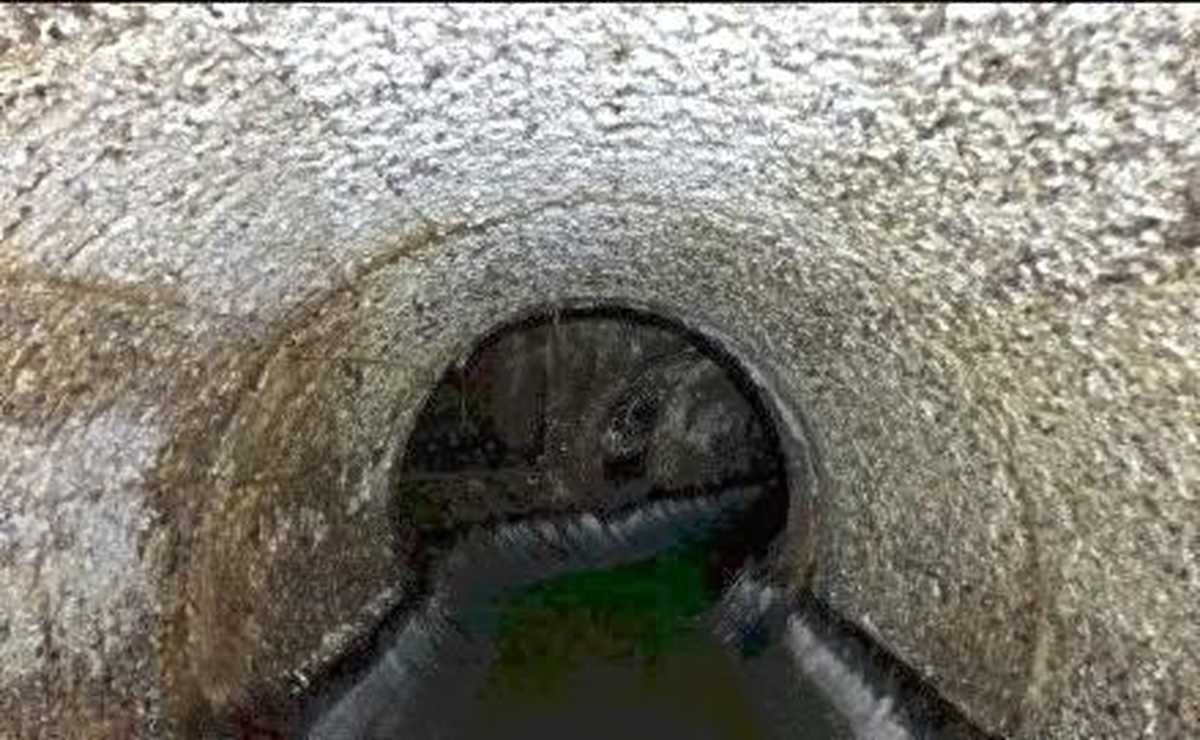
A sewer pipe deemed to need repair or reconstruction measures within one year is seen in Chiba Prefecture.
16:32 JST, September 18, 2025
About 300 kilometers of sewer pipes — nearly half of priority pipes so far checked for such risks as corrosion and damage — require emergency measures within five years, according to interim results of special inspections conducted by the infrastructure ministry.
In the wake of a fatal road cave-in accident that occurred in Yashio, Saitama Prefecture, in January, the Land, Infrastructure, Transport and Tourism Ministry is currently conducting inspections of large sewer pipes installed more than 30 years ago nationwide.
The interim results released Wednesday showed that 12% of the pipes checked so far were in need of measures within one year. On the same day, the ministry sent a written request to municipalities that oversee such sewer pipes to take swift measures to prevent cave-in accidents.
The ministry launched the emergency inspections in March, targeting large sewer pipes more than 2 meters in diameter that were installed in or before fiscal 1994. The total length of these pipes is about 5,000 kilometers. The inspections give priority to 813 kilometers of sewer pipes at risk of extensive damage, including pipes that have ground conditions similar to those at the accident site in Yashio or have structures prone to corrosion. At the request of the ministry, local governments are checking for abnormalities using such methods as drone photography, visual inspections and tapping tests.
The interim findings were presented at a ministry expert panel meeting on Wednesday. An analysis of 621 kilometers for which the inspections had been finished by Aug. 8 showed that the total length of pipes requiring repair or reconstruction within five years due to such factors as exposed reinforcement bars, surface cracks or groundwater infiltration was 297 kilometers, accounting for 48% of the total checked so far. These pipes are located in all prefectures except Gunma, Fukui, Ehime, Saga, Nagasaki and Oita. Of these pipes, 72 kilometers in 35 prefectures, or 12% of the total, were found to need measures within one year.
In the inspections, six underground cavities were found near sewer pipes — one in Kitami, Hokkaido; two in Niigata City; and three in Tamana, Kumamoto Prefecture. One of the three found in Tamana reached nearly 1 meter in diameter. As these cavities have either been repaired or are slated for repair, the risk of road cave-ins is low, according to the ministry.
“The figures that came out are extremely serious,” Hitoshi Ieda, chair of the expert panel who is a senior professor at the National Graduate Institute for Policy Studies, told reporters after the meeting. “We hope repairs will be made as soon as possible.”
The ministry plans to advance the installation of parallel sewer pipes and the replacement of aging large pipes next fiscal year. To that end, it has included related expenses in its budget request for fiscal 2026.





Most Read
Most read in the last 24 hours
-
Japan to Release Additional Oil Reserves from May 1
-
Iwate Pref. Forest Fires Continue into 4th Day, with 30% of Town'...
-

Mazda to End Domestic Production of Mazda2 Compact Car
-

Exhibition on Eric Carle's ‘The Very Hungry Caterpillar’ Picture ...
-

Ehime: Elderly Polar Bear Peace Makes Speedy Health Recovery, Bac...
-

Japanese Govt to Set Up Panel on Widening Access to Sports Broadc...
-

New Budget Framework for Investments: Work to Achieve Both Growth...
-

Toyota Unveils New Development Hub in Woven City Repurposed from ...
Most read in the last 7 days
-
Earthquake Hits Japan's Tohoku Region; 3-meter Tsunami Warning Is...
-

China, South Korea Object to Japanese PM Takaichi's Ritual Offeri...
-

Trump Extends the Ceasefire with Iran but Keeps the Blockade
-

India's Arms Indigenization Quest for Self-Reliance / New Delhi S...
-

¥1,000 Coins to Be Issued to Mark Anniversary of Beginning of Jap...
-

Most Serious Cyberattacks against the UK Now from Russia, Iran an...
-

Trump Opposes United–American Merger, Signals Support for Spirit
-
System Malfunction in Haneda Airport Causes 83 Flight Cancelation...
Most read in the last 30 days
-
Earthquake Hits Japan's Tohoku Region; 3-meter Tsunami Warning Is...
-
Police Find Child's Shoe During Search for Missing Boy in Nantan,...
-
Body Found in Nantan, Kyoto Prefecture, During Search for 11-Year...
-

Cherry Blossoms, Rapeseed Flowers Perform Colorful ‘Duet’ in Niig...
-
China, South Korea Object to Japanese PM Takaichi's Ritual Offeri...
-
Trump Extends the Ceasefire with Iran but Keeps the Blockade
-

Olympic Gold Medal-Winning Figure Skaters Riku-Ryu Announce Retir...
-

Japanese Prime Minister Takaichi Speaks to Pakistani Prime Minist...
Top Articles in Society
-
Earthquake Hits Japan’s Tohoku Region; 3-meter Tsunami Warning Issued (Update 1)
-
Police Find Child’s Shoe During Search for Missing Boy in Nantan, Kyoto Prefecture
-
Body Found in Nantan, Kyoto Prefecture, During Search for 11-Year-Old Boy in Area (Update 1)
-
Cherry Blossoms, Rapeseed Flowers Perform Colorful ‘Duet’ in Niigata
-

Japan to Ban Use of Portable Chargers on Airplanes from April 24, Number of Regular Chargers To Be Limited to 2
JN ACCESS RANKING
-
Earthquake Hits Japan’s Tohoku Region; 3-meter Tsunami Warning Issued (Update 1)
-
Police Find Child’s Shoe During Search for Missing Boy in Nantan, Kyoto Prefecture
-
Body Found in Nantan, Kyoto Prefecture, During Search for 11-Year-Old Boy in Area (Update 1)
-
Cherry Blossoms, Rapeseed Flowers Perform Colorful ‘Duet’ in Niigata
-
China, South Korea Object to Japanese PM Takaichi’s Ritual Offering to Yasukuni Shrine
Most read in the last 24 hours
-
Japan to Release Additional Oil Reserves from May 1
-
Iwate Pref. Forest Fires Continue into 4th Day, with 30% of Town'...
-
Mazda to End Domestic Production of Mazda2 Compact Car
-
Exhibition on Eric Carle's ‘The Very Hungry Caterpillar’ Picture ...
-
Ehime: Elderly Polar Bear Peace Makes Speedy Health Recovery, Bac...
Most read in the last 7 days
-
Earthquake Hits Japan's Tohoku Region; 3-meter Tsunami Warning Is...
-
China, South Korea Object to Japanese PM Takaichi's Ritual Offeri...
-
Trump Extends the Ceasefire with Iran but Keeps the Blockade
-
India's Arms Indigenization Quest for Self-Reliance / New Delhi S...
-
¥1,000 Coins to Be Issued to Mark Anniversary of Beginning of Jap...
Most read in the last 30 days
-
Earthquake Hits Japan's Tohoku Region; 3-meter Tsunami Warning Is...
-
Police Find Child's Shoe During Search for Missing Boy in Nantan,...
-
Body Found in Nantan, Kyoto Prefecture, During Search for 11-Year...
-
Cherry Blossoms, Rapeseed Flowers Perform Colorful ‘Duet’ in Niig...
-
China, South Korea Object to Japanese PM Takaichi's Ritual Offeri...