
11:00 JST, September 5, 2025
Japan’s ruling parties, the Liberal Democratic Party and Komeito, suffered a crushing defeat in July’s House of Councillors election, losing their majority in the upper house as they lost their majority in the House of Representatives last October. On the other hand, some emerging parties made remarkable gains. Call it voters’ judgment on the course of Japan’s economy and society during the 30 years or so after the collapse of the bubble economy. The country’s future is not looking good.
The biggest issue in the upper house election was rising prices. The real problem here is the prolonged stagnation of the Japanese economy.
About 40 years ago, when it was said that the country’s rapid growth would lead to “Japan as No. 1,” the economy was enjoying a bubble, but that burst in the 1990s. Even in 2000, Japan’s nominal gross domestic product per capita — a measure of national strength — was the second highest in the world, behind only Luxembourg. However, Japan then slid down the global rankings, until it was in 38th place by 2024. This is a per capita comparison, so the drop has nothing to do with the country’s shrinking population.
Deflation was to blame for the economic nosedive, many economics professors and economists said. In fact, the government has touted a policy of “breaking with deflation” for many years now. For its part, the Bank of Japan introduced an “extraordinary” monetary easing policy in 2013 to combat deflation, and kept that policy in place for more than 10 years.
But it must be said that deflation is not the true cause of the lingering stagnation.
There are two types of deflation. One is “malign deflation,” in which prices fall by half or more in a few years. This is the kind of deflation seen during the Great Depression in the 1930s. The other kind is “benign deflation,” which is what Japan has experienced since the end of the 20th century. The first sort is a major threat to a capitalist economy, while the latter is not.
Looking back at history, inflation often occurred when the real economy, including production and employment, was booming and deflation often occurred during a recession. However, there were exceptions. The most notable was the United Kingdom in the 19th century. At the time, the country, which led the world economy, had achieved the highest economic growth in history, despite prices having moderately declined for more than 30 years, and it had built the British Empire. What allowed for the great economic boom despite the presence of deflation? Robust innovation.
And in fact, it is a lack of innovation that has brought about the long stagnation of the Japanese economy. There is no relationship between innovation — the creation of new products and businesses — and deflation. Neither does inflation promote innovation. Over the course of the past 30 years or so, with the exception of a few rapidly growing startups, many Japanese companies have avoided taking risks and neglected to innovate.
Despite a lackluster level of innovation, Japan has somehow improved its productivity. Nonetheless, Japanese businesses have increased dividends for their shareholders and piled money into their bank accounts while corporate capital investment and research and development have stagnated. Above all, wages have not risen.
Real wages falling
In recent years, an upward trend in nominal wages has taken hold due primarily to rising prices, and real wages adjusted for price fluctuations remain negative.
The national average minimum hourly wage for fiscal 2025 increased by 6.0% from the previous year to ¥1,118. As a result, all prefectures will likely have a minimum wage of over ¥1,000 for the first time. Nevertheless, considering the trend among some Japanese people to move abroad in search of higher wages, it is undeniable that the move comes too late. As no other advanced country has experienced stagnation in real wages for such a long time, it is hardly a surprise that the public’s discontent has built up like magma.
In July’s upper house election, the campaign promise of “raising your take-home pay” made by some parties resonated with many voters. However, focusing solely on take-home pay will not solve the problems facing Japan’s economy and society.
An increase in take-home pay makes it affordable to spend more on personal consumption, such as food, clothing and travel. But we can’t get along without also having a sufficient supply of “public goods” — which include social security, such as health care and nursing care; infrastructure, such as roads and the water supply; compulsory education; and defense.
If real economic growth improves thanks to innovation, both real wages and tax revenues will go up, allowing for both an increase in take-home pay and a sufficient supply of public goods.
Unfortunately, Japan’s current situation makes it impossible to expect such a positive outcome. If take-home pay is raised by cutting taxes, it will mean one of two consequences — either a disruption of the supply of public goods or an increase in deficit financing through government bonds.
Among public goods, social security has a particular importance to everyone and is large in scale. The cost of social security should be covered by social insurance premiums, but the revenue from such premiums is not nearly enough. Moreover, the tax revenue used to make up for this shortfall is not sufficient either. As a result, the shortfall in social insurance funds has grown in parallel with the government’s fiscal deficit. Japan’s fiscal deficit is dire, and financing for social security is tight.
In Japan, the highest monthly medical expenses incurred by an individual in fiscal 2023 stood at about ¥180 million, an amount that can hardly be borne by individuals, even when they only have to cover 30% as a co-payment. This is not a risk that can be managed by raising take-home pay.
For cases such as these, the public health insurance system has a safety net called a high-cost medical expense benefit. This sets a monthly cap on the amount that people have to pay at hospitals or clinics for medical services. The draft budget for fiscal 2025 initially included a plan to raise the ceiling on this benefit, meaning patients would have to pay more out of pocket. Patient groups protested so strongly that the government shelved the plan during upper house deliberations.
Tapping new fiscal resources
I’d like to point out that there are measures we can take to secure the fiscal resources needed for social security without raising the ceiling. Personally, I propose that the government levy a new tax — separate from the inheritance tax — on a certain percentage of the financial assets left behind by the deceased.
According to a 2024 survey on household financial behavior by Japan Financial Literacy and Education Corp., 76.5% of those in their 70s cited “living expenses for retirement” as their reason for holding financial assets — the highest percentage in the multiple-answer survey. That compared with only 13.4% choosing “to leave it as an inheritance for my descendants.”
Many elderly people try to leave their houses and land to close relatives but consider financial assets as a way to support themselves in old age. In that sense, it can be said that the savings left behind after death have fulfilled their role. If 10% of that amount were collected, for example, it could amount to several trillion yen that could go toward social security for future generations.
Another possible approach is to exclude medications with ingredients and effects similar to over-the-counter drugs from being covered by public health insurance. This would also be certain to reduce medical costs more than the shelved plan to raise the ceiling on out-of-pocket costs for high-cost medical care.
Many people may prefer to remain eligible for the current 30% co-pay for pain-relief patches and vitamin supplements. However, the true purpose of social insurance is to support each other in dealing with larger risks, while letting people manage minor risks through their own efforts as much as possible.
In July’s upper house election, many people supported a tax cut due largely to their dissatisfaction with rising prices. Even so, inflation is a short-term issue, while the declining birth rate and aging population are mid- to long-term challenges that cannot be resolved solely by increasing take-home pay through tax cuts or cash handouts.
The social security system is complex. It is the responsibility of politicians to explain the complete picture to the people in an easy-to-understand manner. In light of the severe state of the country’s finances, what can be done to ensure that the system will remain sustainable into the future? Politicians must show the way to reforms, including for fiscal resources.
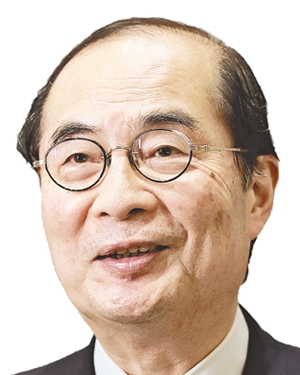
Hiroshi Yoshikawa
Yoshikawa is a professor emeritus at the University of Tokyo. He has served as the chair of the Fiscal System Council, an advisory panel to the finance minister. He is the author of “Reconstruction of Macroeconomics: Methods of Statistical Physics, and Keynes’ Principle of Effective Demand.”
The original Japanese article appeared in the Aug. 31 issue of The Yomiuri Shimbun.







Most Read
Popular articles in the past 24 hours
-
Japan's Ruling Bloc Aims to Reclaim Key Committee Posts in Lower ...
-

Milano Cortina 2026: Japan’s Mitsuki Ono, Ikuma Horishima Add 2 B...
-

Japan, U.S. Fail to Make Final Decision on $550 Bil. Investment P...
-

Taiwan Chipmaker’s New Factory: Utilize Advanced Products to Boos...
-
Council Submits Proposals for Revising Retrial System; Some Legal...
-

Milano Cortina 2026: Japan’s Totsuka Wins Gold, Yamada Takes Bron...
-

Berlin Film Festival Kicks off with a Nod to New Voices from Mich...
-

2026 Has Seen a Grim Dawn in Iran; What Will the Rest of the Year...
Popular articles in the past week
-

Woman with Measles Visited Hospital in Tokyo Multiple Times Befor...
-

Prudential Life Insurance Plans to Fully Compensate for Damages C...
-

Woman with No Overseas Travel History Infected with Measles in Na...
-

LDP Wins Historic Landslide Victory
-

LDP Wins Landslide Victory, Secures Single-party Majority; Ruling...
-

Measles Patient Flew Between Tokyo, Hokkaido in Late January; Lik...
-

Milano Cortina 2026: Kokomo Murase Comes Out on Top After Overcom...
-

Tokyo, Many Regions across Japan Hit with Heavy Snow
Popular articles in the past month
-

Japan Institute to Use Domestic Commercial Optical Lattice Clock ...
-

Israeli Ambassador to Japan Speaks about Japan’s Role in the Reco...
-

Man Infected with Measles May Have Come in Contact with Many Peop...
-

China Eyes Rare Earth Foothold in Malaysia to Maintain Dominance,...
-

Australian Woman Dies After Mishap on Ski Lift in Nagano Prefectu...
-

Japan, Qatar Ministers Agree on Need for Stable Energy Supplies; ...
-
Woman with Measles Visited Hospital in Tokyo Multiple Times Befor...
-

Foreign Snowboarder in Serious Condition After Hanging in Midair ...
Top Articles in Editorial & Columns
-
40 Million Foreign Visitors to Japan: Urgent Measures Should Be Implemented to Tackle Overtourism
-

University of Tokyo Professor Arrested: Serious Lack of Ethical Sense, Failure of Institutional Governance
-
Policy Measures on Foreign Nationals: How Should Stricter Regulations and Coexistence Be Balanced?
-
Greenland: U.S. Territorial Ambitions Are Anachronistic
-

China Provoked Takaichi into Risky Move of Dissolving House of Representatives, But It’s a Gamble She Just Might Win
JN ACCESS RANKING
-
Japan Institute to Use Domestic Commercial Optical Lattice Clock to Set Japan Standard Time
-
Israeli Ambassador to Japan Speaks about Japan’s Role in the Reconstruction of Gaza
-
Man Infected with Measles May Have Come in Contact with Many People in Tokyo, Went to Store, Restaurant Around When Symptoms Emerged
-
China Eyes Rare Earth Foothold in Malaysia to Maintain Dominance, Counter Japan, U.S.
-
Australian Woman Dies After Mishap on Ski Lift in Nagano Prefecture