
Japanese Defense Ministry Announces Standoff Missile Sites, Seeks ¥8.8 Trillion Budget for Fiscal 2026
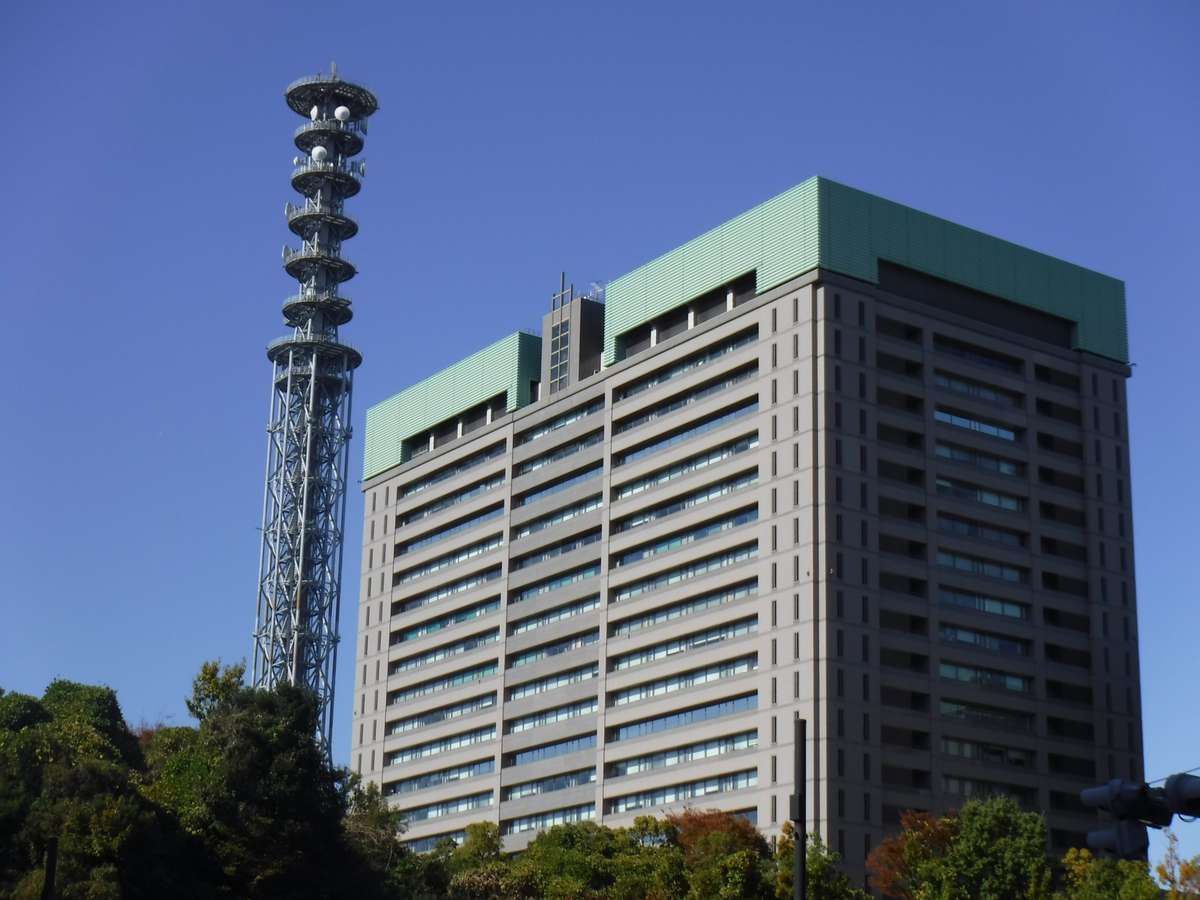
The Defense Ministry in Shinjuku Ward, Tokyo
18:07 JST, August 30, 2025
The Defense Ministry announced Friday four locations where a new model of long-range standoff missiles for counterattacks will be deployed.
The new missiles, which are fired from the ground, will be deployed at Ground Self-Defense Force camps in Hokkaido, Shizuoka, Kumamoto and Miyazaki prefectures.
The ministry also announced its initial budget requests for the fiscal 2026 government budget. The ministry asks for a total of about ¥1.02 trillion for the standoff missile deployments, and the total amount of requested budget for the fiscal year hits the highest ever at about ¥8.85 trillion, up ¥370.6 billion from the budget for this fiscal year.
In addition, the ministry officially decided to convert the Air Self-Defense Force to an “air and space self-defense force” within fiscal 2026.
The deployments of the long-range missiles will be made earlier than initially scheduled to speed up strengthening deterrent power with China and North Korea in mind.
The ground-launched model of the new long-range missiles, an upgraded version of Type 12 surface-to-ship missiles, will have a range of more than 1,000 kilometers.
The new missiles will be deployed at Camp Kengun in Kumamoto Prefecture in fiscal 2025 and at Camp Fuji in Shizuoka Prefecture in fiscal 2027.
Concerning the upgraded new missiles launched from aircraft or ships, deployment will begin in fiscal 2027 instead of the initially planned timing of “fiscal 2028 or later.”
The ship- and aircraft-launched missiles will be operated by the destroyer Teruzuki, whose home port is Maritime Self-Defense Force’s Yokosuka Base in Kanagawa Prefecture, and by F-2 fighters to be deployed to the ASDF’s Hyakuri Base in Ibaraki Prefecture.
Concerning hyper velocity gliding projectiles (HVGPs), which have long ranges and are for defending remote islands, the ministry plans to move the start of deployments forward by one year from fiscal 2026.
By the end of fiscal 2025, HVGPs will be deployed at Camp Fuji. They will also be deployed at Camp Kamifurano in Hokkaido and Camp Ebino in Miyazaki Prefecture in fiscal 2026, when new GSDF units in charge of the HVGPs will be established.
In the ministry’s initial budget request for the fiscal 2026 government budget, the ministry is seeking ¥312.8 billion, the highest ever, for strengthening defense capabilities by utilizing unmanned aerial vehicles.
Of that amount, ¥128.7 billion will be spent mainly for building or improving unmanned water surface vehicles and UAVs flown from ships.
The ministry aims to complete construction of the SHIELD system, which defends coastal regions using drones, by the end of fiscal 2027.
As China is increasingly active in the Pacific Ocean, the ministry plans to launch an office for Pacific defense initiatives which will consider how to manage warning and surveillance activities in the Pacific Ocean.
The ASDF’s capabilities in the space domain will be strengthened, and the conversion of the ASDF to an air and space force will be started.
Also, because China, Russia and some other countries are developing technologies to attack other countries’ satellites, the ministry plans to establish a new SDF unit that will specialize in operations in the space domain.






Most Read
Popular articles in the past 24 hours
-

Voters Using AI to Choose Candidates in Japan's Upcoming General ...
-
Light of Hope Gas Lamp Lit in Wajima as Noto Earthquake, Flood Su...
-
Genichiro Inokuma's Mural in Ueno Station That Gave Hope in Postw...
-
Monkey Strikes Junior High School Girl from Behind in Japan's Yam...
-
Senior Japanese Citizens Return to University to Gain Knowledge, ...
-
Heavy Snow Linked to 30 Deaths across Japan since Late Jan.; JMA ...
-

Japan's Snow-Clad Beauty: Camellia Flowers Seen in Winter Bloom a...
-

Tokyo Police Arrest Head of Resignation Assistance Firm
Popular articles in the past week
-

Japan Institute to Use Domestic Commercial Optical Lattice Clock ...
-
Australian Woman Dies After Mishap on Ski Lift in Nagano Prefectu...
-
Foreign Snowboarder in Serious Condition After Hanging in Midair ...
-

Chinese Embassy in Japan Reiterates Call for Chinese People to Re...
-
Narita Airport, Startup in Japan Demonstrate Machine to Compress ...
-

Toyota Motor Group Firm to Sell Clean Energy Greenhouses for Stra...
-
Sakie Yokota, Last Surviving Parent of a North Korea Abductee, Ur...
-

Milano Cortina 2026: Olympics-Torch Arrives in Co-Host Cortina on...
Popular articles in the past month
-
Univ. in Japan, Tokyo-Based Startup to Develop Satellite for Disa...
-
JAL, ANA Cancel Flights During 3-day Holiday Weekend due to Blizz...
-
China Confirmed to Be Operating Drilling Vessel Near Japan-China ...
-
China Eyes Rare Earth Foothold in Malaysia to Maintain Dominance,...
-
M6.2 Earthquake Hits Japan's Tottori, Shimane Prefectures; No Tsu...
-
Japan, Qatar Ministers Agree on Need for Stable Energy Supplies; ...
-
Japan Institute to Use Domestic Commercial Optical Lattice Clock ...
-

Japan, Italy to Boost LNG Cooperation; Aimed at Diversifying Japa...
Top Articles in
-

Earthquake with Magnitude 4.8 Occurs off Japan’s Ibaraki Pref., Seismic Intensity Scale of 3 Recorded in Ibaraki, Fukushima Prefs
-
Overseas Media Criticize Japanese Parties’ Plans to Lower Consumption Tax, Including PM Takaichi’s Temporary Cut Proposal
-

Japan Takes Step Toward Rare Earths Independence With Sea Mud Excavation
-

Milano Cortina 2026: Olympic Truce Wall Unveiled in Athletes’ Village in Milan
-

Japanese Musician Micro of Duo Def Tech Arrested on Suspicion of Possessing Dried Cannabis
-

Japan’s Nikkei Stock Average Jumps near 4%, Closes at Record High as Precious Metals Sell-off Pauses (UPDATE 1)
-
Univ. in Japan, Tokyo-Based Startup to Develop Satellite for Disaster Prevention Measures, Bears
-
JAL, ANA Cancel Flights During 3-day Holiday Weekend due to Blizzard
-
China Confirmed to Be Operating Drilling Vessel Near Japan-China Median Line
-
China Eyes Rare Earth Foothold in Malaysia to Maintain Dominance, Counter Japan, U.S.
-
Japan, Qatar Ministers Agree on Need for Stable Energy Supplies; Motegi, Qatari Prime Minister Al-Thani Affirm Commitment to Cooperation
JN ACCESS RANKING
-
Univ. in Japan, Tokyo-Based Startup to Develop Satellite for Disaster Prevention Measures, Bears
-
JAL, ANA Cancel Flights During 3-day Holiday Weekend due to Blizzard
-
China Confirmed to Be Operating Drilling Vessel Near Japan-China Median Line
-
China Eyes Rare Earth Foothold in Malaysia to Maintain Dominance, Counter Japan, U.S.
-
Japan, Qatar Ministers Agree on Need for Stable Energy Supplies; Motegi, Qatari Prime Minister Al-Thani Affirm Commitment to Cooperation