
Japanese Government to Expand Sewer System in FY26 in Response to Fatal Saitama Sinkhole Accident
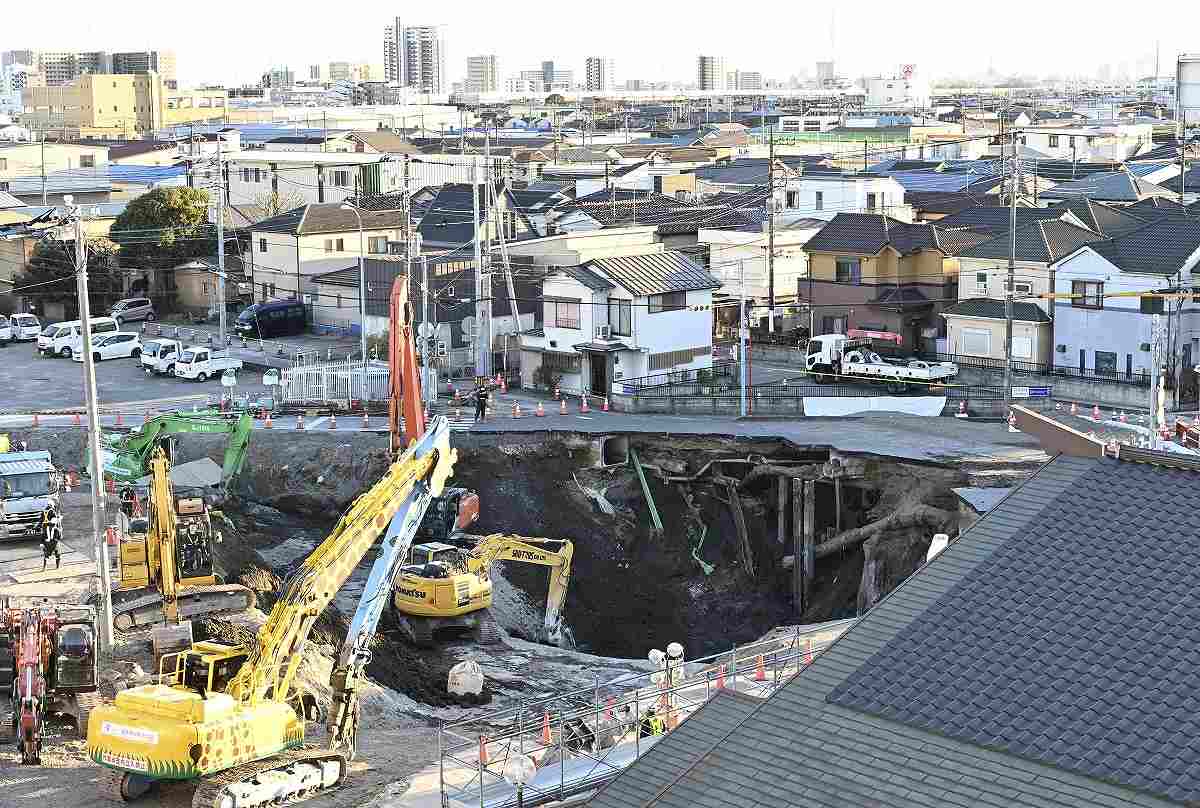
The site of a sinkhole accident in Yashio City, Saitama Prefecture, is seen on Feb. 8.
1:00 JST, August 26, 2025
A fatal sinkhole accident in Saitama Prefecture has spurred the infrastructure ministry to expand the nation’s sewer systems in fiscal 2026, targeting large sewer pipes that could significantly impact residents’ lives if damaged.
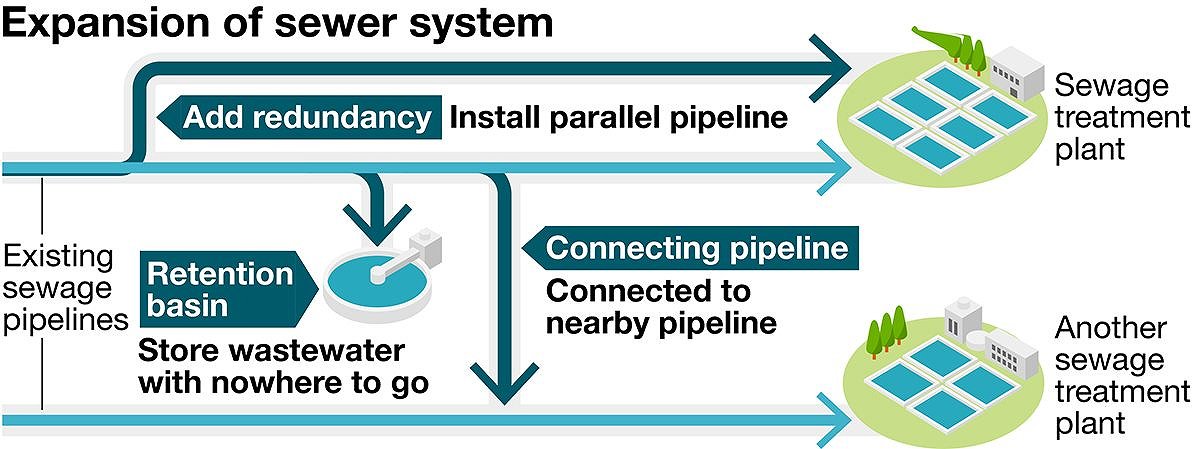
The Land, Infrastructure, Transport and Tourism Ministry will cover half the cost of municipal sewer improvement projects, encouraging the installation of back-up or connecting pipelines. The ministry will also subsidize the costs of updating large pipes, among other infrastructure, in order to swiftly respond to aging sewer systems.
The sinkhole accident that occurred in Yashio on Jan. 28 is believed to have been caused by a ruptured 4.75-meter diameter sewer pipe that had been in use for 42 years. The damaged section led to erosion of its surrounding soil and sand, causing the sinkhole to grow to be 40 meters across and 15 meters deep. About 1.2 million residents in 12 municipalities were urged to refrain from using the sewage system for about two weeks in order to prevent sewage from flowing into the collapsed area.
Aging sewer pipes is a national issue. In response to the accident, the ministry began discussing countermeasures for the aging of large pipes which could have a significant effect if damaged. It has decided to prioritize replacing large pipes, which municipal surveys identified as having a high risk of damage, while diversifying the functions of sewer treatment to disperse risks.
The ministry’s envisioned subsidy program applies to improvement projects for pipes that are 2 meters or more in diameter and located in densely populated or urban areas, where renewal or response to accidents and disasters is difficult.
The ministry aims to cover half the costs for adding redundant pipelines or constructing connecting pipes, which can divert wastewater routes in emergencies, and retention basins to store wastewater in case of leaks. It also plans to subsidize half the costs to replace aging large diameter pipes.
As of fiscal 2024, the ministry found only 7% of about 60 municipalities that have large diameter pipelines eligible for the subsidy program have formulated a relevant plan.
A subsidy program for water supply systems has also been planned in fiscal 2026. The ministry will cover one-third the costs of adding redundant pipelines or replacing existing pipes that have at least a diameter of 80 centimeters. The aging of water supply systems is a nationwide issue, with leaks from water pipes installed 60 to 65 years ago causing flooding this year on roads and in residential areas of Kyoto and Osaka.







Most Read
Popular articles in the past 24 hours
-

Japan's Snow-Clad Beauty: Camellia Flowers Seen in Winter Bloom a...
-

Monkey Strikes Junior High School Girl from Behind in Japan's Yam...
-

Foreign and Security Policy: Political Parties Must Discuss How T...
-

Senior Japanese Citizens Return to University to Gain Knowledge, ...
-
Heavy Snow Linked to 30 Deaths across Japan since Late Jan.; JMA ...
-

Genichiro Inokuma's Mural in Ueno Station That Gave Hope in Postw...
-

Tokyo Police Arrest Head of Resignation Assistance Firm
-

Japan’s Nikkei Stock Average Jumps near 4%, Closes at Record High...
Popular articles in the past week
-

Japan Institute to Use Domestic Commercial Optical Lattice Clock ...
-
Australian Woman Dies After Mishap on Ski Lift in Nagano Prefectu...
-
Foreign Snowboarder in Serious Condition After Hanging in Midair ...
-

Chinese Embassy in Japan Reiterates Call for Chinese People to Re...
-
Narita Airport, Startup in Japan Demonstrate Machine to Compress ...
-

Toyota Motor Group Firm to Sell Clean Energy Greenhouses for Stra...
-

Sakie Yokota, Last Surviving Parent of a North Korea Abductee, Ur...
-

Beer Yeast Helps Save Labor, Water Use in Growing Rice; Govt Hope...
Popular articles in the past month
-

Univ. in Japan, Tokyo-Based Startup to Develop Satellite for Disa...
-

JAL, ANA Cancel Flights During 3-day Holiday Weekend due to Blizz...
-

China Confirmed to Be Operating Drilling Vessel Near Japan-China ...
-

China Eyes Rare Earth Foothold in Malaysia to Maintain Dominance,...
-
Japan Institute to Use Domestic Commercial Optical Lattice Clock ...
-
M6.2 Earthquake Hits Japan's Tottori, Shimane Prefectures; No Tsu...
-

Japan, Qatar Ministers Agree on Need for Stable Energy Supplies; ...
-

Japan, Italy to Boost LNG Cooperation; Aimed at Diversifying Japa...
Top Articles in Society
-
JAL, ANA Cancel Flights During 3-day Holiday Weekend due to Blizzard
-
Record-Breaking Snow Cripples Public Transport in Hokkaido; 7,000 People Stay Overnight at New Chitose Airport
-
Australian Woman Dies After Mishap on Ski Lift in Nagano Prefecture
-
Foreign Snowboarder in Serious Condition After Hanging in Midair from Chairlift in Nagano Prefecture
-
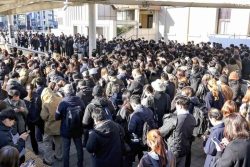
Train Services in Tokyo Resume Following Power Outage That Suspended Yamanote, Keihin-Tohoku Lines (Update 4)
JN ACCESS RANKING
-
Univ. in Japan, Tokyo-Based Startup to Develop Satellite for Disaster Prevention Measures, Bears
-
JAL, ANA Cancel Flights During 3-day Holiday Weekend due to Blizzard
-
China Confirmed to Be Operating Drilling Vessel Near Japan-China Median Line
-
China Eyes Rare Earth Foothold in Malaysia to Maintain Dominance, Counter Japan, U.S.
-
Japan Institute to Use Domestic Commercial Optical Lattice Clock to Set Japan Standard Time