
Ehime: Mt. Ishizuchi Rewards Climbers with Spectacular View, Writer Experiences Pull of Mountain Firsthand
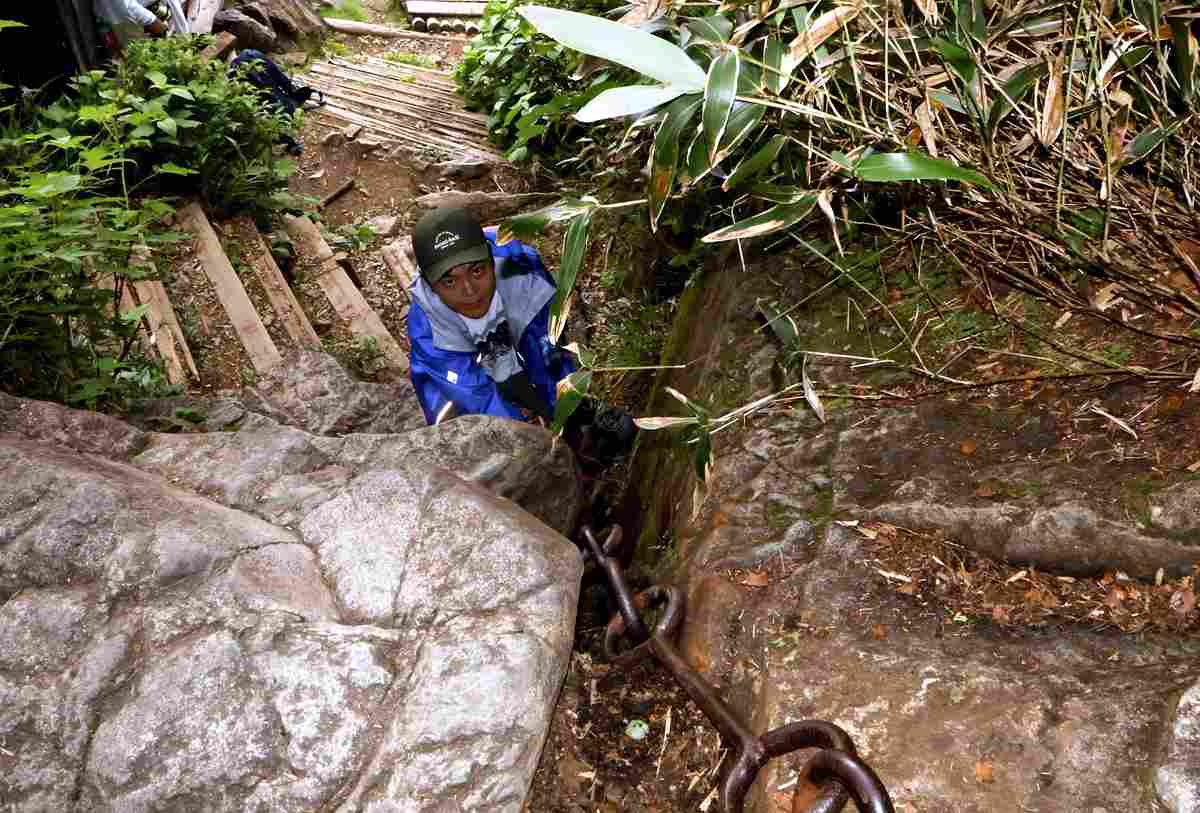
This image, taken by a fellow climber, shows the writer climbing up a chain on Mt. Ishizuchi.
11:13 JST, August 23, 2025
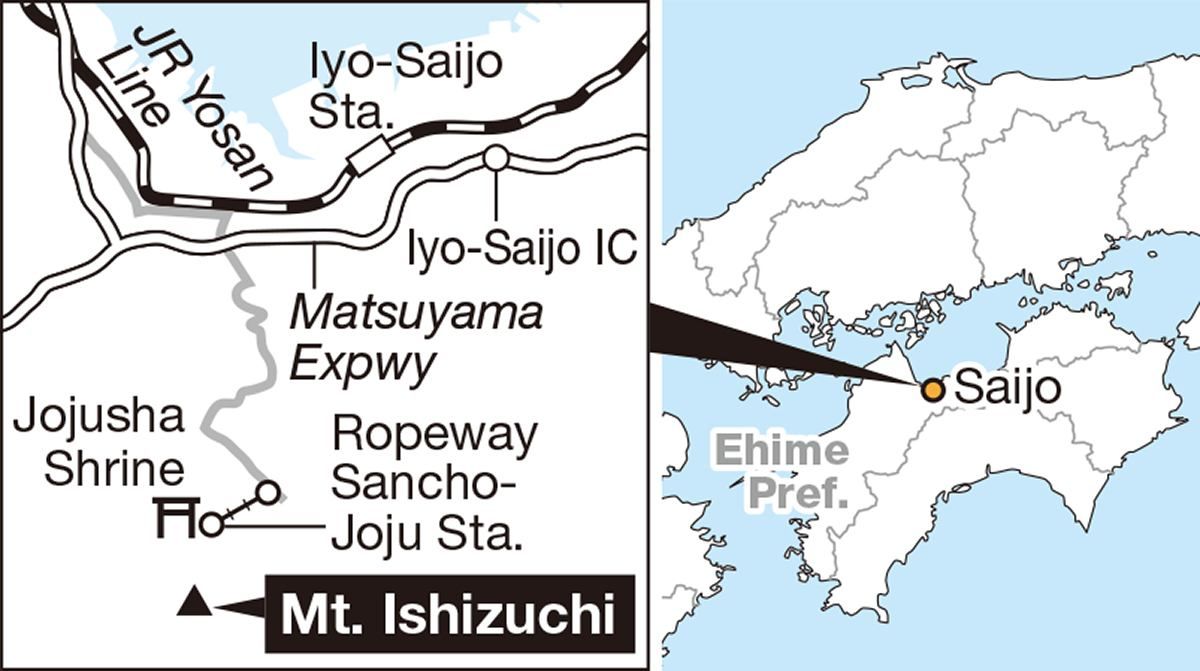
SAIJO, Ehime — Straddling Saijo and Kumakogen in Ehime Prefecture, Mt. Ishizuchi is the highest mountain in western Japan, standing at 1,982 meters above sea level.
As a rookie reporter who started this past spring, I took up the challenge of climbing this sacred mountain, which countless people have revered since ancient times.
The annual grand festival to open the mountain was held on July 1. At 7 a.m., men wearing white garb were in high spirits at Jojusha Shrine, one of Ishizuchi Shrine’s four shrines. Meanwhile, devotees were divided into three groups and ready to carry three divine statues to Chojosha Shrine, which is located at the summit, while chanting “Wasshoi.”
Children around elementary school age took the lead, energetically running up the mountain while shouting. In stark contrast, I was quickly out of breath, having almost no mountain climbing experience.
A worshipper I spoke to on the mountain trail said he had come all the way from Oita Prefecture. Realizing Mt. Ishizuchi attracts people from all over the country, my excitement to reach the summit grew.
About an hour after my climb started, I took a break and bought a sweet drink called “Chikara Ameyu” at a shop. I was surprised to hear that the shop owner carried drinking water and other products up the mountain on his own.
After the break, I faced the first hurdle: the 33-meter-long first climbing chain. The men at the front carried ropes and used the chain to climb the cliff. Following them, devotees carrying the divine statues on their backs, climbed up quickly by using the ropes, which had been thrown down.
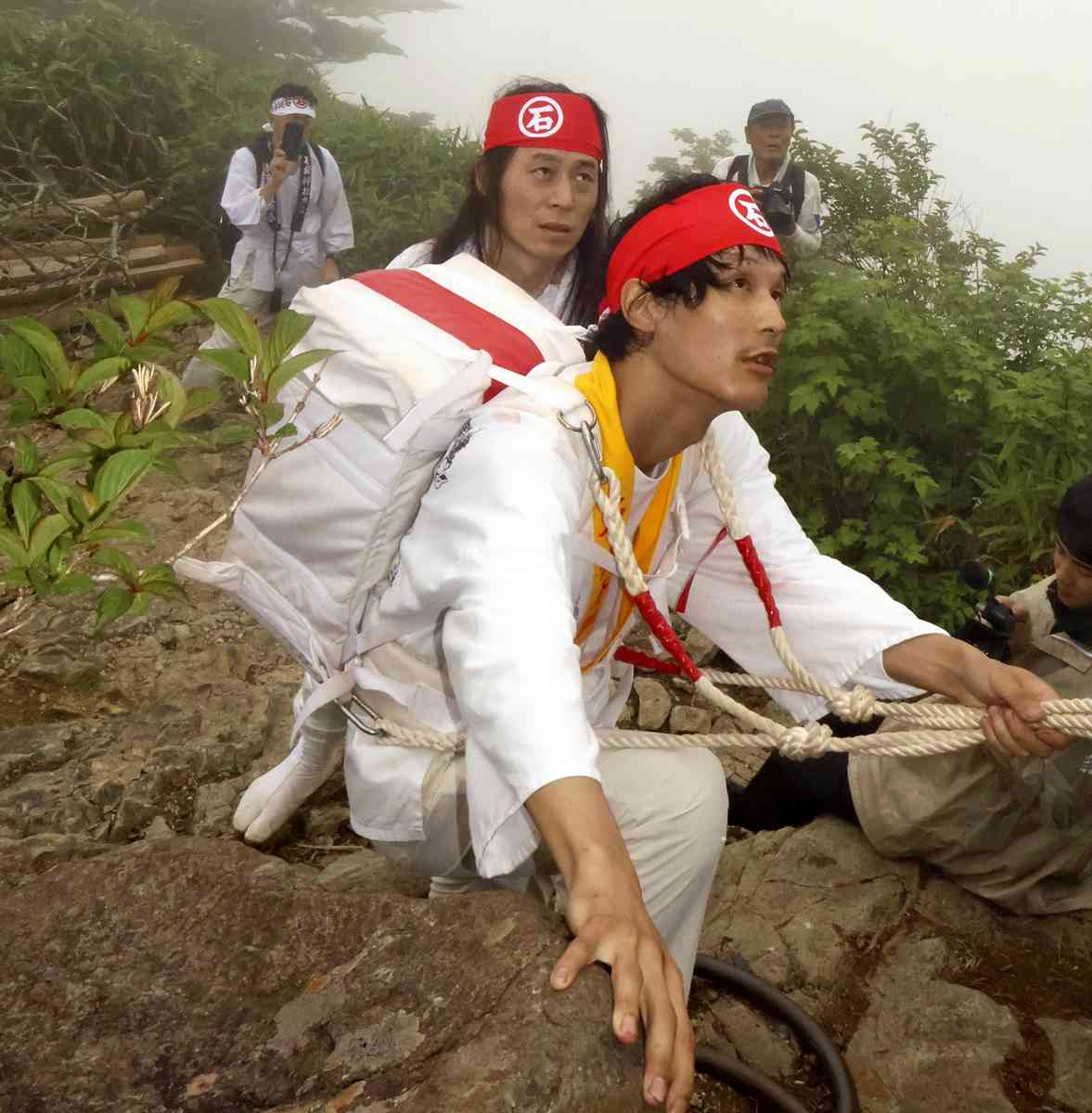
A devotee climbs up a chain path carrying a divine statue on his back.
I somehow managed to climb the first chain and the 65-meter-long second chain. Then the 68-meter-long third chain appeared before me. It hung down from a sheer cliff, with almost no place for climbers to put their feet.
I made up my mind to climb and grasped the chain. Fear and fatigue made my arms tremble. I could not see the ground when I looked down, as it was covered with the mist.
At that time, I heard people cheering me on from above and below, saying things like, “Be careful and take your time but keep trying.” These encouraging words gave me the strength to grip the chain again.
I was wondering how much time had passed since I began climbing the third chain, when suddenly the sky spread out wide, and I realized that I had reached the summit.
The shrine at the summit looked like it was floating on the clouds. Mist surrounded the peak like a sea of white, and the devotees, who had arrived earlier, placed the divine statues at the shrine and offered prayers.
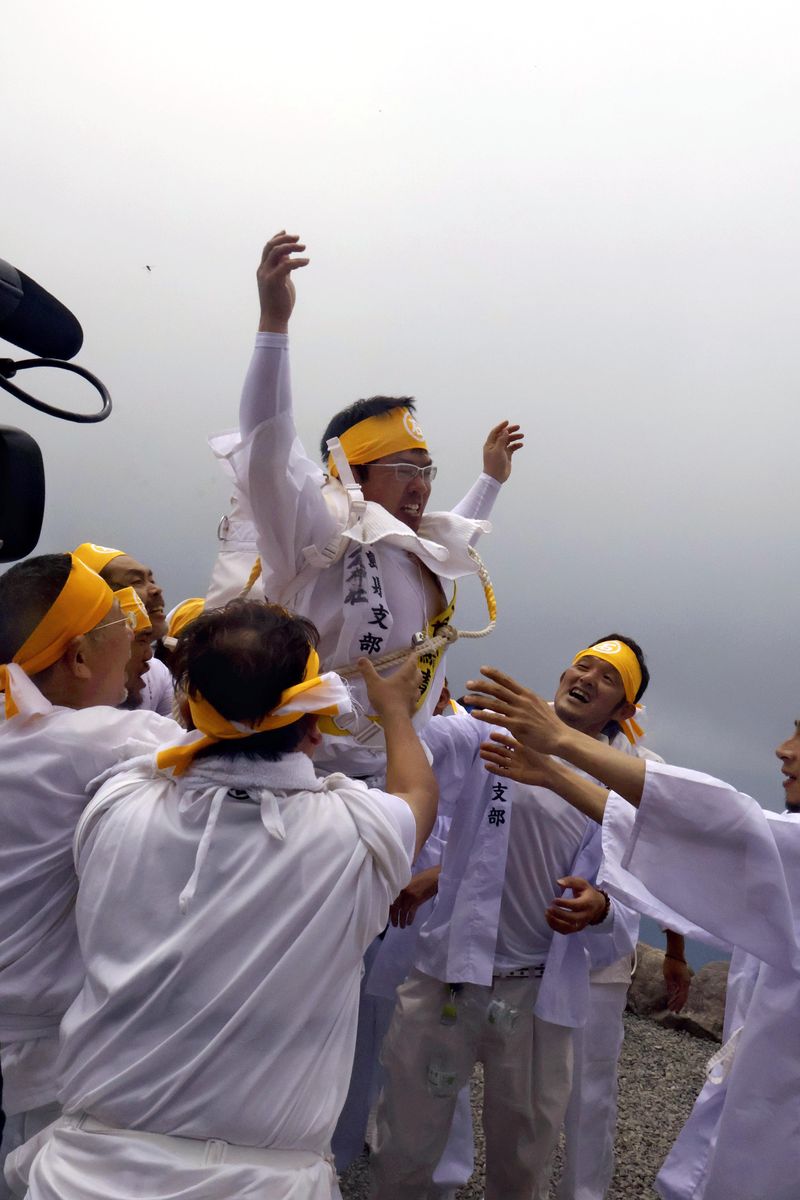
Devotees celebrate reaching the summit.
“Every time I come here, I feel cleansed,” said Keisuke Shiimori, 39, a comedian from the Yoshimoto Shinkigeki company who used to climb the mountain whenever he returned to Kumakogen, his hometown, where he currently lives.
U.S.-born Benjamin Gross, who lives in Seiyo in the prefecture, said he is interested in Shugendo, a fusion of mountain worship and Buddhism, and has climbed the mountain multiple times.
“Last year, it rained heavily, but this year was perfect, with sunny skies,” he said.
During the ritual, the devotees celebrated reaching the summit by lifting each other up in the air.
People with different origins, professions and ages encouraged and supported each other and finally reached the summit. The sacred mountain draws people to it, gives them challenges and rewards them with a spectacular view from its summit. Even for me, who had never been interested in mountain climbing, this experience has become one I will never forget.
On that day, I experienced the “pull” of the mountain firsthand.
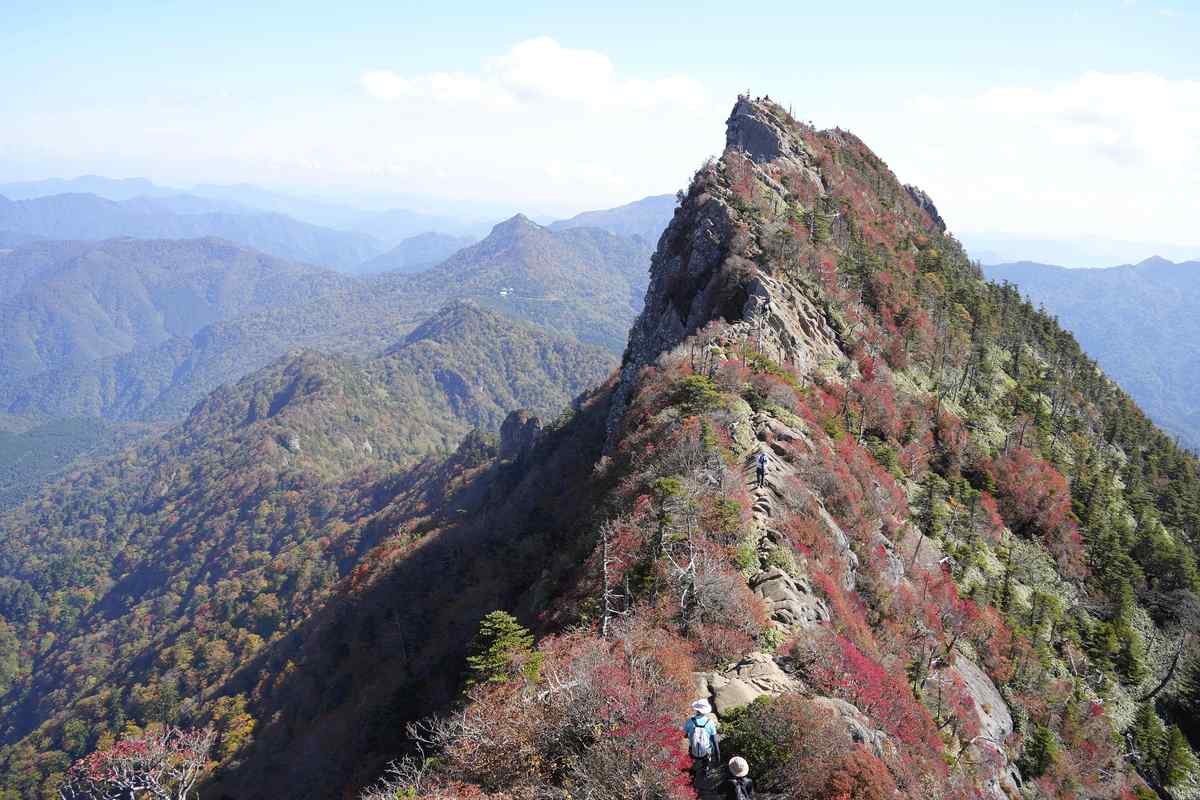
The summit of Mt. Ishizuchi is seen in October 2023.
Mt. Ishizuchi
The mountain has been worshipped as a sacred mountain since ancient times and is considered one of the Seven Holy Mountains of Japan, along with Mt. Omine in Nara Prefecture and Mt. Fuji. En no Ozunu, the founder of Shugendo, established the mountain as a site of worship in 685. It also flourished as a training ground for mountain Buddhists.Jojusha Shrine is located about 70% of the way up from the base to the summit, and to get to the shrine, take the ropeway up to Sancho-Joju Station, which is at an altitude of 1,300 meters, and then walk for another 20 to 30 minutes.


Related Tags

Most Read
Most read in the last 24 hours
-

China, South Korea Object to Japanese PM Takaichi's Ritual Offeri...
-

Trump Opposes United–American Merger, Signals Support for Spirit
-

Florida Launches Criminal Probe into OpenAI and ChatGPT over Dead...
-

Japan's ANA to Introduce Fuel Surcharges to Domestic Flights from...
-

Taiwan President Cancels Africa Trip Blaming Chinese Pressure
-
Wisteria Flowers Glisten in Sunlight at Shrine in Japan's Yamaguc...
-

GSDF Tank Accident: Why did This Unprecedented Explosion Occur?
-

From Africa, Pope Leo Warns Humanity's Future Is 'Tragically Comp...
Most read in the last 7 days
-
Earthquake Hits Japan's Tohoku Region; 3-meter Tsunami Warning Is...
-

Trump Extends the Ceasefire with Iran but Keeps the Blockade
-

Olympic Gold Medal-Winning Figure Skaters Riku-Ryu Announce Retir...
-
China, South Korea Object to Japanese PM Takaichi's Ritual Offeri...
-

Japan to Ban Use of Portable Chargers on Airplanes from April 24,...
-
New Challenges Await as Miura-Kihara Retires; Blade Maker, Ex-Coa...
-
Trump Opposes United–American Merger, Signals Support for Spirit
-
Florida Launches Criminal Probe into OpenAI and ChatGPT over Dead...
Most read in the last 30 days
-
Earthquake Hits Japan's Tohoku Region; 3-meter Tsunami Warning Is...
-
Police Find Child's Shoe During Search for Missing Boy in Nantan,...
-
Body Found in Nantan, Kyoto Prefecture, During Search for 11-Year...
-
Cherry Blossoms, Rapeseed Flowers Perform Colorful ‘Duet’ in Niig...
-
Trump Extends the Ceasefire with Iran but Keeps the Blockade
-
Olympic Gold Medal-Winning Figure Skaters Riku-Ryu Announce Retir...
-
Nori Prices Surge in Japan Due to Poor Seaweed Production Amid Ri...
-

Japanese Prime Minister Takaichi Speaks to Pakistani Prime Minist...
Top Articles in Features
-
Cherry Blossoms in Full Bloom Draw Crowds in Sendai, Miyagi Pref.; Aquarium Creates Underwater ‘Cherry Blossom Viewing’ Show
-
Cherry Blossom Viewing Season at Peak in Japan’s Kanazawa
-
Cherry Blossoms, Tulips, Snow-Capped Peaks Create Picturesque Scene in Toyama Pref., Japan
-
Cherry Blossom Viewers Enjoy Picnic Under the Trees in Full Bloom in Famous Osaka Spot
-
Cherry Blossom View in Front of Shinkansen Bullet Trains Attracting Visitors in Nagasaki Pref.
JN ACCESS RANKING
-
Earthquake Hits Japan’s Tohoku Region; 3-meter Tsunami Warning Issued (Update 1)
-
Police Find Child’s Shoe During Search for Missing Boy in Nantan, Kyoto Prefecture
-
Body Found in Nantan, Kyoto Prefecture, During Search for 11-Year-Old Boy in Area (Update 1)
-
Cherry Blossoms, Rapeseed Flowers Perform Colorful ‘Duet’ in Niigata
-
Trump Extends the Ceasefire with Iran but Keeps the Blockade
Most read in the last 24 hours
-
China, South Korea Object to Japanese PM Takaichi's Ritual Offeri...
-
Trump Opposes United–American Merger, Signals Support for Spirit
-
Florida Launches Criminal Probe into OpenAI and ChatGPT over Dead...
-
Japan's ANA to Introduce Fuel Surcharges to Domestic Flights from...
-
Taiwan President Cancels Africa Trip Blaming Chinese Pressure
Most read in the last 7 days
-
Earthquake Hits Japan's Tohoku Region; 3-meter Tsunami Warning Is...
-
Trump Extends the Ceasefire with Iran but Keeps the Blockade
-
Olympic Gold Medal-Winning Figure Skaters Riku-Ryu Announce Retir...
-
China, South Korea Object to Japanese PM Takaichi's Ritual Offeri...
-
Japan to Ban Use of Portable Chargers on Airplanes from April 24,...
Most read in the last 30 days
-
Earthquake Hits Japan's Tohoku Region; 3-meter Tsunami Warning Is...
-
Police Find Child's Shoe During Search for Missing Boy in Nantan,...
-
Body Found in Nantan, Kyoto Prefecture, During Search for 11-Year...
-
Cherry Blossoms, Rapeseed Flowers Perform Colorful ‘Duet’ in Niig...
-
Trump Extends the Ceasefire with Iran but Keeps the Blockade