
Side Effects of Increasing Japan’s Minimum Wage a Concern; Small, Midsize Businesses May Have Difficulty Passing on Costs
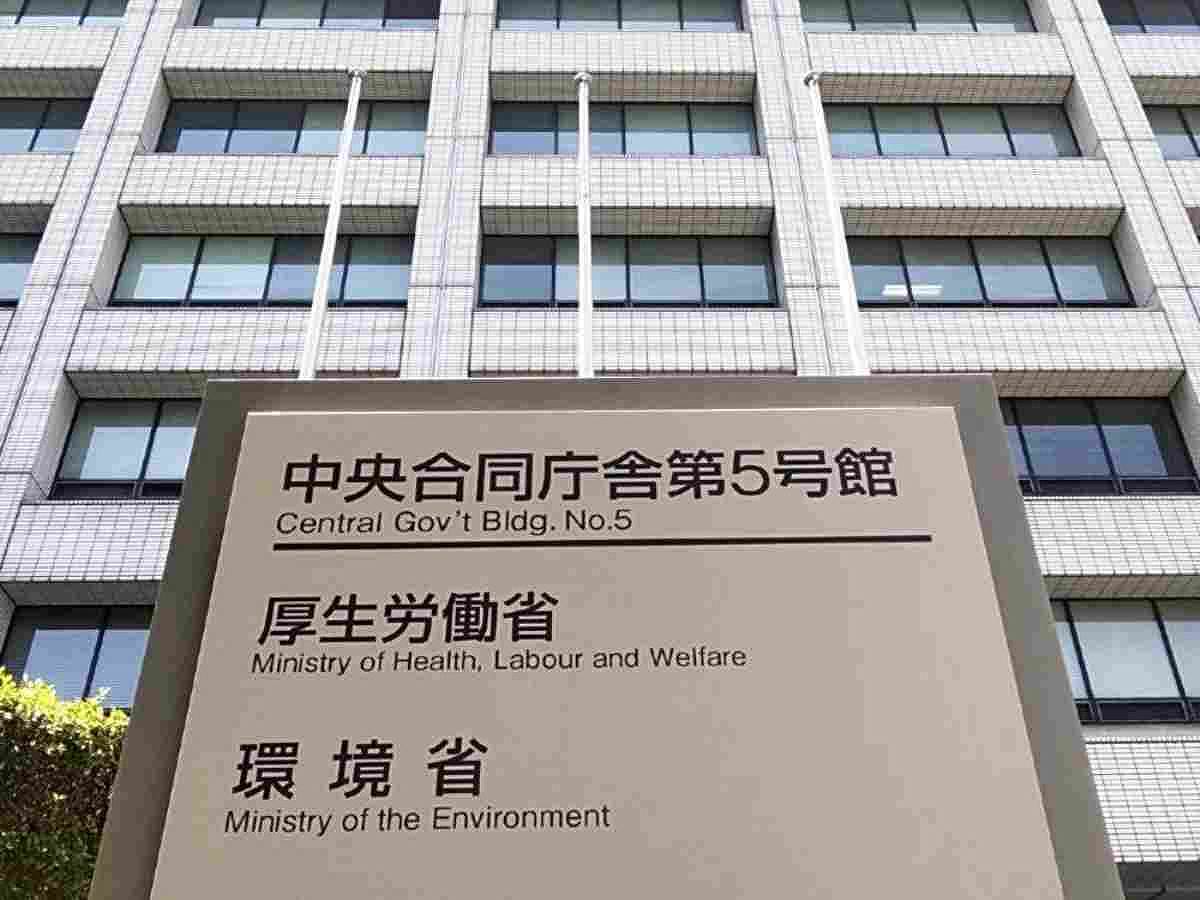
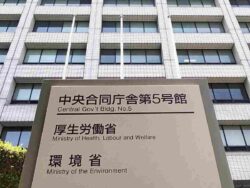
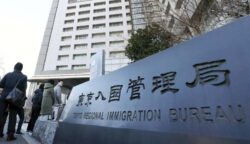
The Health, Labor and Welfare Ministry in Chiyoda Ward, Tokyo
16:49 JST, August 5, 2025
Persistent inflation was reflected in Japan’s average minimum wage, which is expected to surpass the ¥1,100 threshold for the first time. However, the sharp increase is feared to have side effects.
The Health, Labor and Welfare Ministry’s advisory panel agreed Monday on a record hike of the nation’s minimum wage, raising the average hourly rate by ¥63 — or 6.0% — to ¥1,118 for fiscal 2025.
The government has pledged to raise the country’s average minimum wage to ¥1,500 by the 2020s, but the path forward remains unclear.
Due to a difference in opinions during the panel’s discussion, labor and management failed to reach an agreement in the four meetings that were initially announced. The meeting ended up entering a seventh session for the first time in 44 years.
The minimum wage is determined by considering three factors: general wage levels, workers’ living expenses and the paying capacity of businesses.
The rise in the cost of living was a major focus during the deliberations.
Detailed analyses were conducted on various price indices, including food prices, which rose by an average of 6.4% between October 2024 to June. A senior ministry official said the analyses were done to try and “understand the actual living conditions of workers whose incomes are close to the minimum wage.”
The time spent on such analyses is said to have contributed to the prolonged deliberations.
“We looked at various indicators more thoroughly than ever before, taking time to carefully discuss them,” said Kazuhiro Sakuma, deputy director general of the National Federation of Small Business Associations, who is a committee member on the employers side.
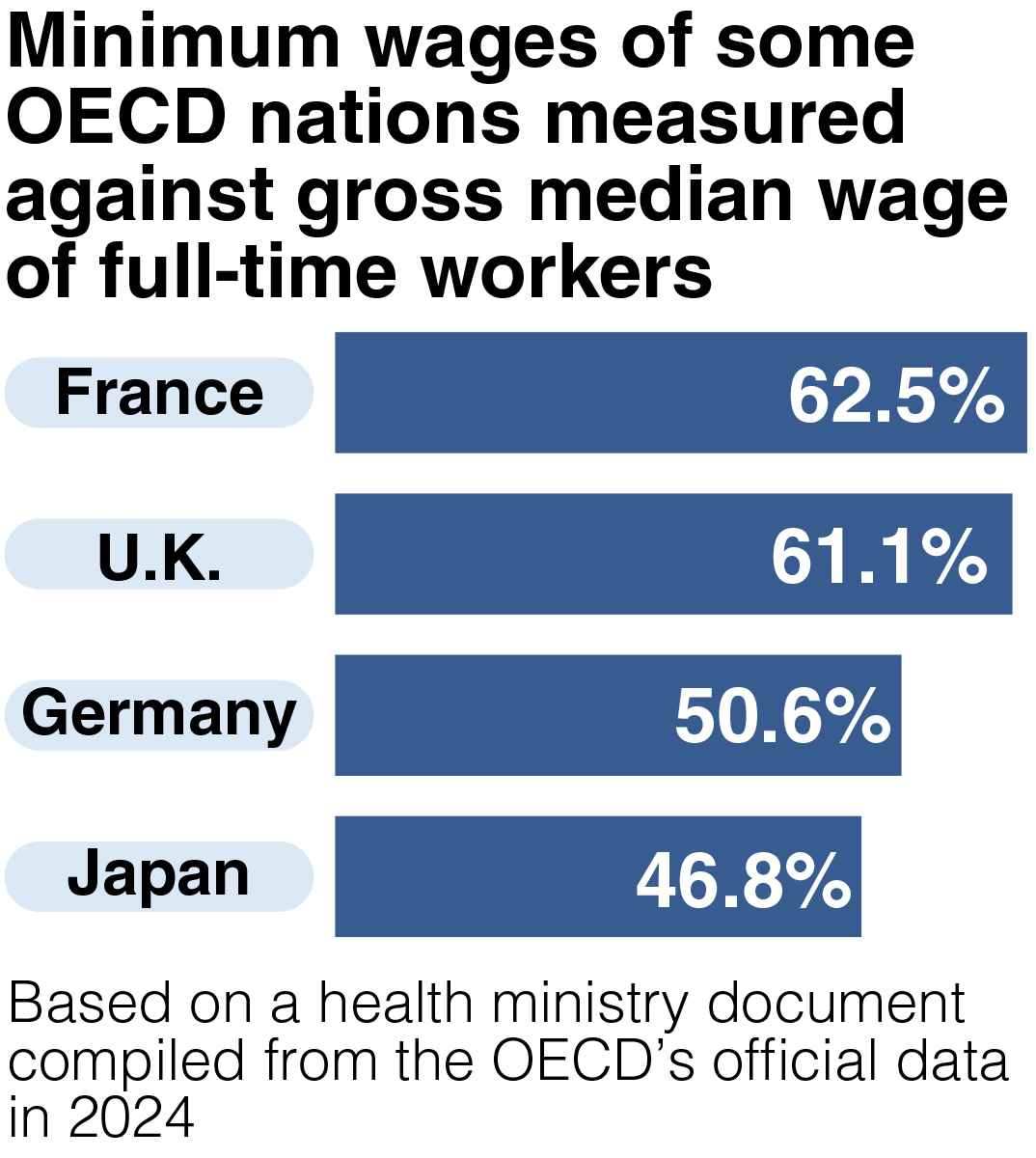
The Organization for Economic Cooperation and Development’s data in 2024 showed that the incomes of Japan’s minimum wage workers stood at 46.8% of the gross median income of full-time employees. The figure was lower than France’s 62.5% and the United Kingdom’s 61.1%.
The panel also looked at Japan’s minimum wage level, which lags behind other advanced nations.
The gap in wages between minimum wage earners and regular employees can create a disparity between non-regular and regular employees. A significant rise in the minimum wage would help narrow this gap.
However, as record minimum wage hikes have been implemented every year for the past four years and is expected to be implemented this year, small and midsize enterprises have been feeling overwhelmed. The Small and Medium Enterprise Agency found that, as of March, only 48.6% of these companies surveyed had been able to pass on increased labor costs on to sales prices, and further wage hikes could worsen business conditions.
There is also concern that the labor shortage will aggravate the situation. Higher hourly wages will push employees over an income tax threshold, possibly leading to part-time workers refraining from working more hours to try and keep their wages below the threshold.
Prime Minister Shigeru Ishiba announced last autumn that the target date for a minimum wage of ¥1,500 would be brought forward from the mid-2030s to the 2020s. To do so, an annual increase of 7% or more is necessary.
The Japan Chamber of Commerce and Industry (JCCI) found 70% of companies surveyed said it would be impossible or difficult to comply.
“There’s no objection to the increase itself, but I cannot help but say it is extremely challenging, considering the payment capacity of small businesses,” said JCCI Chairman Ken Kobayashi on Monday regarding the panel’s decision.
Meiji Yasuda Research Institute, Inc. economist Kazutaka Maeda said: “A hasty hike could have adverse effects on employment. Government policies to boost productivity will become necessary for sustainable wage hikes, such as passing on higher costs, streamlining businesses and support for business succession.”






Most Read
Popular articles in the past 24 hours
-
15 Measles Patients Confirmed in Tokyo in Past 6 Days; 1 May Have...
-
‘King Kazu’ Discusses His Connection to Fukushima
-
JR Tokai Breaks Ground on Yamanashi Maglev Station; Will Be Part ...
-

Japan Closely Monitoring Situation around Hormuz Strait, Collecti...
-

Japan’s Gunma Official Suspended For Unauthorized Absence From Wo...
-

Milano Cortina 2026: Japan’s Alpine Skier Muraoka Extends P...
-
Rising Kabuki Star Works to Ensure Deaf Audience's Enjoyment of P...
-

White House Takes First Step toward Permanent Fix for Illegal Tar...
Popular articles in the past week
-

Japan Figure Skating Legend Yuzuru Hanyu Is Proud Disaster Surviv...
-

Nippon Life Insurance's U.S. Arm Sues OpenAI Over Legal Assistanc...
-
Govt to Utilize ODA for Ensuring Economic Security; Securing Ener...
-
Massive Sewer Pipe Found Jutting Out of Highway in Osaka
-
15 Measles Patients Confirmed in Tokyo in Past 6 Days; 1 May Have...
-

Beckoning Cats Get Makeover to Fit Modern Lifestyles with Sleek D...
-
Japan Govt Survey Finds Just 10% of Workers Want Working Hours to...
-
Japan Govt to Tighten Requirements to Receive Permanent Residency...
Popular articles in the past month
-

Producer Behind Pop Group XG Arrested for Cocaine Possession
-

Japan PM Takaichi’s Cabinet Resigns en Masse
-

Man Infected with Measles Reportedly Dined at Restaurant in Tokyo...
-

Videos Plagiarized, Reposted with False Subtitles Claiming ‘Ryuky...
-
Japan Figure Skating Legend Yuzuru Hanyu Is Proud Disaster Surviv...
-

iPS Treatments Pass Key Milestone, but Broader Applications Far f...
-

Sanae Takaichi Elected Prime Minister of Japan; Keeps All Cabinet...
-

Nepal Bus Crash Kills 19 People, Injures 25 Including One Japanes...
Top Articles in Politics
-
Japan PM Takaichi’s Cabinet Resigns en Masse
-
Sanae Takaichi Elected Prime Minister of Japan; Keeps All Cabinet Appointees from Previous Term
-

Japan’s Govt to Submit Road Map for Growth Strategy in March, PM Takaichi to Announce in Upcoming Policy Speech
-
LDP Begins Training New Lawmakers to Avoid Scandal, Gaffes; Historic Victory in Latest Election Heightens Focus on Party
-

Japan PM Sanae Takaichi Welcomes Peach Ambassadors Koga Momo Musume to Official Residence
JN ACCESS RANKING
-
Producer Behind Pop Group XG Arrested for Cocaine Possession
-
Japan PM Takaichi’s Cabinet Resigns en Masse
-
Man Infected with Measles Reportedly Dined at Restaurant in Tokyo Station
-
Videos Plagiarized, Reposted with False Subtitles Claiming ‘Ryukyu Belongs to China’; Anti-China False Information Also Posted in Japan
-
Japan Figure Skating Legend Yuzuru Hanyu Is Proud Disaster Survivor and Gold Medalist, Vows to Continue Support Efforts