
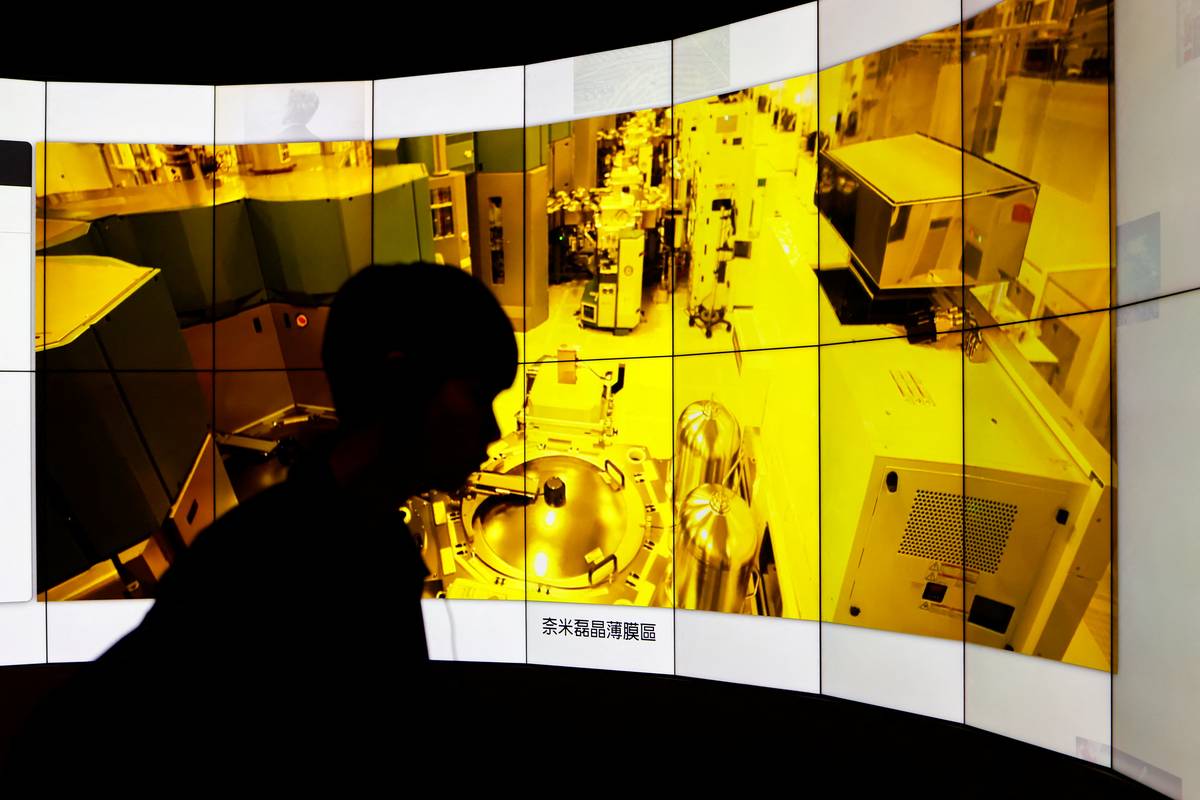
A person visits TSMC Museum of Innovation in Hsinchu, Taiwan May 29, 2024.
13:43 JST, November 10, 2024
NEW YORK/SINGAPORE (Reuters) – The U.S. ordered Taiwan Semiconductor Manufacturing Co 2330.TW to halt shipments of advanced chips to Chinese customers that are often used in artificial intelligence applications starting Monday, according to a person familiar with the matter.
The Department of Commerce sent a letter to TSMC imposing export restrictions on certain sophisticated chips, of 7 nanometer or more advanced designs, destined for China that power AI accelerator and graphics processing units (GPU), the person said.
The U.S. order, which is being reported for the first time, comes just weeks after TSMC notified the Commerce Department that one of its chips had been found in a Huawei AI processor, as Reuters reported last month. Tech research firm Tech Insights had taken apart the product, revealing the TSMC chip and apparent violation of export controls.
Huawei, at the center of the U.S. action, is on a restricted trade list, which requires suppliers to obtain licenses to ship any goods or technology to the company. Any license that could aid Huawei’s AI efforts would likely be denied.
TSMC suspended shipments to China-based chip designer Sophgo after its chip matched the one found on the Huawei AI processor, sources told Reuters last month.
Reuters could not determine how the chip ended up on Huawei’s Ascend 910B, released in 2022, viewed as the most advanced AI chip available from a Chinese company.
The latest clampdown hits many more companies and will allow the U.S. to assess whether other companies are diverting chips to Huawei for its AI processor.
As a result of the letter, TSMC notified affected clients that it was suspending shipments of chips starting Monday, the person said.
The Commerce Department declined comment.
A spokesperson for TSMC also declined to comment beyond saying it was a “law-abiding company…committed to complying with all applicable rules and regulations, including applicable export controls.”
The Commerce Department communication — known as an “is informed” letter — allows the U.S. to bypass lengthy rule-writing processes to quickly impose new licensing requirements on specific companies.
Ijiwei, a Chinese media site covering the semiconductor industry, reported on Friday that TSMC notified Chinese chip design companies it would suspend 7 nanometer or below chips for AI and GPU customers beginning Nov. 11.
The action comes as both Republican and Democratic lawmakers have raised concerns about the inadequacy of export controls on China and the Commerce Department’s enforcement of them.
In 2022, the Commerce Department sent is-informed letters to Nvidia and AMD restricting their ability to export top AI-related chips to China, and to chip equipment makers like Lam Research, Applied Materials and KLA to restrict tools to make advanced chips to China.
The restrictions in those letters were later turned into rules that apply to companies beyond them.
The U.S. has been delayed in updating rules on tech exports to China. As Reuters reported in July, the Biden administration drafted new rules on some foreign exports of chipmaking equipment and planned to add about 120 Chinese companies to the Commerce Department’s restricted entity list, including chipmaking factories, toolmakers, and related companies.
But despite plans for an August release, and later tentative target dates for publication, the rules still have not been issued.








Most Read
Popular articles in the past 24 hours
-

Milano Cortina 2026: Japanese Gold Medalist Figure Skater Miura S...
-

Yokohama to Test Out Renewable-Powered Offshore Floating Data Cen...
-
Japan’s Takaichi Speaks on New U.S. Tariff in Upper House, Says P...
-

Ishinomaki Man Plush Toy Offers Hope to Children in Times of Disa...
-
Japan Authorities Begin On-site Inspection of Japanese Microsoft ...
-

Nikkei Average Rewrites All-Time Closing High
-

Japan's Takaichi Lets LDP Lawmakers Choose Gifts for Election Suc...
-

Japan’s PM Takaichi Responds Carefully in Diet Q&A Session, Fends...
Popular articles in the past week
-

Producer Behind Pop Group XG Arrested for Cocaine Possession
-

iPS Treatments Pass Key Milestone, but Broader Applications Far f...
-

Japan, U.S. Name 3 Inaugural Investment Projects; Reached Agreeme...
-

Tokyo Skytree's Elevator Stops, Trapping 20 People; All Rescued (...
-

Japan’s Major Real Estate Firms Expanding Overseas Businesses to ...
-
Milano Cortina 2026: Japanese Gold Medalist Figure Skater Miura S...
-

Baby Monkey Punch Captures Hearts at Chiba Pref. Zoo, on Social M...
-

Milano Cortina 2026: Japanese Figure Skater Kaori Sakamoto’...
Popular articles in the past month
-
Producer Behind Pop Group XG Arrested for Cocaine Possession
-

Japan PM Takaichi’s Cabinet Resigns en Masse
-

Japan Institute to Use Domestic Commercial Optical Lattice Clock ...
-

Man Infected with Measles Reportedly Dined at Restaurant in Tokyo...
-

Israeli Ambassador to Japan Speaks about Japan’s Role in the Reco...
-

Videos Plagiarized, Reposted with False Subtitles Claiming ‘Ryuky...
-

Man Infected with Measles May Have Come in Contact with Many Peop...
-

Prudential Life Insurance Plans to Fully Compensate for Damages C...
Top Articles in News Services
-

Survey Shows False Election Info Perceived as True
-
Hong Kong Ex-Publisher Jimmy Lai’s Sentence Raises International Outcry as China Defends It
-
Japan’s Nikkei Stock Average Touches 58,000 as Yen, Jgbs Rally on Election Fallout (UPDATE 1)
-
Japan’s Nikkei Stock Average Falls as US-Iran Tensions Unsettle Investors (UPDATE 1)
-
Trump Names Former Federal Reserve Governor Warsh as the Next Fed Chair, Replacing Powell
JN ACCESS RANKING
-
Producer Behind Pop Group XG Arrested for Cocaine Possession
-
Japan PM Takaichi’s Cabinet Resigns en Masse
-
Man Infected with Measles Reportedly Dined at Restaurant in Tokyo Station
-
Israeli Ambassador to Japan Speaks about Japan’s Role in the Reconstruction of Gaza
-
Videos Plagiarized, Reposted with False Subtitles Claiming ‘Ryukyu Belongs to China’; Anti-China False Information Also Posted in Japan