
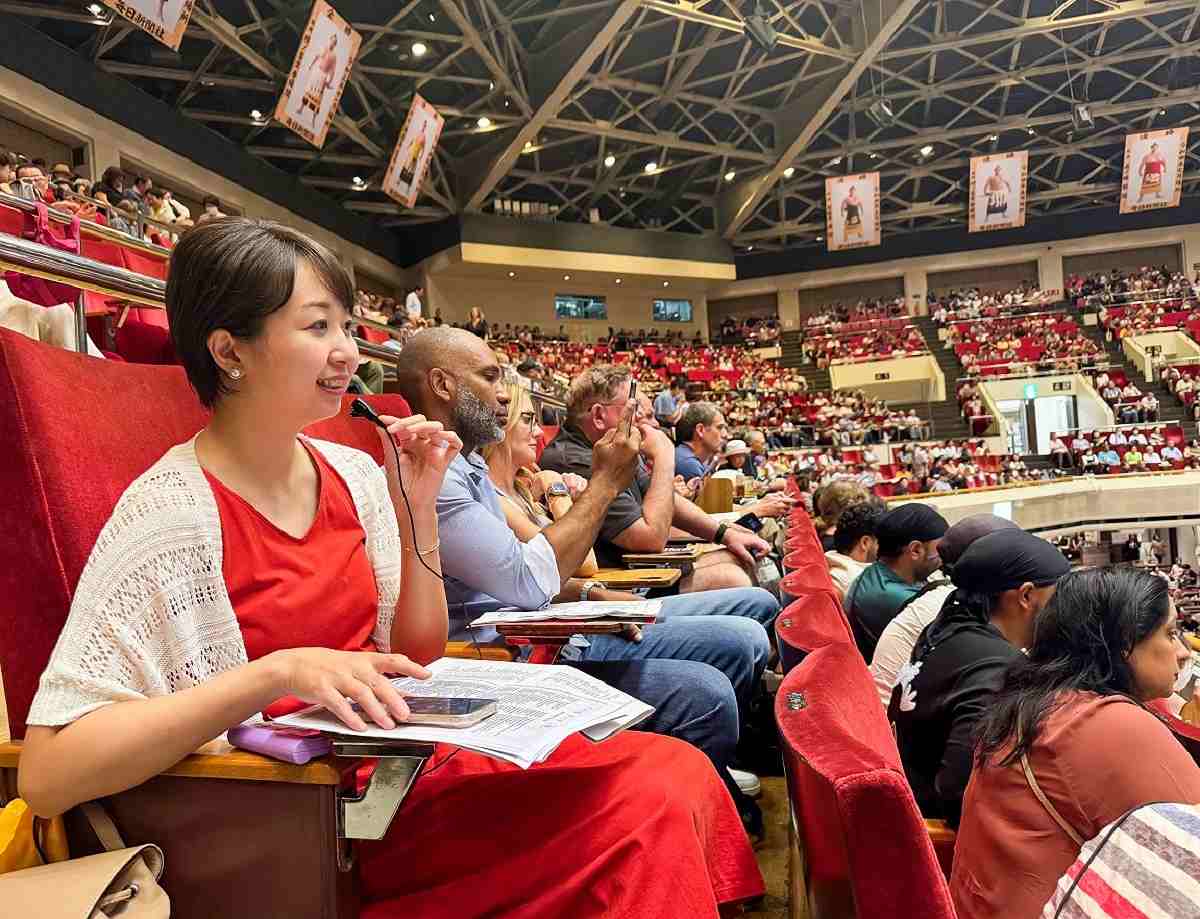
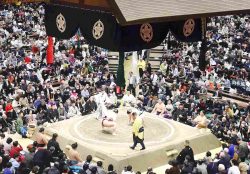
Saki Iizuka, foreground, provides live English commentary from the second-floor seats at Ryogoku Kokugikan in Tokyo on Sept. 13.
12:57 JST, October 2, 2024
The September Autumn Grand Sumo Tournament was a resounding success, with “Sold Out” banners hanging every day of the 15-day event.
One standout aspect about the basho was the significant presence of overseas spectators. Because of a surge in tourism, Ryogoku Kokugikan was packed with visitors from a wide range of countries, most notably Europe and North America.
These tourists were clearly captivated by the dynamic aspect of the matches and the aesthetic qualities of sumo.
To help foreign visitors better understand the appeal of the sport, an initiative was launched during this tournament in the form of a live English commentary service.
Wireless earpieces were provided to overseas spectators who booked their visits through the tour organizer Japan Wonder Travel website, allowing them to enjoy commentary during bouts. Following the halfway point of the day’s matches, the foreign members of the crowd were provided with analysis and details about the wrestlers, their signature moves, the technique used to win each bout and the key points of the match, all while seated inside the arena.
The Japan Sumo Association commissioned sportswriter Saki Iizuka, the author of books on the sport, to provide the commentary. Iizuka studied abroad and learned English during her university years. She offered a simple explanation about what the fans were seeing.
“When describing the winning techniques, I try to add detailed descriptions of the moves so that more people can understand.” While sumo is a sport, it also has deep roots in traditional Japanese culture. There are many aspects, such as rituals, attire, and the meanings behind certain practices, that can be difficult to grasp even for Japanese fans. Therefore, this service is especially valuable for foreign visitors, who represent different cultural backgrounds.
According to Iizuka, the response from the audience was excellent. The live English commentary service is scheduled to expand to basho outside of Tokyo — Fukuoka, Osaka and Nagoya.
“We will work hard to include small tidbits, such as behind-the-scenes stories of the wrestlers, to give them more of an interest in sumo,” Iizuka said.
As it is a unique sport that holds a singular place worldwide, the future demand for such initiatives is expected to grow.
— Kamimura is a sumo expert.




Most Read
Popular articles in the past 24 hours
-

Japan to Strictly Control Exports of Lethal Defense Equipment Whi...
-
High-Hydration Bread on the Rise, Seeing Increase in Specialty Sh...
-

Reform of Retrial System: Diet Must Thoroughly Discuss Remedies f...
-

Japan's Prime Minister Sanae Takaichi Is ‘World's Most Powerful W...
-
White and Pink Plum Blossoms Begin to Bloom at Yuki Shrine in Jap...
-
17-Year-Old Fatally Stabbed in Osaka’s Dotonbori; Suspect at Larg...
-
Gold Smuggling into Japan Running Rampant
-

Bear Found in Warehouse in Fukushima Prefecture Culled
Popular articles in the past week
-

Prudential Life Insurance Plans to Fully Compensate for Damages C...
-

Woman with Measles Visited Hospital in Tokyo Multiple Times Befor...
-

Woman with No Overseas Travel History Infected with Measles in Na...
-
Measles Patient Flew Between Tokyo, Hokkaido in Late January; Lik...
-
Milano Cortina 2026: Kokomo Murase Comes Out on Top After Overcom...
-
CRA Leadership Election Will Center on Party Rebuilding; Lower Ho...
-

Videos Plagiarized, Reposted with False Subtitles Claiming ‘Ryuky...
-
Crime in Japan Ticks Up for 4th Straight Year
Popular articles in the past month
-

Japan Institute to Use Domestic Commercial Optical Lattice Clock ...
-

Israeli Ambassador to Japan Speaks about Japan’s Role in the Reco...
-

Man Infected with Measles May Have Come in Contact with Many Peop...
-

China Eyes Rare Earth Foothold in Malaysia to Maintain Dominance,...
-
Prudential Life Insurance Plans to Fully Compensate for Damages C...
-
Woman with Measles Visited Hospital in Tokyo Multiple Times Befor...
-
Australian Woman Dies After Mishap on Ski Lift in Nagano Prefectu...
-
Foreign Snowboarder in Serious Condition After Hanging in Midair ...
Top Articles in Sports
-
Aonishiki Tops Atamifuji in Playoff to Win New Year Grand Sumo Tournament in Ozeki Debut
-
Milano Cortina 2026: Kokomo Murase Comes Out on Top After Overcoming Obstacles, Aiming for Greater Heights in Competition
-

Milano Cortina 2026: Olympics-Torch Arrives in Co-Host Cortina on Anniversary of 1956 Games
-
Milano Cortina 2026: Japan’s Athletes Arrive in Italy for Milano Cortina Winter Olympics; Other Athletes to Arrive from Now
-
Sumo Scene / What’s in a Sumo Name? The Reason Why the New Year Tournament Is Called the January Tournament
JN ACCESS RANKING
-
Japan Institute to Use Domestic Commercial Optical Lattice Clock to Set Japan Standard Time
-
Israeli Ambassador to Japan Speaks about Japan’s Role in the Reconstruction of Gaza
-
Man Infected with Measles May Have Come in Contact with Many People in Tokyo, Went to Store, Restaurant Around When Symptoms Emerged
-
China Eyes Rare Earth Foothold in Malaysia to Maintain Dominance, Counter Japan, U.S.
-
Prudential Life Insurance Plans to Fully Compensate for Damages Caused by Fraudulent Actions Without Waiting for Third-Party Committee Review