
Japan’s H3 Rocket Successfully Launched, Reaches Orbit; Previous H3 Launch Attempt Failed Due to Electrical Issue
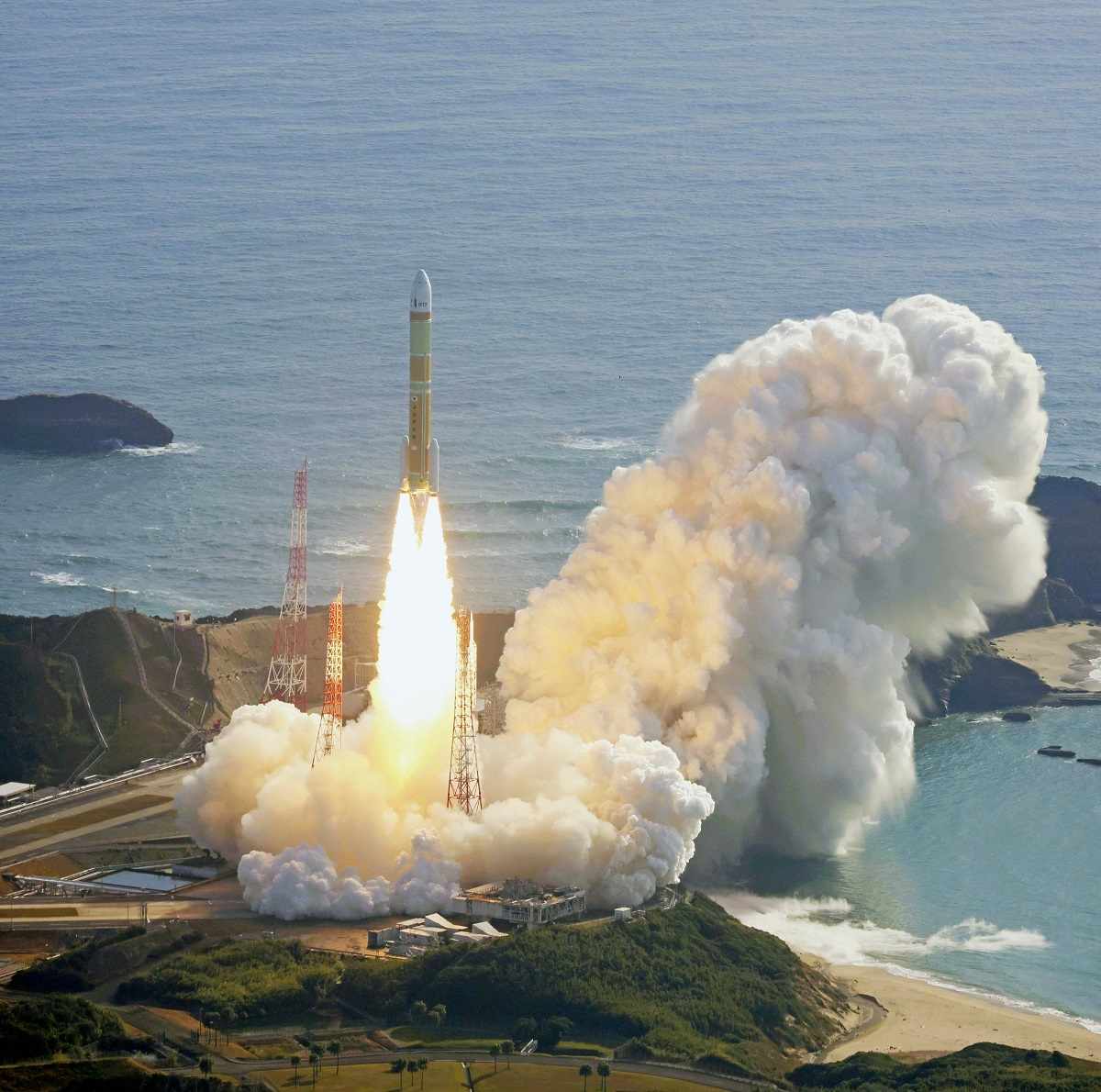
The H3 rocket heads off into the sky.
17:20 JST, February 17, 2024
Japan’s new mainstay H3 rocket lifted off at 9:22 a.m. on Saturday from the Tanegashima Space Center in Kagoshima Prefecture. The rocket successfully reached the planned orbit, the Japan Aerospace Exploration Agency said.
The H3 rocket is Japan’s next flagship rocket that is expected to play a key role in the nation’s space business and exploration in the future. By putting the rocket into practical use, Japan aims to fully participate in the increasingly intense international competition for space exploration.
According to JAXA, the second H3 rocket reached its intended trajectory and the rocket’s second-stage engine successfully ignited about five minutes after launch. In the launch of the first H3 rocket in March 2023, the second-stage engine failed to ignite.
About 16 minutes later, the rocket reached the target altitude for the release of one of the satellites it was carrying. The release of a dummy satellite plus two microsatellites was later confirmed.
Joint development of the H3 rocket was begun by JAXA and Mitsubishi Heavy Industries, Ltd., in 2014, aiming to make it a successor to the current mainstay H2A rocket.
However, the rocket development faced difficulties and the launch of the first H3 rocket was postponed twice. When the first H3 rocket was launched in March last year, it had to be deliberately destroyed after the vehicle’s second-stage engine failed to ignite due to excessive current generated in the engine’s electrical system. The advanced land observing satellite Daichi-3, which was onboard, was also lost. JAXA has looked into the causes and factors of the failure and taken measures for the ignition of the second-stage engine and other parts to prepare for the second trial of the H3 rocket Saturday.
The second H3 rocket measures 57 meters in length and 5.2 meters in diameter. This time, the rocket did not carry important government satellites in consideration of the risk of failure. On the other hand, the rocket carried the two microsatellites and a dummy satellite approximating the weight of the Daichi-3. With these, JAXA tested the vehicle’s launch performance.






Most Read
Popular articles in the past 24 hours
-

Tokyo Skytree's Elevator Stops, Trapping 20 People; All Rescued (...
-

China, India Tapping into Promising African Market; Beijing Annou...
-

Milano Cortina 2026: Miura-Kihara Duo, Other Japanese Figure Skat...
-

Japan’s Major Real Estate Firms Expanding Overseas Businesses to ...
-

Reciprocal Tariffs Ruled Illegal: Judiciary Would Not Tolerate Pr...
-
‘Storytellers’ Being Dispatched Overseas to Promote Japan; Events...
-
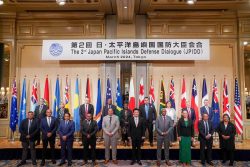
Japan, Pacific Island Nations to Work on Deepening Cooperation
-

Fiji Defense Minister Hopes Japan Will Support Stabilization of P...
Popular articles in the past week
-

Japan PM Takaichi’s Cabinet Resigns en Masse
-

Man Infected with Measles Reportedly Dined at Restaurant in Tokyo...
-

Sanae Takaichi Elected Prime Minister of Japan; Keeps All Cabinet...
-

Japan's Govt to Submit Road Map for Growth Strategy in March, PM ...
-

Bus Carrying 40 Passengers Catches Fire on Chuo Expressway; All E...
-

Milano Cortina 2026: Figure Skaters Riku Miura, Ryuichi Kihara Pa...
-

Japan, U.S. Name 3 Inaugural Investment Projects; Reached Agreeme...
-

U.S. Firm to Build Training Hub in Fukushima N-plant for Debris R...
Popular articles in the past month
-
Japan PM Takaichi’s Cabinet Resigns en Masse
-

Japan Institute to Use Domestic Commercial Optical Lattice Clock ...
-

Israeli Ambassador to Japan Speaks about Japan’s Role in the Reco...
-
Man Infected with Measles Reportedly Dined at Restaurant in Tokyo...
-

Videos Plagiarized, Reposted with False Subtitles Claiming ‘Ryuky...
-

Man Infected with Measles May Have Come in Contact with Many Peop...
-

Prudential Life Insurance Plans to Fully Compensate for Damages C...
-

Woman with Measles Visited Hospital in Tokyo Multiple Times Befor...
Top Articles in Science & Nature
-
Japan Institute to Use Domestic Commercial Optical Lattice Clock to Set Japan Standard Time
-
Japan to Face Shortfall of 3.39 Million Workers in AI, Robotics in 2040; Clerical Workers Seen to Be in Surplus
-
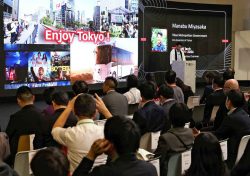
Record 700 Startups to Gather at SusHi Tech Tokyo in April; Event Will Center on Themes Like Artificial Intelligence and Robotics
-

iPS Treatments Pass Key Milestone, but Broader Applications Far from Guaranteed
-
iPS Cell Products for Parkinson’s, Heart Disease OK’d for Commercialization by Japan Health Ministry Panel
JN ACCESS RANKING
-
Japan PM Takaichi’s Cabinet Resigns en Masse
-
Japan Institute to Use Domestic Commercial Optical Lattice Clock to Set Japan Standard Time
-
Israeli Ambassador to Japan Speaks about Japan’s Role in the Reconstruction of Gaza
-
Man Infected with Measles Reportedly Dined at Restaurant in Tokyo Station
-
Videos Plagiarized, Reposted with False Subtitles Claiming ‘Ryukyu Belongs to China’; Anti-China False Information Also Posted in Japan