
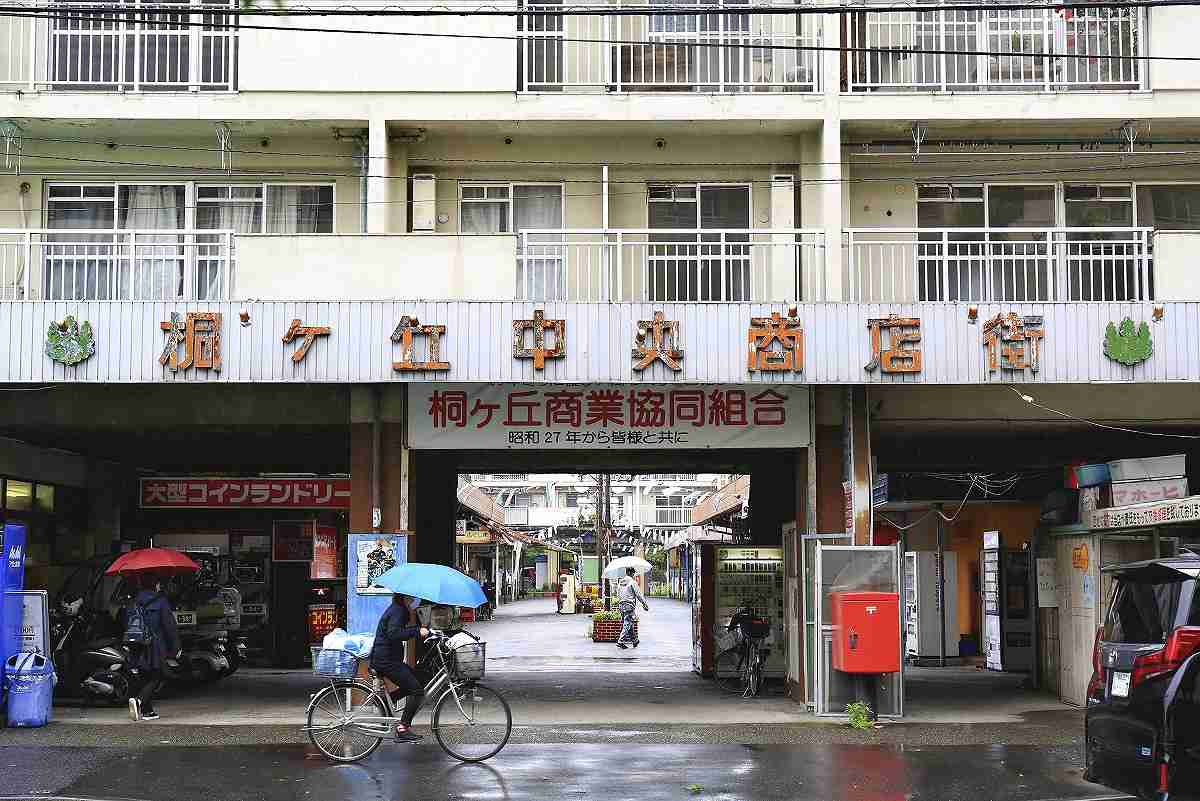
The Kirigaoka central shopping street has been up and running since the middle of the Showa era.
11:10 JST, July 5, 2023
Head west from JR Akabane Station in Kita Ward, Tokyo, and you will find a huge housing complex called Kirigaoka Danchi, operated by the Tokyo metropolitan government. On the ground floor of a residential building on the corner of the housing complex stands an entrance to the Kirigaoka central shopping street.
I stepped inside and discovered shops selling home appliances, candy and other goods, with the shop signs all hold-overs from the Showa era (1926-89). Small, faded flags of various nations were strung up overhead. I felt as if I were wandering into someone’s memories.
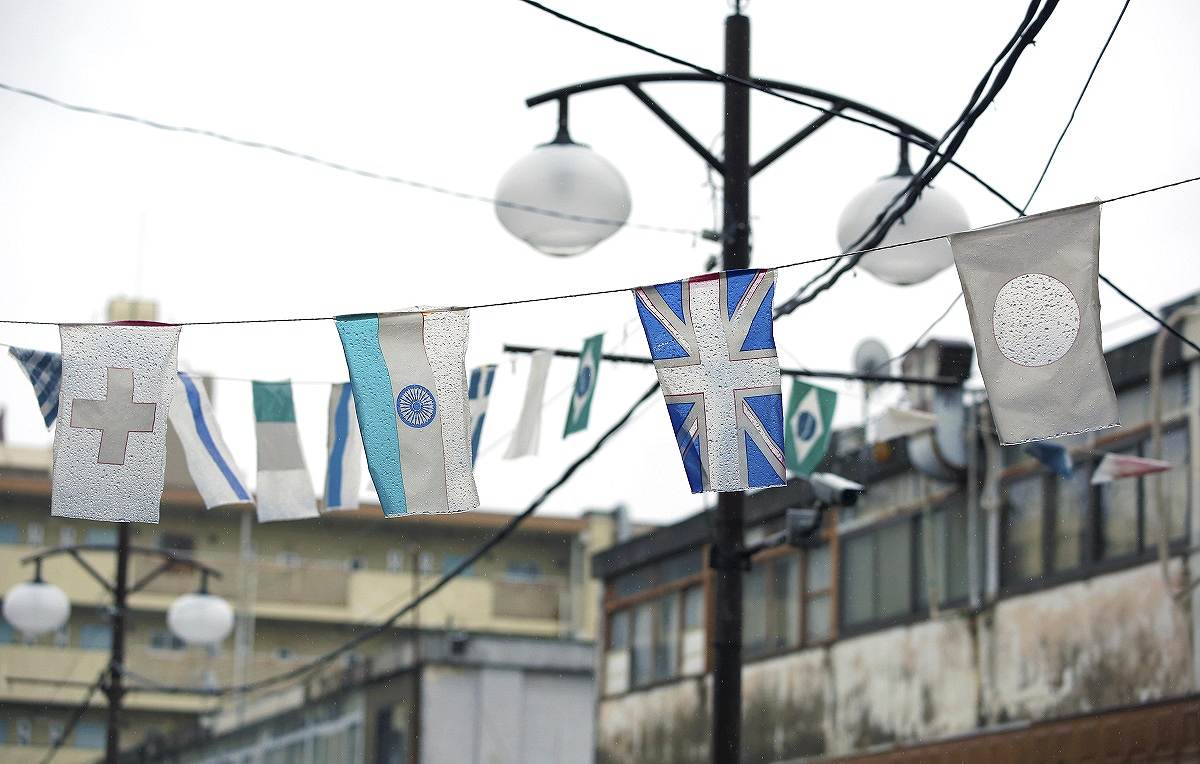
Flags of various nations were strung up on the street after such flags were used to shoot a TV drama.
“It used to be we could buy anything here,” said a person who has kept up a toy store on the shopping street. On top of this scene of a slightly deserted shopping street, I overlaid in my mind the hustle and bustle of the past: a woman in a scarf holding a shopping basket, a young man in work clothes eating something he’s just bought and children on bikes weaving between them.
The shopping street predates the Kirigaoka Danchi housing complex. After World War II, repatriated and war-affected people moved onto land where the Imperial Japanese Army had been storing ammunition, and a market naturally formed there. “Where people gather, there will always be people selling things,” said the head director of the Kirigaoka commerce cooperative association. The association used to be composed mainly of small stores run by individuals. As Japan entered its high economic growth period, a housing complex was constructed, and the shops moved to their current location in 1964.
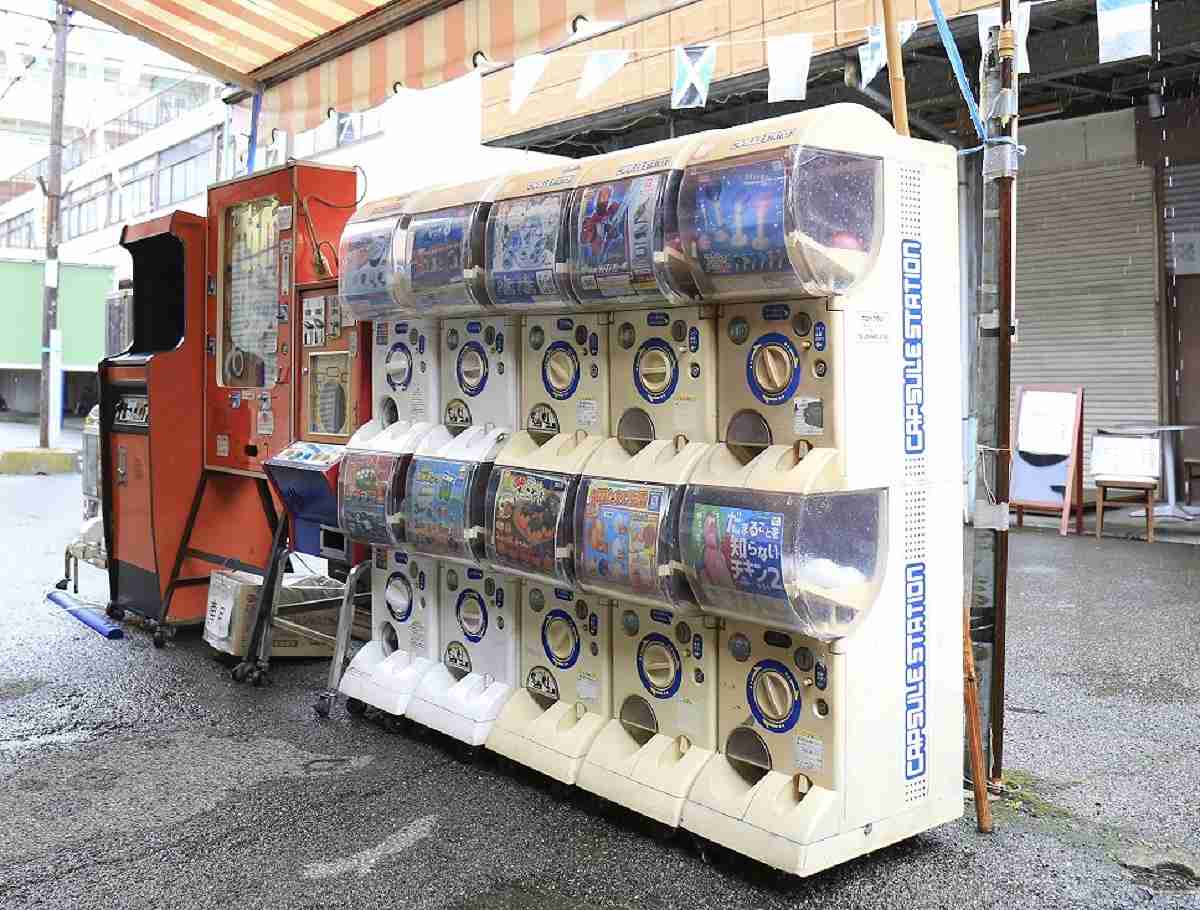
Capsule toy machines and retro arcade games stand outside on the shopping street.
At its peak, the housing complex was home to more than 5,000 households. However, the buildings will be demolished as part of a reconstruction project being implemented by the metropolitan government. While the nostalgic streetscape of the old complex has attracted fans, more and more owners have closed down their shops. The shuttered storefronts are hard to miss.
With the economic growth of the Showa era, people moved to urban areas and into housing complexes. The families who lived in these complexes were supported by shopping streets like the one at Kirigaoka Danchi. Now the number of residents at the complex is declining, and the head director said he sees it hanging on only for another three years or so.
The times have changed, but for the moment a banner hanging over the entrance still reads: “We’ve been here for you since 1952.”
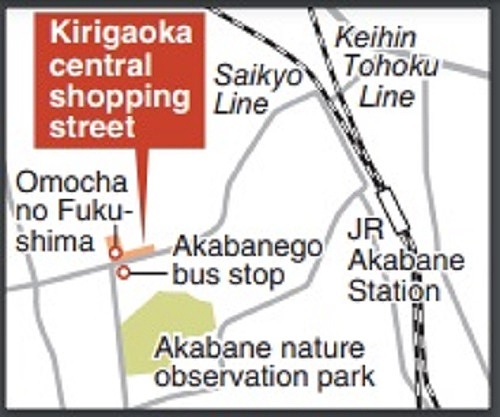
Kirigaoka central shopping street
Address: 1-9-2, Kirigaoka, Kita Ward, Tokyo
Access: Take a bus from the west exit of JR Akabane Station and get off at the Akabanego bus stop. The shopping street is a one-minute walk from the bus stop.
Hours: The Omocha no Fukushima toy shop is open from 10 a.m. to 6 p.m. and closed on Wednesdays.


Related Tags

Most Read
Popular articles in the past 24 hours
-

LDP Wins Historic Landslide Victory
-

Ruling Coalition of LDP, JIP Secures Two-Thirds Majority, Enablin...
-

Milano Cortina 2026: Japan Finishes 2nd in Figure Skating Team Co...
-

Milano Cortina 2026: Japan Takes Silver Medal in Team Figure Skat...
-

Japanese Communist Party Unable to Halt Decline in Election; ‘The...
-

Woman with Measles Visited Hospital in Tokyo Multiple Times Befor...
-
LDP Rides Wave of Takaichi’s Popularity to Landslide Win; PM’s Po...
-

LDP’s Landslide Victory: Takaichi Should Leverage Stable Base to ...
Popular articles in the past week
-

Man Infected with Measles May Have Come in Contact with Many Peop...
-

Israeli Ambassador to Japan Speaks about Japan’s Role in the Reco...
-

BTS to Hold Comeback Concert in Seoul on March 21; Popular Boy Ba...
-
LDP Wins Historic Landslide Victory
-
Sapporo Snow Festival Opens with 210 Snow and Ice Sculptures at 3...
-

LDP Wins Landslide Victory, Secures Single-party Majority; Ruling...
-
Green Tea Exports Hit Record High in 2025 Amid Growing Demand, Li...
-

U.N. Plans to Set Safety Regulation Standards on Automated Drivin...
Popular articles in the past month
-
Univ. in Japan, Tokyo-Based Startup to Develop Satellite for Disa...
-

Japan Institute to Use Domestic Commercial Optical Lattice Clock ...
-
JAL, ANA Cancel Flights During 3-day Holiday Weekend due to Blizz...
-

China Eyes Rare Earth Foothold in Malaysia to Maintain Dominance,...
-
Man Infected with Measles May Have Come in Contact with Many Peop...
-

Japan, Qatar Ministers Agree on Need for Stable Energy Supplies; ...
-
Australian Woman Dies After Mishap on Ski Lift in Nagano Prefectu...
-

Japan, Italy to Boost LNG Cooperation; Aimed at Diversifying Japa...
Top Articles in Features
-
Pangasius Catfish Increasingly Featured on Japanese Restaurant Menus, Home Dining Tables Due to Affordability, Mild Flavor
-
Sapporo Snow Festival Opens with 210 Snow and Ice Sculptures at 3 Venues in Hokkaido, Features Huge Dogu
-

Tourists Flock to Ice Dome Lodge at Resort in Hokkaido, Japan; Facility Invites Visitors to Sleep on Beds Made of Ice
-
Traditional Umbrellas Illuminated in Gifu City, Projection Mapping Lights Up Park Near Gifu Castle
-

Venison from Culled Deer Made into Prepackaged Curry in Mie Pref. City, Creator Hopes to Inspire Young People to Hunt
JN ACCESS RANKING
-
Japan Institute to Use Domestic Commercial Optical Lattice Clock to Set Japan Standard Time
-
China Eyes Rare Earth Foothold in Malaysia to Maintain Dominance, Counter Japan, U.S.
-
Man Infected with Measles May Have Come in Contact with Many People in Tokyo, Went to Store, Restaurant Around When Symptoms Emerged
-
Japan, Qatar Ministers Agree on Need for Stable Energy Supplies; Motegi, Qatari Prime Minister Al-Thani Affirm Commitment to Cooperation
-
Australian Woman Dies After Mishap on Ski Lift in Nagano Prefecture