
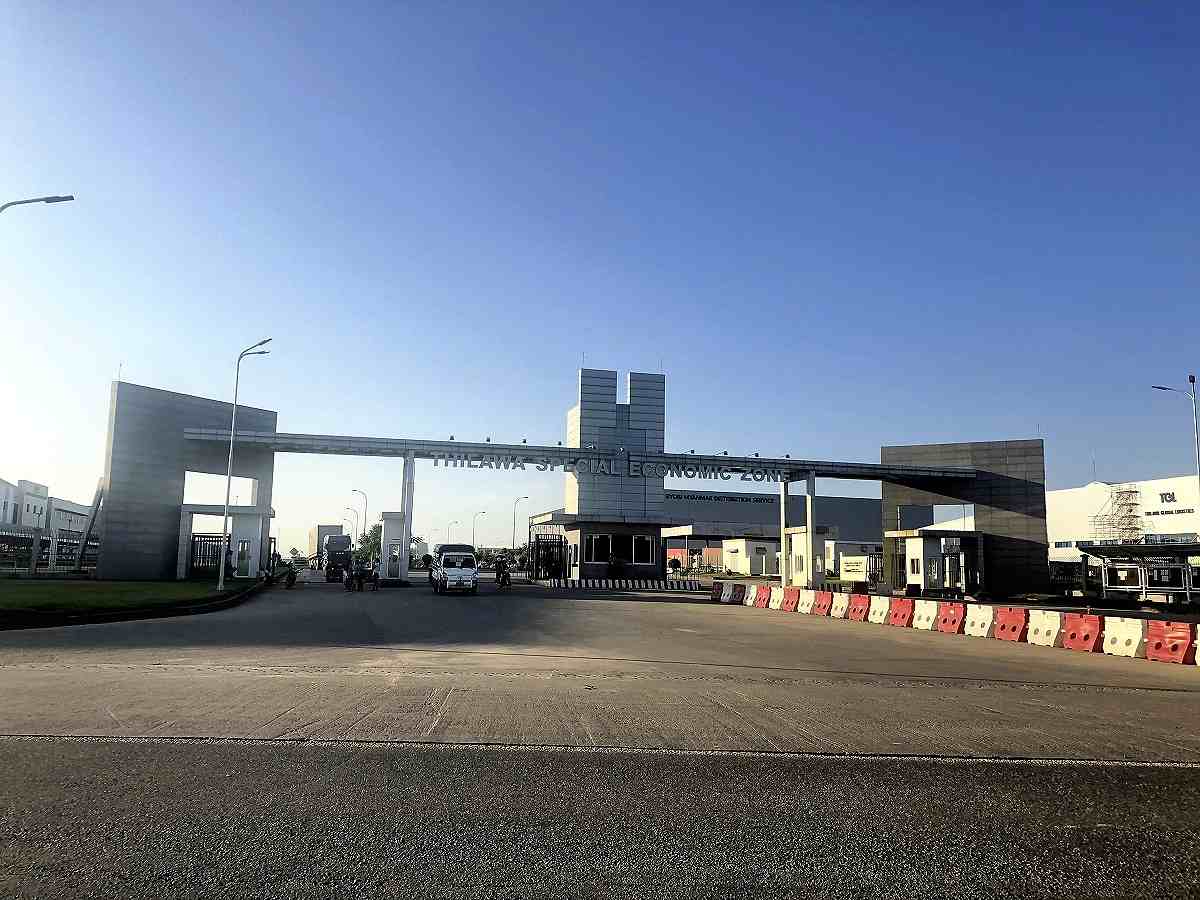
This photo taken in 2019 shows the Thilawa Special Economic Zone in the suburbs of Yangon, where many Japanese companies have established operations.
13:17 JST, February 9, 2021
Myanmar’s military coup has put Japan in a difficult position. While the Japanese government intends to encourage Myanmar to return to civilian rule through dialogue, the administration of U.S. President Joe Biden is ready to impose sanctions from a human rights perspective. Japan is carefully considering its response to avoid a rift with the newly-established U.S. administration.
“We need to communicate [with the Myanmar military] and then assess the situation.” Foreign Minister Toshimitsu Motegi said at a press conference Friday, responding to a question about the possibility of sanctions.
Japan has had ties with Myanmar’s military since the former administration under the military regime. When Motegi visited Myanmar in August last year, he met with State Counselor Aung San Suu Kyi as well as Myanmar military Commander-in-Chief Min Aung Hlaing.
According to a senior official of the Foreign Ministry, “Japan is the only [developed] nation that can engage in dialogue with the military.”
The Japanese government is cautious about imposing sanctions on Myanmar partly because it fears Naypyitaw may become internationally isolated and lean toward Beijing again, with which it had close ties during the former military regime.
The possibility of sanctions restricting the activities of Japanese firms’ Myanmar units is also behind the government’s cautious approach.
According to the Japan External Trade Organization, 436 Japanese companies were operating in the country as of the end of January this year, about eight times more than in the end of March 2012, when there were 53.
The new Biden administration has taken a hard-line stance on human rights violations, such as recognizing the suppression of ethnic minorities in China’s Xinjiang Uyghur Autonomous Region as “genocide.”
Japan has conveyed its concerns about the implementation of Myanmar sanctions to the U.S. administration, but a senior Japanese government official said, “If the situation does not improve, the United States will exert more pressure for sanctions.”
There have also been moves within the ruling Liberal Democratic Party to press the government to strengthen its foreign policy on human rights.
A resolution calling on the government to consider suspending economic assistance to Myanmar was compiled Friday at a joint meeting of the LDP’s Foreign Affairs Division and other groups.






Most Read
Popular articles in the past 24 hours
-
JR Tokai Breaks Ground on Yamanashi Maglev Station; Will Be Part ...
-

Milano Cortina 2026: Japan’s Alpine Skier Muraoka Extends P...
-
Rising Kabuki Star Works to Ensure Deaf Audience's Enjoyment of P...
-

Lady Bess: Iroha Okuda, Mayuko Kominami Discuss Performing Elizab...
-
Japan Considering Taking Part in U.S. ‘Golden Dome’ Defense Syste...
-
46 Evacuated from UAE, Oman on Japanese Govt-chartered Flight
-

Japan's TEPCO Releases Footage from Fukushima N-Plant Reactor
-

Driver Dies in Collision with Express Train at Crossing in Mito; ...
Popular articles in the past week
-

Japan Figure Skating Legend Yuzuru Hanyu Is Proud Disaster Surviv...
-

Nippon Life Insurance's U.S. Arm Sues OpenAI Over Legal Assistanc...
-
Govt to Utilize ODA for Ensuring Economic Security; Securing Ener...
-
Massive Sewer Pipe Found Jutting Out of Highway in Osaka
-
15 Measles Patients Confirmed in Tokyo in Past 6 Days; 1 May Have...
-
Japan Govt to Tighten Requirements to Receive Permanent Residency...
-

Beckoning Cats Get Makeover to Fit Modern Lifestyles with Sleek D...
-
Japan Govt Survey Finds Just 10% of Workers Want Working Hours to...
Popular articles in the past month
-

Producer Behind Pop Group XG Arrested for Cocaine Possession
-

Japan PM Takaichi’s Cabinet Resigns en Masse
-

Man Infected with Measles Reportedly Dined at Restaurant in Tokyo...
-

Videos Plagiarized, Reposted with False Subtitles Claiming ‘Ryuky...
-
Japan Figure Skating Legend Yuzuru Hanyu Is Proud Disaster Surviv...
-

iPS Treatments Pass Key Milestone, but Broader Applications Far f...
-

Sanae Takaichi Elected Prime Minister of Japan; Keeps All Cabinet...
-

Nepal Bus Crash Kills 19 People, Injures 25 Including One Japanes...
Top Articles in World
-
Videos Plagiarized, Reposted with False Subtitles Claiming ‘Ryukyu Belongs to China’; Anti-China False Information Also Posted in Japan
-
Nepal Bus Crash Kills 19 People, Injures 25 Including One Japanese National
-

South Korea Tightens Rules on Foreigners Buying Homes in Seoul Metro Area
-
Govt to Utilize ODA for Ensuring Economic Security; Securing Energy, Critical Minerals Sought
-

Ukrainian Ambassador Closely Watching Japan’s Revision of Defense Export Rules, Hopes for Future Arms Support
JN ACCESS RANKING
-
Producer Behind Pop Group XG Arrested for Cocaine Possession
-
Japan PM Takaichi’s Cabinet Resigns en Masse
-
Man Infected with Measles Reportedly Dined at Restaurant in Tokyo Station
-
Videos Plagiarized, Reposted with False Subtitles Claiming ‘Ryukyu Belongs to China’; Anti-China False Information Also Posted in Japan
-
Japan Figure Skating Legend Yuzuru Hanyu Is Proud Disaster Survivor and Gold Medalist, Vows to Continue Support Efforts