
Japanese Hibakusha Group Meets with American Woman Who Witnessed Attack on Pearl Harbor
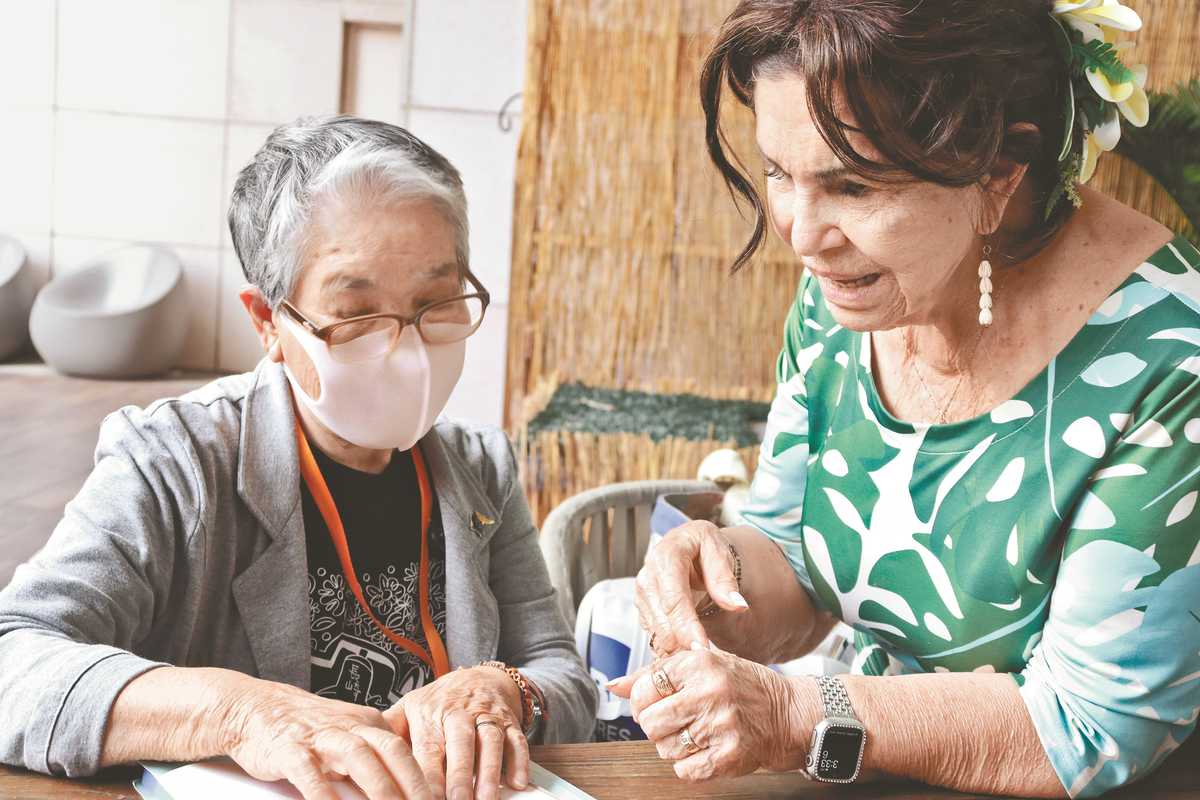
Chiyoko Motomura, left, and Dorinda Nicholson converse in Honolulu on Dec 6.
21:00 JST, December 13, 2025
HONOLULU — A delegation from a hibakusha group in Nagasaki Prefecture met with an American woman who witnessed the attack on Pearl Harbor as a child, in Honolulu on Dec. 6.
Dorinda Nicholson, 90, used to live near Pearl Harbor. On the morning of Dec. 7, 1941, she looked up at the sky from the yard of her house and saw Japanese military planes. Then, she heard large explosions and the smell of fire and oil filled the air. She saw black smoke rising in the direction of the harbor.
Nicholson, who was 6 years old, did not understand what had happened. She, her parents and siblings evacuated by car to a hilltop. She vividly remembers a person shouting over the car radio that it was not a drill. The family fled to a sugarcane field, where they stayed for a while. Even after returning home, they did not switch on the light after dark and spent nighttime in darkness because they were worried about air raids.
The Japanese Imperial Navy’s surprise attack on Pearl Harbor on the island of Oahu destroyed and sank eight U.S. battleships and killed more than 2,400 people.
Nicholson subsequently learned that many Americans hated Japanese and were taught the phrase, “Remember Pearl Harbor.” Yet she never felt hatred toward Japan and thinks that was because she was familiar with many Japanese people in Hawaii.
After the war, Nicholson worked as a flight attendant, among many other jobs. As an eyewitness to what happened that day, she has published a book about her experiences and given talks at schools to share what she experienced with young people.
For the recent commemorative ceremony for victims of the attack, she traveled to Honolulu from the mainland. She met with the hibakusha group delegation from Nagasaki Prefecture at the hotel she was staying at and told them about her experience.
The delegation from the group, Nagasaki-ken Hibakusha Techo Tomo no Kai (Nagasaki Prefecture hibakusha handbook friends’ association), included a woman who was 6 when the atomic bomb was dropped on Nagasaki, where she was living.
Chiyoko Motomura, now 86, asked Nicholson, “Do you still hold no grudges against Japan?”
Nicholson said she doesn’t hate Japan and that they can understand each other deeply. She also sympathized with hibakusha and said the saddest part of war is that children and civilians are affected.
Motomura lost her aunt in the atomic bombing on Nagasaki and saw the charred bodies of many people near the hypocenter. Eighty years have passed since the end of the war. The two women, who experienced great trauma during their childhood, reaffirmed that it is important to understand each other and have hope, never hating each other. They promised that they will both tell their stories to young people, then they hugged.
The Nagasaki delegation consists of 10 people and includes first- and second-generation hibakusha. Since arriving in the United States on Nov. 27, they have traveled around the country to speak about their experiences with the atomic bombing and met young people.


Related Tags
Most Read
Popular articles in the past 24 hours
-

Japanese Shipping Giants Halt Strait of Hormuz Transit as Iran Co...
-

U.S. Launches Attacks on Iran: Avoid Escalation of Conflict by An...
-
Sawtooth Roof Factory Stands as Monument to Ashikaga Textile Hist...
-
Parents of Japanese Teen Shot in U.S. Strive for Gun Control
-
Disinformation Spreads About Team Mirai, Ballot Readers; Online P...
-
Asahi Breweries to Stage Comeback with New Product in April; Comp...
-
Bank of Japan Deputy Governor Says Rate Hikes Likely to Continue
-
Japanese Government Bonds Rally, Yields Tumble as Iran Strikes Sp...
Popular articles in the past week
-

Nepal Bus Crash Kills 19 People, Injures 25 Including One Japanes...
-
Milano Cortina 2026: Japanese Gold Medalist Figure Skater Miura S...
-
Tokyo Spends Big on Children, Wins Over Parents
-
McDonald's Japan Raises Prices; Big Mac to Cost ¥500, Double Chee...
-
Japan’s Miura, Kihara Announce Withdrawal from Figure Skating Wor...
-
Exhibition Featuring Yoshiharu Tsuge’s Manga World Underway in Ch...
-

Yokohama to Test Out Renewable-Powered Offshore Floating Data Cen...
-
BOJ Keeping Eye on Economy and Takaichi's ‘Proactive Fiscal Polic...
Popular articles in the past month
-

Producer Behind Pop Group XG Arrested for Cocaine Possession
-

Japan PM Takaichi’s Cabinet Resigns en Masse
-

Man Infected with Measles Reportedly Dined at Restaurant in Tokyo...
-

Israeli Ambassador to Japan Speaks about Japan’s Role in the Reco...
-

Videos Plagiarized, Reposted with False Subtitles Claiming ‘Ryuky...
-

Man Infected with Measles May Have Come in Contact with Many Peop...
-

Prudential Life Insurance Plans to Fully Compensate for Damages C...
-
Woman with Measles Visited Hospital in Tokyo Multiple Times Befor...
Top Articles in Society
-
Producer Behind Pop Group XG Arrested for Cocaine Possession
-
Man Infected with Measles Reportedly Dined at Restaurant in Tokyo Station
-
Man Infected with Measles May Have Come in Contact with Many People in Tokyo, Went to Store, Restaurant Around When Symptoms Emerged
-
Woman with Measles Visited Hospital in Tokyo Multiple Times Before Being Diagnosed with Disease
-
Bus Carrying 40 Passengers Catches Fire on Chuo Expressway; All Evacuate Safely
JN ACCESS RANKING
-
Producer Behind Pop Group XG Arrested for Cocaine Possession
-
Japan PM Takaichi’s Cabinet Resigns en Masse
-
Man Infected with Measles Reportedly Dined at Restaurant in Tokyo Station
-
Israeli Ambassador to Japan Speaks about Japan’s Role in the Reconstruction of Gaza
-
Videos Plagiarized, Reposted with False Subtitles Claiming ‘Ryukyu Belongs to China’; Anti-China False Information Also Posted in Japan