
Saitama Prefecture Cities Want to Host Disaster Agency; Idea Recalls Meiji-Era Statesman’s Plan to Move Capital to Honjo
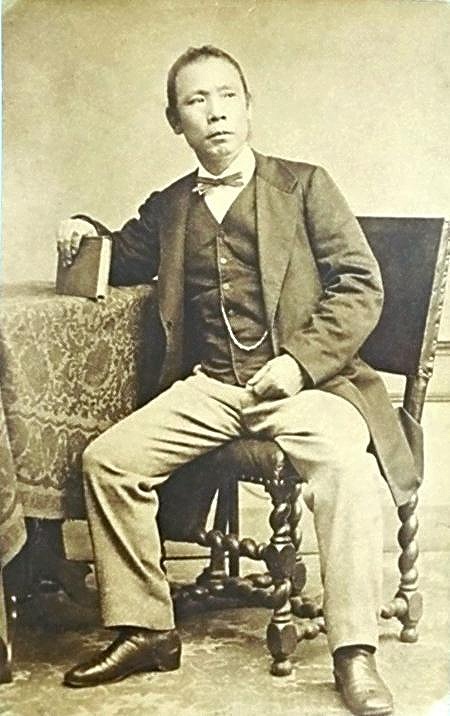
Tsunetami Sano (date of photograph unknown)
14:44 JST, September 9, 2025
SAITAMA — The city of Honjo and three nearby towns in Saitama Prefecture have jointly expressed interest in hosting the headquarters of a disaster preparedness and management agency the government intends to establish. If this comes to pass, it would mean moving some functions of the central government out of Tokyo.
In fact, a similar idea was actually floated once before, when a government official in the early Meiji era (1868-1912) created a plan to move the nation’s capital to Honjo. Now, about 150 years later, such a scheme might finally become reality.
In 1878, as debate raged within the new government about where the capital should be located, Tsunetami Sano, a Councilor of Senate, who is now known as the father of the Japanese Red Cross Society, drafted an opinion paper advocating for relocating the capital. In Sano’s view, Honjo should become Japan’s capital and could even surpass Tokyo as a major city “within two or three years.”
Sano was born in what is now Saga Prefecture, Kyushu region, in 1822. He was dispatched to the 1867 Paris Exposition, where he learned about the activities of the International Red Cross. After returning to Japan, he worked in the new government before he established an organization that became the predecessor of the Japanese Red Cross Society. He died aged 79 in 1902.
Sano’s paper pointed out several of Tokyo’s major shortcomings. For example, if foreign ships entered Tokyo Bay, the city would be vulnerable to naval bombardment. Tokyo also suffered from periodic outbreaks of disease and civil unrest.
Sano compared Tokyo to candidate sites in the interior, stretching from Kumagaya, Saitama Prefecture, to Maebashi, Gunma Prefecture. Sano concluded Honjo would be the ideal location for the capital because it had several advantages. It was situated on high ground, with a cool climate that kept its water clean, and the nearby Tone River could be used for transportation.
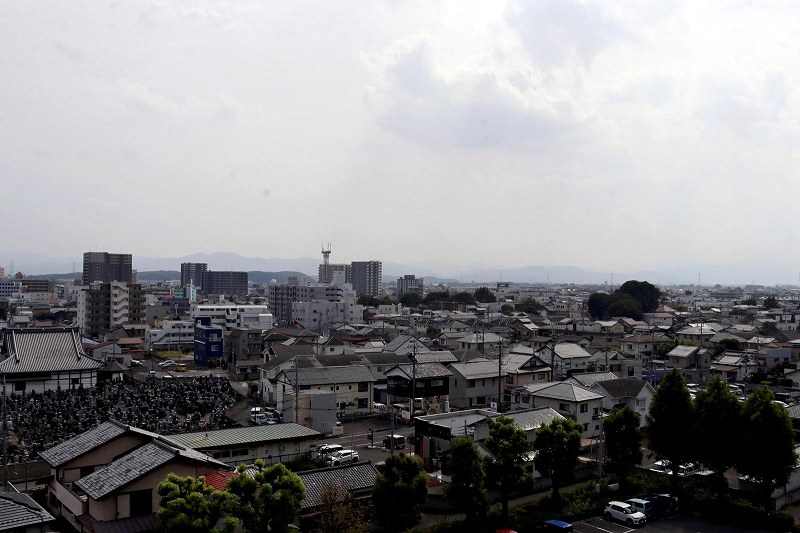
A view of the Honjo cityscape, with the Chichibu mountains in the distance, as seen from the city office in Honjo, Saitama Prefecture
Security purposes
Sano detailed his vision for the new capital. It would be linked to Tokyo by a new railway that would follow the Nakasendo road. A new university would be established, and the city would be developed into a manufacturing base for industries that could tap the region’s abundant water resources.
Relocating the capital to Honjo, and thereby separating the nation’s political and economic centers, would also serve a security purpose. Sano, who was familiar with conditions in Europe and the United States, suggested in his opinion paper that Honjo and Tokyo could grow together just like Washington D.C. and New York had done.
However, Sano’s paper was not submitted to the Meiji government. In fact, its existence was largely forgotten until a researcher made a presentation on it in 1961. It remains unclear why Sano, who seems to have had no connections to Honjo, supported moving Japan’s capital there. His opinion paper also contained detailed accounts of the city’s geographical features and history.
Resistant to disasters
“Sano had amazing foresight,” said Honjo mayor Shinge Yoshida. “When talk about the new disaster agency started, his proposal on shifting the capital popped into my head.”
In July, Honjo and the three towns of Misato, Kamikawa and Kamisato jointly submitted a request to the Cabinet Office to be considered to host the new agency.
The advantages of Honjo that Sano cited still hold true today. The city’s urban area is located on a plateau that gives it a stable foundation. Observers believe an earthquake that struck directly beneath the Tokyo metropolitan area would not have much impact on Honjo. Because Honjo is higher than the surrounding area, it is also able to withstand flooding. Honjo also has convenient transport links, with a Shinkansen bullet train line and an expressway passing through the city. In the event of an emergency, these could also serve as supply routes.
“I’m confident that the Honjo region could handle all the functions required of the new disaster agency,” Yoshida said. “Relocating the capital to Honjo is the ardent wish of local lawmakers. I believe a chance to make that dream a reality is coming.”
Other municipalities in Saitama Prefecture are revving up their efforts to be selected as the venue for the new agency. In addition to the Honjo region, five other cities in the western part of the prefecture, including Tokorozawa, are throwing their hats in the ring, as are the city of Chichibu and four towns in the Chichibu region.


Related Tags

Popular Articles
Popular articles in the past 24 hours
-
China Delays Customs Clearance for Japanese Sake; Intensified Eco...
-
China Criticizes Sanae Takaichi, but China Itself Is to Blame for...
-
Japan Lower House Election Likely in Early to Mid-February as Pri...
-

Withdrawal from International Organizations: U.S. Makes High-hand...
-
Godzilla Artwork at Japan's Haneda Airport Terminal 3 Gives Trave...
-
At 58, the World's Oldest Professional Soccer Player Says He Is O...
-
Heirs of Kyoto Talent: Craftsman Strives for ‘Blacker than Black'...
-

Mega Solar Power Projects: Strengthen Regulations to Suit Local C...
Popular articles in the past week
-
China Confirmed to Be Operating Drilling Vessel Near Japan-China ...
-
M6.2 Earthquake Hits Japan's Tottori, Shimane Prefectures; No Tsu...
-

Mcdonald's, Starbucks in Japan Move Away from Paper Straws Amid C...
-
Sanyo Shinkansen Train Service Fully Resumed (Update 2)
-
Tokaido Shinkansen, Sanyo Shinkansen Nozomi Trains to Have Reserv...
-

Hakone Ekiden 2026: Aoyama Gakuin Hakone Ekiden Runners Kept Depa...
-
Taiwan Alarmed by China’s AI-Driven Election Interference; Beijin...
-
Business Leaders Praise Takaichi's Economic Policies; Executives ...
Popular articles in the past month
-
As Chinese Tourists Shun Japan, Hotels and Stores Suffer
-
Tokyo Economic Security Forum to Hold Inaugural Meeting Amid Tens...
-
Osaka-Kansai Expo's Economic Impact Estimated at ¥3.6 Trillion, T...
-
Japan Govt Adopts Measures to Curb Mega Solar Power Plant Project...
-
BOJ Gov. Ueda: Highly Likely Mechanism for Rising Wages, Prices W...
-
Economic Security Panels Debate Supply Chains, Rare Earths; Parti...
-
Japan, U.S. Start Talks on Tokyo's $550 Bil. Investment in U.S.; ...
-
Tokyo Ranks 2nd in Global Power City Index, Highest-Ever Position...
"Society" POPULAR ARTICLE
-

Tokyo Zoo Wolf Believed to Have Used Vegetation Growing on Wall to Climb, Escape; Animal Living Happily after Recapture
-
Israeli Tourists Refused Accommodation at Hotel in Japan’s Nagano Pref., Prompting Protest by Israeli Embassy and Probe by Prefecture
-
Tsukiji Market Urges Tourists to Avoid Visiting in Year-End
-
Snow Expected in Tokyo, Neighboring Prefectures from Jan. 2 Afternoon to Jan. 3; 5-Centimeter Snow Fall Expected in Hakone, Tama, and Chichibu Areas
-
Tokyo, Yokohama Observe First Snowfall of Season; 1 Day Earlier than Average Year
JN ACCESS RANKING
-
As Chinese Tourists Shun Japan, Hotels and Stores Suffer
-
Tokyo Economic Security Forum to Hold Inaugural Meeting Amid Tense Global Environment
-
Osaka-Kansai Expo’s Economic Impact Estimated at ¥3.6 Trillion, Takes Actual Visitor Numbers into Account
-
Japan Govt Adopts Measures to Curb Mega Solar Power Plant Projects Amid Environmental Concerns
-
BOJ Gov. Ueda: Highly Likely Mechanism for Rising Wages, Prices Will Be Maintained