
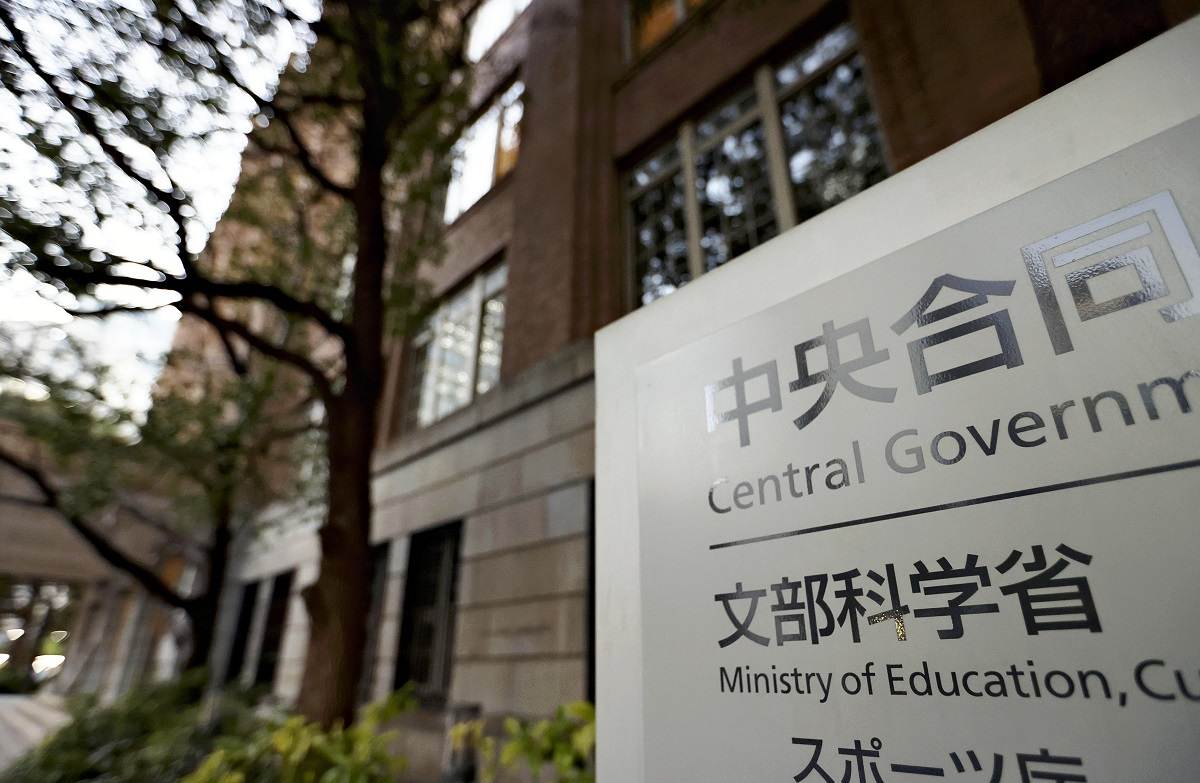
The Education, Culture, Sports, Science and Technology Ministry
1:00 JST, July 12, 2025
A recent survey found that 75% of school corporations that operate private kindergartens, elementary, junior high or high schools had never used a national database to check if teachers they may hire have ever been punished for indecent acts against students in the past.
Such checks are mandated under the law on the prevention of sexual violence against children by educational personnel.
The law, enacted in May 2021, required the establishment of the database, listing the names of former teachers who were disciplined and had their teaching licenses revoked for indecent acts. It also includes stricter review procedures for the reissuance of teaching licenses.
To expand the scope of the regulations to other education-related employers, the government plans to launch at the end of 2026 a so-called Japanese version of the DBS (Disclosure and Barring Service) modeled on the British system. In the system, school operators can refer to the Justice Ministry’s database through the Children and Families Agency and check the sex-related criminal history of people working in jobs that involve working with children.
The law mandates database checks to prevent former teachers who were dismissed over committing indecent acts against students from returning to the field. The database has been available since fiscal 2023, with education boards registering for public schools and school corporations doing so for private schools as a reference for hiring decisions.
A year after its introduction, the Education, Culture, Sports, Science and Technology Ministry conducted the survey on the use of the database in fiscal 2023 on 8,164 private school operators nationwide from May to August last year and received responses from 7,258 entities. This survey was conducted due to the high number of private schools that had not registered with the database.
After the survey, the ministry issued in March a notice through prefectures and designated cities responsible for private schools, urging them to ensure the thorough use of the database.
According to the survey, 3,062 entities said they had not registered for the database, while 2,418 said they registered but had not used it. This means that 75% of the responding entities — or 5,480 — had not accessed the database. Regarding the reason for not using it, the respondents said they were unaware that it was an obligation or had thought it was for checking the validity of teaching licenses.
All education boards have registered for use of the database. However, the ministry has not confirmed if they use it in the hiring process of all applicants.
Sexual incidents involving teachers have occurred in both public and private schools. In June, the Aichi prefectural police arrested two city-run elementary school teachers in Nagoya and Yokohama on suspicion of taking indecent photos of girls and sharing them on social media among teachers.
“Municipalities lack sufficient personnel to guide private schools on compliance with laws and regulations,” Shukutoku University Prof. Takashi Sakata, an expert on school compliance, said. “The central government should encourage schools to take action, such as publicly disclosing the names of school corporations that are not using the database.”






Most Read
Popular articles in the past 24 hours
-

Japanese Students Use Traditional Pickle to Create Novel Wagashi ...
-

‘Dry Bonsai’ Gives New Life to Withered Trees, Allows Free Artist...
-

McDonald's Japan Raises Prices; Big Mac to Cost ¥500, Double Chee...
-

Nepal Bus Crash Kills 19 People, Injures 25 Including One Japanes...
-

Astellas Collaborates with Vir to Develop Its Experimental Prosta...
-

Japan’s Nikkei Stock Average Rises as AI-Related Stocks Shine; Co...
-

Early-Blooming Kawazu Cherry Blossoms Create Sea of Pink at Park ...
-

Dodgers' Shohei Ohtani (Probably) Won't Pitch for Japan in WBC
Popular articles in the past week
-

Producer Behind Pop Group XG Arrested for Cocaine Possession
-

Japan PM Takaichi’s Cabinet Resigns en Masse
-

Sanae Takaichi Elected Prime Minister of Japan; Keeps All Cabinet...
-

Japan's Govt to Submit Road Map for Growth Strategy in March, PM ...
-

Bus Carrying 40 Passengers Catches Fire on Chuo Expressway; All E...
-

U.S. Firm to Build Training Hub in Fukushima N-plant for Debris R...
-

Japan, U.S. Name 3 Inaugural Investment Projects; Reached Agreeme...
-

Riku-Ryu Pair Wins Gold Medal: Their Strong Bond Leads to Major C...
Popular articles in the past month
-
Producer Behind Pop Group XG Arrested for Cocaine Possession
-
Japan PM Takaichi’s Cabinet Resigns en Masse
-

Japan Institute to Use Domestic Commercial Optical Lattice Clock ...
-

Man Infected with Measles Reportedly Dined at Restaurant in Tokyo...
-

Israeli Ambassador to Japan Speaks about Japan’s Role in the Reco...
-

Videos Plagiarized, Reposted with False Subtitles Claiming ‘Ryuky...
-

Man Infected with Measles May Have Come in Contact with Many Peop...
-

Prudential Life Insurance Plans to Fully Compensate for Damages C...
Top Articles in Society
-
Producer Behind Pop Group XG Arrested for Cocaine Possession
-
Man Infected with Measles Reportedly Dined at Restaurant in Tokyo Station
-
Man Infected with Measles May Have Come in Contact with Many People in Tokyo, Went to Store, Restaurant Around When Symptoms Emerged
-

Woman with Measles Visited Hospital in Tokyo Multiple Times Before Being Diagnosed with Disease
-

Australian Woman Dies After Mishap on Ski Lift in Nagano Prefecture
JN ACCESS RANKING
-
Producer Behind Pop Group XG Arrested for Cocaine Possession
-
Japan PM Takaichi’s Cabinet Resigns en Masse
-
Japan Institute to Use Domestic Commercial Optical Lattice Clock to Set Japan Standard Time
-
Man Infected with Measles Reportedly Dined at Restaurant in Tokyo Station
-
Israeli Ambassador to Japan Speaks about Japan’s Role in the Reconstruction of Gaza