
16:45 JST, January 23, 2022
The number of people who developed pneumonia after contracting the omicron variant of the novel coronavirus is about one-sixth of those infected with the delta variant, according to a survey by the National Institute of Infectious Diseases.
The omicron variant is believed to have a lower risk of causing serious symptoms, but caution is still being urged. There have been reports, for example, of severe throat pain leading to an overall deterioration in people’s condition.
The survey was conducted in Tokyo and its neighboring prefectures of Kanagawa, Saitama and Chiba. The results were compared by time period — around the autumn of 2020 when the original coronavirus strain was prevalent, last summer when delta was dominant, and early January, when the omicron variant started spreading.
It examined the percentage of cases in which infected people had pneumonia or other serious symptoms when they reported their infection. Compared to those who developed pneumonia when the original coronavirus strain was prevalent, the figure dropped to 73% for the delta variant and 12% for omicron. The decline may be attributable to progress in vaccinations since last spring.
The omicron variant also differs from delta regarding symptoms other than pneumonia.
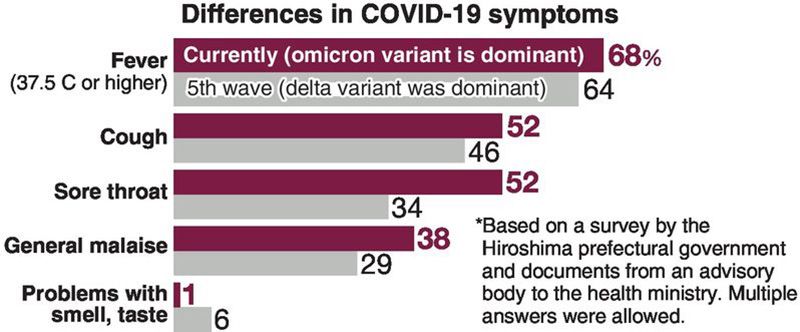
According to a survey conducted by the Hiroshima prefectural government on about 400 people infected with the coronavirus during the year-end and New Year holiday season, when the omicron variant spread rapidly, 52% complained of a sore throat. This was higher than the 34% who developed this symptom during the fifth wave of infections when delta was rampant.
Among the omicron-infected respondents, the percentages of those who complained of coughing and general malaise were also higher than among people infected with the delta variant. However, only 1% of the omicron patients reported problems with their sense of smell and taste, lower than the 6% of delta-infected people.
The symptoms of infection with the omicron variant are similar to those of influenza or a cold, but Norio Omagari, director of the Disease Control and Prevention Center at the National Center for Global Health and Medicine, called for people to remain cautious.
“There is still the possibility of the elderly and people with chronic conditions becoming seriously ill, so we must be on our guard,” Omagari said. “There have been cases in which a person’s overall condition worsened due to severe throat pain that prevented them from eating and drinking water. I hope people will try to drink plenty of water and eat well during their recuperation, as well as take basic measures to prevent infection.”






Most Read
Popular articles in the past 24 hours
-

Ransomware Attacks Hitting Japan's Small, Midsize Firms
-
Japan's Budget on Track for Quick Passage, but Ruling Parties to ...
-

German Journalist Traces Footsteps of Great-Grandfather Who Was P...
-

10 Foreign Tourists Sustain Injuries After Fire at Capsule Hotel ...
-

World Baseball Classic: Venezuela Beats Japan in Nail-biting Back...
-

Rapid Services on JR Chuo Line Suspended; Accident at Kokubunji S...
-

Rapid Services Resume on JR Chuo Line; Suspension Caused by Accid...
-

World Baseball Classic: Red Sox’s Abreu Hits 3-run Homer, Giving ...
Popular articles in the past week
-

Japan Figure Skating Legend Yuzuru Hanyu Is Proud Disaster Surviv...
-
Govt to Utilize ODA for Ensuring Economic Security; Securing Ener...
-
15 Measles Patients Confirmed in Tokyo in Past 6 Days; 1 May Have...
-
Massive Sewer Pipe Found Jutting Out of Highway in Osaka
-
Japan Govt to Tighten Requirements to Receive Permanent Residency...
-

Power Outage Forces About 980 Passengers in Yokohama to Walk to T...
-

JR Tokai Breaks Ground on Yamanashi Maglev Station; Will Be Part ...
-

Parents in Japan to Get Instagram Notifications When Teens Repeat...
Popular articles in the past month
-

Producer Behind Pop Group XG Arrested for Cocaine Possession
-

Japan PM Takaichi’s Cabinet Resigns en Masse
-

Man Infected with Measles Reportedly Dined at Restaurant in Tokyo...
-
Japan Figure Skating Legend Yuzuru Hanyu Is Proud Disaster Surviv...
-

iPS Treatments Pass Key Milestone, but Broader Applications Far f...
-

Sanae Takaichi Elected Prime Minister of Japan; Keeps All Cabinet...
-

South Korea Tightens Rules on Foreigners Buying Homes in Seoul Me...
-

Nepal Bus Crash Kills 19 People, Injures 25 Including One Japanes...
Top Articles in Society
-
Producer Behind Pop Group XG Arrested for Cocaine Possession
-
Man Infected with Measles Reportedly Dined at Restaurant in Tokyo Station
-
15 Measles Patients Confirmed in Tokyo in Past 6 Days; 1 May Have Come into Contact with Many in Shibuya
-

Bus Carrying 40 Passengers Catches Fire on Chuo Expressway; All Evacuate Safely
-

Ibaraki Pref.’s 1st Foreign Bus Driver Hired in Tsukuba
JN ACCESS RANKING
-
Producer Behind Pop Group XG Arrested for Cocaine Possession
-
Japan PM Takaichi’s Cabinet Resigns en Masse
-
Man Infected with Measles Reportedly Dined at Restaurant in Tokyo Station
-
Japan Figure Skating Legend Yuzuru Hanyu Is Proud Disaster Survivor and Gold Medalist, Vows to Continue Support Efforts
-
iPS Treatments Pass Key Milestone, but Broader Applications Far from Guaranteed